
Book Review: "Chaucer" by Peter Ackroyd
5/5 - Peter Ackroyd gives us a taste of Chaucer's real 14th century life in this short, but incredible book...

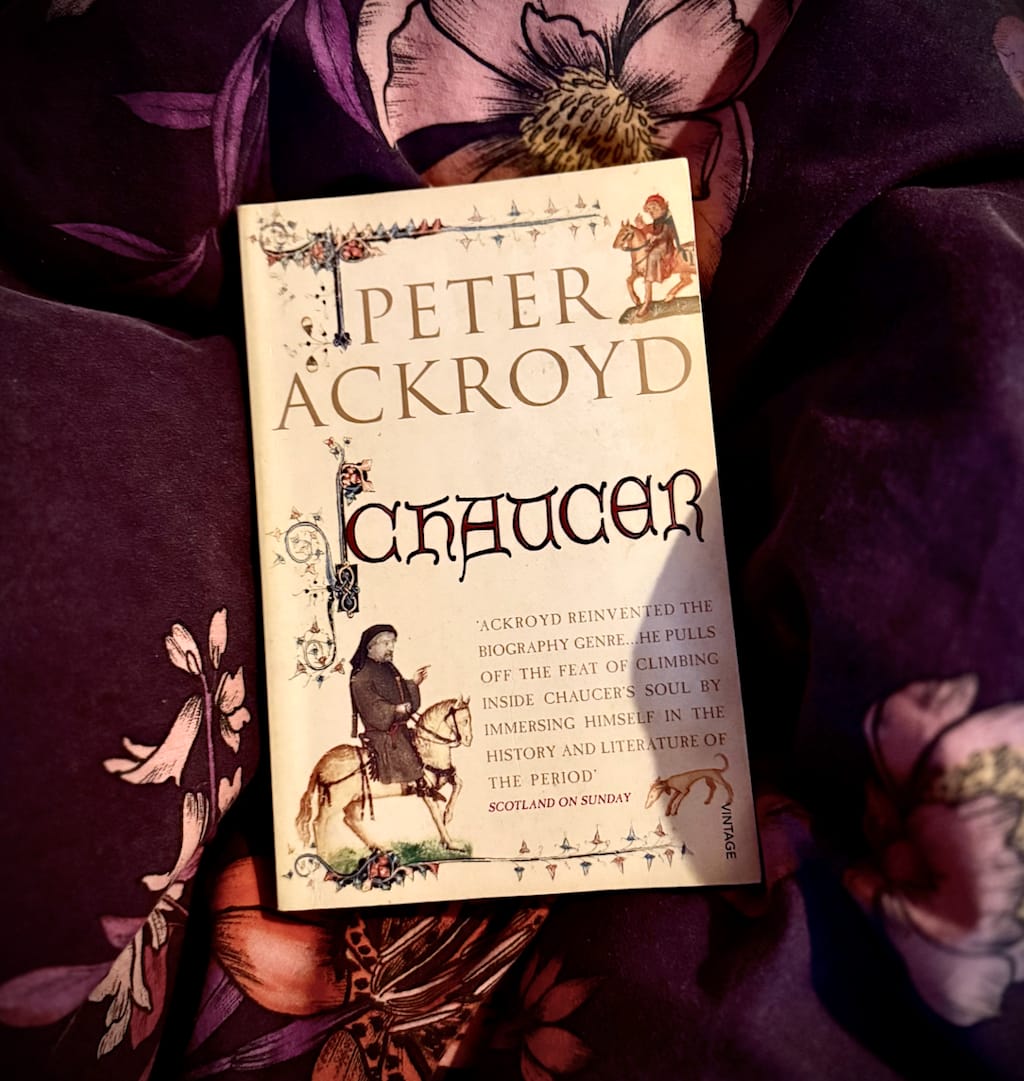
I love Chaucer and I love Peter Ackroyd (except for his book on King Arthur which got me thinking whether I should continue with his bibliography, though I did absolutely consume Dan Leno and the Limehouse Golem faster than a competitive eater working a hotdog in the first thirty seconds of a competition. Nice save Ackroyd). I've now chosen that putting together Chaucer and Peter Ackroyd is probably my next great idea. It actually came from reading Arguably by Christopher Hitchens in which I read an essay about Peter Ackroyd. Hitchens goes on to mention and (quite formally) gush about the best books by the author, toeing the line of a fanatic (go on, laugh about the irony). But anything that Hitchens states you should read, you should perhaps read. It will feed your soul.
Peter Ackroyd reconstructs what life would have been like for Chaucer living in the 14th century. This is the time of Richard II's court and a very divided London when it came to churches and inns. There's a turbulence within Medieval England which centres around the 100 Years' War and Ackroyd seems to centre Chaucer in the midst of this, introducing him as a man who was complex about himself and often contrasted himself between what he thought and what others said. For example: he described himself as reserved and quiet and yet, there aren't many sources that would agree with that sentiment. This is a world of contrasts, why would Chaucer himself be any different? He fits right in to his own time and yet, was very much ahead of it in his language use. He knew the language of the court, he knew the language of the streets of London and he utilised them both to become the best of all poets at the time.
Yes he was a poet though Peter Ackroyd also presents him as being firmly set within the workings of the royal machine - he was a diplomat and frequented the royal courts. His observational skills when it came to royal customs is presented as a huge advantage when it came to understanding the inner-lives of all kinds of people from all walks of life. This would definitely help when it came to working on his magnum opus, though unfinished, The Canterbury Tales. The pilgrimage, the wide range of voices, the different stories - these all play into how we understand how Chaucer saw his own people of his own day and what he learnt from them. Ackroyd writes this so well, even though we must get a backdrop of who Chaucer was first - The Canterbury Tales is a vision of an England changing with its people. All different types of them.
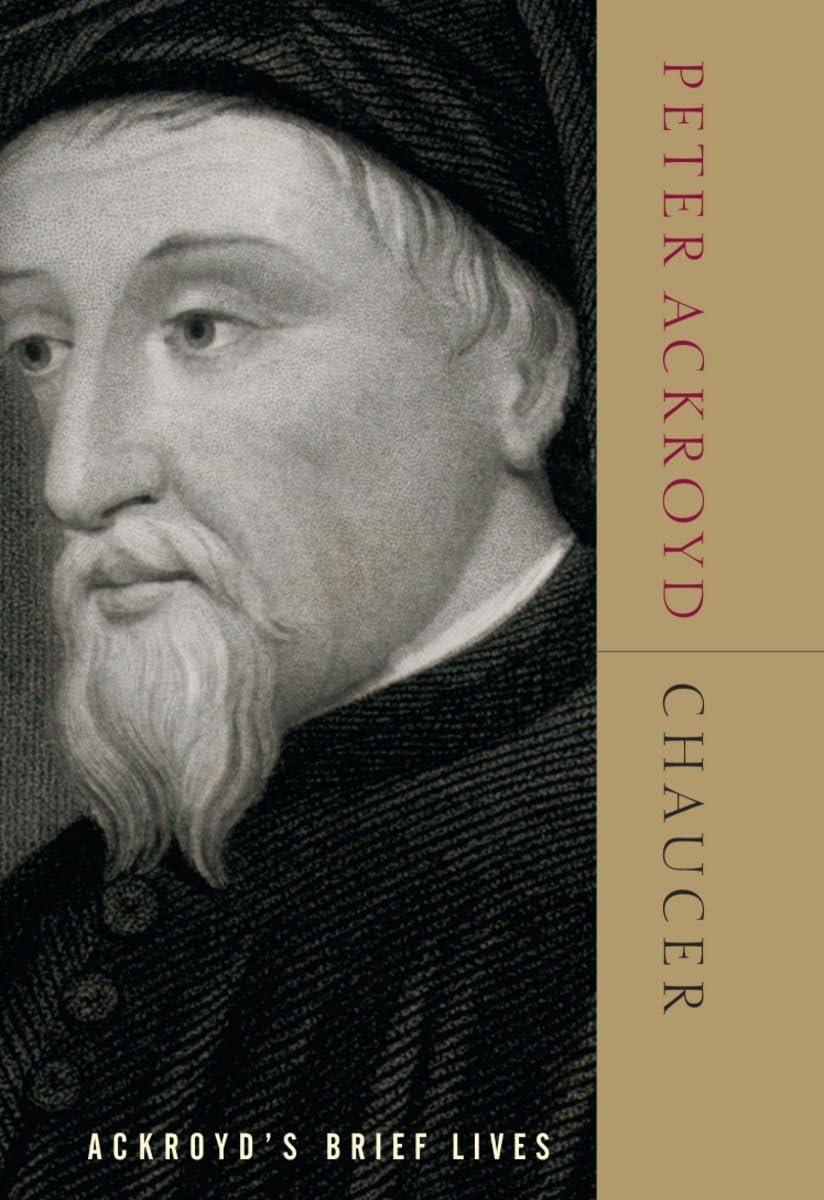
Ackroyd states that Chaucer’s incredible use of the English vernacular at a time when Latin and French dominated literature was basically the first formation of what we understand as "English". By writing in Middle English, Chaucer helped legitimise English as a literary language, making his work more accessible and contributing to the development of a distinctly English literary tradition. This is why Chaucer is normally referred to as the Father of the English Language. Ackroyd, as we can tell from the text, has a deep appreciation for Chaucer and definitely enjoys writing about him - the passion that comes through the paper is definitely the main thing that keeps us as readers hanging on to the story. We may know the story of Chaucer already and yet, we stick around for Ackroyd's brilliant storytelling of the whole affair.
Chaucer's adaptation of European ideas into his own work is something the literature student will love. Studying Dante and Boccaccio and making the themes found within these works more accessible to more people was definitely one of the things I loved studying about Chaucer when I was growing up. Yes, there is something distinctly English about Chaucer's works but that doesn't mean there were not great influences from other places as well.
I personally loved reading Ackroyd's work about Chaucer (and I have plenty of Peter Ackroyd's works to still read). I hope you, if you can, pick up this short but splendid book which takes us through the real and imagined worlds of one of English history's greatest storytellers.
About the Creator
Annie Kapur
"Et in Arcadia Ego"
***
I am:
🙋🏽♀️ Annie
📚 Avid Reader
📝 Reviewer and Commentator
🎓 Post-Grad Millennial (M.A)
***
I have:
📖 300K+ reads on Vocal
🦋/X @AnnieWithBooks
📸 ThePrancingPonyBakery
🔗 PrancingPonyBakery.com
***
🏡 UK
Enjoyed the story? Support the Creator.
Subscribe for free to receive all their stories in your feed. You could also become a paid subscriber, letting them know you appreciate their work.
Comments
There are no comments for this story
Be the first to respond and start the conversation.