
Book Review: "Blake" by Peter Ackroyd
4/5 - ...I had no idea William Blake was so interesting...

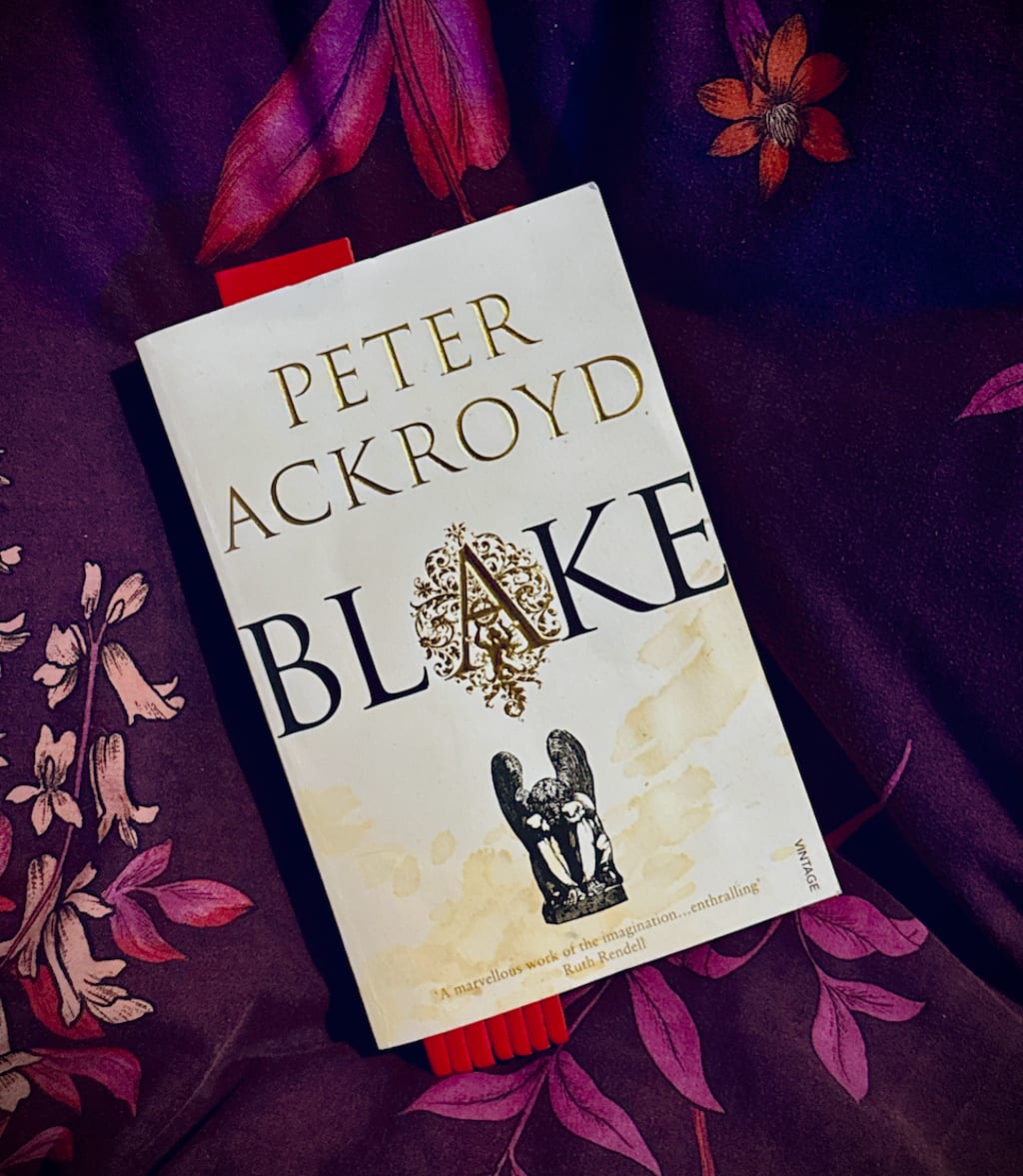
Peter Ackroyd is definitely back on my menu after my reading of the essays of Christopher Hitchens in which Hitchens recommends reading many of Ackroyd's works. Blake is about the 18th century British poet, William Blake - a staple of schools in England and a massively underrated and under-read writer. I personally didn't realise that Blake's life was so interesting having only encountered him as a slightly looney religious man who thought he had visions and failed so badly at writing his family was almost resigned to poverty even though he was a print-maker. Who knew the life of Blake was actually pretty complex and that social issues were everywhere in his life, poems and relations. Peter Ackroyd's book reveals a side to William Blake that we often do not see as we choose the more rebellious writers: Byron, Wordsworth, Coleridge, Shelley and even to some extent, Thomas de Quincey. But Blake was definitely a man of his time - a time of great upheaval and revolution.
If we are to look to his poetry, we can see the world that Blake grew up in and the author of this book makes us see it clearly. William Blake is born into a world wrestling with revolution - European revolutions are springing up (especially in France), and the Industrial Revolution with all of its injustices for the poor is getting underway. One of the things I found quite interesting about this book is the way in which Ackroyd uses language to talk about Blake's upbringing. It is different to the way he writes his book on Chaucer. Blake's story is much more strident and filled with fiery description - as if we are about to delve into a world unknown to us. But at the same time there is a huge amount of demystification going on, as we know, Blake isn't the easiest man to understand.
The reason why he isn't easy to understand is mainly because of those religious visions he is so famous for having - almost as famous as the actual poetry he writes. But our author is not dismissive of these visions but presents them as this integral part in which if we didn't get them - we probably would not have received Blake's wondrous poetry or those intricately detailed pieces of art that go along with them in Songs of Innocence and Experience. The visions were a very important part of that. They were also part of crafting the mythology around William Blake, one that has survived centuries as we today can see.
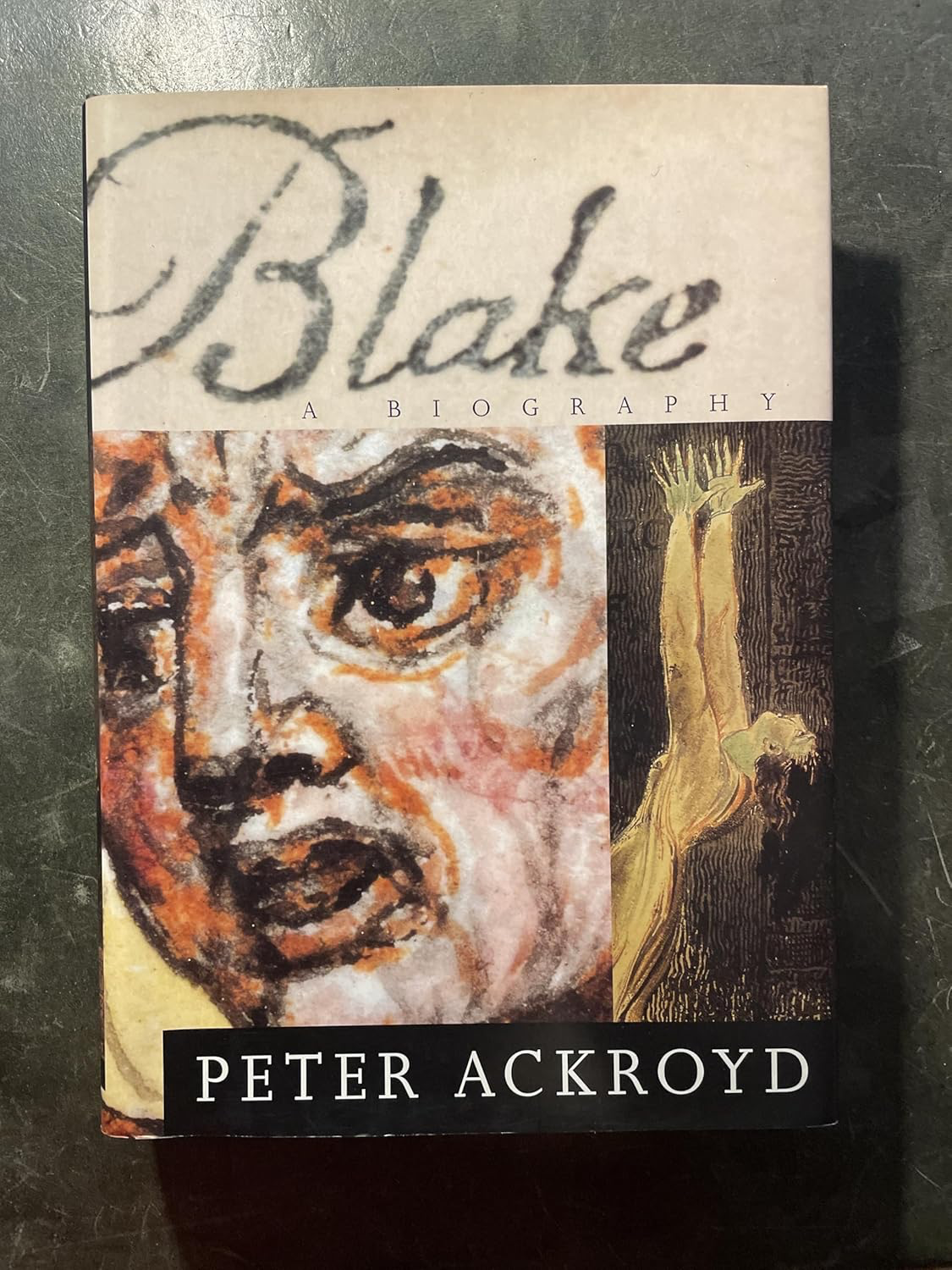
The author presents Blake as a man who believed that art, poetry and spirituality were basically inseparable. This is the reason for the print works in the book Songs of Innocence and Experience, in which illuminated prints show us something about the poems - helping us to understand the mind of William Blake and even more so, the world around him. In his poetry he contrasts purity with corruption and childhood with experience, looking deeply not only at the religious aspects of this, but also at the way Industrial Revolution London perpetuates the slavery towards this corruption, ruining childhood (as seen in his most famous poem: London).
It's true that Blake was pretty obscure during his own lifetime, he struggled to gain recognition or any kind of real-world success - relying on a small set of patrons and supporters. But this basically means that Blake didn't really have to compromise any of his ideas for the publishing world like some authors (especially smaller, less middle class ones) had to. Blake's ideas were therefore quite raw and intense looks at life in the 18th and 19th centuries, this is why they are still read today I think - because they represent a reality that is very rarely seen in poetry of the past seeing as publishing was once a rich man's endeavour. Blake however, only achieved fame after he passed away.
We are taken through his marriage to Catherine and how close they were, but one of the most interesting things about Blake remains his reason for writing poetry. This is a man with very little poetic background who was once a religious print maker who decided to take a pen and write poems, decorating them with striking illuminated images. If he had not have had this idea, would we still have this bleak view of Industrial Revolution London we have today? Would we still have these poems which celebrate childhood friendship and purity in a world before children's literature? How do we still today forget how innovative William Blake really was?
About the Creator
Annie Kapur
"Et in Arcadia Ego"
***
I am:
🙋🏽♀️ Annie
📚 Avid Reader
📝 Reviewer and Commentator
🎓 Post-Grad Millennial (M.A)
***
I have:
📖 300K+ reads on Vocal
🦋/X @AnnieWithBooks
📸 ThePrancingPonyBakery
🔗 PrancingPonyBakery.com
***
🏡 UK
Enjoyed the story? Support the Creator.
Subscribe for free to receive all their stories in your feed. You could also become a paid subscriber, letting them know you appreciate their work.
Comments
There are no comments for this story
Be the first to respond and start the conversation.