
Book Review: "Arguably" by Christopher Hitchens (Pt. 1)
"All American"

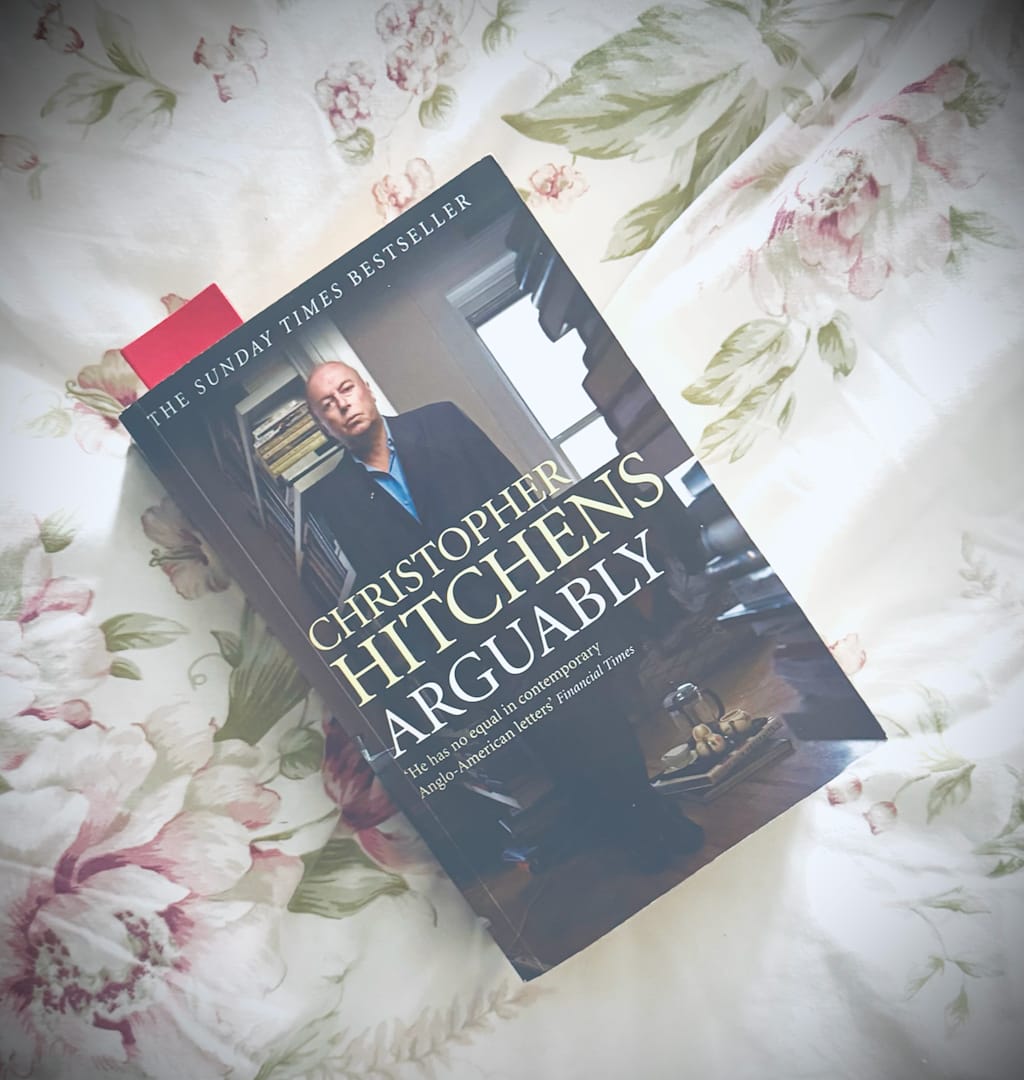
Rating: 3.5/5 = Hitchens makes great argument but has a predication to over explain himself with side-facts from time to time.
***
“In the long human struggle, the idea of martyrdom presents itself with a Janus-like face. Those willing to die for a cause larger than themselves have been honoured from the Periclean funeral oration to the Gettysburg Address. Viewed more skeptically, those with a zeal to die have sometimes been suspect for excessive enthusiasm and self-righteous, even fanaticism.”
- Arguably by Christopher Hitchens
Christopher Hitchens is perhaps one of my favourite people from modern history. A man who was a great public speaker, a brilliant mind and of course the creator of 'Hitchens' Razor' (what can be proven without evidence can also be dismissed without evidence). Famed atheist who probably made a few blunders concerning his support for the Iraq War, he isn't a man who's known for being afraid to admit there are two sides to every equation. I've read many works by Christopher Hitchens and Arguably I believe, is my last. If I discover more works by him I would never hesitate to pick them up.
In the introduction to the book, Hitchens confirms what a martyr is and the religious/political implications and landscapes of the 'fanatic'. In classic Hitchens fashion, he deploys his knowledge of various conflicts in order to depict this in the best way he possibly can - looking mainly at how martyrdom is employed in the actual fight of the war. He doesn't take a side but I definitely believe that at this time in modern history, he did not have all the information we perhaps have now. He has not necessarily got it wrong, he just died before all could be revealed, I guess. But if we take the introduction at face value, he is technically correct about what martyrdom and war really are: the frosted glass of political chess games.
In “Gods of Our Fathers” he covers the religious aspects of the founding fathers in the USA - stating that even though there were religious differences, they understood the requirement of people being able to live together better than countries where squabbling over religious differences was still quite common. - I didn’t really enjoy the essay as it seemed to lack an actual point other than showing the reader that America had hit an enlightenment whilst those at the top had a morality compass fixated by religious doctrine. Hitchens is known for making a point but here it just seems like I'm being told a story. However “The Private Jefferson” is slightly more enjoyable with comments about the sexual affairs of Thomas Jefferson but also an analysis on the fact that this man was clearly (and weirdly) into eugenics. The politics of Jefferson’s love life is explored in detail as being not too much, but also not too little.
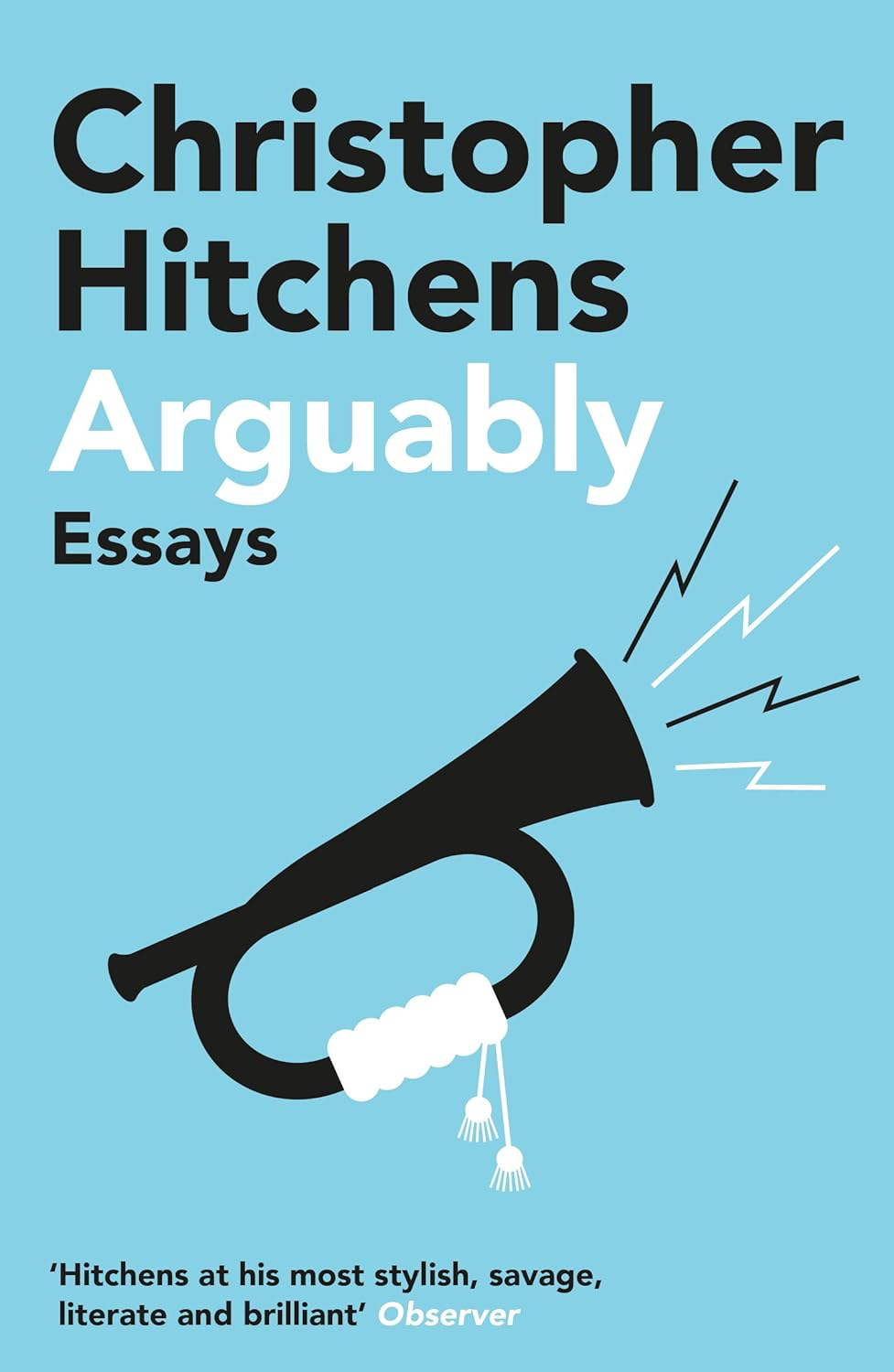
I would like to take this sidenote to say that there are a lot of writings by Hitchens about America. As a man who was fascinated by the country, I don't believe that when he doesn't make an actual point he is doing this because he doesn't know what point to make, but rather that he is attempting to step away from making a point because there are so many different sides to any equation he is talking about at the time. I definitely enjoyed "The Private Jefferson" more because this is where we see Hitchens makes definitive points as he also does in “Benjamin Franklin: Free and Easy”. Be that as it may, I also like it when Hitchens tells his little side stories and anecdotes, so I definitely loved the little tale about him having to get his child baptised at the beginning of the Benjamin Franklin essay. That was quite funny and you can actually hear Hitchens saying it in your head. He sounds both pissed off and like he also gets the joke.
Many of these are book reviews of other people's works and so, in his essay on Mark Twain in which he covers the politics of Twain's time and place, he also refers to a book about Twain in more than one way. He states that Twain should never be boring yes, but also in the same essay calls DH Lawrence 'humourless' - someone has never read Life with a Capital L in which DH Lawrence aptly takes the piss out of Thomas Mann. Be that as it may, Hitchens makes the landscape of Twain's America rich and elevated, something we can see and smell - something we can definitely feel with all of its double standards and ironies. America is changing.
His essay on Nabokov takes place in a changed America but not before it takes place in an unstable Iran. Reading Lolita in Tehran is a book that Hitchens has praised before with him even naming Azar Nafisi as one of the women we should definitely be celebrating for her courage and awesomeness (I definitely agree). We start our story in Iran and Hitchens gives voice to these women, taking into account how they interpreted Lolita during their own political turmoil, one that took away their rights and freedoms, one that put them in grave danger for simply existing. I love this about Hitchens - he explores in detail these, most oppressed people, and gives their voice something very important in the landscape of the understanding of the book. We know more implications of the book than ever purely because of Nafisi's book club.
As we move on to part 2 of this review, hopefully we see more of Hitchens' ability to show us the double standards of society, the mediocrities of humans and the stupidity of organised religions. I am definitely looking forward to it.
About the Creator
Annie Kapur
"Et in Arcadia Ego"
***
I am:
🙋🏽♀️ Annie
📚 Avid Reader
📝 Reviewer and Commentator
🎓 Post-Grad Millennial (M.A)
***
I have:
📖 300K+ reads on Vocal
🦋/X @AnnieWithBooks
📸 ThePrancingPonyBakery
🔗 PrancingPonyBakery.com
***
🏡 UK
Enjoyed the story? Support the Creator.
Subscribe for free to receive all their stories in your feed. You could also become a paid subscriber, letting them know you appreciate their work.
Comments
There are no comments for this story
Be the first to respond and start the conversation.