
Book Review: "Agnes Grey" by Anne Bronte
5/5 - a massively overlooked Bronte novel...

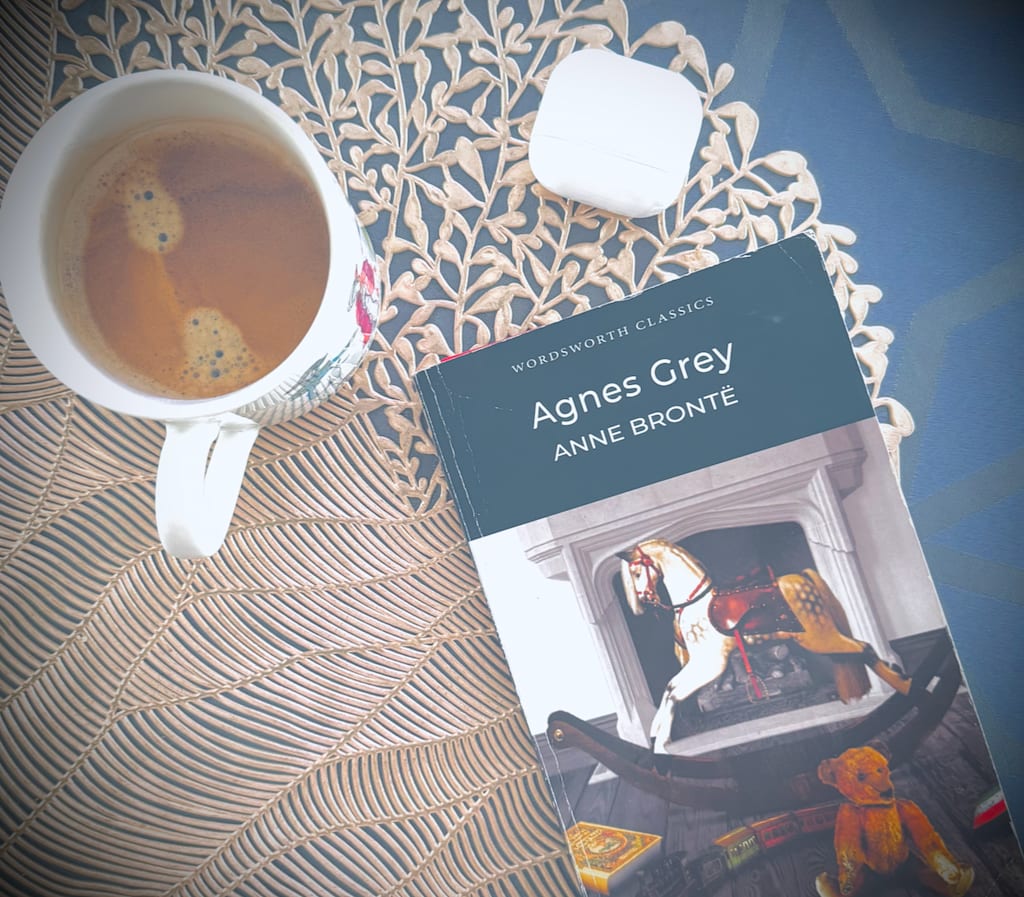
1847 may have seen Wuthering Heights and Jane Eyre published, but it also saw one of the most overlooked Bronte books begin to circulate: Agnes Grey has often been ignored in favour of the works by the other two sisters. In 1850, Charlotte Bronte went over the work, made some edits and revisions and republished it in its 2nd edition. Another Bronte novel about a governess with themes of the abuse of women seems to be too Jane Eyre for fans of Charlotte to really sink their teeth into. However, the book itself is actually quite different and seems to stand on its own as a work of Victorian Fiction which begins in a rather odd way by comparison.
It starts with the marriage of the mother and father of Agnes Grey. Written in first person, she tells the story of how her mother was wealthy and her father a poor religious man. But, her mother gave up her wealth and carriages to go and marry the father and they were happy. Eventually, they had children and only Mary and Agnes survived. The way Bronte writes this is fairly happy considering which way this situation is going to go, you almost never see it coming. The girls learn at home, taught by their mother and their father teaches them Latin. Everything looks very nice and calm though the girls are isolated from others their own age. When the family have the chance to gain some wealth - they take it. But the whole thing goes up in smoke when a ship sinks with their items aboard - killing the crew and the merchant who was taking them. Anne Bronte completely changes the atmosphere from happy to almost greying. It's like the whole book becomes overcast with this heaping sense of dread and disappointment.
Agnes, now over eighteen, is upset because everyone still treats her like a child. She states that she would like to become a governess and everyone is shocked - her mother even laughs at her. The problem is, she actually gets a job as a governess and goes to work against the wishes and the predictions of other people. She is to go to Wellwood house to work for the Bloomfield family. Anne Bronte's writing of optimism versus pessismism is amazing because no matter what good things happen (or at least they seem to be good things) they are always overcast with a little shadow - just like the incident with the ship. The family though are cruel and this was completely unexpected. Again, the idea of tragedy and pessimism comes back - Agnes didn't even consider that they might be bad people.
One of the children is called Tom and he is absolutely horrid in every way. He delights in torturing small animals and he is simply unruly. Of course, Agnes is the governess and is therefore blamed for all the bad behaviour being displayed even though it is clear that this was being displayed far longer than she had been governess of the children. Eventually, because of the distress, Agnes is relieved of her position - she goes home a little deflated. I'm not going to lie, the children are monsters and Agnes should not have blamed herself. I think a lot of people nowadays who go to work with children and/or young people realise the same thing: they only want whats best for them and yet, they are constantly having it thrown back in their face. Agnes Grey is overlooked but proves it is a timeless work that relates to a lot of us.

She then goes to work at the Murrays' household in which she is in charge of two girls (as the boys have gone off to school). The girls are difficult but not as unpleasant as the children of the previous household. Agnes is still disobeyed and ignored by them, they don't like her very much and they often scheme behind her back. Once Rosalie Murray (one of the daughters) enters society, she notices that Agnes is gaining some interest amongst a man who picks her some flowers. His name is Edward. She tells Agnes that though she plans to get married, she is also having a good time flirting with other men and asks Agnes not to tell anyone. This really does place a divide between the two women and I was shocked to learn it - even though these are behaviours Rosalie displayed growing up. I thought she would have grown out of them by the time she was to get married. And of course, one of the men she is flirting with is Edward.
Agnes' father eventually passes away and she leaves behind the Murrays and returns home to open a small school with her mother. She also leaves behind Edward and of course, that one actually hurts. She receives a letter from Rosalie who claims she despises her husband and that he left London because of all the gentlemen she was attracting. However, she also hears that Edward has left too and gets upset at the prospect of not seeing him again. I have to say, I care very little for Rosalie even though she is in an unhappy marriage. If she had perhaps been nicer to Agnes then I could understand, but I don't care for her at all.
There are a number of things that happen afterwards, including that Agnes does in fact see Edward again (honestly, I'm not going to say much more about it). But I think Agnes is someone who wants to be all things to all people. She constantly gets treated badly by others only to be told that she must be steadfast and nice to everyone else. She is constantly maintaining the emotions of everyone around her though they make no effort towards her. Honestly, this definitely sounds like the story of my own life at times. Especially regarding my situations with others in my very real life. Agnes is a wonderful, brilliant character but I do think she puts far too much effort into dealing with people who would not care for her.
About the Creator
Annie Kapur
"Et in Arcadia Ego"
***
I am:
🙋🏽♀️ Annie
📚 Avid Reader
📝 Reviewer and Commentator
🎓 Post-Grad Millennial (M.A)
***
I have:
📖 300K+ reads on Vocal
🦋/X @AnnieWithBooks
📸 ThePrancingPonyBakery
🔗 PrancingPonyBakery.com
***
🏡 UK
Enjoyed the story? Support the Creator.
Subscribe for free to receive all their stories in your feed. You could also become a paid subscriber, letting them know you appreciate their work.
Comments
There are no comments for this story
Be the first to respond and start the conversation.