
Book Review: "A Hidden History of the Tower of London" by John Paul Davis (Pt. 2)
Chapter 4 to Chapter 6

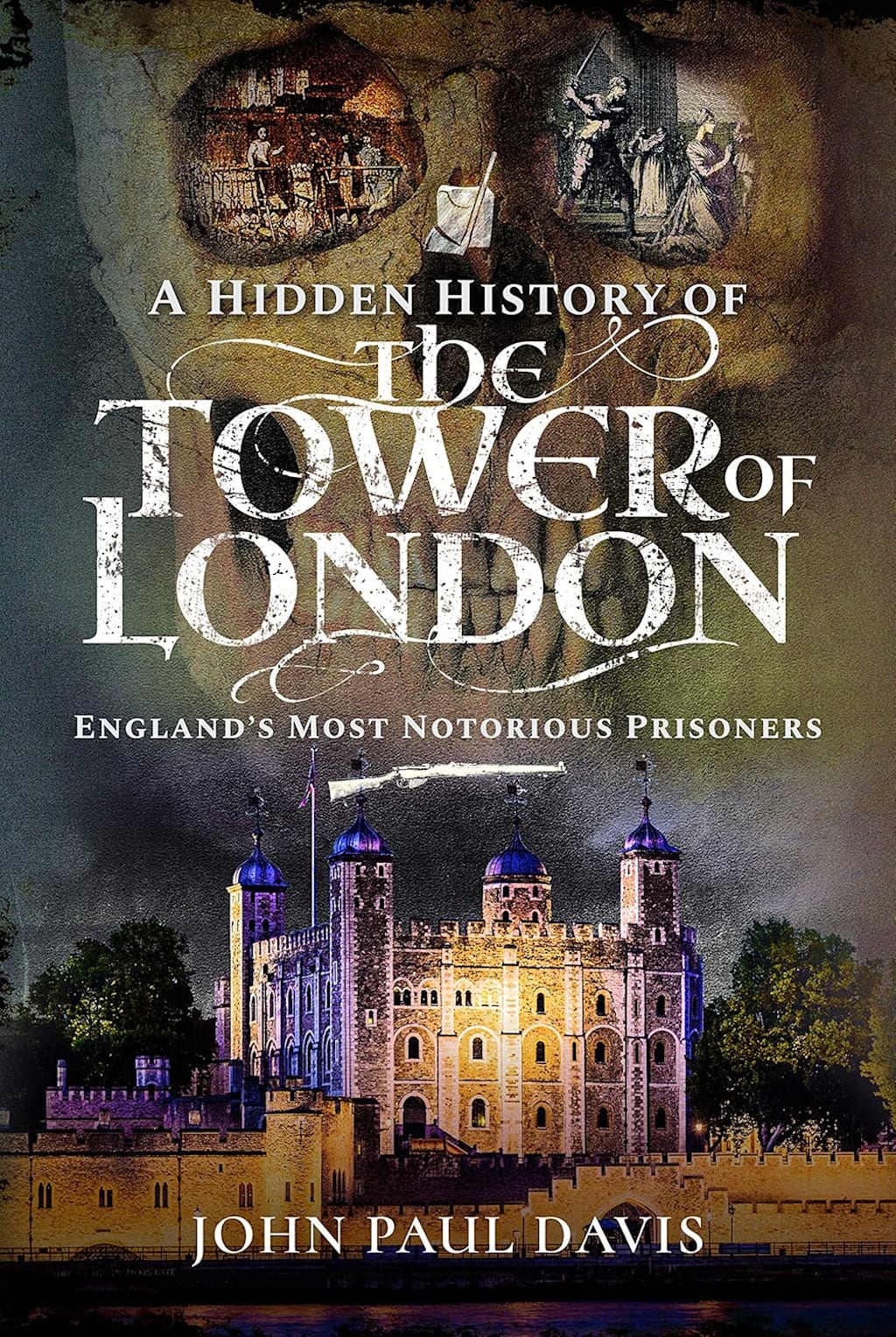
By the time we move into the new age of the Medieval sector we are made to realise by the author, how different Edward II is from his father, Edward I. If you know me then you'll know that I adore Edward II's era and love learning about who he was and what kind of person he became into his reign. I just think for a man who barely had any real training on kingship apart from war, he was dealt a pretty bad hand to begin with let alone, the fact that it would be in absolute ruins by the end of his reign. Under criticism from the horrid state the Tower was kept in, Edward didn't really carry out many repairs on it - Isabella gave birth there underneath a leaking roof dripping with rain. The author definitely makes the upkeep of the Tower seem almost reflective of Edward II's reign. There was no upkeeop and that is where this is heading.
There are huge political minefields between Isabella, Edward II and Roger Mortimer. This, you can learn all about in a fantastic book called Edward II by Seymour Phillips. But the one thing that Mortimer hated about Edward II is that he put the Despenser Family in charge of many things, moving them up the ranks of society when it was well documented that Mortimer's family had a falling out with them in the past. During Edward's reign, the author reports that Isabella would take her time in the Tower because she enjoyed it there but, Roger Mortimer would be there for a whole different reason. Locked in the Tower in the 1320s, he had actually managed to escape using a very tried and tested method (even though it had failed once) of a rope ladder. The author makes it clear to us that because of the different amendments made to the castle since Flambard, it would have been impossible for Mortimer to carry this out on his own - we become aware of every single person who helped him. The escape, it is said, would prove catastrophic for Edward II.
But as it happens, Mortimer would return to the Tower after becoming too much like the Despenser boy for Edward III's liking. It was then he was locked in a windowless cell and eventually he was hanged. The author's writing is fun and engaging but at the same time, it often reminds us of the darkness that hankers within the halls and cells of the Tower, the politics that had destroyed lives there and ultimately it had executed men who had dared to kill Kings. This is chilling as it is intriguing.
During the 1300s, Richard II seems to have a field day with the Tower and after a Peasant's Revolt in which the rich and powerful lock themselves in the Tower to escape people who want to kill them for their greed, he revamps the whole thing. The author states that he puts his own insignia on it. By this point, there is a healthy amount on the actual Tower itself and there's a good amount of story concerning how Richard II would lock people in the Tower so often that eventually he himself ended up locked in the Tower. He would be moved and done away with afterwards. The author's writing on the Tower is thoroughly interesting and has a great amount of reference to earlier periods - especially that of Edward II.

Unfortunately that's not really what's happening by the time we get to Henry IV, V and VI, where everything becomes a lot more political and the Tower seems to become a background. The book becomes less about the Tower and its imposition but more about 'and this person went to the Tower' or 'this person was imprisoned in the Tower'. The historical story seems to take over the book and I'm not sure that I like this all that much. This is mainly because I was looking for a book primarily about the Tower and yet, this book is not a political history book either. It covers the surface of everything as now, it is trying to do too much at once. It would have been better to do one thing properly.
As Salisbury attempts to siege the walls with 2000 men, there was a release of weapons on to its own people for the first time in the Tower's history. During the story of Henry VI and Edward IV, there was even more politics and yet, there are more escapes and more imprisonments. Apart from now having executions on Tower Hill, this book is now moving further and further away from its true purpose: being a book about the Tower.
But when Henry VI is taken to the Tower and it briefly becomes less about politics and more about how the Tower served as the King’s new home. What we then get is a weaving of far-out politics and odd flashes of Henry VI in the Tower and his wife going to visit him, there's also no depth served to the death of Prince Edward which seems rather odd. At the moment, I am not sure how to feel about this. Though it is interesting that there are now executions happening on Tower Hill far more regularly.
I enjoyed learning about the politics, don't get me wrong, but this book is meant to be about the Tower itself and its prisoners. I would have liked it to be more like The Palace by Gareth Russell which covers the history of Hampton Court. It covers each room and events that happened within, and then it gets extrapolated to the politics if it is relevant. It doesn't feel like the story is just going off on a tangent which I am afraid is happening in this text we are reading.
About the Creator
Annie Kapur
"Et in Arcadia Ego"
***
I am:
🙋🏽♀️ Annie
📚 Avid Reader
📝 Reviewer and Commentator
🎓 Post-Grad Millennial (M.A)
***
I have:
📖 300K+ reads on Vocal
🦋/X @AnnieWithBooks
📸 ThePrancingPonyBakery
🔗 PrancingPonyBakery.com
***
🏡 UK
Enjoyed the story? Support the Creator.
Subscribe for free to receive all their stories in your feed. You could also become a paid subscriber, letting them know you appreciate their work.
Comments
There are no comments for this story
Be the first to respond and start the conversation.