
Bleak House by Charles Dickens
Why It's a Masterpiece (Week 119)

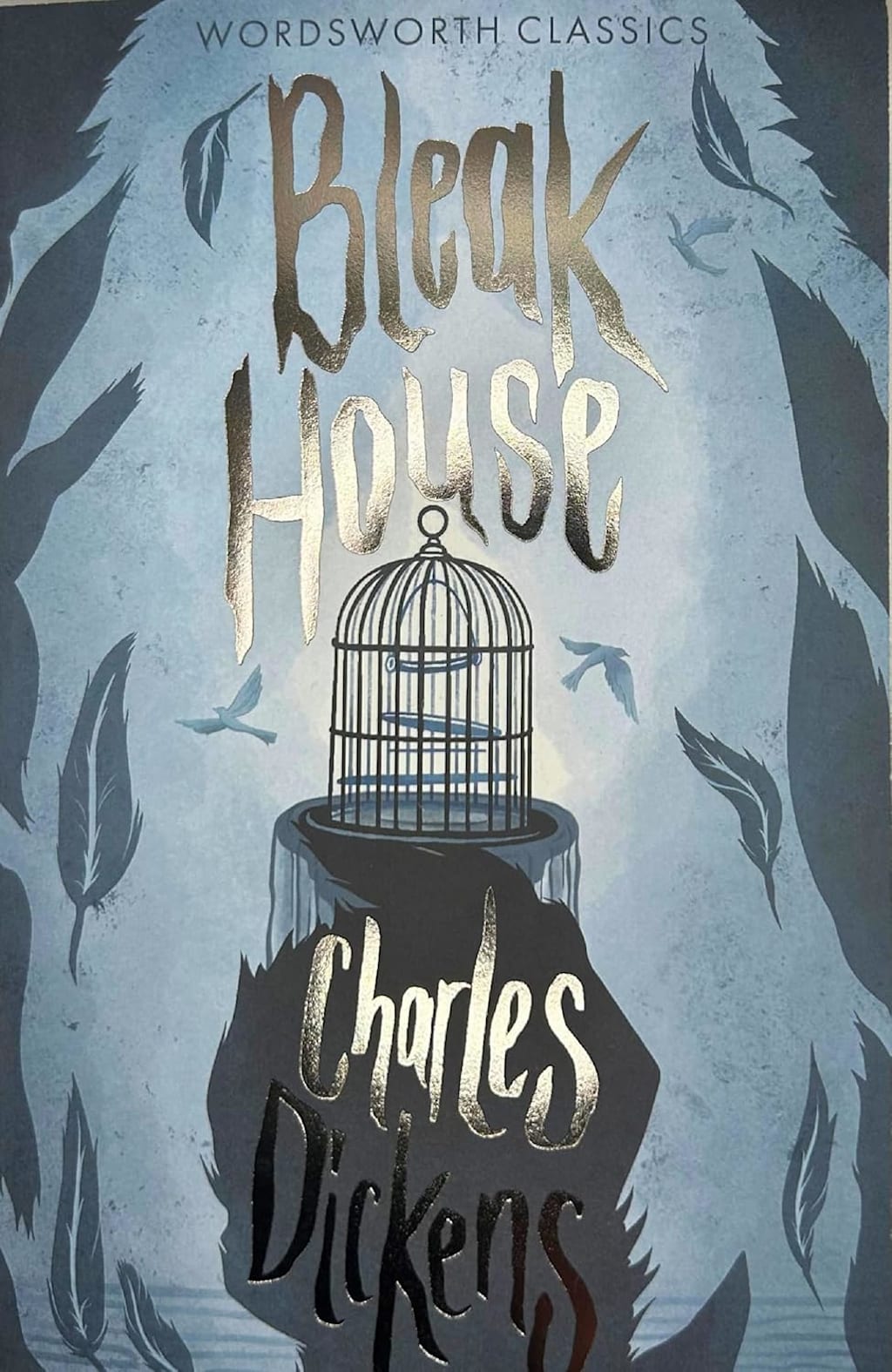
This novel was first published in serial form between March 1852 and September 1853. Like many of Dickens’s major works, it appeared in 20 monthly instalments, with the final part being a double issue. The novel was illustrated by Hablot Knight Browne, known as “Phiz,” who had collaborated with Dickens on several earlier works.
These instalments were later compiled into a single volume which was then published in 1853. Bleak House was printed by Bradbury and Evans, a firm that had also published Household Words, the magazine Dickens edited. The novel’s publication in instalments reflected Dickens’s ongoing engagement with his readership and allowed him to respond to public reception as the story unfolded.
Its dual narrative structure and criticism of the British legal system, particularly the Court of Chancery, contributed to its popularity and lasting impact. This was especially true for the issues concerning the treatment of the poor.
Plot

The novel opens with a description of fog and mud in London, setting the tone for a novel that centres on confusion, delay, and decay, particularly in the legal system. At the base of the story is the interminable court case Jarndyce and Jarndyce, which has dragged on for generations and concerns a disputed inheritance.
The young orphan Esther Summerson becomes the central figure of the novel when she is taken in by John Jarndyce, a kind and generous man who lives at Bleak House. Esther, who narrates much of the novel in a modest voice, becomes a companion to Ada Clare, one of the wards of the court involved in the Jarndyce case. Ada is in love with her fellow ward, Richard Carstone, whose life becomes increasingly consumed and ruined by his obsessive hope of a fortune from the lawsuit.
Parallel to Esther’s domestic and emotional growth is a wide-ranging web of characters and subplots that reflect the social and institutional ills of Victorian society.
Lady Dedlock, the aloof and aristocratic wife of Sir Leicester Dedlock, hides a painful secret about her past: she bore a child out of wedlock, whom she believes to have died. Unbeknownst to her, Esther is that child. The secret threatens to come to light through the investigations of Mr Tulkinghorn, the Dedlocks’ sinister and manipulative solicitor. His efforts to expose Lady Dedlock’s secret lead to tragedy, but before his own mysterious murder, he causes great distress by confronting her with knowledge of her past. Lady Dedlock, tormented by shame and fear of disgrace, eventually flees her home.
Esther contracts smallpox while nursing an ill companion, which leaves her permanently scarred. Her relationship with Mr Woodcourt, a compassionate doctor, is complicated by her sense of unworthiness due to her illegitimacy and her altered appearance. Meanwhile, Richard Carstone’s downward spiral continues as he grows increasingly reckless and obsessed with the outcome of Jarndyce and Jarndyce, leading to estrangement from his loved ones.
The novel also follows other vividly drawn characters including: the rag-and-bottle man Krook, who literally dies of spontaneous combustion, the poverty-stricken Jo, a crossing-sweeper who becomes entangled in the legal and moral corruption surrounding the Dedlocks. And finally, Inspector Bucket, one of literature’s first detectives, who solves the mystery of Tulkinghorn’s murder.
In the end, the court case collapses when the entire estate has been consumed by legal costs, leaving nothing for any of the claimants. Richard, devastated and in ill health, dies shortly after the case is resolved. Esther learns the full truth of her parentage and is reconciled with her past. She ultimately marries Mr Woodcourt and finds happiness in a quiet life of service, while John Jarndyce, having earlier proposed to her but stepping aside for her true happiness, remains a benevolent figure.
Into the Book

The Corrupt Legal System:
One of the central themes in Bleak House is the destructive and corrupting influence of the legal system, embodied by the case of Jarndyce and Jarndyce. Dickens uses this never-ending lawsuit as a symbol of institutional failure and moral decay.
The Chancery Court, rather than delivering justice, drains the financial and emotional resources of those entangled in it. Richard Carstone’s descent into obsession and ruin epitomises the personal cost of the system’s inefficiency. Dickens satirises the court with scathing irony: “The one great principle of the English law is to make business for itself.”
The court thrives on delay, ambiguity, and red tape, serving lawyers more than clients. Even characters like Mr Vholes, who presents a respectable exterior, are complicit in prolonging the process for personal gain. The ultimate futility of Jarndyce and Jarndyce (which ends with all the money exhausted in legal fees) shows how the promise of justice is a cruel illusion. Dickens thus critiques a system that operates in its own interests, with devastating consequences for the vulnerable.
“This scarecrow of a suit has, in course of time, become so complicated that no man alive knows what it means.”
- Bleak House by Charles Dickens
The Strength of Women:
Dickens explores the role of women in Victorian society through a range of characters, particularly Esther Summerson, who embodies strength, humility, and quiet influence. Esther, though introduced as submissive and self-effacing, becomes the emotional and moral centre of the novel. Her kindness, resilience, and practical wisdom stand in contrast to many of the men, who are often ineffectual or corrupted. Dickens presents her as a domestic heroine, whose influence is felt through care rather than power.
This is different to Lady Dedlock who represents a tragic female figure destroyed by the rigid expectations of propriety and secrecy. Her past love and motherhood must remain hidden, or she faces disgrace and social exile.
Even minor characters, such as Miss Flite or Jenny, reveal the burdens placed upon women by poverty, reputation, and institutional neglect. Dickens does not advocate overt social change, but he highlights the injustices and limitations placed on women. Despite her perceived flaws, Esther becomes a symbol of moral strength: “It was not a triumph; not a word of it was a triumph over him. It was all good and true and right, and done in a friendly spirit.”
“I only ask to be allowed to live quietly, and to help those about me.”
- Bleak House by Charles Dickens
Social Injustice and Poverty:
Throughout the novel, Dickens exposes the harsh realities of poverty and the indifference of society’s institutions to the suffering of the poor. The novel is filled with images of neglected children, squalid housing, and the grinding hopelessness of life on the margins.
Characters like Jo, the homeless crossing-sweeper, are depicted with deep pathos. Jo’s death, largely ignored by the legal and social systems, is a condemnation of Victorian England’s moral failures. “Dead, your Majesty. Dead, my lords and gentlemen. Dead, Right Reverends and Wrong Reverends… Dead, men and women, born with Heavenly compassion in your hearts. And dying thus around us every day.”
Dickens's direct address in this passage underlines the reader’s complicity in the social hierarchy’s neglect. Krook’s filthy premises and spontaneous combustion serve as grotesque symbols of moral rot in the world of greed and injustice. Meanwhile, the charitable work of Mrs Jellyby is portrayed as farcical and misguided, focusing on distant causes while neglecting those at her doorstep. Through irony, satire, and pathos, Dickens demands attention to the suffering of the poor, calling for compassion and reform.
“Jo lives — that is to say, Jo has not yet died — in a ruinous place known to the like of him by the name of Tom-all-Alone’s.”
- Bleak House by Charles Dickens
Why It's a Masterpiece

The novel was really well received upon publication as by then, Dickens was rather a large figure on the literary scene often famed for his public performances that he would put on of his novels or their extracts. However, something else happened when it came to Bleak House...
Victorian readers were particularly struck by its scathing portrayal of the legal system and its innovative use of dual narration. And so, over time it has come to be regarded as one of Dickens’s masterpieces due to its complex structure and moral depth. The novel's blend of satire, mystery, and realism, along with its sustained critique of institutional injustice, makes it an incredible social commentary.
Conclusion

I hope you enjoyed this brief but also thorough analysis of Bleak House. If you were to ask me, it would probably be in my top 5 Dickens novels with A Tale of Two Cities running a bit ahead followed closely by Great Expectations. But, yes, Bleak House is definitely up there. Its relevance today cannot be underestimated, especially as poverty is beginning to become a problem in our first world societies yet again.
Next Week: In a Lonely Place by Dorothy B Hughes
About the Creator
Annie Kapur
"Et in Arcadia Ego"
***
I am:
🙋🏽♀️ Annie
📚 Avid Reader
📝 Reviewer and Commentator
🎓 Post-Grad Millennial (M.A)
***
I have:
📖 300K+ reads on Vocal
🦋/X @AnnieWithBooks
📸 ThePrancingPonyBakery
🔗 PrancingPonyBakery.com
***
🏡 UK
Enjoyed the story? Support the Creator.
Subscribe for free to receive all their stories in your feed. You could also become a paid subscriber, letting them know you appreciate their work.
Comments
There are no comments for this story
Be the first to respond and start the conversation.