
Beyond the Sparkle: Why the “Twilight Saga” Is More Overrated Than Iconic
Content Note: This critique of “The Twilight Saga” looks at both the books and their film adaptations. It addresses themes like unhealthy relationship dynamics, consent, Indigenous representation, emotional dependency, and the imprinting storyline. The goal is to examine the franchise's story structure and cultural impact rather than judge its audience. Personal connections to stories are completely valid.

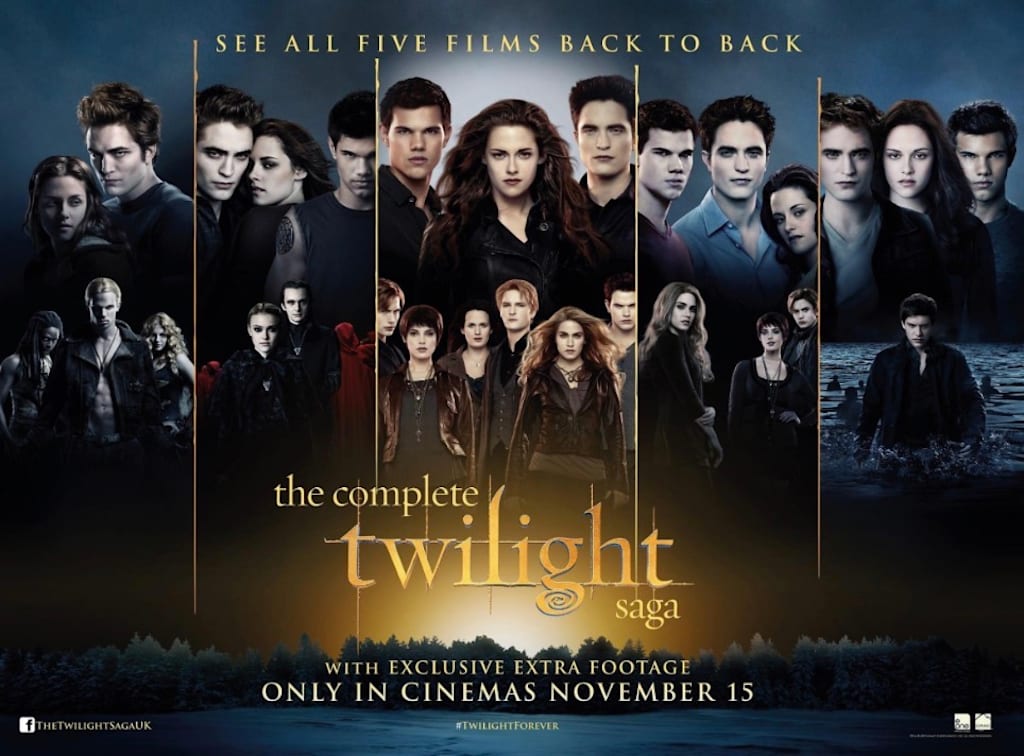
A major cultural phenomenon can change young adult fiction without being a literary masterpiece. Almost two decades after Bella Swan and Edward Cullen first gained attention, an important question remains: did Twilight earn its iconic status through superb storytelling, or did perfect timing and unique cultural momentum play a bigger role?
Few works affected the young adult scene of the late 2000s as much as The Twilight Saga. What started as a teen vampire romance quickly became a global hit, leading to blockbuster movies, dedicated fan groups, conventions, merchandise, and broader interest in paranormal romance fiction. Years later, Bella and Edward are still recognizable pop culture symbols, bringing back memories for readers who grew up with the series.
However, popularity and industry influence should not be confused with artistic quality. I approached the series with an open mind, reading every novel and watching every film adaptation to understand its worldwide resonance. Yet, this exploration showed a clear gap between recognizing its vast cultural impact and truly valuing its storytelling quality.
Describing The Twilight Saga as overrated does not dismiss its loyal fanbase. Readers connect with stories for personal reasons—whether for comfort, as a gateway to reading, or for happy memories. It’s completely understandable to love a story despite its flaws.
The problem arises when popularity is seen as proof of quality. A work can reshape an industry and leave a lasting mark on culture while still lacking in characterization, relationship dynamics, and narrative execution. The Twilight Saga deserves recognition for changing young adult fiction, but it also needs careful critique. Its legacy is well established, yet its reputation often surpasses what the storytelling itself provides.
A Cultural Sensation Born of Flawless Timing
The rapid rise of Twilight was driven by both its timing and the story itself.
It launched during a surge in young adult publishing. The series took advantage of the growing interest in supernatural romance and online fan communities. Fans engaged through discussion forums, fan fiction, YouTube edits, and conventions, changing reading from a solitary activity into a lively, shared cultural event.
This momentum transformed the novels and films into a massive phenomenon. It opened doors for many authors, encouraged publisher investment in YA fiction, and made supernatural romance a regular bestseller. Debates like Team Edward versus Team Jacob quickly entered everyday conversation.
These achievements are significant, as having such an enormous influence is an impressive accomplishment.
However, cultural impact does not equal great craftsmanship.
Many stories become cultural landmarks because they reflect a specific time rather than because they demonstrate outstanding literary quality. While Twilight met the desires of teenage readers in the late 2000s, its popularity doesn’t automatically make it one of the best examples of storytelling in its genre. Big commercial success can easily coincide with notable artistic flaws, a distinction that Twilight illustrates very well.
Characters Who Rarely Evolve
The series has a major flaw in its weak characterization.
Critics often point out Bella Swan’s passivity, but the real issue is her lack of personal growth. Reserved characters can be interesting when they have clear motivations and inner conflict. However, Bella's identity is almost completely shaped by her romance with Edward Cullen. Her choices, goals, and sense of self all depend on his supernatural world, making her story feel limited instead of truly transformative.
Edward also starts with great potential. A vampire wrestling with his urges while facing guilt and morality provides a rich backdrop. Still, these complex psychological conflicts often take a backseat to conventional romantic themes, focusing more on his charm and devotion than on real internal struggle.
In contrast, the supporting characters often offer much more interesting possibilities. Aspects like Alice’s ability to see the future, Rosalie’s sorrow over lost humanity, Carlisle’s strong moral sense, and the Volturi’s political strategies reveal emotional depth that surpasses the main romance.
In the end, the world Meyer built is far more engaging than the main story she chose to tell.
When Control Is Mistaken for Romance
The portrayal of the concept of romance is the series’ most prominent and arguably unfair criticism to date. Not that Twilight promotes abusive relationships, per se–the series’ narrative is, in many cases, simply a thinly veiled exercise in justification of controlling behaviour disguised as love.
Case in point: Edward’s constant stalker-ish behaviour towards Bella, including sneaking glimpses at her while she sleeps and disabling her vehicle so she could not visit Jacob. Edward Cullen is a predator, plain and simple, and while his motives may be portrayed as noble by the series’ designers, his actions do not change. Any remotely competent writer would’ve understood that such behaviours, even when undertaken in the name of protection and/or love, are objectively controlling and thus abusive, and if the Twilight series had not been a supernatural romance fantasy aimed primarily at teenagers, its narrative would not have romanticized them so explicitly.
This unfairness is further compounded by the fact that Bella’s life revolves around Edward and his actions. After he leaves her in New Moon, the narrative does not depict her as devastated–it depicts her as empty, as if the only purpose she had up to that point had been to be with him. This is not an unreasonable expectation for teenagers in relationships, and it's actually quite realistic that a broken heart could lead to feelings of hopelessness. However, Twilight often depicts Bella as incapable of functioning properly without Edward's affection.
Jacob Black’s storyline is, perhaps, the most egregious example of Twilight's unfairness to women. After he forcibly kisses Bella despite her objections and his own, according to the narrative, understanding of those objections, the series paints his actions in a far better light than they deserve. It ignores Bella’s feelings and portrays Jacob as heartbroken and confused throughout the ordeal, while Bella – presumably still reeling from Edward breaking up with her – forgets about the problem shortly after and begins obsessing over Jacob. This is not unrealistic behaviour for a teenager in love to display, but it is certainly unhealthy, and it is unfair to women to depict it as normal or acceptable.
A book or a movie is not obligated to be a textbook on healthy relationships, but it's unfair to normal behaviour patterns to ignore their existence in favour of the fictional ones.
Representation Serves Greater Care
While many works of fiction that use elements of real-life history and mythology as a basis, depicting actual communities within the stories they create requires greater care and effort. The Twilight series’ depiction of the Quileute tribe is a particularly notable example of this. The problem with this approach is not in using actual elements as a basis for the fictional tribe, but because the real-life tribe had to change its traditional beliefs and practices to suit the story’s needs.
As the book series and the corresponding movie franchise gained both notoriety and popularity on the global stage, the depiction of the Quileutes as werewolves began to overshadow the real-life history and culture of the tribe, which is why careful and sensitive portrayal is necessary and important.
Representing fringe groups within larger society in works of fiction is important, but so is presenting them respectfully. Portraying an entire real-life tribe in a large-scale project like Twilight has a responsibility that requires extra care. After all, the popularity of the series and the movies inevitably affects public perception of the tribe.
If the tribe’s real culture and customs are overshadowed by the supernatural creatures it was portrayed as sharing its home with in the story, it diminishes their cultural significance. Works of fiction can and do play an important role in representing fringe groups, but the larger-scale the project is, the more responsibility its creators have to handle the representation of real-life people with care. After all, both the tribe and the writers who depicted it have creative freedom.
The Imprinting Storyline Remains Difficult to Defend
Few plot points in the franchise are as contentious as Jacob’s imprinting on Renesmee in Breaking Dawn. Despite the narrative’s emphasis on imprinting being non-romantic and Renesmee having a choice to make regarding Jacob later in her adulthood, this context fails to mitigate the discomfort caused by the association of an adult male character with a child in any capacity.
This conclusion is drawn from the premise of the choice itself, not Jacob’s behavior throughout the events of Breaking Dawn. The mere notion of an adult character having a romantic fate intertwined with that of a child, even if one is male and the other female, is distasteful and raises more questions about consent than the narrative attempts to answer.
Thus, the decision of imprinting is arguably one of the worst design choices from the series, which continues to resonate negatively with the audience.
Influence and Excellence Are Not the Same Thing
Without a doubt, The Twilight Saga has made an incredible imprint on popular culture. It has given young adult fiction a significant boost in terms of commercial success, launched the careers of numerous actors, motivated thousands of teenagers and young adults to read, contributed to the overall diversity of the reading public, and created entire fandoms that continue to exist and grow even after the end of the book and movie series. All of these factors are surely worth admiration and praise.
However, despite the overwhelmingly positive legacy of the Saga, it is crucial to admit that sometimes a successful story can have considerable drawbacks, being built on rather shallow premises. While millions of fans have fallen in love with the Saga’s universe, its writing, characters, and central relationships can hardly be considered masterfully crafted and healthy. Therefore, one should not confuse universal acclaim with literary excellence.
Perhaps this is the reason why the Saga’s legacy and its status in popular culture are so interesting to discuss. The Twilight series will most likely never lose its status as an important phenomenon due to the precise timing of its appearance, the strength of the fandom, and the overall cultural impact that it continues to have even after a decade. Yet at the same time, the Saga will never achieve critical acclaim as a piece of literature, and a story told masterfully due to the underlying simplicity of its premises and arguably unrealistic relationship between the protagonists.
About the Creator
Jenna Deedy
Just a New England Mando passionate about wildlife, nerd stuff & cosplay! 🐾✨🎭 Get 20% off @davidsonsteas (https://www.davidsonstea.com/) with code JENNA20-Based in Nashua, NH.
Instagram: @jennacostadeedy
Enjoyed the story? Support the Creator.
Subscribe for free to receive all their stories in your feed. You could also become a paid subscriber, letting them know you appreciate their work.
Comments
There are no comments for this story
Be the first to respond and start the conversation.