
Archie's Plastic Paradise
The American Dream That Forgot to Grow Up


I've been reading Archie comics off and on for a while, but I'll be damned if I can remember a single, solitary story or plotline with any certainty. Somewhere along the way, I heard Archie described as "Leave It to Beaver after a corporate lobotomy," a sardonic, ironic line that made me laugh out loud while rolling across the floor slapping the tiles like a human emoji.
That pretty much sums it up better than I ever could — and yet, somehow, I still have a strange affection for that plastic little world.
I like Archie comics because they portray a timeless world where everyone is beautiful, affluent, and non-threatening. It's as if your life were a continual loop of consumerist, bourgeois sitcom joys — life with a built-in laugh track and theme music. Everyone is forever young and always feels "good." Conflict never bites too deep. It's the logical last evolutionary step of a prefabricated personal environment: a polished little dream where nothing can really hurt you, and the future never comes knocking.
Archie is the extenuated collective fantasy of Eisenhower-era America.
Brought into the Eighties — the era from which my childhood emerged — it maintained that same frozen optimism for the Reaganite crowd.
What is its meaning today, we may well ask.
For moi?
It's a Dobie Gillis world of malt shops, soda fountains, white picket fences, and Mr. Weatherbee breathing down your neck.
Are there mass casualty shooting incidents? No. Teen pregnancies? No. Racial unrest? No. Drugs? Nope. Divorce? Homelessness? No. No. No. You get the picture.
It's a Leave It to Beaver fantasy of green lawns and white smiles, sunny bright-eyed girls and guys in letterman jackets, cruising down Main Street in polished Chevys while sockhop tunes spill from the radios — not hip hop, not heavy metal or hardcore punk, just that endless bubblegum buzz from a jukebox that never stops playing.
No one grows up. No one dies. No one gets kicked in the teeth by life.
The worst crime in Riverdale might be someone stealing your fries at Pop’s Chock’lit Shoppe. Rebellion consists of pranks, not protests. Romance never goes further than a chaste kiss at a school dance, and the cruelest insult you’re likely to hear is someone being called "a goof." Even Jughead’s nonconformity feels cute and calculated — a marketing-approved rebellion in a paper crown.
It's not real. It's a looping commercial break, selling a world that never existed — a museum piece of "American youth" trapped behind glass, smiling forever. Meanwhile, the only thing that actually gets old... is you.
Truth be told, I don’t actually recall a lot of Archie’s misadventures — there aren’t many details here to wax poetic over. It was always just the feeling: bright colors, harmless crushes, sockhop smiles. You didn’t read Archie comics for gripping plot twists. You read them because they offered a clean, frictionless slice of what life was supposed to feel like if you believed the ads.
And then came The Married Life — the ill-advised attempt to drag Archie into the 21st century, complete with real problems like aging, weight gain, bad smells, and the slow, inevitable decay of all things.
In this brave new world, Archie is somehow married to both Betty and Veronica, depending on which timeline you stumble into, making you wonder if somewhere in Riverdale there’s a secret amateur threesome waiting to leak onto OnlyFans. (Spoiler: No.)
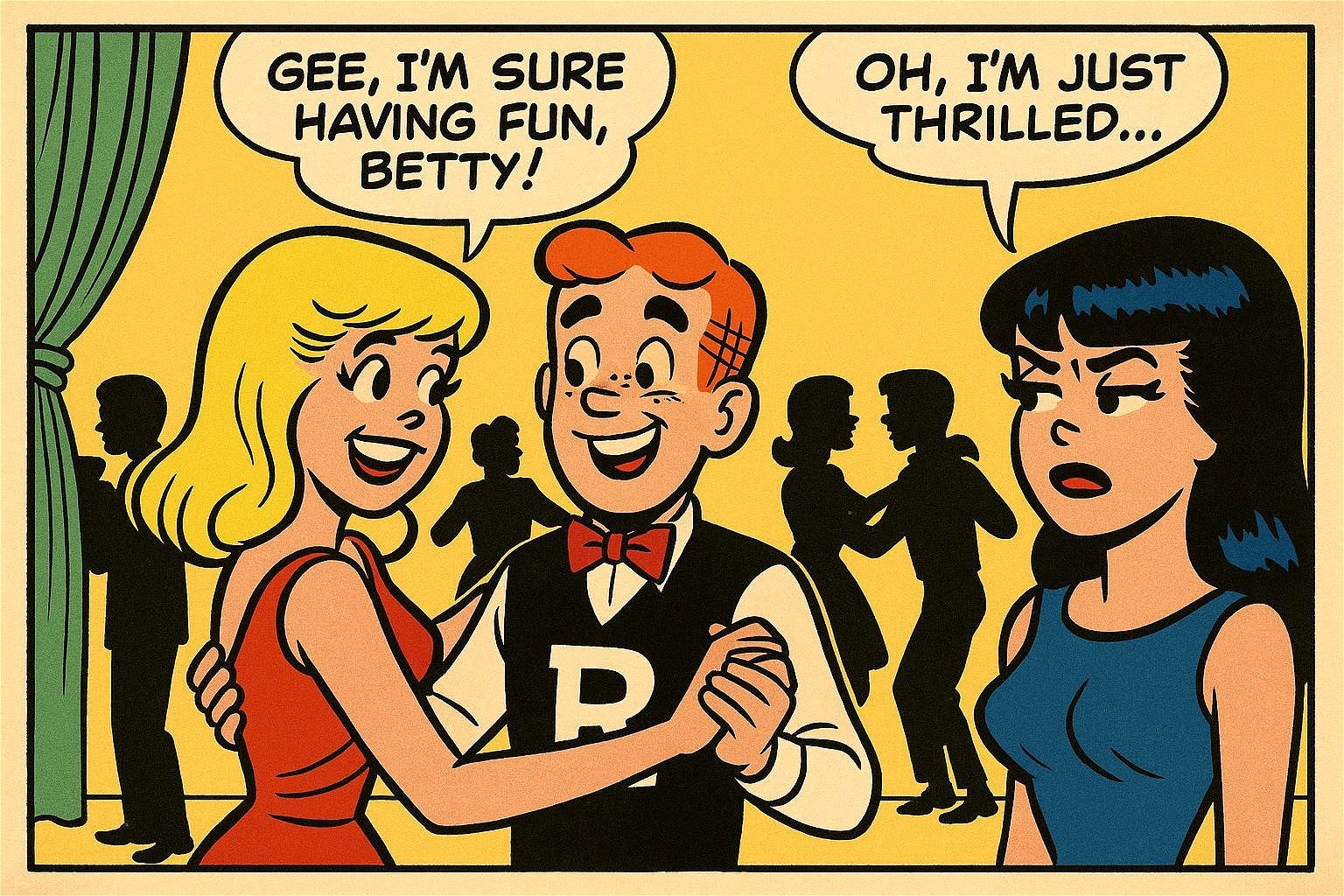
Jughead, true to form, remains Jughead — somehow immune to type-2 diabetes despite mainlining cheeseburgers for what must be sixty consecutive years. His metabolism alone qualifies as science fiction.
Reggie, meanwhile, turns into a soap opera villain, doing something shady to someone for some reason. Nobody really remembers the details. Not even Reggie, probably.
My memories of this whole affair are sketchy. Then again, so was the whole idea.
Maybe Archie was never meant to grow up. Maybe none of them were. Maybe Riverdale only really works when it’s frozen in time, like a Norman Rockwell painting if Rockwell had been sponsored by Coca-Cola and Chevrolet.
Some worlds aren’t supposed to survive reality.
They’re better off staying perfect, plastic, and forever young — right where we left them.
Connect with me on Facebook
About the Creator
Tom Baker
Author of Haunted Indianapolis, Indiana Ghost Folklore, Midwest Maniacs, Midwest UFOs and Beyond, Scary Urban Legends, 50 Famous Fables and Folk Tales, and Notorious Crimes of the Upper Midwest.: http://tombakerbooks.weebly.com
Enjoyed the story? Support the Creator.
Subscribe for free to receive all their stories in your feed. You could also become a paid subscriber, letting them know you appreciate their work.
Comments
There are no comments for this story
Be the first to respond and start the conversation.