
A Connecticut Yankee in King Arthur’s Court by Mark Twain
Why It's a Masterpiece (Week 127)

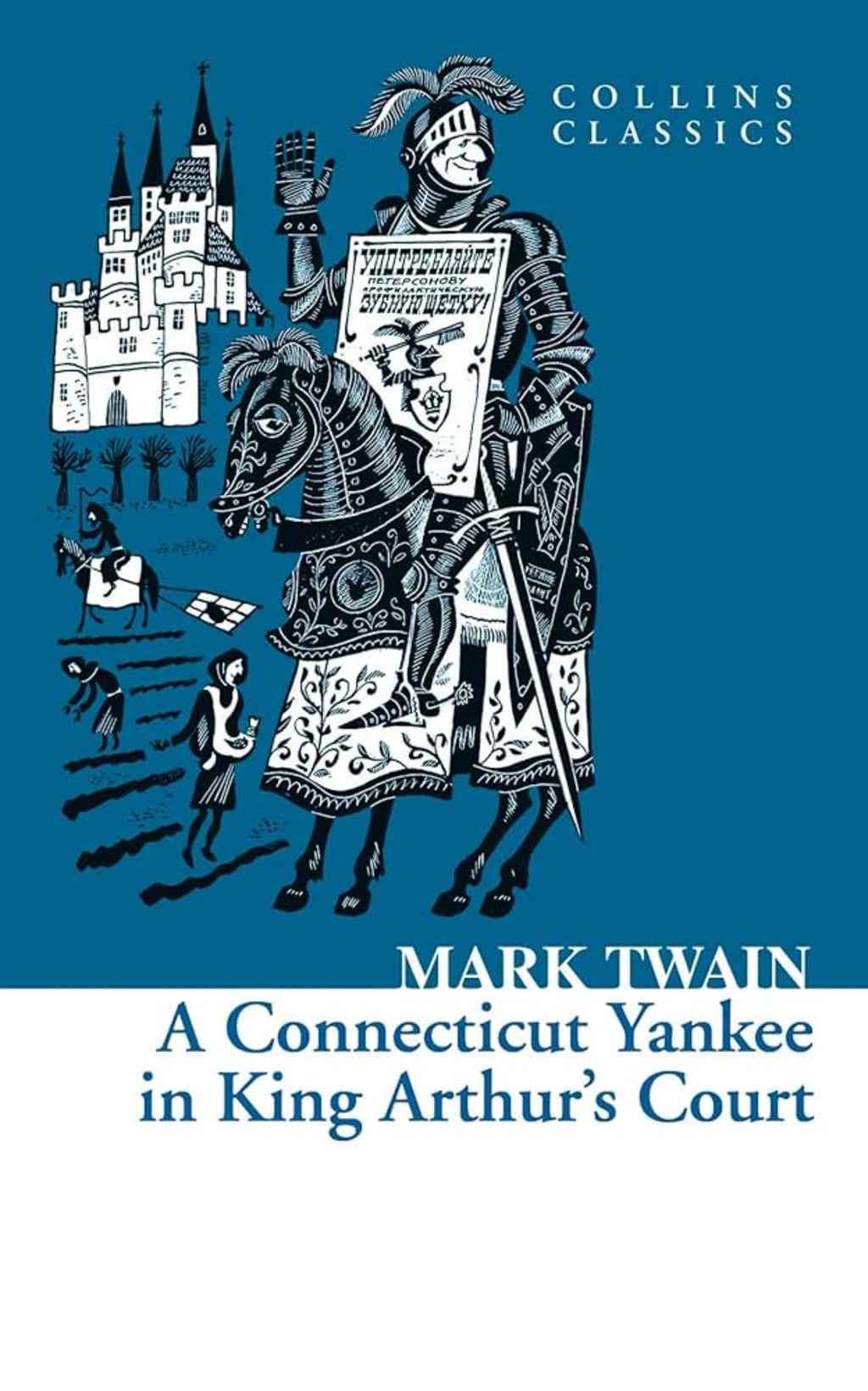
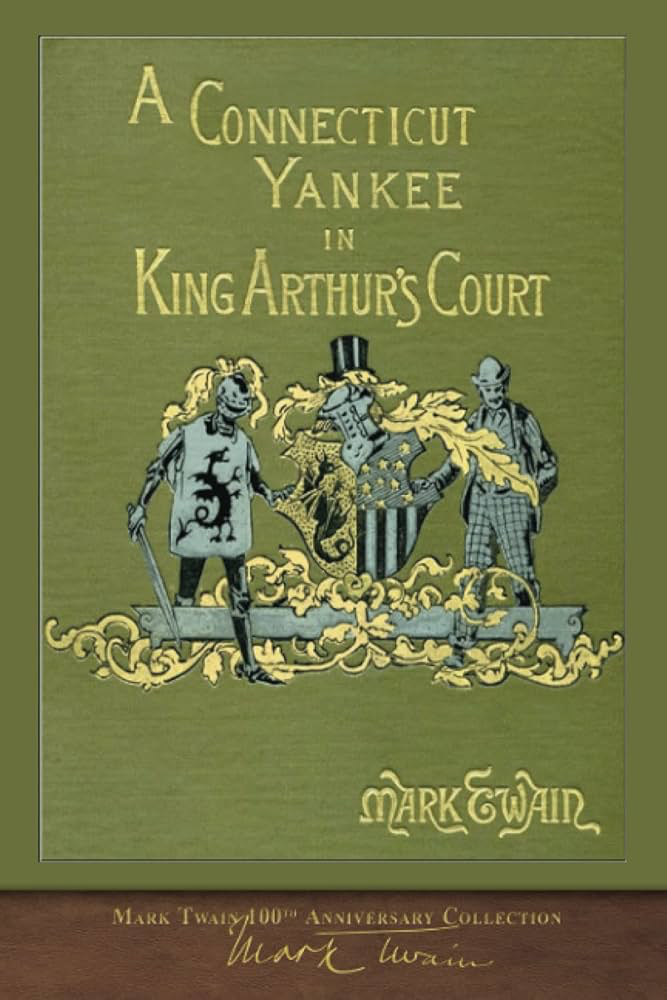
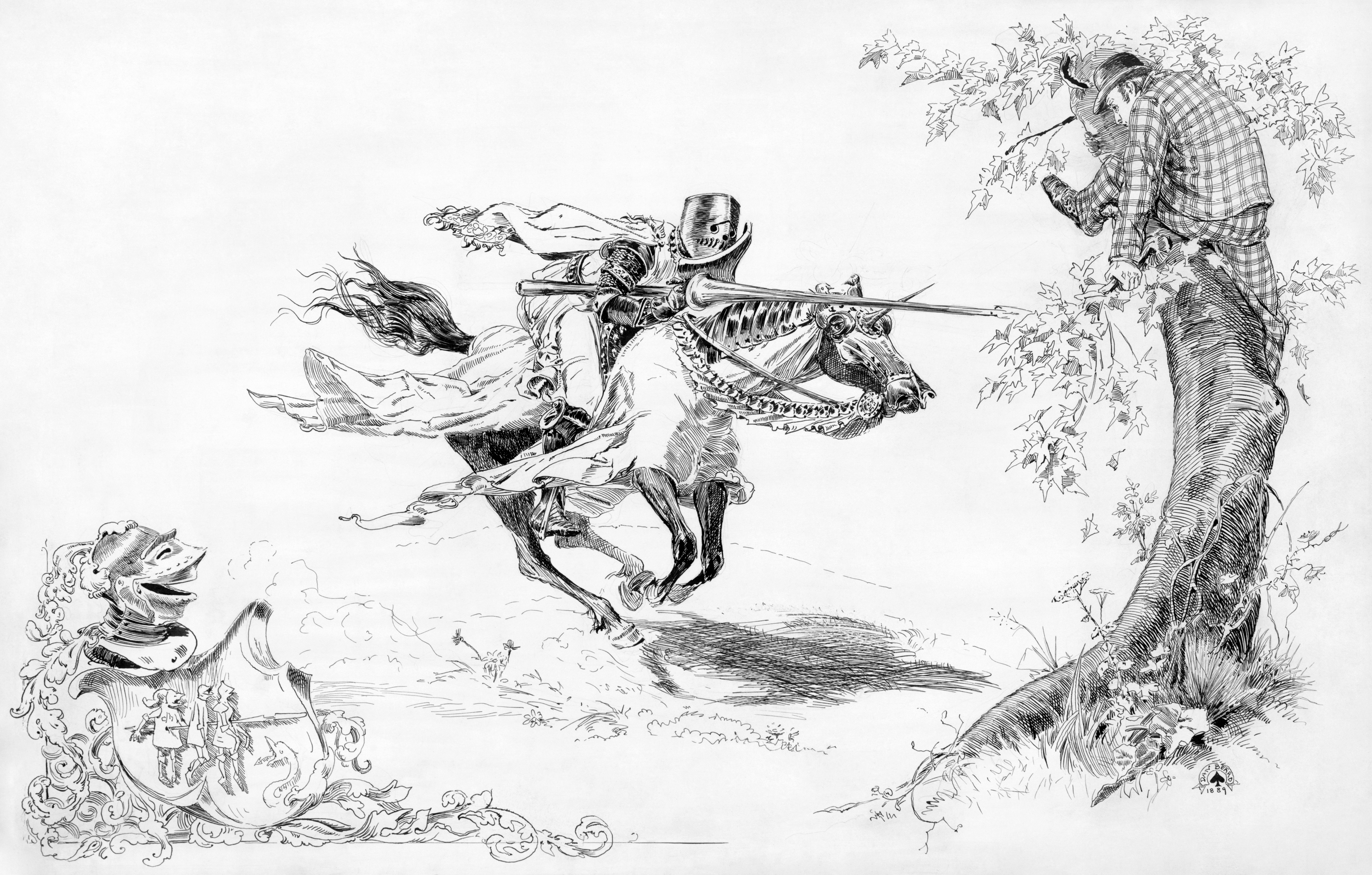
This novel was published in December 1889 in the United States by Charles L. Webster & Co which, at the time was already the publishing company that dealt with the work of Mark Twain. The first edition contained over 200 illustrations by Dan Beard, whose satirical style matched Twain’s tone - something that some of the newer editions often miss out.
It was written in the 1880s, at a time where scientific progress was at the forefront of many minds. Apart from this Twain was also deeply interested in technology, scientific progress, and social reform - wanting there to be a way to change the state of the world with new ideas and progressive thinking.
The novel combines elements of science fiction, satire, and Arthurian romance, telling the story of Hank Morgan, a 19th-century engineer from Hartford, Connecticut, who is mysteriously transported back to 6th-century England and attempts to modernise King Arthur’s realm.
Plot
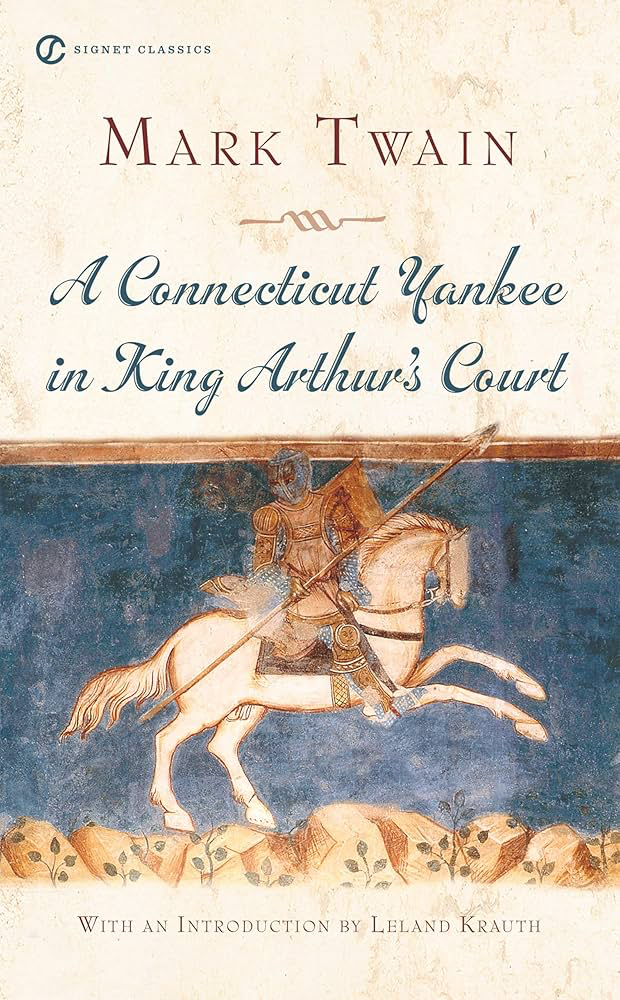
Hank Morgan, a skilled engineer from 19th-century Connecticut, is struck on the head during a quarrel at his factory. When he regains consciousness, he finds himself in early medieval England during the reign of King Arthur. Initially bewildered and mistaken for a foreigner, he is captured by Sir Kay and taken to Camelot as a prisoner. The court views him with suspicion and ignorance, regarding him as a curiosity. Facing the threat of execution, Hank quickly realises he must use his knowledge of modern science and technology to secure his safety in this unfamiliar and dangerous world.
Scheduled for execution by burning, Hank remembers that a total solar eclipse is due to occur on the appointed day. Using this foreknowledge, he convinces King Arthur and the court that he possesses powerful magical abilities, threatening to blot out the sun unless released. When the eclipse takes place exactly as predicted, the people are awestruck, and Hank is immediately elevated to a position of power. He is declared “The Boss” and granted authority second only to the king himself, giving him free rein to implement his ideas and introduce modern innovations into the medieval kingdom.
Seizing his newfound authority, Hank begins a campaign to modernise Camelot. He secretly sets up factories, schools, and a network of telegraphs, training select young men in modern engineering and democratic ideals. His goal is to replace superstition with rational thinking and advance the kingdom’s technology centuries ahead of its time. However, he must tread carefully, as the established Church and traditional nobility view his ideas as dangerously subversive.
Hank meets Sandy, a talkative and eccentric young woman who tells him of a supposed enchantment involving captive princesses guarded by ogres. Though doubtful, Hank agrees to help. Their journey turns comical when the “princesses” turn out to be ordinary peasant girls working on a farm. Hank’s willingness to follow Sandy’s tales nevertheless strengthens their bond, and they eventually marry.
King Arthur, intrigued by Hank’s world, accompanies him in disguise to travel among commoners and see his realm from a peasant’s perspective. This journey opens Arthur’s eyes to the suffering, poverty, and injustice endured by his subjects. They encounter harsh laws, brutal punishments, and the oppressive influence of the Church. When they try to help peasants, they are met with suspicion and hostility. Eventually, the king is mistaken for a common beggar and imprisoned.
While imprisoned, Hank and Arthur are sold into slavery. They are forced to work under cruel conditions until Hank’s men arrive to rescue them. This ordeal strengthens their camaraderie, and Arthur promises to support more of Hank’s reforms. Yet the king remains partially bound by his sense of chivalric duty and religious tradition. Hank recognises that change is slow and that medieval society’s loyalty to custom runs deep.
Hank’s reforms progress steadily: factories produce goods, printing presses circulate ideas, and his young engineers spread innovations across the kingdom. Yet resistance grows. The Catholic Church, fearing a loss of power, excommunicates Hank and his followers. Political tensions rise, and Hank understands that the situation could erupt into open conflict. Determined not to back down, he strengthens his inner circle, arms his followers with modern weapons, and prepares defences. He is convinced that technological superiority will guarantee victory over the old order. However, his confidence begins to border on arrogance, and he underestimates the deep cultural roots of medieval tradition.
When King Arthur dies, the balance between Hank’s new order and the old regime collapses. Nobles and clergy unite to overthrow him, portraying him as a dangerous sorcerer and heretic. Hank retreats to Merlin’s old cave with his loyal followers, where they fortify it using barbed wire, landmines, and Gatling guns. Soon, an army of knights advances against them. In the battle, Hank’s modern weaponry annihilates the medieval forces, leaving a field of slaughtered knights. The victory, however, feels hollow; Hank is horrified by the scale of death and the realisation that his progress has destroyed lives.
In the aftermath, the Church imposes a curse on Hank and his men, trapping them inside the cave. Disease and wounds take their toll, and most of his followers die. Hank falls gravely ill and slips into a delirious sleep. Merlin, who has always resented him, sneaks into the cave disguised as a healer and casts a spell over Hank, sending him into a deathlike slumber. Time passes without his knowledge, and the reader is left to wonder whether Hank’s efforts will ever be remembered, or whether the medieval world will simply erase every trace of his radical experiment.
Into the Book
Progress vs. Tradition
The novel explores the tension between modern knowledge and entrenched customs. Hank’s mission to introduce technology, democracy, and rational thinking to medieval England is met with suspicion and resistance. Twain shows that progress, though beneficial in theory, can provoke fear and backlash when it challenges deeply held beliefs. Even well-intentioned reforms risk cultural alienation if imposed without understanding existing values. The catastrophic ending suggests that technology alone cannot overcome social inertia and that progress imposed too rapidly can lead to destruction rather than improvement.
“You can’t reason with your heart; it has its own laws, and thumps about things which the intellect scorns.”
- A Connecticut Yankee in King Arthur’s Court by Mark Twain
Satirising Romanticised Chivalry
Twain satirises the idealised vision of the Middle Ages popular in literature of his time, showing knights and nobles as often ignorant, superstitious, and brutal. By placing a pragmatic 19th-century American among them, he highlights the inefficiency and injustice of feudalism. Hank exposes the hollowness of courtly rituals and challenges the notion that the chivalric code represents true nobility. Through absurd situations and anachronistic humour, Twain critiques the nostalgia for a “golden age” that never truly existed, revealing that progress often involves discarding cherished but impractical traditions.
“The motto of chivalry is also the motto of wisdom; to serve all, but love only one.”
- A Connecticut Yankee in King Arthur’s Court by Mark Twain
The Limits of Human Perfection
A recurring thread in the novel is Hank’s belief that education, reason, and technology can remake society. While he achieves impressive advancements, Twain underlines the stubborn persistence of human flaws such as: greed, fear, and the urge to preserve hierarchy. Hank’s failure is partly due to his underestimation of these forces and his overconfidence in his own methods. The story ultimately questions whether society can ever be perfected, or whether human nature inevitably resists utopian visions.
“A man is a man, at bottom. Whole ages of abuse and oppression cannot crush the manhood clear out of him.”
- A Connecticut Yankee in King Arthur’s Court by Mark Twain
Why It's a Masterpiece
Initial reviews were mixed. Some praised its wit and inventiveness, while others found its shifts in tone (from humour to grim violence) unsettling. William T. Stead in 1890 commented on the book. In his review in Review of Reviews, Stead called Twain’s novel “one of the most significant of our time,” describing its satire as both irreverent and audacious. He praised its appeal to the “mass of men who speak English" - looking at the idea of vernacular more than simply the storyline or tone.
Conclusion
I very much enjoyed this book when I first read it. I've read it quite a few times and each time there's something new to uncover. It's more than simply a book that goes from comedy to darkness, it is a comment about the changes in American culture. If you have not already read it, then it is highly recommended.
Next Week: The True Deceiver by Tove Jansson
About the Creator
Annie Kapur
"Et in Arcadia Ego"
***
I am:
🙋🏽♀️ Annie
📚 Avid Reader
📝 Reviewer and Commentator
🎓 Post-Grad Millennial (M.A)
***
I have:
📖 300K+ reads on Vocal
🦋/X @AnnieWithBooks
📸 ThePrancingPonyBakery
🔗 PrancingPonyBakery.com
***
🏡 UK
Enjoyed the story? Support the Creator.
Subscribe for free to receive all their stories in your feed. You could also become a paid subscriber, letting them know you appreciate their work.
Comments
There are no comments for this story
Be the first to respond and start the conversation.