
The Crown Prince Problem: Why a 600-Person Open-World Game Just Lost Its Producer
Hua Tao’s exit from Wangyue isn’t a scandal. It’s what happens when an entire generation of anime open-world projects plans for a throne that Genshin refuses to vacate.
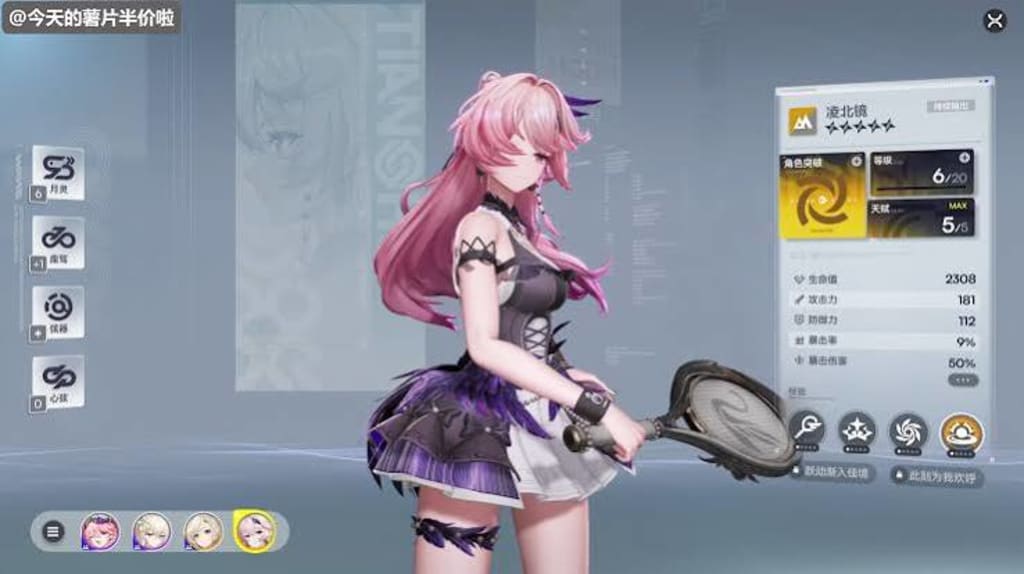
Hua Tao Steps Down as Executive Producer of Wangyue. The official line is “a difference between his personal creative direction and the project’s current needs.”
In the game industry, there is a blunter version: your strengths are no longer what the project needs.
Hua Tao’s résumé is specific. Level designer on Honkai Impact 3rd. Level lead and DLC producer on Punishing: Gray Raven. His anchors were action, levels, and combat. When Wangyue was greenlit in 2021, it was a diorama-style action anime game benchmarked against Punishing: Gray Raven. Back then, the project needed him. Then Genshin Impact blew up. Investors looked at the project again. A diorama was not enough. It had to be open world. Action was not enough. It had to be urban. Combat was not enough. It had to have a system behind it. So Wangyue went from diorama action to open world, then to anime urban open world, benchmarked against Neverness to Everness and Ananta. The team grew past 600 people. Hua Tao was still Hua Tao. The project was no longer the project. The resignation was a breakup after a mismatch.
This did not happen only to Wangyue.
Honor of Kings: World drew a cold reaction from outsiders at launch. Ananta had a launch date forced on it without sufficient testing. Fanying changed producers three times in six years. He Jia, who came from miHoYo, left at the end of 2024. Wuthering Waves stumbled at launch in 2024. None of these projects were wrong when they were greenlit. What was wrong was that they all assumed Genshin Impact would age.
In conventional mobile-game experience, flagship content games follow a template: launch, explode, peak for two or three years, then decline and cede market space to newcomers. By that template, a project greenlit in 2021 and launched around 2025 would perfectly catch the users left behind after Genshin’s tide went out. The plan was perfect. The problem was that Genshin did not retreat.
According to an optimistic third-party revenue chart, Genshin Impact’s annual revenue from 2021 was roughly RMB 30 billion, 40 billion, 32.5 billion, 27.5 billion, 21.5 billion, then RMB 12.5 billion in the first half of this year, or about RMB 25 billion annualized. A sixth-year open-world game whose revenue has not fallen sharply, and has risen this year. There is almost no precedent in mobile-game history.
MiHoYo’s left-hand-versus-right-hand strategy was more absurd. In April 2023, Honkai: Star Rail launched. Same genre. Same audience. One company using one flagship to attack another. To outsiders, it looked like self-harm. But Genshin Impact and Star Rail quickly differentiated themselves: one leaned toward daily immersion and map exploration, the other toward consuming content in concentrated weekend sessions. What looked like fighting itself became both hands beating competitors together. The anime-game users with the most spending power and willingness to invest time were almost entirely captured by miHoYo with two products.
Star Rail’s own trajectory, by contrast, matched historical experience. After two standout years in 2023 and 2024, it began a steady decline, with annual revenue sliding from RMB 20 billion to an estimated RMB 10 billion this year, RMB 5 billion in the first half. Revenue halved in its fourth year. This is the script the industry knows. But Genshin did not follow that script. It did not step down when it should have. It did not yield the market. It could still fight when it should have grown old.
It is like Kangxi outlasting the crown prince. The crown prince waited a lifetime, thinking his Imperial Father would eventually grow old and yield the throne. But Kangxi was healthy, diligent in state affairs, and fathered several more capable sons. The crown prince did not wait until he ascended. He waited himself into madness. The latecomers in the anime open-world race are those crown princes. They planned projects and set launch milestones on the assumption that Genshin would decline after three years. As a result, Genshin not only failed to decline, it brought along Star Rail to block the door.
The window is gone.
A 600-person team on Wangyue is no small number. Big investment and long cycles meant sunk costs were extremely high. Multiple pivots made them higher. Time wore down investors’ patience and the team’s confidence. Core members’ buy-in to the project’s direction faded too. Hua Tao’s departure was just the first valve to pop on that pressure cooker. More adjustments may follow, along with harsher trade-offs.
But putting all the blame on Wangyue is unfair. It simply walked into a misjudgment shared by the entire industry. When it was greenlit in 2021, no one could predict Genshin would be this strong, or that Star Rail would complete a second harvest in the same genre. Everyone was using linear experience: flagships age, users spill over, latecomers get a chance. But miHoYo is a nonlinear opponent. It does not follow cycles or common sense. It does not even follow its own company’s commercial rationality. At least to outsiders, two flagships in the same genre fighting each other is a lunatic move.
That move succeeded.
The Wangyue producer’s resignation exposes a problem: when the market leader refuses to decline, even the chance for latecomers to get on the field becomes a luxury. They waited for a throne and got a wall. They made decisions by historical experience, and history did not follow experience. A whole generation of Genshin-like projects faced the same trap. Their logic at greenlight was sound, and their choices during pivots were defensible. Their teams were large and their backers committed. But they were born in the wrong era: an era where the flagship does not die and two flagships block the door. The window is postponed indefinitely.
Wangyue is not the first, and it will not be the last. Next, every anime open-world project still in the pipeline must answer the same question: if Genshin is still not old after three years and Star Rail is still around after five, why should users walk away from them to you? If miHoYo keeps eating the market by fighting itself, what is your answer?
There is no standard answer. The era of planning project cycles by waiting for the predecessor to abdicate is over.
Hua Tao is going to incubate a hardcore action console game with a small-to-mid-sized team. Wangyue’s team is over 600 people and still in the pipeline. No one knows who the next producer to resign will be.
About the Creator
Jin
Writer of reamstories
https://reamstories.com/jin
Enjoyed the story? Support the Creator.
Subscribe for free to receive all their stories in your feed. You could also become a paid subscriber, letting them know you appreciate their work.
Comments
There are no comments for this story
Be the first to respond and start the conversation.