list
Lists of all things gaming; a collection of must-try games and the best accessories, video game characters, controllers, online communities and more.
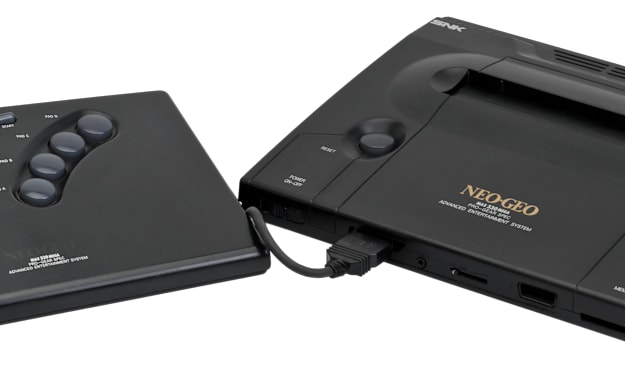
My Top 25 Neo Geo Games
The Neo Geo, or NEO·GEO if you insist, was a unique entry in the 90s gaming world. SNK aimed to corner the arcade market with their Multi-Video System, an arcade standard which used switchable game cartridges, instead of each cabinet housing a single game. They then released the Advanced Entertainment System, a home console running the same hardware as their arcade machines. This meant the AES could play arcade-perfect games. It was extremely expensive; a top-end, luxury item rather than a market leader. If you were really minted, you could get an adaptor to play the gigantic arcade carts on your home machine. SNK later released the Neo Geo CD, a cheaper CD-Rom-based home console that was otherwise more-or-less the same as the AES.
By Daniel Tessier13 days ago in Gamers
Two-Player Games You Can Play Over the Phone
When my kids were growing up, one thing we always looked forward to was family game night. We would take turns picking games, while munching on snacks and joking around. My kids are grown now, and not all of them live near me, so family game night as I knew it no longer exists.
By Janis Masyk-Jackson18 days ago in Gamers
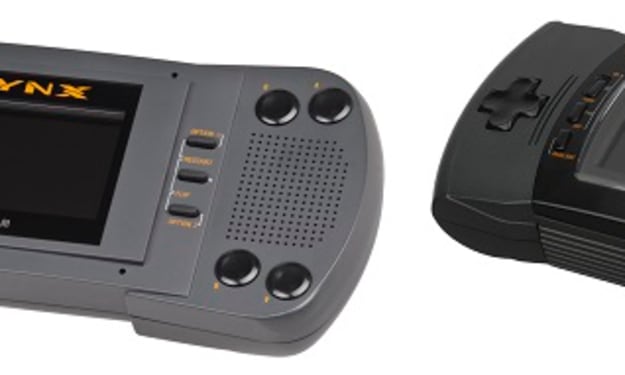
My Top 25 Lynx Games
The Atari Lynx was a notable also-ran in the original handheld console war. The Game Boy dominated the market, the Game Gear trailed behind in second. Of the original three main competitors, the Lynx came in a distant third. I think it did a little better in the UK than in most places, though. I know a few people in the early-to-mid-forties age bracket who have fond memories of it. My flatmate, who is much smarter and cooler than I, was a Lynx girl, and still champions the cause. I knew at least one kid who had a Lynx back in the day, and got the chance to play on it a few times. I can’t for the life of me remember who they were, but I do remember the console. In retrospect, it was way too big and unwieldy for a handheld, but to the small me the size and weight of it just made it seem more impressive. This was a grown-up’s machine.
By Daniel Tessier2 months ago in Gamers
My Top 25 Game Gear games
While the Mega Drive/Genesis was Sega’s major console success story, and the Master System was a hit everywhere except North America and Japan, the Game Gear was a serious contender for the handheld market. While it never came close to meeting the Game Boy’s sales, the Game Gear achieved a respectable market share, and was a big hit in the UK. I knew a lot of kids who owned Game Gears, particularly friends’ older brothers and sisters, and much like the Mega Drive it was the cooler, grown-up rival to Nintendo’s consoles. Sega leaned into this, of course, with the sleek black design, and even the name, which deliberately made the Game Boy sound like the kids’ version.
By Daniel Tessier3 months ago in Gamers
The Ball That Sees Everything
Every four years, billions of eyes lock onto a single object—a ball. It flies across stadiums, curves through defenders, and lands in moments that define history. To fans, it’s just a football. But beneath its surface lies a world of technology, precision, and engineering that few ever imagine. Long before it reaches the world’s biggest stage, the journey of a FIFA World Cup match ball begins in a place far from roaring crowds—inside a highly controlled manufacturing facility. Here, raw materials are transformed into one of the most advanced pieces of sports equipment ever created. It starts with synthetic materials designed for performance. These aren’t ordinary plastics or rubber. Each layer is engineered to serve a purpose—strength, flexibility, control. Cushioning layers are added to give players that perfect touch, while hidden reinforcement layers ensure the ball maintains its shape even after thousands of powerful strikes. Each sheet of material is carefully bonded under pressure. This process removes even the smallest pockets of air, ensuring durability and consistency. What begins as a flat composite sheet soon becomes something more recognizable. Precision cutting tools slice the material into perfectly shaped panels—pentagons and hexagons that will later form the iconic football design. But shape alone isn’t enough. The surface of each panel is textured to influence how the ball moves through the air. Aerodynamics play a crucial role at the professional level, where even the slightest variation can change the outcome of a match. Once shaped, the panels move to the design stage. High-precision printing machines apply intricate graphics and tournament branding. These designs aren’t just for appearance—they make the ball instantly recognizable to millions watching around the world. While the exterior panels take shape, the heart of the ball is created separately. A specialized rubber bladder is formed, designed to hold air while remaining flexible under constant impact. A precision valve is inserted, ensuring the ball maintains consistent pressure throughout a match. But modern World Cup balls go even further. Inside the bladder, a small but powerful motion-tracking sensor is installed. Encased in a protective capsule, this technology can detect every touch, pass, and shot. Before being approved, it must endure intense testing—simulating the force of professional play. Once ready, the assembly process begins. The bladder becomes the core, and one by one, the panels are attached around it. At first, only a few panels cover the surface, leaving much of the bladder exposed. But slowly, the structure grows. Pentagons and hexagons interlock, forming the familiar spherical shape. This stage requires incredible precision. Each panel must align perfectly, or the ball’s performance could be affected. Workers carefully position every piece, building the shell step by step until the entire surface is covered. Yet, at this point, the ball is still incomplete. The panels are only temporarily held in place. To transform it into a true match ball, the structure undergoes thermal bonding. Heat and pressure permanently fuse the panels together, creating a seamless, durable outer shell. After bonding, the ball is cooled under controlled conditions. This step stabilizes its shape, ensuring perfect roundness—a critical factor for consistent flight and bounce. For the first time, the ball is complete. But its journey isn’t over. Each ball undergoes rigorous testing in laboratory conditions. Engineers measure its bounce, flight stability, and durability. The internal sensor system is also verified, ensuring it can accurately track movement during matches. Only after passing every test does the ball move to the next stage—real-world play. It enters training grounds where elite athletes put it to the test, replicating the intensity of competition. Finally, after months of engineering, manufacturing, and testing, the ball reaches its ultimate destination: the FIFA World Cup. Under bright stadium lights, surrounded by tens of thousands of fans and watched by billions more, the ball takes center stage. Every pass, every shot, every goal—it records it all silently, hidden beneath its surface. To the world, it’s just a ball. But inside, it’s a masterpiece of science, design, and innovation—quietly shaping the biggest moments in football history.
By Behind the Curtain3 months ago in Gamers
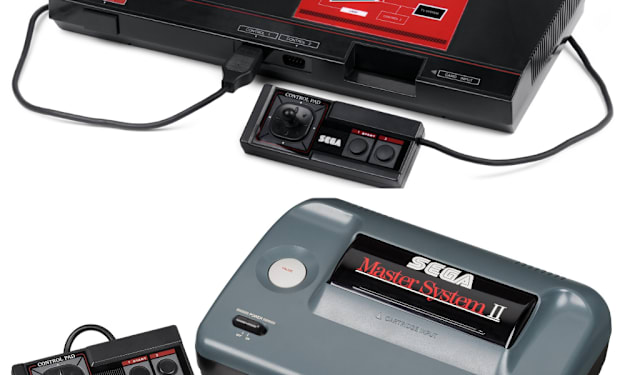
My Top 25 Master System games
The Sega Master System is one of those consoles that was either a huge deal or a mere also-ran, depending on your age and where you grew up. It was Sega's first true international release, arriving in different regions between 1986 and 1989, followed by the cheaper, more streamlined Master System II in 1990. In North America and its native Japan, it hardly made a dent. In the UK, Australia, New Zealand and much of Europe, it was a huge hit, outselling the NES for several years. In Brazil, it was even bigger, with local manufacturer Tec Toy releasing Master System variants well into the 21st century.
By Daniel Tessier4 months ago in Gamers
Exploring Endix Expo: An Overdue Overview - Top 7 Unforgettable Indie Games Landing On My Wishlist
Endix Expo feels like a hybrid between PSO2:NGS‑style modular housing and Second Life’s stitched‑together vertical sims. Every booth in Endix's indie showcase is a self‑contained micro‑environment built from different pieces. The way you actually move through the space, with rooms streaming in as you cross thresholds and challenges perched on rooftops, is pure SL energy.
By Total Apex Entertainment & Sports4 months ago in Gamers
Top 5 White Label Poker Software Providers in 2026: Complete Guide for Poker Startups, Casino Operators & Gaming Entrepreneurs. AI-Generated.
The online poker industry has changed a lot in the last decade. A few years ago, starting an online poker room required a huge investment, a development team, security experts, server engineers, payment gateway integrations, compliance consultants, and months of testing.
By Pokerscript5 months ago in Gamers
From Boring to Beautiful: How a Stylish Name Generator Transforms Your Online Identity
In today's digital world, your name is more than just a label it's your first impression. Whether you're setting up a gaming profile, creating a social media account, or building a personal brand, the way your name looks matters more than ever. A plain, default username blends into the crowd, but a beautifully crafted, decorative name instantly grabs attention. That's exactly where a stylish name generator comes in.
By Mubashir Safeer5 months ago in Gamers