
Phantom Blade Zero's 88 Isn't a Disappointment. It's Exactly What Chinese Games Needed.
A combat system sharper than anything else this year, wrapped around visible industrial seams. Both facts tell us more than a perfect score would.
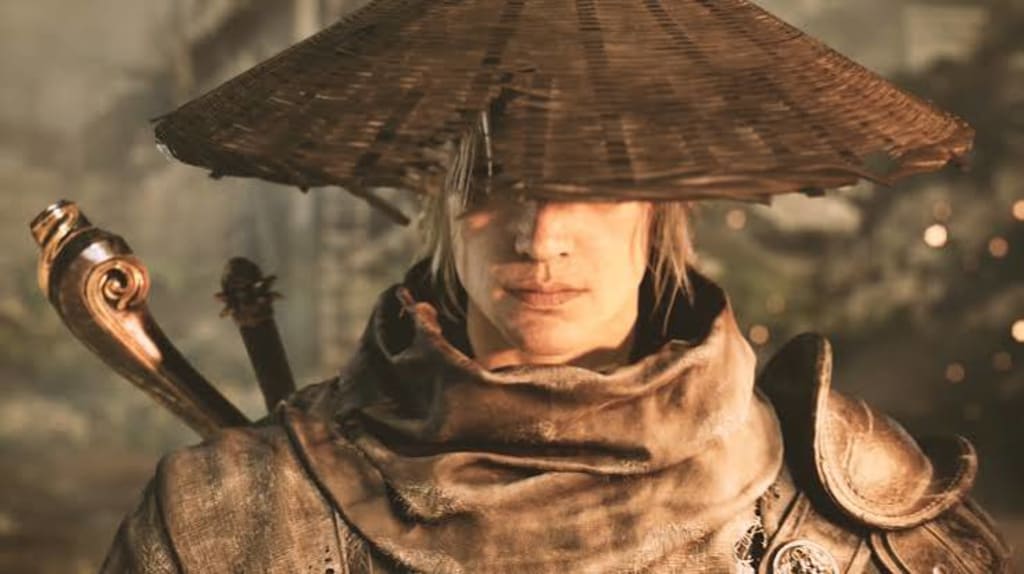
The completion screen read: 36 hours and 25 minutes, good ending, 89% total collection. The reviewer noted that "thanks to the thoughtful map guidance, I took far fewer detours," so those 36-plus hours almost all landed on solid ground. Put that next to a Metacritic score of 88 and an IGN 9, and my judgment is this: it meets expectations, but not the expectation of flawlessness. It meets a harder one: that a Chinese action game has finally reached the international genre benchmark in its core experience.
1. "Expectation" Has More Than One Layer
There were at least two layers of expectation around Phantom Blade Zero. The first: after Black Myth: Wukong, can the next Chinese AAA game carry the baton? The second: in action games, the genre that most ruthlessly tests hard craft, can it do something no one else can replicate?
The Metacritic 88 and IGN 9 mainly answer the second question. They prove that S-Game was not trading on a "Chinese game" label for leniency. On the pure action track, with a highly distinctive system, it delivered an experience at international first-tier quality. But it does not fully satisfy the first layer's fantasy of a seamless baton pass. It is not an upgraded copy of Black Myth, nor an industrial behemoth polished to invulnerability through sheer scale and visuals. Its high score comes from one strength sharp enough to cut, not from being good at everything.
2. The Strength: A Combat Grammar You Have to Relearn
IGN calls it "incredibly smooth," and outlets call it one of the best action games in recent memory. Both point to the same thing: its combat rhythm is different from almost every comparable game out there.
The reviewer was honest. Early on, he relied on the defensive-counter habits built by other games, got beaten to near despair by certain bosses, and complained plenty that it was "unreasonable." Only when he stopped turtling and threw himself forward did something click. That shift did not come from narration. A concrete action completed it: he stopped waiting for the opponent to move first. He pressed forward.
Three layers of design support that experience.
First, easy-to-learn controls. The moves look spectacular, but your hands only need two attack buttons and a small number of combos. The developers put it plainly: this combat "is not trying to challenge some depth or execution ceiling... the operation is kept within a moderate range." When your hands are not straining, your mind can spend everything on offense, defense, advance, and retreat.
Second, the Sha Qi system. Sha Qi functions as both a stamina bar and a posture bar. Empty it, and you fall into a huge, helpless stagger. To efficiently drain a boss's Sha Qi, seventy percent of the work has to go into offense. The more conservative you are, the more passive you become. The more you dare to press in, the more the rhythm stands on your side.
Third, the action performance. More than twenty martial artists and stunt performers spent three years on motion capture, bringing the bone-on-bone, blade-on-blade flavor of kung fu cinema's golden age into the controller. The reviewer said many fights were finished "with teeth clenched." That sense of "loss of control" is the most seductive part, not a defect. You know the car is going very fast, and you still want to press the accelerator again.
Right after that emotional high, the reviewer added a very ordinary detail: by the second half, he had started worrying about "how much time is left before the deadline." That one line pins the emotion back to the ground and puts "thrilling" and "exhausting" on the table at the same time.
3. The Foundation: The Strength Is Not a Castle in the Air
If only the combat were cool, it would at best be a "good-looking video." The 88 also comes from a solid foundation.
The map is assembled from eight oversized boxed levels. The design principle is clear: do not make things hard on the player. There are not too many memory-testing forks. When you hit a lock or a mechanism, the solution is usually within a few hundred steps. Pang Town deserves special mention. In a Chinese game, this is the first time I have seen a Chinese architectural complex built at AAA industrial scale. The last time I felt I had walked into a city was Elden Ring's Leyndell, Royal Capital.
The equipment system grounds the "cool" in builds. The protagonist can equip two weapons, two Phantom Arms, and up to six accessories. Every weapon has its own move set and combat style. In one playthrough each can reach level 30, unlocking an active or passive skill every five levels, and special materials can forge its soul and unlock its final form. Phantom Arms consume resources to use, often serving as the finishing touch, and some are keys to map locks. Buildcraft and combat reads split the load roughly half and half. Changing a weapon changes a way of fighting, not just numbers.
Items and attributes are deliberately reduced. Only recovery medicine and secret medicine, with a few types under each. Attribute upgrades concentrate on attack, break, HP, and Sha Qi. The skill tree is clear at a glance and free to respec. Quests are color-coded (gold for mainline, purple for key sidequests, white for ordinary sidequests), and the two endings only require all gold mainline and purple key sidequests. Puzzles are almost nonexistent. The reviewer's exact words were "fortunately that was never the point."
The volume is content-rich in the way only Chinese productions tend to be. Enter a new map, grind away for an hour, switch to the menu, and completion has just passed 10%. The reviewer said an ordinary player would light up at that number, while he, as a reviewer, stared blankly. That detail is more concrete than any adjective about "content-rich."
Art and music are a distinctive "kung fu punk." Within ancient-style symbols you run into the eeriness of Chinese horror, the strangeness of Chinese Cthulhu, the grotesquerie of Chinese SCP. Folk melodies interweave with electronic music and rock. Before the Green Dragon Crescent Blade splits out its fierce arc of light, the aura the protagonist takes on is the best possible footnote to Guan Yu's line: "In my eyes, they are no more than clay chickens and pottery dogs."
4. The Gaps: Industrial Accumulation Cannot Be Skipped
Why 88 and not 90-plus is also clear.
Performance: most of the time it holds a stable 4K 60 fps, but there are occasional slight frame drops during large scene transitions. Reuse: in the second half, reskins and recycled bosses and mobs increase noticeably. The reviewer's words were "occasionally irritating." Jumping and exploration: in combat, Soul can soar into the sky and burrow into the earth. In exploration, he cannot even climb onto a kang, and a waist-high ledge stops him. Details: voice volume fluctuates, clipping occurs, standing conversations look stiff, and walking can be inexplicably tripped by a rock.
These are gaps in industrial maturity, not collapses of design philosophy. Rockstar has the spare capacity to obsess over the thermal expansion and contraction of a horse's testicles. S-Game is still straining to make picking up a weapon from different directions feel smooth. This is tuition Black Myth paid, and Phantom Blade Zero cannot skip a cent of it.
On narrative, the reviewer could only skim because of time pressure, but the through-line is clear and does not rely on fragmentary storytelling to keep you hooked. A man with only sixty-six days to live moves from saving himself to protecting others. In a jianghu of intrigue and human feeling, the fated duel between Soul and Left Soul ties everything together. It is not a narrative masterpiece, but it is never muddled.
5. Where 88 Stands
Put Phantom Blade Zero into the scoring coordinate system of action games, and its position becomes clearer.
Sekiro: Shadows Die Twice has a Metacritic 90. It represents the same "offense as defense" rhythmic revolution and is the most direct reference point. Devil May Cry 5 has an 88. It is the peak of traditional high-speed action, tied with Phantom Blade Zero, but on a completely different stylistic path. Black Myth: Wukong has an 81. It is the pioneer of Chinese AAA. Phantom Blade Zero's 88 is about seven points higher, meaning it has climbed a step in the maturity of the core action experience.
That position says S-Game succeeded on the pure action track, the one that most tests hard craft, with a highly distinctive system, delivering an experience at international first-tier quality. Its relationship with Black Myth is not replacement, and even less a tug-of-war for bragging rights. Together they prove that Chinese single-player games can reach world-class height in different genres. Liang Qiwei said two years ago that single-player game companies basically do not compete with one another. They only share the dividends of expanding the market together. We used to call Black Myth "the first college student in the village." The sign that matters is that we finally have a university of our own. That is a fine line, but I will not elevate it here. 88 is 88. It is a report card, not a monument.
6. Ending: The Expectation Was Never Perfection
We do not choose a game because it is good at everything. What makes a game stand is a strength no one else can replicate. When that strength grows long enough to become a long sword, like the wooden sword from the protagonist's childhood in Phantom Blade Zero, it can still stir the world. There is a philosophy of Chinese kung fu at work here: when the skill reaches its limit, you no longer need a divine weapon.
In the game, a man whose heart has been pierced uses the last sixty-six days of his life to find his heart again. Outside the game, a person took nearly twenty years of detours and finally found his own heart again. Move yourself; hold nothing back. That refusal to hold back, that willingness to move yourself first, is the greatest strength of Chinese single-player games.
So back to the original question: IGN 9, Metacritic 88. Does it meet expectations?
Yes. Because my expectation was never that it be flawless. It was that it do something only it can do in the place that matters most. It did. 88 is not the finish line. It is a fitting starting point. It tells the market that a Chinese action game can stand on the world stage on the strength of its strongest asset. It tells the industry that gaps must be acknowledged and tuition must be paid. For action game fans, this is an invitation almost impossible to refuse. For Chinese single-player games, it is a new foundation stone.
After finishing the game, the reviewer glanced at the time: 3 a.m. He turned off the game. On the corner of the desk sat half a cup of cold tea and a box of stomach medicine. Tomorrow he still had to write. That is the everyday reality after 88.
About the Creator
Jin
Writer of reamstories
https://reamstories.com/jin
Enjoyed the story? Support the Creator.
Subscribe for free to receive all their stories in your feed. You could also become a paid subscriber, letting them know you appreciate their work.
Comments
There are no comments for this story
Be the first to respond and start the conversation.