
The Greek Filmmakers in the Pantheon of International Cinema
From political struggle to the poetry of memory: how Costa-Gavras and Theo Angelopoulos transformed history, human experience and cinema itself.

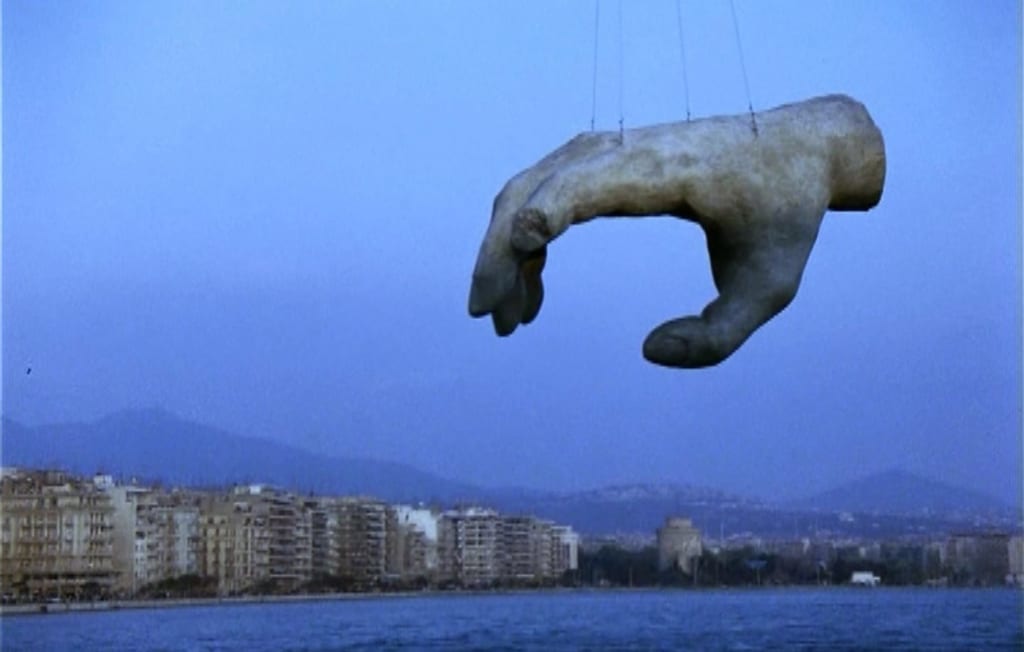
Greece is a relatively small country, at least geographically, with an extraordinary cultural and historical inheritance. When people speak about its contributions to civilisation, they usually return to antiquity, and I cannot blame them. Ancient Greek philosophy, literature, theatre and art have influenced human thought for centuries. But I have always felt that concentrating exclusively on the ancient world risks overlooking the remarkable cultural achievements of modern Greece. From poets such as George Seferis, C. P. Cavafy and Yannis Ritsos to painters, musicians and filmmakers, Greece has continued to produce artists whose work extends far beyond its national boundaries.
I would like to write more about these figures in the future, particularly our poets and their influence upon literature and human thought. For now, I want to introduce two filmmakers whose work I consider indispensable to international cinema: Costa-Gavras and Theo Angelopoulos. Both achieved extraordinary international recognition, although their cinematic languages are remarkably different. Their films have also influenced my own understanding of how art can investigate political and social reality without becoming a simple reproduction of it.
Costa-Gavras: When Cinema Becomes a Political Act
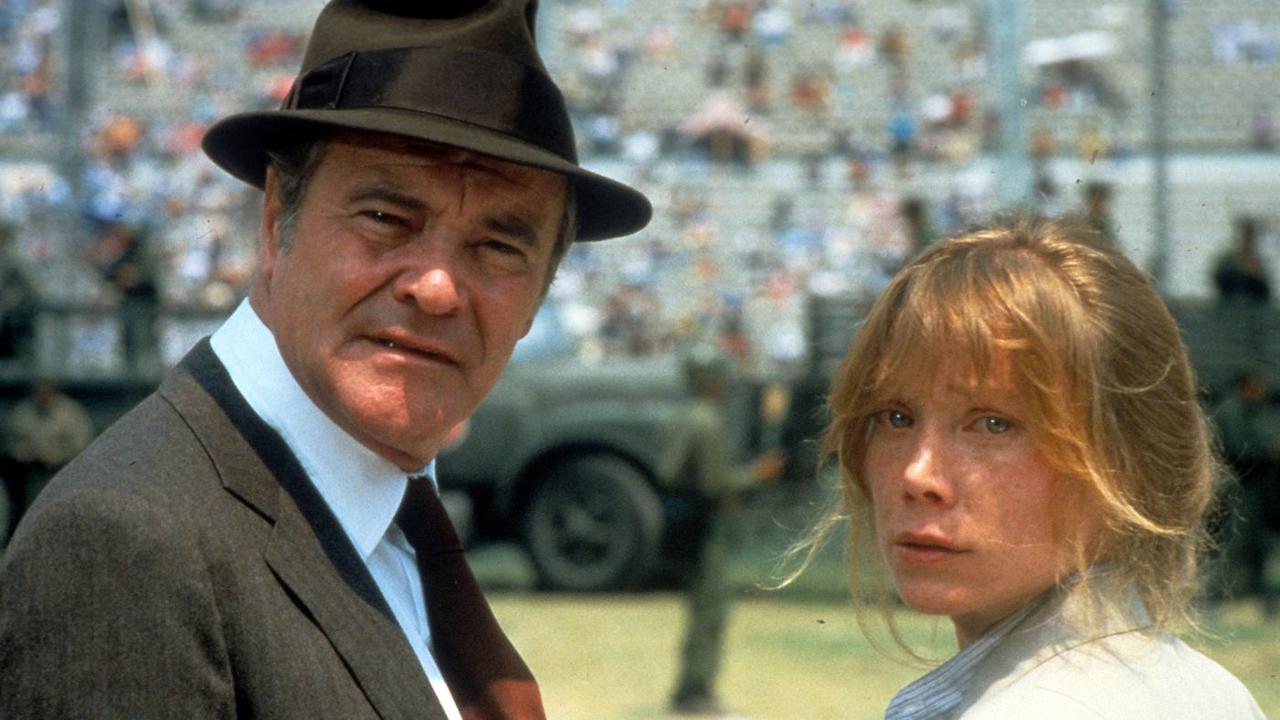
I find it difficult to discuss political cinema internationally without mentioning Costa-Gavras. His film Missing (1982) takes us to Chile during the military coup of September 1973, when General Augusto Pinochet overthrew the government of Salvador Allende. The story follows the father and wife of Charles Horman, an American journalist and filmmaker who disappeared and was killed during the repression that followed the coup. Through their desperate attempts to discover what happened to him, the film gradually exposes the violence of the dictatorship and raises disturbing questions about the involvement and responsibility of American authorities.
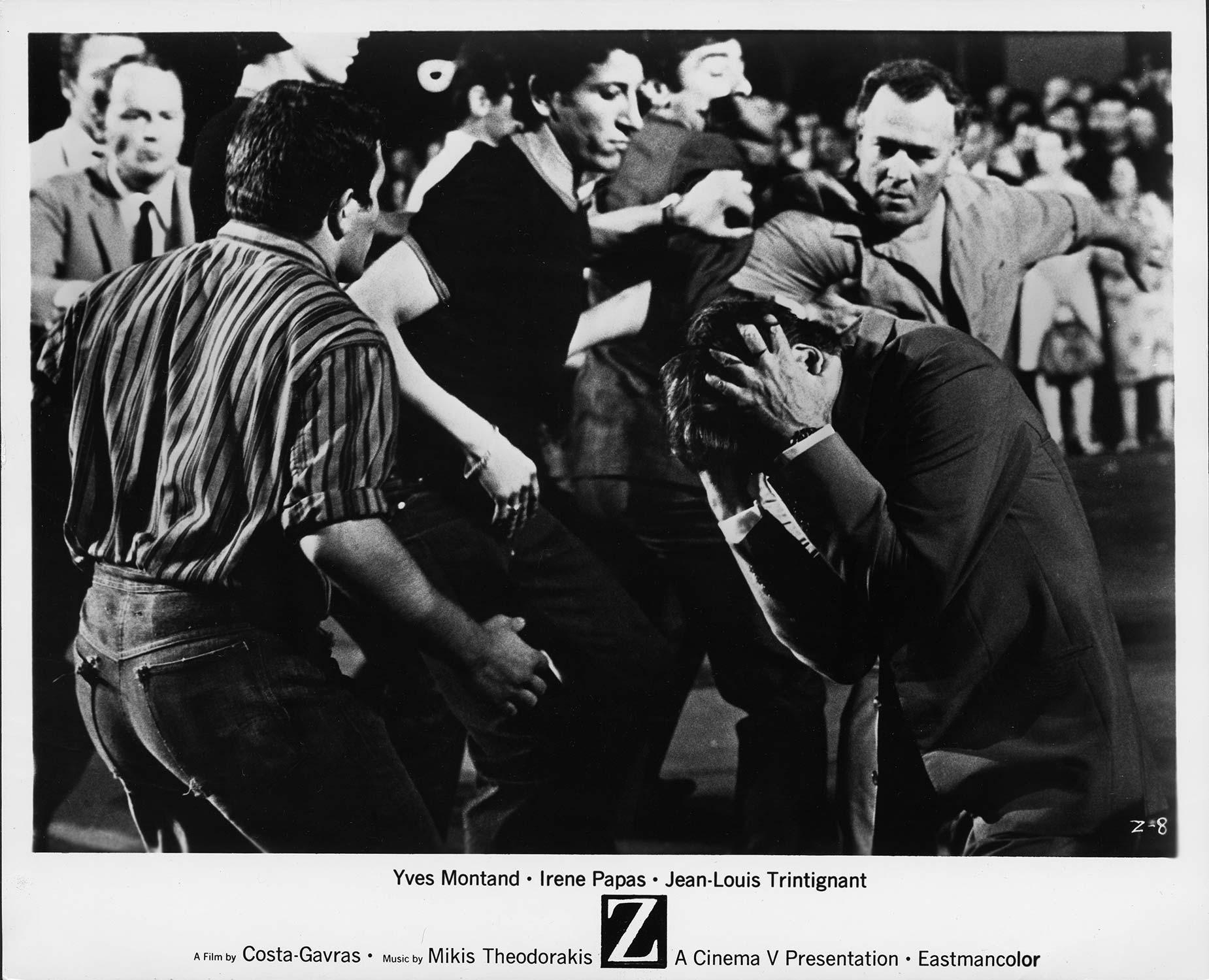
What makes Missing particularly compelling is the way Costa-Gavras approaches a major historical event through the experiences of two individuals. Their search becomes something more than an investigation into a disappearance. It confronts them with political institutions whose actions and explanations increasingly contradict the ideals they are supposed to represent. Another extraordinary film, Z (1969), brings us back to Greece and the assassination of Grigoris Lambrakis, a physician, athlete, parliamentarian and peace activist murdered following a political gathering in Thessaloniki in May 1963. Inspired by Vassilis Vassilikos's novel of the same name, the film examines the assassination and the attempt by elements of the political and security establishment to conceal responsibility for the crime. Its release during the Greek military dictatorship of 1967–1974 gave the story an even greater political significance.
In both films, Costa-Gavras transforms historical events into cinema without sacrificing their political importance. With remarkable performances, suspenseful storytelling and a powerful sense of direction, he brings the viewer into the experiences of people confronting injustice and institutions determined to protect their authority. I would argue that his films are more than historical dramas. They are political acts, not because they merely tell the audience what to believe, but because they expose the mechanisms through which power can operate against the very people it claims to protect. What I especially admire is that Costa-Gavras allows the circumstances and actions of his characters to reveal the injustice. His political convictions are unmistakable, yet his films possess a dramatic force that cannot be reduced to propaganda.
Theo Angelopoulos: Cinema as Poetry
From Costa-Gavras, whose films can awaken a desire for political action, I want to turn to a filmmaker whose individual scenes can almost be experienced as poetry. Theo Angelopoulos approached the political and sociological history of Greece through a remarkably different cinematic language. His long, carefully composed shots, the movement of characters across landscapes and the relationship between silence, memory and dialogue create something that I find difficult to describe as conventional storytelling.
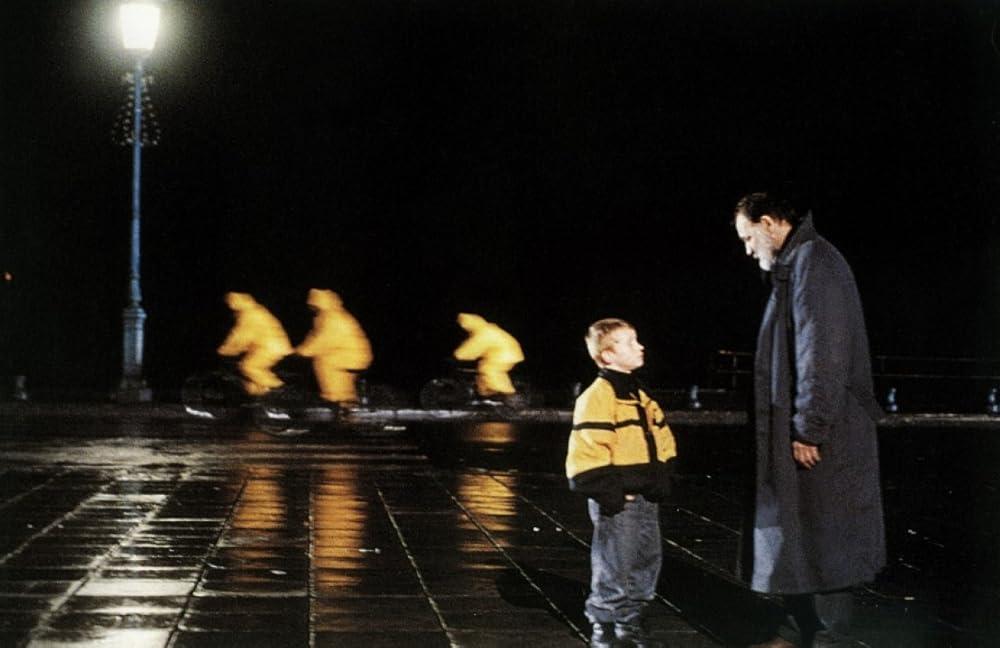
In Eternity and a Day (1998), we follow Alexander, an ageing writer in Thessaloniki who is approaching the end of his life. He has been working on the unfinished poetry of Dionysios Solomos, one of the most important figures of modern Greek literature, whose work is inseparable from the Greek struggle for independence. As Alexander revisits his memories and encounters a young Albanian boy, the film gradually brings together personal loss, migration, loneliness and the difficulty of understanding a life that is coming to an end. What fascinates me about Angelopoulos is his ability to make the movement between past and present feel almost inseparable from the characters themselves. Their memories do not merely interrupt the narrative. They become part of the world through which they continue to live and understand their experiences.
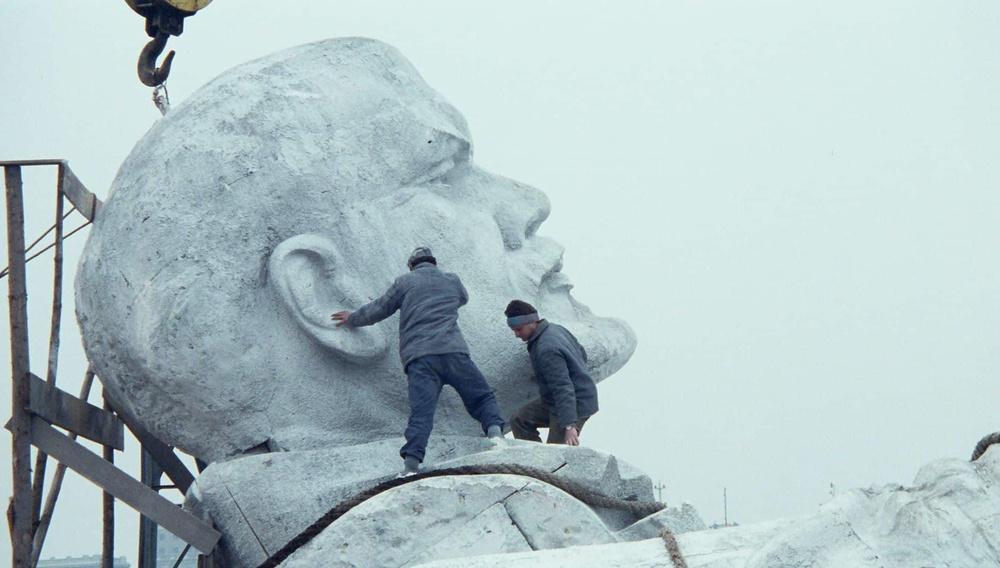
In Ulysses' Gaze (1995), another lost figure, this time a Greek-American filmmaker played by Harvey Keitel, travels across the troubled Balkans of the 1990s in search of three undeveloped film reels by the Manaki brothers, pioneers of Balkan cinema. His journey takes him through countries marked by political divisions, the collapse of former ideological arrangements and the violence of the Yugoslav wars. Yet the search for these forgotten images gradually becomes something more personal. Is he searching for the beginnings of cinema in the Balkans, for a lost cultural identity, or for something within himself that he can no longer recognise? There is something beautifully unsettling about this journey. A fictional character searches for images of a past that has almost disappeared, while the historical world surrounding him is undergoing another profound transformation. Angelopoulos does not need to recreate political events through conventional dramatic action to communicate their consequences. The landscape, the characters' silences and the places through which they wander become inseparable from the historical circumstances that have shaped their existence. Both films demonstrate how fiction can communicate something deeply recognisable about human experience. Their poetic imagery does not remove them from political reality. It allows us to encounter that reality through memory, relationships and the emotions of individuals attempting to find their place within history.
Beyond the Limits of Cinema
Costa-Gavras and Theo Angelopoulos developed different ways of approaching political history. One draws us towards the mechanisms of power, institutional responsibility and injustice. The other invites us to wander through the memories, landscapes and experiences of people whose lives have been shaped by historical change. Yet I would not separate them entirely. Angelopoulos is as politically concerned as Costa-Gavras, while the latter is equally capable of understanding history through profoundly personal experiences. What connects them, in my eyes, is their ability to transform cinema into something more than the narration of events. Their films encourage us to reconsider the relationship between individuals and the societies in which they live.
I have always believed that art can reach aspects of human experience that historical accounts, political explanations and everyday language do not necessarily exhaust. These two filmmakers offer remarkable examples of that possibility, although through very different artistic methods. Their international recognition is well established. Z won the Academy Award for Best Foreign Language Film; Missing received the Palme d'Or at Cannes in 1982; Ulysses' Gaze won the festival's Grand Prix in 1995; and Eternity and a Day received the Palme d'Or in 1998.
But their significance cannot be measured by awards alone. For me, the films of Costa-Gavras and Theo Angelopoulos remain among the most compelling expressions of what cinema can achieve when artistic imagination encounters history, political reality and the contradictions of human existence. They belong in the pantheon of international cinema, not merely because of the recognition they received, but because their films continue to offer us different ways of looking at the world.
Written and published by Sergios Saropoulos
Sources and Selected Bibliography
The Criterion Collection. Missing (1982), directed by Costa-Gavras. Historical and cinematic context of the disappearance and killing of Charles Horman during the Chilean coup.
https://www.criterion.com/films/769-missingThessaloniki International Film Festival. Z (1969), directed by Costa-Gavras. Historical background on the assassination of Grigoris Lambrakis and the film's political significance.
https://filmfestival.gr/en/films/z/The Criterion Collection. Z (1969). Film information, production credits and critical commentary.
https://www.criterion.com/films/1400Thessaloniki International Film Festival. Eternity and a Day (1998), directed by Theo Angelopoulos. Film synopsis, production details and awards.
https://filmfestival.gr/en/films/eternity-and-a-day-2/European Film Gateway / Greek Film Archive. Eternity and a Day. Background on the relationship between Alexander and Dionysios Solomos's unfinished poem The Free Besieged.
https://europeanfilmgateway.eu/detail/ETERNITE%20ET%20UN%20JOUR/tte%3A%3A2715cd3e328c7d0f32ffab0d58990cf4Festival de Cannes. To Vlemma tou Odyssea (Ulysses' Gaze) (1995). Official synopsis, credits and Grand Prix recognition.
https://www.festival-cannes.com/en/f/to-vlemma-tou-odyssea/Festival de Cannes. Missing (1982). Official festival record of the Palme d'Or and Best Actor awards.
https://www.festival-cannes.com/en/f/missing/Festival de Cannes. The Palme d'Or: The 1990s. Historical recognition of Theo Angelopoulos and Eternity and a Day.
https://www.festival-cannes.com/en/2020/palme-d-or-the-1990s/
About the Creator
Sergios Saropoulos
As a Philosopher, Writer, Journalist and Educator. I bring a unique perspective to my writing, exploring how philosophical ideas intersect with cultural and social narratives, deepening our understanding of today's world.
Enjoyed the story? Support the Creator.
Subscribe for free to receive all their stories in your feed.
Comments
There are no comments for this story
Be the first to respond and start the conversation.