
Talk to each other before you kill each other
A discussion prompted by Anita Lasker-Wallfisch


It's strange how life send echoes to greet you. Have you ever had a thought or a discussion and then days later, found something that supports that view or which validates how you view things, taken from the wider world?
You're thinking that my phone has been listening to me, aren't you? That I am being swayed by algorithms? But I don't mean through the ads that appear on my feeds or the "You might like...?" suggestions.
An echo, as I call them, doesn't have to be something deep: it can be a motif that runs through a day; or a phrase from a book which reiterates an idea that you chatted about with a friend over breakfast; or someone repeating words to you that you heard from some other source only days before.
For example (and I'll admit this is a trite one, but it demonstrates it well), David Hasselhoff was a motif that continually came up in one of my work days. Firstly, we had a customer who, I kid you not, was called Michael Knight. Then the radio mentioned The Hoff, I can't remember the why, but there he was again! Finally, when communicating with my boss about a customer waiting for a visit from him and how tight my boss's day was becoming and did he think he'd make it in time, my boss sent a GIF of David Hasselhoff running across a beach in full Baywatch mode, the inference being that he, my boss, would be the hero coming to the rescue.
This didn't support anything that I was thinking on a deeply philosophical level but it was strangely coincidental, to the point where even my colleague noted it, like it was a theme, a David Hasselhoff themed work day. Everyone should have a Hoff day or Day of the Hoff or similar!
For me, this happens a lot. There are threads that, like a spider's web, mesh us together, whether we can see them or not and sometimes, they vibrate and send out their reverberations and if, if, you are sensitive enough you will feel them or in this instance if you are listening, you will hear them.
And so, to Anita Lasker-Wallfisch.
Today, I saw a clip on Facebook from an Auschwitz survivor called Anita Lasker-Wallfisch who is celebrating her 100th birthday. She was being interviewed by the BBC. I didn't know who she was although I am a fan of classical music but there was something about her face that made me stop and listen to the clip instead of scrolling on by.
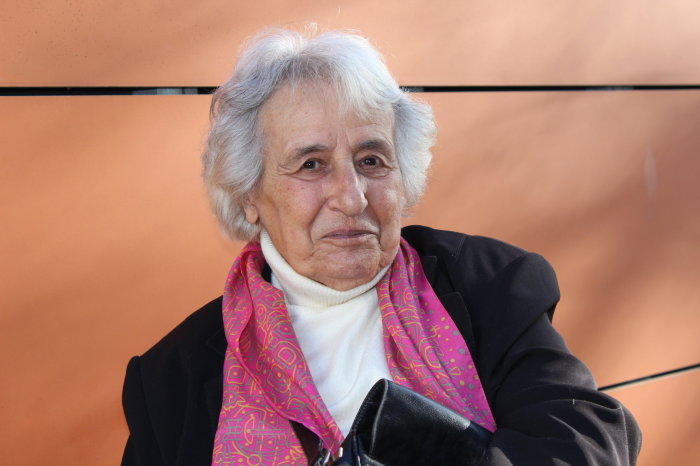
It was very brief and in it, she talks of how she was saved from extermination in Auschwitz by the fact that she could play the cello and could be selected for the orchestra. Primo Levi had already led me to these orchestras in his book If this is a man, a first hand account of his time, also as a prisoner in Auschwitz.
It saved her life, her playing, her music and her inclusion in the orchestra, and she has lived a very long life indeed.
The interviewer then went on to ask her what would she say to those who still, to this day, would seek to hurt others and she simply and emphatically said:
Talk to each other before you kill each other
I'm just going to leave that to sit with you for a minute.
Here. Have some soothing music:
It's a simple enough idea, isn't it? It shouldn't really take too much to do it, should it? To sit down and to talk?
It hit me like an arrow: in its directness, in its wisdom, in its succinctness, in its simplicity.
And it echoed thoughts that I have been having recently about our ability as a race to communicate with each other. I don't think that we know how to do it effectively anymore. What do you mean? I hear you cry! The world is full to the brim of people talking! And to an extent that is true. You can be talked at by many without much interaction involved on your part at all. Just open a screen and watch a reel.
But is that really talking? I don't think so. That's speaking but I would argue that talking involves something which is in even rarer supply and that is the ability to listen.
And therein, as Shakespeare would say, lies the rub.
I think that we live in a world where it is very easy to shout the odds to try and make ourselves heard but where are the listeners? Where are the people who reflect on what we are saying? Talk is a two-way thing, I think and is built on respect. Both people must be prepared to do a balance of talking and listening. This, however, I am prepared to admit is a very rare occurrence.
There seems to be a distinct lack of respect man-to-man and it's only getting worse and more blatant and it's not just on social media.
Many times I've had conversations and been mid sentence only to have people talk over the top of me. I've also had people who I can tell are less than engaged in what I am saying, their attention focused elsewhere, eyes drifting and posture indicating restlessness. I wouldn't mind but they're not overly interesting themselves; however, I exercise courtesy in my interactions with them, despite my inner need to escape.
It is something of which I am very conscious, this lack of listening and this need to be heard. Anita Lasker-Wallfisch summarised how I have been feeling about the world: that we need to talk. To sit and get to know each other as people. Not as other people, people who are different to us, but as people who share the same space, who share the same needs, who share the same aspirations, share the same hopes for our children. So much is made of division and yet, more and more I am aware of the way that we are all linked, that the world is just one big community and that if we could all band together, we could achieve so much more.
It's a simple idea. I'm not naïve. I know that in order for any talks to work, the attitude has to be present to want that change to happen. Selfishness must be left at the door as must personal posturing. Leaders have to look out wider than their fanbase to augment changes and we all want different things and we all want things to work the best for us. Which is naïve. And selfish. And unsustainable. Because we can't have it all...unless we're happy to let someone else suffer.
If there's one thing that I've learnt about life it's that it's made up of give and take and that applies to a whole abundance of things including talking.
We should listen to the wise, to our elders, to the people who have lived through multiple crises as despite their failing eyesight, their lenses are the clearest and I think Anita Lasker-Wallfisch with her own personal history would know better than most.
So let's start a wave. Take the time to listen. It's important on so many levels. And you know, you might just learn something that may benefit you in some way.
But you'll never know unless you listen.
About the Creator
Enjoyed the story? Support the Creator.
Subscribe for free to receive all their stories in your feed. You could also become a paid subscriber, letting them know you appreciate their work.
Comments
There are no comments for this story
Be the first to respond and start the conversation.