Historical
The Science and Strategy of Modern Missiles
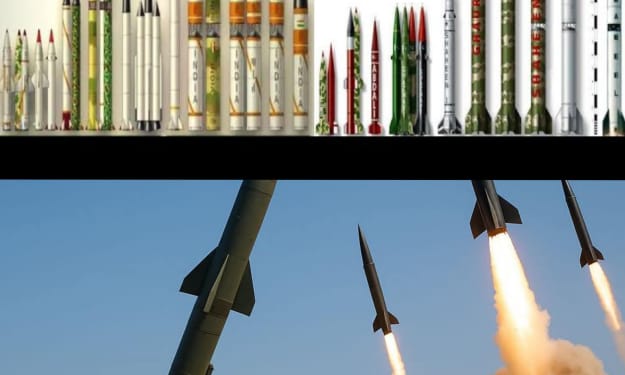
The Science of Missiles A missile is essentially an automatically guided projectile that consists of a rocket engine, a guidance system, a control system, and a warhead. The rocket engine propels the missile at speeds reaching thousands of kilometers per hour, enabling it to cover long distances rapidly. The guidance system—such as GPS (Global Positioning System), inertial navigation, or radar—directs the missile along an accurate trajectory towards its target. The control system constantly adjusts the missile’s altitude, angle, and speed during flight to maintain precision. Upon reaching the target, the warhead detonates, causing destruction. Warheads can vary from conventional explosives to highly destructive nuclear payloads, depending on the missile's design and purpose. --- Types of Missiles Missiles come in different types based on their range, speed, and intended use. Each type is designed with specific capabilities to suit various military requirements. --- 1. Ballistic Missiles Ballistic missiles follow a curved, parabolic trajectory through the atmosphere and space before descending onto their target. These missiles are capable of carrying nuclear warheads, making them some of the most strategic and devastating weapons in modern arsenals. Examples include Pakistan’s Shaheen missile series and India’s Agni missiles. Ballistic missiles are launched with tremendous force from the ground or submarines. After the initial powered flight phase, they coast along a ballistic trajectory, relying on gravity to guide them to their target. Because of their high speeds and long ranges—often spanning hundreds to thousands of kilometers—they can strike distant targets with high precision. Ballistic missiles are central to deterrence strategies due to their ability to deliver nuclear warheads quickly and unpredictably. --- 2. Cruise Missiles Cruise missiles are designed to fly at low altitudes over long distances to target specific ground locations. They use advanced navigation systems to avoid detection by enemy radar and defenses by flying under radar coverage, often just above the terrain (terrain-following flight). Pakistan’s Babur missile and India’s BrahMos missile are examples of cruise missiles. Unlike ballistic missiles, cruise missiles maintain powered flight throughout their journey, often using jet engines. This allows them to maneuver around obstacles and avoid defenses. For example, India employed SCALP cruise missiles during the May 7, 2025 attacks, launching them from Rafale fighter jets. These missiles are specifically designed to target underground or fortified enemy installations with high accuracy. --- 3. Tactical Missiles Tactical missiles are intended for short-range engagements, typically used in battlefield scenarios to attack enemy troops, armored vehicles, or command centers. They are designed for quick deployment and rapid strikes on localized targets. Pakistan’s Nasr missile is a notable example. Tactical missiles can be equipped with nuclear or conventional warheads. Nasr, for instance, is tailored to counter enemy tank brigades and troop concentrations with precise strikes. It’s a strategic tool for delivering a swift, limited nuclear response or conventional strike on the battlefield, providing a deterrent against conventional military threats. --- 4. Air-to-Surface Missiles (ASM) These missiles are launched from fighter jets or other military aircraft to strike targets on the ground or at sea from a safe distance. They provide air forces the capability to destroy enemy infrastructure, vehicles, or fortifications while minimizing risk to the aircraft and pilot. Examples include Pakistan’s Ra’ad-II missile and India’s Nirbhay missile. Air-to-surface missiles can be equipped with advanced guidance systems like infrared or laser targeting to enhance accuracy. Their ability to be launched from high-speed aircraft increases the range and flexibility of air strikes during combat operations. --- 5. Surface-to-Air Missiles (SAMs) Surface-to-air missiles are defensive weapons used to intercept and destroy enemy aircraft, drones, or incoming missiles like cruise missiles. These systems are a critical component of a nation’s air defense network. SAMs launch vertically or at an angle and rapidly accelerate to high altitudes to intercept hostile targets mid-flight. Pakistan’s LY-80 and India’s Astra missile are examples of such air defense systems. These missiles often use radar guidance or infrared homing to track and neutralize threats, thereby protecting key installations, cities, and military forces from aerial attacks. --- 6. Anti-Ship Missiles Anti-ship missiles are specialized weapons designed to target and destroy enemy naval vessels at sea. They typically fly at low altitudes over the water surface, making detection by radar more difficult. Pakistan’s Zarb missile and India’s Dhanush missile are examples of anti-ship missiles. These missiles combine the speed and maneuverability of cruise missiles with warheads capable of crippling or sinking large warships. Their use in naval warfare is crucial for controlling sea lanes and denying enemy fleets freedom of movement. --- 7. Drone-Like Missiles (Loitering Munitions) A recent innovation in missile technology is the development of drone-like missiles, also called loitering munitions or “suicide drones.” These are hybrid weapons combining aspects of traditional missiles and unmanned aerial vehicles (UAVs). Loitering munitions can fly within a designated area for an extended period, searching for targets with onboard sensors. Once a target is identified, the missile crashes into it, detonating its warhead. This approach allows for dynamic target selection and engagement in real time. India, for example, has used the SkyStriker loitering munition developed with Israeli cooperation in recent military operations. These weapons represent a growing trend in precision warfare, enabling highly flexible and adaptive strike capabilities. --- Summary Missiles have transformed modern warfare with their speed, precision, and destructive power. Whether delivering nuclear deterrence through ballistic missiles or conducting surgical strikes with cruise or tactical missiles, these weapons are critical assets for national defense and strategic operations. Advances such as drone-like loitering munitions are expanding the battlefield capabilities further, introducing new dimensions to missile science and military technology. Understanding missile types, their mechanisms, and their strategic roles provides insight into the complexity and evolving nature of modern defense systems.
By Ikram Ullahabout a year ago in FYI
Songket
As you all know, I am from Malaysia, and today I would like to talk about Songket, which is one of my country's cultural heritage. Songket is a traditional Malay woven fabric from Malaysia. It is famous for its beautiful gold and silver threads, which make the cloth shine. Songket is a symbol of royalty, wealth, and culture. It has been worn for centuries in special ceremonies and celebrations. Its shimmering gold and silver threads make it truly unique, embodying both beauty and status.
By Syira Husairi about a year ago in FYI
Trump’s Gulf Odyssey: Power, Politics, and the Pursuit of Legacy
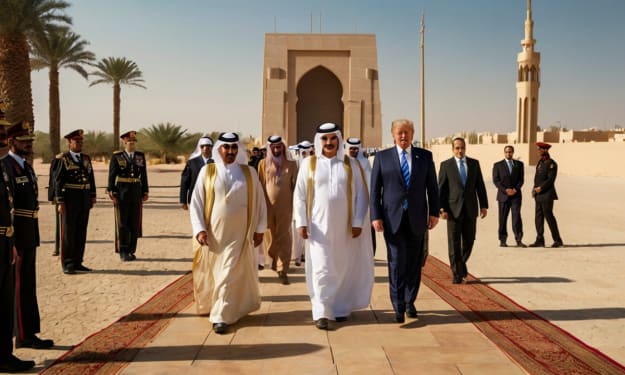
Introduction: A Return to the Global Stage In May 2025, former U.S. President Donald J. Trump embarked on a high-profile tour of the Middle East, visiting Saudi Arabia, Qatar, and the United Arab Emirates. This journey was not merely a series of diplomatic meetings; it was a meticulously orchestrated endeavor blending statecraft, economic ambition, and personal legacy. Chapter 1: Riyadh—The Desert Welcome Arrival and Ceremonial Grandeur On May 13, Air Force One touched down at King Khalid International Airport in Riyadh. Trump was greeted with an opulent ceremony: a lavender carpet laid out, traditional music echoing through the air, and a camel procession leading the way. The Saudi royal family spared no expense, signaling the importance of this visit . Strategic Agreements and Historic Meetings In Riyadh, Trump and Crown Prince Mohammed bin Salman signed a "strategic economic partnership" agreement encompassing energy, defense, and other sectors. Notably, this included a $142 billion arms deal and broader investments totaling $600 billion. Additionally, Trump held a historic meeting with Syrian President Ahmed al-Sharaa—the first such encounter in 25 years—announcing intentions to lift longstanding U.S. sanctions on Syria following the fall of Bashar Assad’s regime . Chapter 2: Doha—Deals and Diplomacy Economic Engagements On May 14, Trump arrived in Doha, Qatar. The visit was marked by significant economic engagements, including Qatar Airways signing an agreement to purchase as many as 210 planes from Boeing—the largest order in the company's history. The United States announced over $243.5 billion in deals with Qatar, covering defense agreements and infrastructure projects . Cultural Exchange and Symbolism Beyond the economic aspects, the visit included cultural exchanges. Trump attended a state dinner at Lusail Palace and participated in a ceremony passing the hosting duties of the FIFA World Cup to the United States. These events underscored the strengthening ties between the two nations.A photorealistic digital scene showing Donald Trump arriving at a grand Gulf palace by motorcade at sunset. Towering palm trees line the marble driveway, with golden lanterns glowing softly. Trump steps out of a black armored limousine, greeted by Gulf leaders in white robes and gold-trimmed bishts. Children in traditional dress wave flags. Drones fly overhead capturing the moment. In the background, the skyline blends modern skyscrapers with ancient architecture. The scene captures both political power and emotional resonance. Chapter 3: Abu Dhabi—Technology and Recognition Advancements in Artificial Intelligence On May 15, Trump arrived in Abu Dhabi, United Arab Emirates. The visit focused on technological collaboration, with the UAE committing to invest $1.4 trillion in the U.S. artificial intelligence sector over the next decade. This partnership aimed to enhance the UAE's access to U.S. AI and semiconductor technologies, positioning the nation as a leader in the global AI sector . Honors and Cultural Visits During his stay, Trump was awarded the Order of Zayed, the UAE's highest civil decoration. He also toured the Sheikh Zayed Grand Mosque and visited an interfaith center, reflecting a commitment to cultural and religious understanding. Chapter 4: Emotional Undercurrents and Personal Reflections Private Encounters Amidst the grandeur, there were moments of personal significance. In Dubai, Trump met privately with an American businesswoman who had lost her husband in the Afghanistan war. The encounter was solemn, with Trump expressing condolences and reflecting on the human cost of conflict. Legacy and Personal Ambition Throughout the tour, Trump was acutely aware of his legacy. The scale of the deals and the warmth of the receptions were seen as validations of his approach to foreign policy. In interviews, he emphasized the success of the trip, noting the unprecedented nature of the agreements and the strengthening of U.S. relations Throughout the tour, Trump was acutely aware of his legacy. The scale of the deals and the warmth of the receptions were seen as validations of his approach to foreign policy. In interviews, he emphasized the success of the trip in the region . Conclusion: A Complex Tapestry Trump's 2025 Middle East tour was a multifaceted endeavor, blending diplomacy, economic ambition, and personal legacy. The agreements signed and the relationships reinforced have the potential to shape regional dynamics for years to come. While the tour was met with both praise and criticism, it undeniably marked a significant chapter in the ongoing narrative of U.S. engagement in the Middle East. Call to Action: What are your thoughts on the impact of Trump's Middle East tour? Do you believe these engagements will lead to lasting change? Share your perspectives in the comments below.
By Shabir Ahmadabout a year ago in FYI
The Hidden Mystical Practices of the Baduy Tribe
Nestled in the lush green hills of West Java, Indonesia, the Baduy people stand as a remarkable example of traditional living and spiritual integrity. They have preserved a unique spiritual framework deeply intertwined with nature, cultural practices, and ancestral traditions. Their belief system, Sunda Wiwitan, is more than just a religion—it’s a holistic philosophy that shapes every aspect of their lives.
By Diah Dewi Rahmawati Utamiabout a year ago in FYI
"High-Power 50HP Electric Drive Motor". Content Warning.
Unleashing Power and Efficiency: The 50HP Electric Drive Motor for Industrial and Commercial Use In today’s competitive industrial landscape, the demand for powerful, reliable, and energy-efficient motors has never been greater. One standout solution is the 50HP Electric Drive Motor, a robust machine that serves as the backbone of numerous industrial and commercial operations. From manufacturing plants to HVAC systems and large-scale water pumps, this motor plays a crucial role in maintaining consistent productivity and operational stability.
By Mukhtiar Ahmadabout a year ago in FYI
The 2025 India-Pakistan Conflict: A Crisis at the Brink. AI-Generated.
In April and May 2025, South Asia witnessed one of its most intense military confrontations in decades, as longstanding tensions between India and Pakistan escalated into a full-scale conflict. The catalyst was a terrorist attack in Pahalgam, Jammu and Kashmir, which led to a series of retaliatory actions, military operations, and a humanitarian crisis, all set against the backdrop of nuclear-armed nations.
By Farhan Rafidabout a year ago in FYI
Why Jaipur Leads in Hand Block Printed Cotton Fabric
In the heart of Rajasthan lies Jaipur, a city that has captured the world's attention not just for its palaces and pink-hued architecture, but for its deep-rooted legacy in textile arts. One of the most celebrated traditions here is hand block printing — an ancient method of printing patterns on fabric using hand-carved wooden blocks and natural dyes. Today, hand block print cotton fabric manufacturers in Jaipur are preserving this beautiful heritage while adapting it to meet modern design sensibilities and global demand.
By Heros Fashionabout a year ago in FYI
🖱 Fascinating Facts About the Computer Mouse — You’ll Never Click the Same Way Again
1. 🧠 The Mouse Was Born at Stanford in the '60s The first prototype of the computer mouse was created by Douglas Engelbart in 1964 at the Stanford Research Institute. It was a wooden block with two metal wheels and a single button.
By wawanhereraabout a year ago in FYI