Historical
Why Hustle Culture Is a Lie We Keep Telling Ourselves
I used to wear burnout like a badge of honor. Four hours of sleep, a double espresso, three meetings before noon, and a to-do list longer than a CVS receipt—that was my norm. I called it “the grind.” I told myself I was building an empire. I posted inspirational quotes on Instagram: “Rise and grind.” “Sleep is for the weak.” “You can rest when you’re dead.” But I was already dying—just very, very slowly. At 27, I was managing two side hustles, freelancing on the weekends, and working full-time in a tech startup that celebrated overwork as “commitment.” I remember once skipping my grandmother’s birthday dinner to finish a deck for a client who didn’t even end up using it. I told myself I was investing in my future. I convinced myself that sacrifices were necessary. And for a while, that narrative worked. Until it didn’t. It started with the little things. I was constantly tired. I’d forget simple tasks, miss emails, leave texts unanswered. My body was sending warning signals I chose to ignore: migraines, insomnia, back pain, and an overwhelming sense of dread every Sunday night. But I pushed on. Because that’s what winners do, right? Then one afternoon, sitting in a crowded café hunched over my laptop, my hands started shaking. My vision blurred. I felt a wave of panic rise from my stomach like a tsunami. I couldn't breathe. I stumbled out onto the street and collapsed onto a bench, convinced I was having a heart attack. It wasn’t. It was a full-blown panic attack. And that’s when the illusion shattered. --- The Myth of More We’re told that hustle is noble. That if we just work a little harder, sacrifice a little more, we’ll finally “make it.” The dream is dangled like a carrot: financial freedom, success, admiration, peace. But hustle culture doesn’t promise peace. It promises productivity. It glorifies the chase, not the destination. And what no one tells you is that the finish line keeps moving. Once you hit one goal, there’s always another: a bigger deal, a newer project, a fatter paycheck. You’re never enough. You never arrive. And slowly, without realizing it, you trade your joy for checklists. Your creativity for caffeine. Your relationships for performance metrics. You lose yourself. --- Who Are We Working For, Really? When I finally took time off—a real break, not a long weekend—I started asking uncomfortable questions. Why was I working so hard? Who was I trying to impress? What did I actually want? The truth? I didn’t know. I had spent so long chasing external validation—likes, promotions, praise—that I hadn’t built a life I actually enjoyed. I wasn’t passionate about half the things I was doing; I was just good at performing. I was addicted to achievement. The hustle had become my identity. And I realized I wasn’t alone. So many of us are taught to equate our worth with our output. We think slowing down is weakness. We’re afraid of being seen as lazy or unmotivated. But rest isn’t laziness—it’s human. And constant motion doesn’t mean you’re going anywhere meaningful. --- The Cost of Constant Hustle We don’t talk enough about the real toll of hustle culture. About the relationships that suffer. The mental health crises. The burnout so deep it takes years to recover. The missed birthdays. The forgotten hobbies. The loss of presence. I missed my best friend’s wedding because of a “career-defining opportunity.” I forgot my niece’s dance recital because I was knee-deep in emails. I can’t get those moments back. No amount of hustle can buy them now. And for what? To impress people online? To chase approval from bosses I don’t even respect? To accumulate money I never had time to enjoy? That’s not success. That’s survival dressed in designer burnout. --- Redefining Success I’ve learned that success isn’t how busy you are. It’s how aligned your life is with your values. Success is being able to wake up without dread. It’s having time to make your partner breakfast, to call your mom, to take a walk without checking your phone. It’s working on things that light you up—not just what pays well. It’s saying no without guilt and yes without fear. Now, I still work. I still have ambition. But I no longer worship hustle. I protect my peace. I rest without apologizing. I build in slow, intentional ways—even if that means I move a little slower than everyone else. Because I’d rather live a full life than a fast one. --- The Lie We Keep Telling Ourselves Hustle culture thrives on the lie that we’re only as valuable as what we produce. That we have to earn our right to rest. That if we’re not suffering, we’re not trying hard enough. But here’s the truth: Your worth isn’t tied to your productivity. You are not a machine. You don’t have to prove your right to exist by burning out in public. You can opt out of the race. You can choose balance over burnout. Wholeness over hustle. Joy over grind. And when you do, you realize that the life you were breaking yourself to build was never the life you truly wanted. It’s okay to want more—but not at the cost of yourself. Let’s stop lying to ourselves. Let’s stop calling exhaustion ambition.
By Zeeshan Khanabout a year ago in FYI
The Mystery of the Bermuda Triangle: Facts, Myths, and Scientific Theories"
H1: The Mystery of the Bermuda Triangle: Facts, Myths, and Scientific Theories Meta Description: Explore the enigma of the Bermuda Triangle: uncover the facts, bust the myths, and dive into scientific explanations behind the world’s most mysterious region.
By Shamshair Khan Hasan Zaiabout a year ago in FYI
London's Langham Hotel: cursed luxury
The Langham Hotel, an elegant place in Marylebone, London, welcomed its first guests in 1865. Famous for its long history and luxurious construction, the hotel is also known for being one of the most haunted sites in London.
By Ninfa Galeanoabout a year ago in FYI
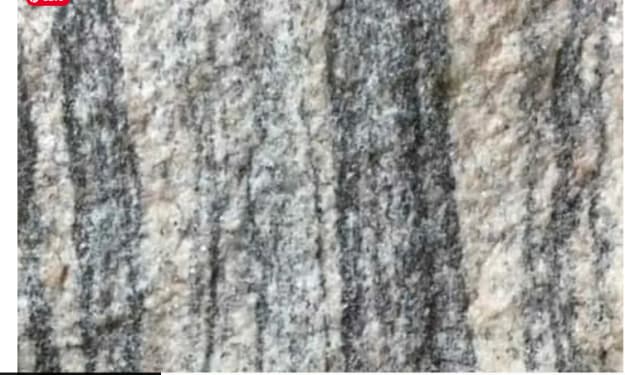
The oldest rock discovered by geologists in the United States is 3.82 billion years old.
Scientists have confirmed that Michigan's gneiss is the oldest rock in the United States. This includes Zispristals, formed around 3.82 billion years ago and served in front of long, outstanding competitors. We once assumed that Minnesota maintained this distinction, but fresh data is heading in a different direction. Carol Frost of the University of Wyoming published these results with a team that tested rock samples with the help of advanced geological chronology tools.
By Francis Damiabout a year ago in FYI
Why You Talk to Yourself — And Why It’s Actually Smart
You catch yourself whispering under your breath—maybe rehearsing what to say in a meeting, reminding yourself to grab your keys, or scolding yourself for forgetting something (again). It might feel strange or even a little embarrassing, like you're doing something only kids or eccentrics do. But here's the truth: talking to yourself isn't weird. It's brilliant. In fact, it’s one of the most efficient tools your brain has for organizing thoughts, solving problems, and managing emotions. You’re not crazy—you’re clever.
By Noman Khan about a year ago in FYI
No bacteria have ever been observed on Earth or anywhere else before, except on the Chinese space station.
Life in orbit has constantly intrigued scientists, however, few predicted that to would discover a microbe that had by no means been visible on Earth. A bacterium named Niallia tiangongensis has popped up aboard China`s Tiangong station, sparking interest and concern. The new species became diagnosed via way of means of Dr. Junxia Yuan, from the Shenzhou Space Biotechnology Group in Beijing, following designated genetic and biochemical tests.
By Francis Damiabout a year ago in FYI
The Headless Survivor: Nature’s Most Resilient Insect
Did You Know? > There is a creature that can survive for a whole week even after its head is cut off! As unbelievable as it sounds, it’s absolutely true. There exists a creature in this world that can live for days—even up to a week—without its head. That creature is the cockroach. Yes, a cockroach can stay alive for several days, sometimes even a week, after being decapitated. It may sound astonishing, but there are fascinating scientific reasons behind this phenomenon. --- How Can a Cockroach Live Without Its Head? 1. No Blood Pressure Like Humans Cockroaches don’t have a circulatory system like humans. Their bodies don’t rely on blood pressure in the same way. Instead of a closed circulatory system (where blood is pumped through arteries and veins), cockroaches have an open circulatory system. This means their organs are bathed in a free-flowing fluid (hemolymph), which doesn’t require a heart to pump it forcefully. So, when a cockroach loses its head, it doesn’t bleed to death the way a human would. Its neck simply closes off, and because there’s no pressurized system, the fluid doesn’t gush out uncontrollably. 2. Breathing Without a Head One of the biggest reasons a cockroach can survive without its head is its unique respiratory system. Cockroaches don’t breathe through their nose or mouth. Instead, they have small holes called spiracles located along the sides of their body. These spiracles lead to a network of tubes (tracheae) that deliver oxygen directly to their tissues. So, even if the head is removed, the body continues to absorb oxygen and release carbon dioxide—no lungs or central nose required. This allows the body to function for several days after decapitation. 3. A Simple Nervous System Cockroaches have a decentralized nervous system. Their brain is relatively small and doesn’t control all bodily functions. In fact, many basic reflexes and survival mechanisms are managed by nerve clusters called ganglia located in different parts of their body, especially in the thorax and abdomen. Even without a brain, these ganglia can control locomotion (movement), simple responses to stimuli, and even coordination. This is why a cockroach can still move, crawl, or twitch without a head. It's almost like a biological autopilot mode. --- Then Why Do Cockroaches Eventually Die Without Their Head? Despite these amazing abilities, headless cockroaches don’t live forever. The primary reason they die after a few days is that they can’t eat or drink. With their head gone, they lose the ability to consume food or water. As a result, they eventually die of starvation or dehydration, not from the injury itself. This process usually takes about 5 to 7 days, depending on the surrounding temperature and humidity. --- Why Is This So Fascinating? This strange survival trait of cockroaches fascinates scientists and biologists because it reveals how evolution has shaped insects differently from mammals. It shows how some organisms can function without a centralized command center (like a brain), relying instead on decentralized systems that allow parts of the body to continue independently for a short time. Additionally, this has inspired biomimetic research—where scientists study how to design robots or systems based on the cockroach’s biology. For example, researchers are developing search-and-rescue robots modeled on cockroach movement, especially for navigating tight or dangerous spaces during disasters. --- Bonus: More Amazing Cockroach Facts They can hold their breath for up to 40 minutes. They can survive without food for over a month. They’ve been around for millions of years, even before dinosaurs. Some species can survive radiation levels far higher than humans. --- Conclusion: A Humble Yet Incredible Creature The cockroach may be one of the most disliked creatures in our homes, but its biological capabilities are truly remarkable. Being able to live without a head for days is not just a bizarre survival trick—it’s a window into how diverse life on Earth can be. These insights remind us that even the smallest creatures possess powerful adaptations that can inspire science, challenge our understanding of life, and even push us to think differently about resilience, survival, and the boundaries of biology.
By Ikram Ullahabout a year ago in FYI