Historical
History of the Liberation of Auschwitz
January 27, 1945, was the liberation of the Auschwitz Concentration Camp, one of the most notorious camps of World War II, by the Soviet Red Army. This date is now known by the United Nations and the European Union as International Holocaust Remembrance Day.
By Bill Petro4 years ago in FYI
Tyrants of Ancient Greece!
Tyrannies occurred everywhere in Greece, from city-states to the islands of Sicily and Samos. Most historians place the Great Age of Greek Tyranny between 750 and 500 BCE, concluding with Hippias' deposition; however, other writers extend the period into the 4th century BCE, covering Cassander's dictatorial rule in Macedonia as well as the tyrannies of Dionysius I and II in Syracuse.
By Father of History4 years ago in FYI
What is dinosaur?
I. Introduction A. Definition of dinosaurs: Dinosaurs are a group of extinct reptiles that lived during the Mesozoic Era, which lasted from about 252 to 66 million years ago. They were characterized by their bipedal or quadrupedal posture, and the presence of a skull with a single occipital condyle, a feature that distinguishes them from other reptiles. B. Time period in which dinosaurs lived: Dinosaurs lived during the Mesozoic Era, which is divided into three periods: the Triassic, Jurassic, and Cretaceous. The Triassic period began 252 million years ago and lasted for about 50 million years. The Jurassic period began 201 million years ago and lasted for about 55 million years. The Cretaceous period began 145 million years ago and lasted for about 80 million years. C. Classification of dinosaurs: Dinosaurs are divided into two main groups: Saurischia and Ornithischia. The Saurischia group includes the carnivorous theropods, such as the T-Rex, and the herbivorous sauropods, such as the Brontosaurus. The Ornithischia group includes the armored dinosaurs, such as the Stegosaurus, and the horned dinosaurs, such as the Triceratops. II. Physical Characteristics A. Size and shape: Dinosaurs ranged in size from small, bird-like dinosaurs that were about the size of a turkey, to large, long-necked dinosaurs that were as tall as a four-story building and as long as a city bus. Their shapes also varied greatly, from the quadrupedal, tank-like ankylosaurs to the bipedal, agile raptors. B. Skeletal structure: Dinosaurs had a variety of skeletal structures, depending on their size and lifestyle. Some had long, slender limbs for running and hunting, while others had short, stocky limbs for supporting their heavy bodies. Many had bony plates or spikes for protection, and some had large, sharp teeth for hunting. C. Skin and feather variations: The skin of dinosaurs varied greatly depending on the species. Some had scaly skin, while others had feathers. Feathers were primarily found in theropod dinosaurs, like velociraptors and T-Rexes, which are believed to have been covered in feathers. D. Locomotion: Dinosaurs moved in a variety of ways depending on their size and shape. Some walked on two legs, while others walked on four legs. Some were fast runners, while others were slow walkers. Some were able to swim, while others were land-bound. III. Dinosaur Behavior A. Social behavior: Some dinosaurs were solitary animals, while others lived in groups. Some dinosaurs were social, living in herds or packs, while others were territorial and aggressive. B. Feeding and hunting: Dinosaurs had a variety of feeding and hunting strategies. Some were herbivores, eating plants, while others were carnivores, eating other animals. Some had sharp teeth and claws for hunting, while others had beaks and jaws for grinding up plants. C. Reproduction: Dinosaurs probably had a variety of reproductive strategies. Some were oviparous, laying eggs, while others were viviparous, giving birth to live young. Some dinosaurs had a single mate, while others were polygynous. IV. Different Types of Dinosaurs A. Triassic dinosaurs: Triassic dinosaurs were the first dinosaurs that appeared on earth. They were small and relatively insignificant in comparison to the dinosaurs of the later periods. Famous Triassic dinosaurs include Coelophysis and Plateosaurus.A. Triassic Dinosaurs: During the Triassic period (252-201 million years ago), the first dinosaurs appeared on Earth. These early dinosaurs were small, bipedal creatures that were not yet the dominant species on the planet. Some notable Triassic dinosaurs include Coelophysis, Plateosaurus, and Eoraptor. B. Jurassic Dinosaurs: During the Jurassic period (201-145 million years ago), dinosaurs became the dominant land animals and diversified into a variety of forms. Some notable Jurassic dinosaurs include Allosaurus, Stegosaurus, and Brachiosaurus. The famous T-Rex lived in the Cretaceous period C. Cretaceous Dinosaurs: During the Cretaceous period (145-66 million years ago), dinosaurs continued to diversify and thrive. Some notable Cretaceous dinosaurs include Velociraptor, Triceratops, and the famous T-Rex. D. Famous Dinosaurs: T-Rex: Also known as the Tyrant Lizard King, T-Rex was one of the largest and most fearsome predators of the Cretaceous period. It had large, powerful jaws and short, but strong arms. Velociraptor: This small, bipedal dinosaur was a skilled hunter that had a large, sickle-shaped claw on its foot that it used to kill its prey. Triceratops: This large herbivore had a distinctive head with three horns and a bony frill. V. Extinction of Dinosaurs: A. Theories about extinction: The most widely accepted theory is that a large asteroid or comet struck the Earth, causing a massive extinction event. This theory is supported by the discovery of a large impact crater (the Chicxulub crater) in the Yucatan Peninsula of Mexico. Volcanic activity and climate change are also believed to have contributed to the dinosaurs' extinction. B. Evidence for extinction: The presence of iridium in rock layers from the time of the extinction event is evidence of an asteroid impact. Iridium is rare on Earth but common in asteroids. The discovery of the Chicxulub crater provides further evidence of an asteroid impact. Fossil evidence also shows that many species of dinosaurs disappeared suddenly at the end of the Cretaceous period.
By King of Earth4 years ago in FYI
What is Gold?
Introduction: Gold is a chemical element with the symbol Au (from Latin: aurum) and atomic number 79, making it one of the higher atomic number elements that occur naturally. It is a dense, soft, malleable, and ductile metal with a bright yellow color and luster that is considered attractive, which is maintained without tarnishing in air or water. Gold is a good conductor of electricity and does not react with most chemicals. It is found in nature mainly as the free metal and in various ores such as argentite and electrum. Physical and chemical properties of gold: Gold is a dense, soft, and malleable metal with a bright yellow color and a metallic luster. It is a good conductor of electricity and does not tarnish in air or water. Its atomic number is 79 and its symbol is Au. It has a melting point of 1064.18 °C and a boiling point of 2807 °C. Historical significance of gold: Gold has been treasured since ancient times for its beauty, resistance to tarnish, and unique yellow color. It has been used to make jewelry, coins, and other decorative objects throughout history. In many ancient cultures, gold was believed to have supernatural powers and was used in religious ceremonies. In more recent times, gold has been used as a store of value and a medium of exchange, and it has also been used in medicine and industry. Gold mining and production: Gold is extracted from the earth through a process called mining. There are several methods for extracting gold, including placer mining, panning, sluicing, dredging, hard rock mining, and by-product mining. The most common method is hard rock mining, which involves extracting the gold from a vein of rock deep underground. Methods of extracting gold: Placer mining: A method of mining where gold is extracted from river sediments or gravels by washing and panning. Panning: A method of mining where gold is extracted by washing gravels or river sediments and separating the gold particles using a pan. Sluicing: A method of mining where gold is extracted by washing gravels or river sediments through a sluice box, which separates the gold particles using gravity. Dredging: A method of mining where gold is extracted by dredging river sediments or gravels with a dredge. Hard rock mining: A method of mining where gold is extracted from a vein of rock deep underground. By-product mining: A method of mining where gold is extracted as a by-product of mining other minerals such as copper or silver. Major gold producing countries: China Australia Russia United States Canada Peru South Africa Mexico Environmental impact of gold mining: Gold mining can have a significant impact on the environment. The process of extracting gold from the earth can release large amounts of toxic chemicals into the air and water, and it can also lead to deforestation and destruction of wildlife habitats. Additionally, the use of cyanide and other chemicals in gold mining can be harmful to fish, animals, and plants that live in and near the mining area. Uses of gold: Jewelry and decorative arts: Gold is used to make jewelry and other decorative objects such as gold plating, gold leaf, and gold paint. Electronics and technology: Gold is used in electronics and technology as a conductor in electronic devices such as smartphones, computers, and televisions.
By King of Earth4 years ago in FYI
Roman City
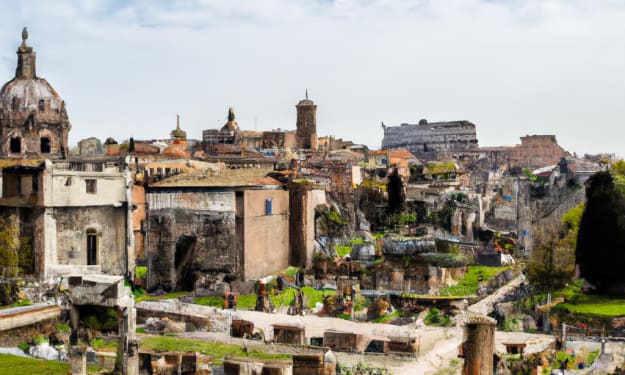
The Roman city was a complex and sophisticated urban landscape that played a key role in the Roman Empire's political, social, and economic life. At the heart of the Roman city was the forum, a large open space that served as the city's center of political, legal, and commercial activity.
By Architect Yogesh4 years ago in FYI
Xerxes the First's Life and Rule: 9 Facts!
Xerxes I signifies the beginning of the Achaemenid Empire's downfall, with a reign marked by revolts. Ruler Xerxes is possibly the most prominent Achaemenid Persian king, best notable for his inability to conquer Greece. Xerxes I was known for severe penalties, womanizing, and depleting the Persian empire's resources. He created massive palaces and other buildings at Persepolis, leaving his imprint on both European and Asian history. Here are nine facts regarding King Xerxes' life and reign.
By Father of History4 years ago in FYI
History of Australia Day
Did you know that the history of European Australia has ties to the American Revolutionary War? When the 13 American Colonies were part of the British Commonwealth, it was convenient for England to transport its convicts to the Colonies. Indeed, it was considered more humane to “transport” prisoners than to execute them, and there were getting to be so many convicts.
By Bill Petro4 years ago in FYI
Uncover the Fascinating Facts of Ancient Greece
The Olympics: A Tradition that Dates Back to 776 BC The ancient Olympic Games were a series of athletic competitions held in honor of the Greek god Zeus. These games were of great importance to the ancient Greeks, and were held every four years in the city of Olympia. The first Olympic Games were recorded to have taken place in 776 BC, making it one of the oldest recorded sporting events in history.
By Brad Williams4 years ago in FYI