
Gavin Newsom in the Spotlight: How Washington’s Political Turbulence Is Reshaping California’s Next Big Power Player
As Washington’s political scandals and accountability debates intensify, Gavin Newsom emerges as a key figure shaping the Democratic Party’s future direction and public trust.

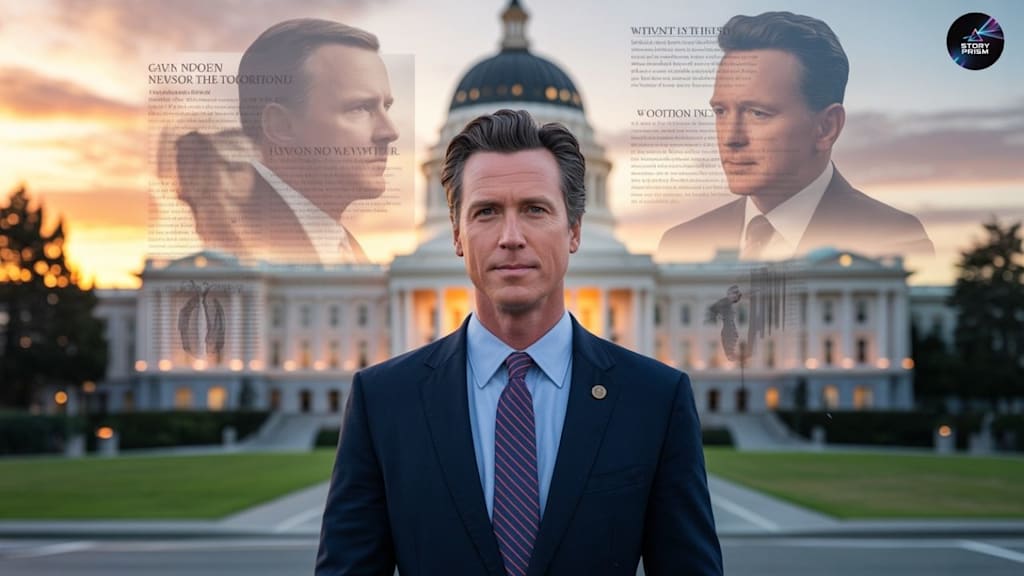
Gavin Newsom, the Governor of California, has long been one of the most visible and ambitious figures in the Democratic Party. Known for his sharp media presence, progressive policy agenda, and national political profile, Newsom has increasingly become a symbol of modern Democratic leadership. But in 2026, as Washington faces turbulence from congressional scandals, misconduct allegations, and internal party debates about accountability, Newsom’s role is being re-examined through a wider national lens.
Recent political developments involving high-profile Democrats—particularly controversies surrounding former Representative Eric Swalwell—have intensified discussions about trust, leadership judgment, and institutional culture in Washington. While Newsom is not directly involved in these controversies, the ripple effects are shaping how party leadership in California and beyond is being evaluated.
At the center of this political moment is a growing concern inside the Democratic Party: how to balance loyalty with accountability. The Swalwell controversy, which led to his resignation after multiple allegations of misconduct, has created a broader debate about how much party leaders knew, what was ignored, and how informal “whisper networks” allowed concerns to circulate without formal action. Allies of Swalwell, including prominent political figures, have faced scrutiny over their past support and delayed responses.
This environment has indirectly placed leaders like Newsom under a microscope. As the governor of the most influential Democratic state in the country, Newsom is often seen as a gatekeeper of the party’s future direction. Observers are asking whether the next generation of Democratic leadership will prioritize transparency and early accountability—or continue relying on internal political trust networks that have come under criticism.
Newsom has built his political identity on a blend of progressive policy and pragmatic governance. From climate initiatives and healthcare expansion to economic development strategies, he has positioned California as a model for national Democratic priorities. However, the current political climate in Washington highlights a different kind of leadership test—one that is less about policy and more about judgment, response, and institutional ethics.
The broader conversation also reflects concerns about political culture inside Congress and allied political circles. Reports describing long-circulating rumors, delayed responses to allegations, and the breakdown of formal accountability systems have raised questions about how political institutions handle misconduct claims. These issues are not limited to any one individual but instead point to systemic challenges in how power, reputation, and trust are managed in American politics.
For Newsom, this environment presents both opportunity and risk. On one hand, he is positioned as a stable, high-profile leader who has maintained relative distance from Washington’s internal scandals. On the other hand, as a leading figure in the Democratic Party, he cannot fully separate himself from the broader institutional concerns affecting party credibility.
Political analysts note that leaders like Newsom often become symbolic representatives of their party’s strengths and weaknesses. In times of crisis or controversy, attention naturally shifts toward those with national visibility and leadership potential. As speculation continues about the future of Democratic presidential candidates, Newsom’s name frequently appears in discussions about who could shape the party’s direction in the coming years.
Another factor influencing this moment is the growing emphasis on media-driven politics. Newsom is widely recognized for his communication skills and ability to engage directly with national audiences. In an era where political narratives are shaped rapidly through television interviews, social media, and digital platforms, his public presence gives him an advantage—but also increases scrutiny.
The same media environment that elevates leaders also magnifies controversy. As seen in recent congressional scandals, public perception can shift quickly once allegations, rumors, or institutional failures become widely reported. This dynamic has reinforced the importance of transparency and proactive communication, both of which are now central expectations for political leaders at the state and national level.
California itself remains a critical backdrop to Newsom’s leadership narrative. As the largest state economy in the United States, it serves as both a policy testing ground and a political stage. Decisions made in Sacramento often influence national debates on climate, housing, immigration, and technology regulation. This makes the governor’s role inherently national in scope, even when focused on state governance.
Ultimately, the current political climate underscores a broader truth: modern political leadership is no longer defined solely by policy achievements. It is equally shaped by perception, accountability, and the ability to navigate institutional crises. As Washington continues to grapple with questions of ethics and trust, figures like Gavin Newsom will remain central to discussions about the future direction of American politics.
Whether Newsom ultimately seeks higher office or continues to focus on California, his political trajectory is now closely tied to a national conversation about leadership standards in a time of increasing scrutiny and polarization.
About the Creator
Enjoyed the story? Support the Creator.
Subscribe for free to receive all their stories in your feed.
Comments
There are no comments for this story
Be the first to respond and start the conversation.