
Case Against Saying 'Amen' to Everything
It is appropriate to say "Amen" to some things but not to everything.


Some people have gotten into the habit of saying "Amen" to everything. Therefore, nothing stands out. Sometimes people say it without even thinking about what they are agreeing with. Therefore, this article is a case against saying "Amen" to everything.
"Amen" means "it is so" or "so be it." In its truest form, "Amen" comes at the end of a prayer, creed, or statement that is absolutely true. It is used to express solemn ratification or agreement.
"Amen" comes at the end of the model prayer known as "Our Father" found in Matthew 6:13.
"And lead us not into temptation, but deliver us from evil: For thine is the kingdom, and the power, and the glory, forever. Amen."
"Amen" in the Bible means just about the same thing in Hebrew in the Old Testament as it does in Greek in the New Testament.

"Amen" comes from the Hebrew word that means “certainty,” “truth,” and “verily.” The word is found in the Old Testament about 30 times. It is in the Gospels in the New Testament almost 70 times. Jesus said it 30 times in Matthew, 13 times in Mark, six in Luke, and 20 in John, where the "Amen" is always doubled.
"Amen" is a personal affirmation of the person who says the word. That's why it's not good to say "Amen" to a statement you don't agree with just because others are saying it.
(Grammatically, you say "Amen" to something you agree with).
Jesus Used "Amen" a Different Way
Jesus frequently used the word “Amen” at the end of conversations with His Father. We don't hear their conversations. Instead, we hear Jesus' agreements in the form of "verily, verily" or "truly, truly." Therefore, Jesus' "Amen" is a closing response to His Father and an opening to His listeners.
Also, when Jesus said "Amen" twice or repeated it, He was emphasizing that whatever He was about to say was the absolute truth.
In John's gospel, the "Amen" that frequently introduces Jesus' speech is doubled. Scan or read the Gospel of John and notice how many times Jesus said, "Verily, verily, I say unto you." Or "Truly, Truly..."

Double and Triple "Amens"
In Psalm 41:13, the psalmist says, “Blessed be the Lord, the God of Israel, from everlasting to everlasting! Amen and Amen.” What David concludes in this psalm about the graciousness of God is not only one Amen, but he repeats it.
In Jewish literature, this is a great emphasis. The only greater emphasis that is possible in Jewish literature is to say or write something three times. That is only reserved when referring to God, where it is said that He is “holy, holy, holy” in Isaiah 6 and some other places.
More Amens on Facebook Than in the Bible
There are more "Amens" on Facebook than in the Bible. There is a space for people to comment. However, instead of commenting, too many people simply type "Amen" without commenting. Needless to say, some people say "Amen" to many things that they really shouldn't.
Sometimes, there are hundreds of Amens to posts when personal comments would have been much better. A good example of that is if someone posts that a groom kills his new wife on their wedding day, instead of stating an opinion about the situation, some people take a shortcut and simply type "Amen." In that case, the word "Amen" is an agreement, and not a welcome comment.
People should not ask others to type "Amen" to something they have posted. It is manipulation when they do that. An "Amen" should come freely and not after a request has been made.
Warnings About Saying "Amen"
Since the word is one of agreement, people should be careful about using it. Some have a habit of saying "Amen" to almost anything someone says. It is a declaration of affirmation and should not be used haphazardly.
Therefore, people should be very careful about what they agree with. They could be agreeing with something they will later regret.
Several things happen when people say "Amen" to something:
They ratify and agree with what has been said.
They become accessory to what they are agreeing with.
They co-sign what has been said or written.
They are embracing what was said as truth, whether it was right or wrong.
People become accountable to what they agree with.
People sow seeds into what they agree with. If it is a lie, the seeds will grow and spread, and they will end up reaping what they sow.
We should never agree with anything that does not line up with the word of God.
Unfortunately, we might be experiencing hardships in our lives because of what we have agreed with that was against God's will.
If "Amen" is used for everything, it loses its sacredness and becomes a cliché instead of the solemn word it was meant to be.
Saying "Amen" in Church
People in the traditional Black churches say "Amen" to almost everything the preacher says. Since everything the preacher says should be true, is it necessary to shout "Amen" throughout most of the sermon?
Saying "Amen" to everything is like highlighting an entire page of text. Attention is called to EVERYTHING. Therefore, NOTHING stands out.
Some people do not reserve the word for rituals and at the end of prayers.

Some preachers have a habit of making a statement and then questioning the congregation, such as "God is good, Amen?" This is admonishing the congregation to respond. Some preachers go so far as to ask, "Can I get an Amen? Amens should not be requested. They should be freely given.
Once a pastor asked his associate ministers to meet with him after he had preached during a morning service. He reprimanded them for not saying "Amen" while he was preaching. It doesn't speak too highly of a preacher who gets upset when people in the congregation don't say, "Amen." Perhaps the preacher should evaluate if what he says is worthy of an "Amen."
One Spelling, Two Pronunciations
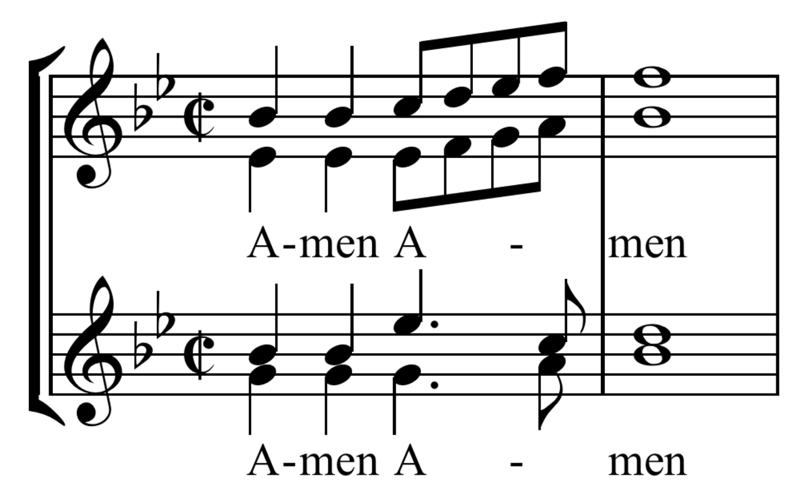
Even though the small word is spelled the same, it has two primary pronunciations in English. It is pronounced one way at the end of a prayer and another way at the end of a song.
Say ay-men at the end of a prayer, creed, or formal statement.
Sing ah-men in a song. The first part of the word is like what you do at the doctor's office when he tells you to open your mouth and make a sound. It is like a gargle.
Sing "Ah-Men" In This Song
DISCLAIMER: This article was not written to advise people to stop saying "Amen." It merely cautions people to say "Amen" when they actually agree with what has been said instead of saying it out of habit or compulsion.
About the Creator
Margaret Minnicks
Margaret Minnicks has a bachelor's degree in English. She is an ordained minister with two master's degrees in theology and Christian education. Thanks for reading and sending TIPS her way.
Enjoyed the story? Support the Creator.
Subscribe for free to receive all their stories in your feed. You could also become a paid subscriber, letting them know you appreciate their work.
Comments
There are no comments for this story
Be the first to respond and start the conversation.