
While warming the earth, carbon dioxide is cooling the higher atmosphere.
A fresh mechanistic perspective

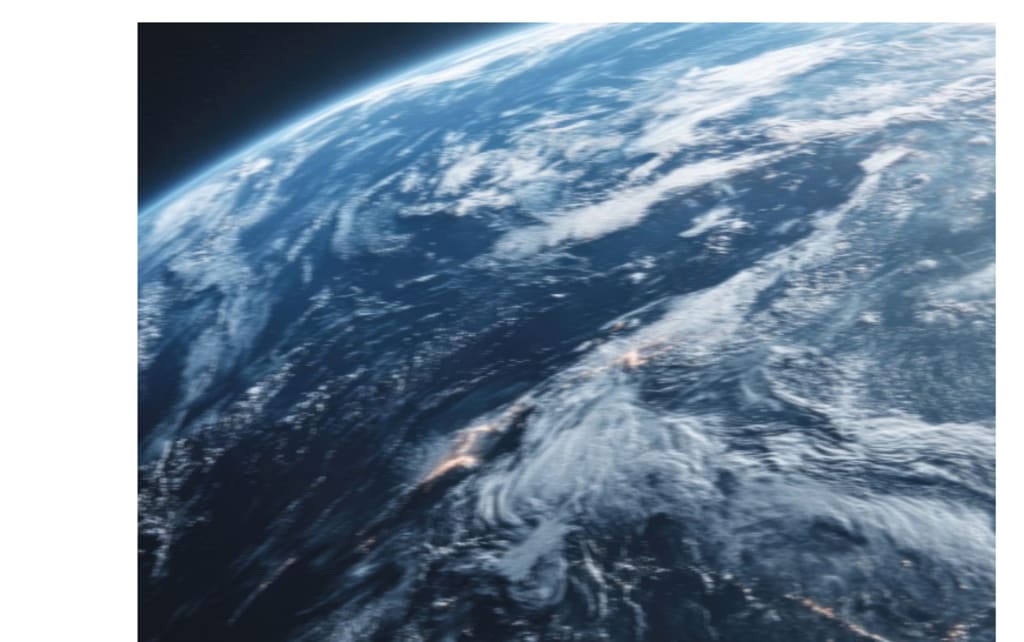
There is a paradox in climate change that goes unnoticed. The high atmosphere has been sharply cooling as temperatures are rising at the surface and in the lower atmosphere. Although the underlying physics has never been fully explained, scientists have known about this for decades—it's actually regarded as one of the most obvious indicators of climate change driven by humans.
This phenomenon has been clarified by a recent study carried out at Columbia University's Lamont-Doherty Earth Observatory. Sean Cohen, a postdoctoral research scientist, oversaw the study. Co-authors of the work include Columbia Engineering geophysicist Lorenzo Polvani and ocean and climate physics research professor Robert Pincus.
Two storylines, two atmospheres
Knowing that the atmosphere is not a single, homogeneous entity aids in comprehending the contradiction. At different altitudes, the atmosphere behaves considerably differently, and CO2, the primary cause of surface warming, has opposing effects.
The well-known function of CO2 in the lower atmosphere is to retain heat that would otherwise escape into space, warming the earth below. However, the dynamic completely changes when you ascend higher into the stratosphere, which is the layer of atmosphere that is between 11 and 50 kilometres above the surface.
CO2 molecules behave more like radiators than blankets up there. A portion of the infrared energy they capture from below is released into space. The stratosphere cools down as additional CO2 is added because it reflects heat away more effectively.
Forecasts of climatic change brought on by CO2
Climatologist Syukuro Manabe, who went on to win a Nobel Prize for his models of CO2-induced climate change, actually predicted this impact back in the 1960s. Since the mid-1980s, the stratosphere has cooled by around 2 degrees Celsius, which is more than ten times what would have been predicted in the absence of CO2 emissions from human activity. "We currently lack a quantitative theory for CO2-induced stratospheric cooling, but the existing theory was incredibly insightful," Cohen stated.
Determining the mechanism
The scientists used a systematic, iterative technique to figure out the specifics. They determined the essential procedures and gave them numerical values. The scientists adjusted the equations and repeated the process after comparing their pen-and-paper models with extensive simulations and real-world data.
They discovered that the interaction between CO2 and infrared light, sometimes referred to as longwave light, is at the core of the process. When they travel through CO2 molecules, different infrared wavelengths behave differently. Some are far more effective at cooling than others.
Factors that were excluded
A type of Goldilocks zone with wavelengths that are very useful for promoting stratospheric cooling was discovered by the team. Importantly, that zone grows as CO2 concentrations rise. According to Cohen, "those changes in efficiency will ultimately be what's driving stratospheric cooling."
Additionally, the researchers examined water vapour and ozone, both of which are engaged in related processes. It turned out that their impact on stratospheric cooling is quite small when compared to CO2.
A turn of events that exacerbates surface warming
The team's calculations neatly matched a number of confirmed data. At greater altitudes, stratospheric cooling becomes more noticeable. Near the top of the stratosphere, significant cooling occurs with each doubling of CO2. Additionally, less infrared radiation can escape into space overall when the stratosphere is cooler.
The stratosphere cools because CO2 improves its ability to radiate heat outward. However, as it gets colder, it radiates less overall energy into space than it normally would. As a result, the Earth system as a whole retains more heat, which intensifies the warming occurring below.
In other words, CO2 is simultaneously warming the earth and chilling the stratosphere, and the two impacts are related. We've been aware of this process for more than 50 years, and we had a fairly good qualitative grasp of its operation. But we didn't know the specifics of what mechanically propelled that process, according to Cohen.
A fresh mechanistic perspective
What this study is and isn't is made plain by the researchers. The argument for climate change has long since been resolved, thus this is hardly additional evidence. Instead, it provides a more comprehensive mechanical understanding of a process that has been a part of climate science for fifty years but has never been adequately defined. Pincus remarked, "This is really telling us what is essential."
Knowing which factors truly cause stratospheric cooling and being able to articulate it mathematically provides future researchers with a stronger base on which to build. Better models, more accurate forecasts, and a clearer understanding of how the atmosphere functions are all part of this foundation.
Uses outside of Earth's climate
Additionally, there is an unanticipated reach beyond Earth. In theory, other planets' atmospheres are governed by the same physics that controls CO2 behaviour in our stratosphere. Scientists may be able to better understand circumstances on other solar system worlds and maybe exoplanets orbiting other stars with the aid of a more straightforward mathematical explanation for stratospheric cooling.
Understanding alien atmospheres is a long way from a peculiarity in Earth's temperature record. However, basic science occasionally operates in this manner. You end up with a tool that goes beyond what you anticipated when you set out to explain something that has baffled people for decades.
About the Creator
Enjoyed the story? Support the Creator.
Subscribe for free to receive all their stories in your feed.
Comments
There are no comments for this story
Be the first to respond and start the conversation.