
The Oregon Pilot Project
Future Fragments - Protein in The New World

I watch Tim separating ants into categories while Jeffrey creates cricket powder. Since natural resources are depleted and traditional Western protein sources have long since dried up, we must find other food sources.
I remember Mom grimacing as she told me about a TV show from 2025 featuring bizarre exotic foods. Leaning back with her hands covering her belly, she recounted an episode in which an Asian chef showed dishes he had created from insects. Mom said it creeped her out to watch the host of the show taste all the dishes: black ants (nutrient-dense, packed with protein) and squirming mealy worms. Growing up, we didn't eat insects, but it's not out of the question now.
My parents passed on as octogenarians in 2028. They survived the COVID-19 pandemic but didn't last through the Avian Flu, which killed tens of thousands. As the avian flu wiped out chickens, sheep, and finally infected cattle, I remember the CDC's warnings to look for other ways to ranch and grow food. There were so many inoculations at the time that we joked there would soon be one to stop hangnails.
Hunters started patrolling the woods for deer, elk, and anything else they could find after the shutdown of industrial livestock operations. They taught people how to shoot, track, trap, and skin carcasses when not selling the meat they bagged on the hunt. Everywhere you looked, there were classes to learn about hunting and weapons. In 2042, when I realized they were rapidly decimating the nearby food sources, I moved to Alaska.
It's 2050 now, and humans have caused a mass extinction. Wildlife biologists have declared that no deer or elk remain - all are extinct. My mom used to say that ranchers always blamed wolves for livestock predation, but we both know it was never the wolves.
Once a small industry, aquaculture exploded. It's now the main way we grow crops. Of course, large corporations jumped on board and quickly expanded the production of hot-house vegetables and fruit. Large expanses of land across California covered with solar panel graveyards transformed into greenhouses—very ingenious, in my opinion.
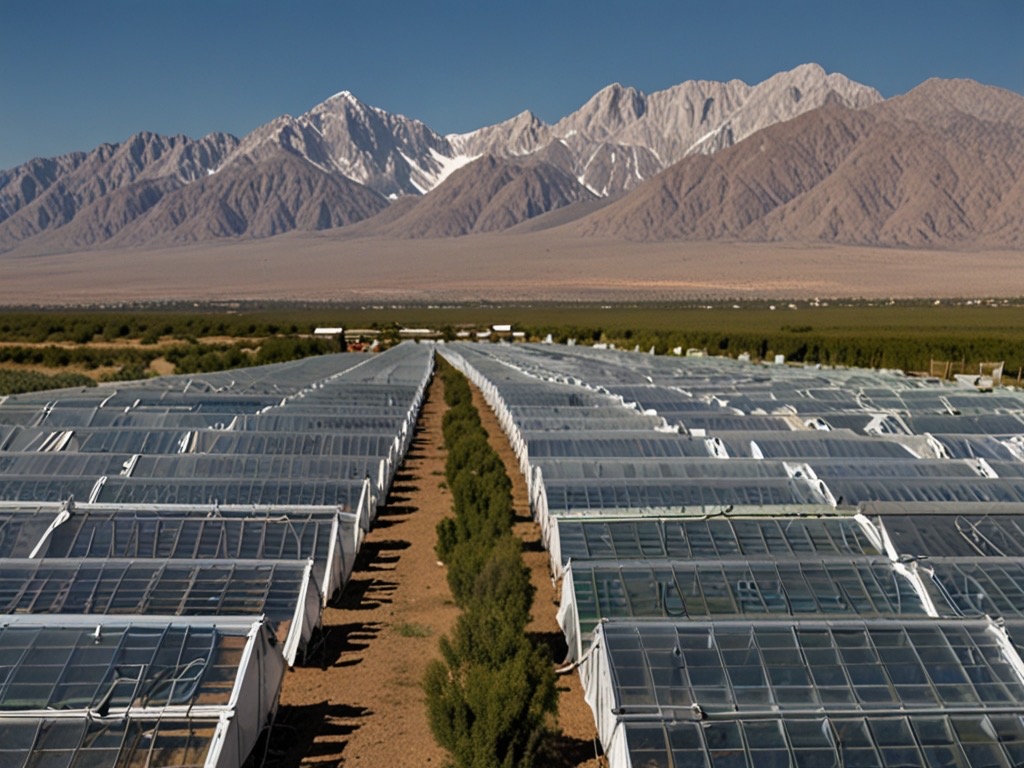
"In 2050, aerial views show ninety-eight million acres of California land are now encased in greenhouses. The solar panels are angled purposefully around the growing facilities and mounted on old metal street lamp poles, directing the dim sunlight to the roofs." - Dierdre Adams, Universal Unity Division of Disney
***
It's too dangerous now to raise livestock in large quantities like in the past. The days of hog, cattle, and sheep farms are gone. Disease spreads too quickly in them, and it's easy for it to jump species. We learned that the hard way with the Avian Flu. When it arrived, it promptly wiped out the chickens and most wild birds, and before we got it under control, the cross-species transmissions began. Everything was at risk, including the wild fish. It was a domino effect, so I hightailed it to whiter pastures…if you get my pun.
People are lucky now if they can snag a wild turkey, grouse, ptarmigan, or quail. Many shoot and eat starlings and pigeons if they find healthy ones. I've also heard about folks raising bullfrogs and snakes for food.
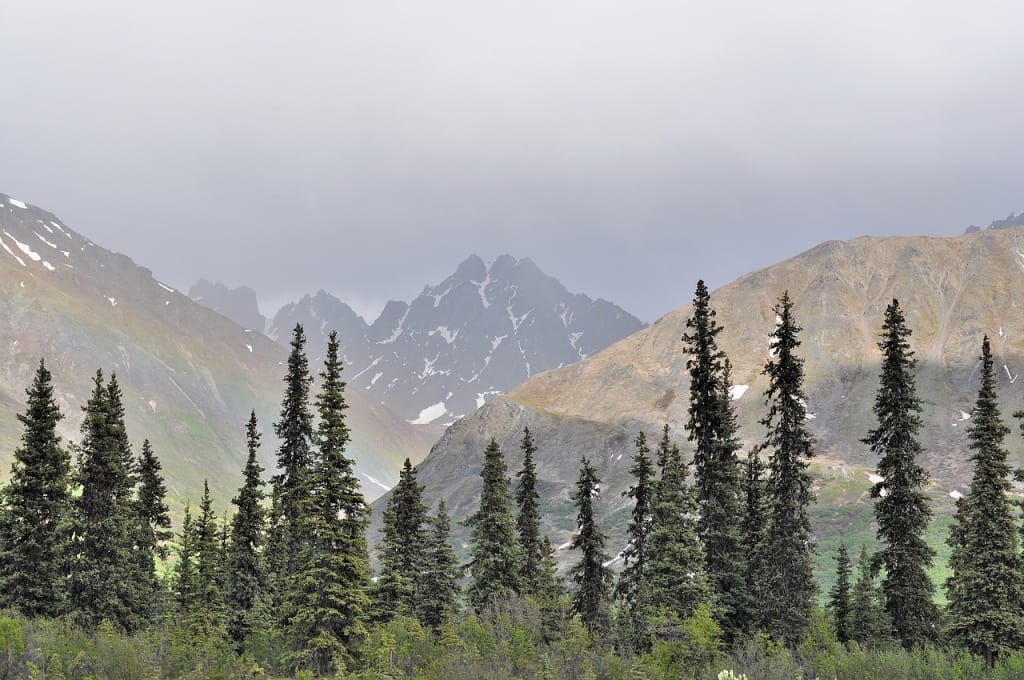
When I moved to my homestead on the outskirts of Healy, I loved that I only saw the occasional backpacker or hunter. Healy is just outside Denali National Park, but park staff no longer oversee it; supplies are too difficult to transport here in large enough quantities. One good thing about this warmer, drier weather is that I get to see Denali's peak daily. Slamming into the sky from the ground, it rises twenty-six thousand feet, dwarfing everything else across the landscape. Despite fewer glaciers on its peak, I still awaken each morning to the sun gleaming on its ice.
With the warmer climate, the Nenana River no longer freezes. This allows for easy year-round fishing. Because the water is pure here, fish is my primary protein. Moose are also plentiful, but I can't stand to shoot them and don't allow the hunters on my land. Now, don't start in on me about the need to cull them. We have natural predators like grizzlies and wolves that keep them in check. I'd like to think that the wildlife around here knows my small place is a peaceful refuge. 'Sides, moose meat is an acquired taste, and I can't stomach it.
Tim lives thirty miles to the east. A retired military pilot from Space Force, he can fly anything, whether fixed-wing or rotary. Our partnership with the coastal communities has created a food cooperative across Interior Alaska. We plan to fly the food we've been growing on our properties down to the Lower 48, beginning with dried-up Oregon. Washington and British Columbia have already built their co-ops, so our primary goal is to feed the smaller and more spread-out populations further south. People are hungry, and we can feed them; since days are so long up here, gardeners and farmers can grow much larger produce. Pumpkins and cabbage tend to reach over one hundred pounds, and broccoli and cauliflower are the next largest, at thirty. We're also cultivating other cruciferous and root vegetables.
We consider fish our main protein, but we've also been experimenting with Dall sheep meat. Our bear-proof fish building has fifteen commercial stainless pans of salmon being brined daily. After a forty-minute brining, it's placed on drying racks, and later, we wrap the smokers with old blankets to trap the smoke.
While we wait for our crops, I teach nearby communities about sorrel, a leafy green that propagates quickly. It keeps for long periods, is nutrient-dense, and quite hearty.
Due to the lack of medical personnel, herbs - not pharmaceuticals - are our medicine, and we've dedicated part of our operation to hemp and cannabis. Mary, Tim's partner and a naturopath, oversees this for us. She used her elegant calligraphy to label the hundreds of glass jars lining the shelves in her apothecary. I love that the scents of what she grows envelop me when I visit. Dried lavender, chamomile, and lemon balm are so calming. Sunlight blazes through the glass skylight over her tiny tea room, and the ceiling fan keeps her indoor wind chimes tinkling. You'll always find a large gathering of people sitting on the porch, waiting for an audience with her.
My bestie, Skye, is an aquaculturist and scientist who spends her days in the kelp hatchery on her island. Her husband attaches the kelp seedlings over acres of rope in the purest water on earth, and their farm yields abundant harvests. She creates the most amazing dinners when we visit using tofu and vegetables from her greenhouse. As we eat family-style on their deck, we look out at the lapping waves, knowing the kelp is growing underneath and will sustain humans.
Tim's brilliant idea for growing insect edibles will supplement our fish and sheep supplies! He and Skye have been working 'round the clock to catalog everything and figure out the best way to process the insects into protein packs. Apparently, the black ants taste the best!
A cadre of his former Space Force buddies stands by, ready to transport our first shipment next week.
Copyright © 1/10/2025 by Andrea O. Corwin
I appreciate your stopping by! 😃 It would be my sincere pleasure if you click the ♡, leave a comment, share the story, and hit that (free) subscribe button.
About the Creator
Andrea Corwin
🐘Wildlife 🧘♀️ 🖋️🈷️ 3rd°🥋 See nature through my eyes and photos.
Poetry, haiku, fiction, horror, life experiences. Written without A.I. © Andrea O. Corwin
bigcats4ever.bsky.social
Threads/ Instagram @andicorwin
Enjoyed the story? Support the Creator.
Subscribe for free to receive all their stories in your feed. You could also become a paid subscriber, letting them know you appreciate their work.
Comments
There are no comments for this story
Be the first to respond and start the conversation.