
The James Webb Space Telescope (JWST)
The James Webb Space Telescope (JWST) is one of the most highly anticipated scientific instruments of the 21st century. Named after James E. Webb, a former NASA administrator, the telescope is set to become the premier observatory for studying the cosmos.

Introduction:
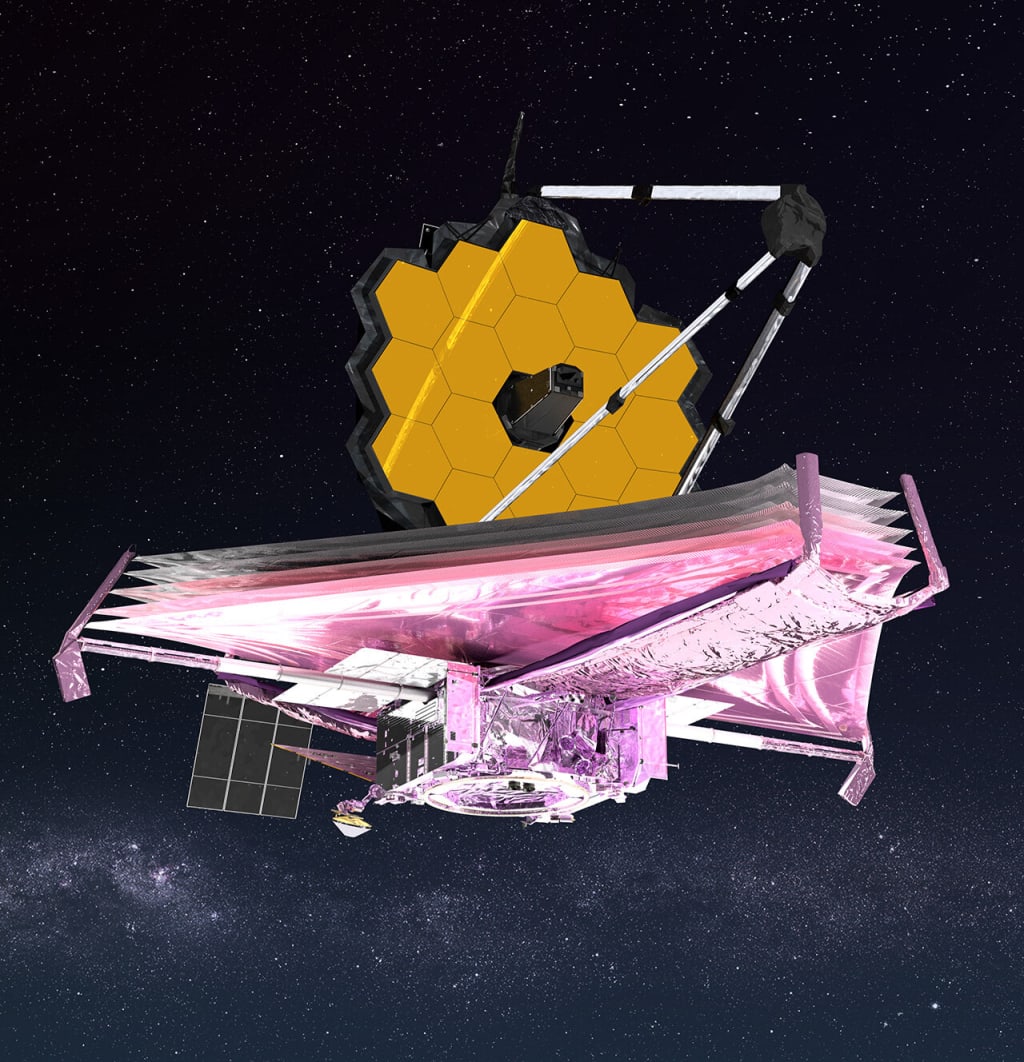
The James Webb Space Telescope (JWST) is one of the most highly anticipated scientific instruments of the 21st century. Named after James E. Webb, a former NASA administrator, the telescope is set to become the premier observatory for studying the cosmos. With a mirror nearly three times larger than the Hubble Space Telescope, the JWST is expected to revolutionize our understanding of the universe and reveal new insights into the mysteries of the cosmos.

History in Development:
The development of the JWST began in 1996, with the goal of creating a more advanced space telescope than the Hubble. The Hubble has been in operation since 1990 and has made numerous groundbreaking discoveries, including the first images of a planet beyond our solar system and the discovery of dark energy. However, it has limitations, such as being sensitive to visible and ultraviolet light only. The JWST was designed to overcome these limitations by focusing on infrared wavelengths.

Primary Objectives to study:
One of the primary objectives of the JWST is to study the origins of the universe. It will do this by observing the first galaxies that formed after the Big Bang, which are too distant and too faint to be seen by any other telescope. By studying these ancient galaxies, scientists hope to learn more about how the universe evolved and how the first stars and galaxies formed.

Study of Exoplanets:
The JWST will also study the atmospheres of exoplanets, which are planets that orbit stars outside of our solar system. By studying the chemical composition of these atmospheres, scientists hope to determine whether these planets could support life. The JWST will also be able to observe the early stages of planet formation, which will provide new insights into how planets form around stars.
Unique Features:
Another unique feature of the JWST is its sunshield, which is designed to protect the telescope from the heat of the Sun and the Earth. The sunshield is made up of five layers of a special material that reflects sunlight and dissipates heat. The sunshield is about the size of a tennis court and will be deployed once the telescope reaches its destination, a point in space called L2, which is located about 1.5 million kilometers from Earth.

The Launch of (JSWT):
The launch of the JWST has been delayed several times due to technical and budgetary issues. The telescope is now scheduled to launch in late 2021, on an Ariane 5 rocket from French Guiana. Once in space, the telescope will undergo a series of tests before it begins its scientific observations. The telescope has a planned operational lifetime of 10 years.
Conclusion:
In conclusion, the James Webb Space Telescope represents a major milestone in space exploration and is expected to revolutionize our understanding of the universe. With its advanced infrared capabilities, the JWST will be able to study the origins of the universe, exoplanets, and the early stages of planet formation. The launch of the JWST will mark a new era in astronomy and will undoubtedly lead to many new discoveries and breakthroughs in our understanding of the cosmos.
About the Creator
Mindings
"Hi there! I'm Mindings, a tech enthusiast and blogger with a passion for all things digital. and other stuff, Thanks for stopping by, and I hope you enjoy reading my blog!"
Enjoyed the story? Support the Creator.
Subscribe for free to receive all their stories in your feed.
Comments
There are no comments for this story
Be the first to respond and start the conversation.