space
Space: The Final Frontier. Exploring space developments and theorizing about how humans fit into the universe.
Tomorrow’s Utopia: The Perfect World That Wasn't. AI-Generated.
**Tomorrow’s Utopia: A Perfect World with Hidden Cracks** The year is 2145. Humanity has finally achieved what generations before could only dream of—a utopia. War, poverty, disease, and inequality have all been eradicated through radical technological innovation and deep social restructuring. Cities glisten with solar-powered towers, energy is limitless, and humans live in perfect harmony with nature. Artificial Intelligence governs with unparalleled efficiency, ensuring justice, opportunity, and fairness for all.
By Ahmet Kıvanç Demirkıran2 years ago in Futurism
Quantum Leap Forward: . AI-Generated.
Imagine a world where a computer solves a puzzle in seconds that would take today’s fastest machines a million years to crack. It’s not a sci-fi dream—it’s February 27, 2025, and quantum computing is teetering on the edge of a breakthrough that could rewrite reality as we know it. This year, whispers from labs in Silicon Valley and Beijing hint at a milestone: a quantum machine that doesn’t just crunch numbers but bends the rules of physics itself. Are we standing at the dawn of a new era, or peering into a Pandora’s box we can’t yet comprehend? Quantum computing isn’t new, but 2025 feels different. Giants like IBM and Google have spent decades wrestling with qubits—those elusive quantum bits that can be 0, 1, or both at once, thanks to a trick called superposition. Picture a coin spinning in midair, undecided until it lands. By early 2025, rumors swirl of a stable 1,000-qubit system, dwarfing the 100-qubit toys of yesteryear. This leap could crack problems we’ve long deemed impossible—like breaking unbreakable encryption or simulating molecules for miracle drugs. One breakthrough this month: a quantum algorithm slashed a climate model’s runtime from years to hours, hinting at real-world power. But it’s not just about speed; it’s about weirdness. Quantum entanglement—where particles link across vast distances, acting as one—promises instant communication, maybe even teleportation. In 2025, a Beijing team claims they’ve entangled qubits 500 miles apart via satellite, a record that makes Star Trek feel closer than ever. Imagine a future where data zips across galaxies without delay, or where physical objects beam from lab to lab. It’s mind-bending stuff: if two particles can share a secret no distance can break, what does that say about the fabric of reality? Are we all just entangled threads in a cosmic web? The implications ripple outward. By 2025, quantum machines could decode the universe’s deepest mysteries—black holes, dark matter, the Big Bang—faster than any human mind could dream. Industries brace for upheaval: cybersecurity scrambles as quantum codebreakers loom, while medicine eyes tailored cures from simulated DNA. Yet, there’s a catch. Scaling quantum tech is a beast—qubits are fragile, collapsing at the slightest nudge from heat or noise. This year’s prototypes are still lab-bound, gulping liquid nitrogen like thirsty dragons. Practicality lags, but the horizon glimmers. Now, let’s leap to the futuristic edge. By 2040, quantum computers might not just solve problems—they could reshape existence. Picture a reality where we manipulate time’s flow via quantum simulations, or where entangled networks link human minds to machines, blurring consciousness itself. It’s a wild vision: a world where physics bends to our will, or where we discover reality’s a hologram we’ve only begun to tweak. But with power comes peril—could quantum hacks unravel society, or unleash forces we can’t control? Here’s where you come in, futurists: how would quantum tech change your life? Could it unlock utopia or unravel our grip on what’s real? Drop your predictions below—I’m itching to hear how you see this revolution unfolding. As 2025 unfolds, we’re reminded of Albert Einstein’s words: “Imagination is more important than knowledge. For knowledge is limited, whereas imagination embraces the entire world.” In the quantum age, that imagination might just redefine it.
By Pure Crown2 years ago in Futurism
China's James Webb Space Telescope Rival: The Xuntian Space Telescope
China is making significant strides in space exploration, and one of its most ambitious projects is the Xuntian Space Telescope (CSST), also known as "Surveying the Heavens." This state-of-the-art telescope is set to launch in late 2026, aiming to rival the James Webb Space Telescope (JWST) and the Hubble Space Telescope. The Xuntian telescope will play a crucial role in advancing astronomical research, providing new insights into dark matter, galaxy formation, and cosmic evolution.
By Delta Roblox Executor Download APK 2026 latest New Update2 years ago in Futurism
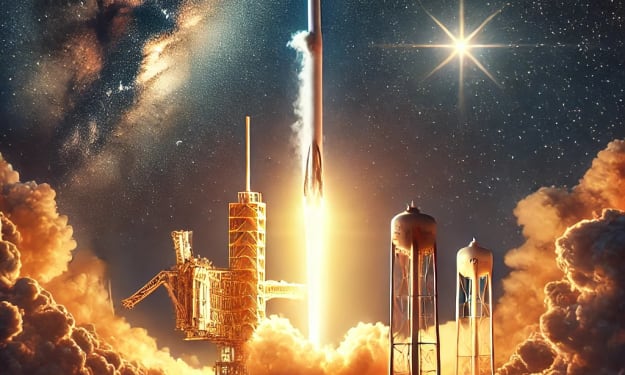
SpaceX Falcon 9 Rocket Launch: Everything You Need to Know About the Latest Mission
SpaceX continues to revolutionize space travel with its advanced rockets and ambitious missions. The SpaceX Falcon 9 rocket launch remains one of the most anticipated events for space enthusiasts worldwide. Whether you're searching for details about the latest SpaceX launch, the schedule for today's launch, or updates on Vandenberg launches, this article covers everything you need to know.
By Delta Roblox Executor Download APK 2026 latest New Update2 years ago in Futurism
The Quantum Leap:
The future isn’t coming—it’s accelerating toward us, powered by a technology so disruptive it defies comprehension. Quantum computing, once a theoretical whisper in physics labs, is now a tangible force, promising to unravel problems that have stumped humanity for decades. Forget the binary world of zeros and ones; quantum computers operate in a realm of probabilities, harnessing the quirks of subatomic particles to process information at unimaginable speeds. As we stand on the brink of this quantum leap, the question isn’t if it will change our lives, but how profoundly—and whether we’re ready for the upheaval it could bring.
By Pure Crown2 years ago in Futurism
The Cities of Tomorrow: How Floating Homes Could Solve Overpopulation
The world is running out of room. With the global population hurtling toward 10 billion by 2050, cities are straining at the seams. Urban sprawl devours forests and farmland, housing crises push rents into the stratosphere, and coastal regions grapple with the twin perils of overcrowding and rising seas. Traditional solutions—building skyscrapers or sprawling suburbs—can only go so far. But what if the answer lies not on land, but on water? Floating homes, once a quirky novelty, are emerging as a radical blueprint for the cities of tomorrow, promising to ease overpopulation while reimagining how we live.
By Pure Crown2 years ago in Futurism
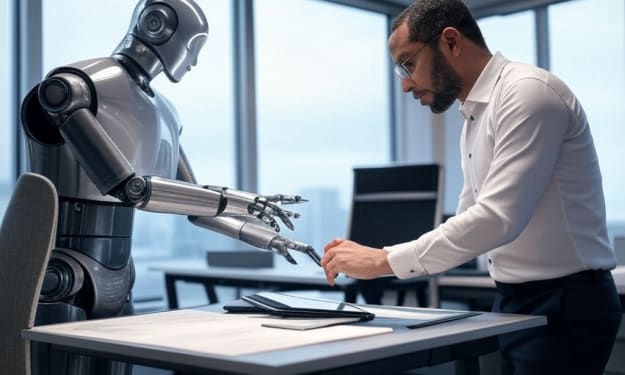
The Future of Work: Will Robots Take Over Your Job?
Imagine it’s 2035. Your coworker isn’t sipping coffee or grumbling about deadlines—it’s a sleek, humming machine, tireless and immune to office drama. Science fiction? Hardly. Robots and artificial intelligence are already reshaping the workplace, and the question isn’t if they’ll take your job, but how they’ll transform it. Let’s break it down.
By Pure Crown2 years ago in Futurism
AI and Humanity: Partners or Rivals in the Coming Decades?
The curious mind and heart! Have you ever stopped to wonder about the machines we’re building, the ones that think, learn, and sometimes even surprise us? Artificial intellige qnce is no longer just a sci-fi fantasy; it’s here, weaving itself into our lives, our jobs, our dreams. And here’s the million-dollar question that keeps us all up at night: Are we on the brink of an incredible partnership, or are we staring down a rivalry that could change everything? Let me tell you—it’s thrilling, it’s a little scary, but most of all, it’s ours to shape.
By Pure Crown2 years ago in Futurism
The Ethics of AI: Can Machines Make Moral Decisions?. Content Warning. AI-Generated.
Artificial Intelligence (AI) is no longer a futuristic concept—it’s here, shaping our lives in ways we never imagined. But as machines grow smarter, a critical question arises: Can machines make moral decisions? This post dives deep into the ethics of AI, exploring its potential, limitations, and implications for humanity. Whether you’re a student, professional, or simply curious, this article will guide you through the fascinating world of AI ethics with clarity and actionable insights.
By kalu ram meena2 years ago in Futurism
NASA’s Insights on Asteroid 2024 YR4: Is Earth at Risk of an Impact?
The vastness of space holds many celestial objects, among them asteroids—rocky remnants from the early solar system. These space rocks occasionally pass near Earth, raising concerns about potential impacts. Recently, NASA has been monitoring an asteroid named 2024 YR4, which has gained attention due to speculations about its trajectory and potential impact on Earth. But should we be worried?
By Delta Roblox Executor Download APK 2026 latest New Update2 years ago in Futurism
Footy
Footy, also known as football in many countries, is one of the most popular sports in the world. It is played in different forms, such as soccer, Australian Rules Football, rugby, and American football. People of all ages enjoy playing and watching footy, and it brings communities together. This article will discuss the history, rules, benefits, and global impact of footy.
By Farhan Sayed2 years ago in Futurism