science
Topics and developments in science and medicine, presented by Futurism.
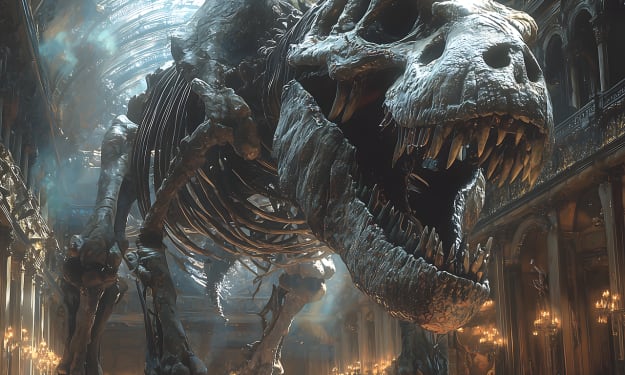
The Hidden Legacy of Giants And The Smithsonian: Part One
Memories of Forgotten Beings and the Mysteries They Left Behind Throughout human history, stories of giants have haunted the edges of myth and memory. From the towering Nephilim of the Bible to the Titans of Greece and the thunderous Jötnar of Norse legend, nearly every culture has preserved fragments of a time when beings of unusual size and power roamed the Earth. But are these stories simply metaphors for human ambition, or do they conceal a hidden chapter of history that someone has tried to erase? Old Memories of a race of forgotten beings fade through the myths and scriptures of nearly every civilization. They surface like fragments of a dream, half-remembered, half-suppressed, yet too consistent across cultures to be ignored. The idea of giants, beings far taller and stronger than ordinary men, is not limited to the Bible’s brief mention of the Nephilim. It is a motif carved into stone, sung in ancient epics, and passed down through the oral traditions of peoples separated by oceans and millennia.
By The Secret History Of The Worldabout a year ago in Futurism
The Empathy Protocol
According to a 2024 survey, 72% of young adults aged 18–30 believe AI could one day understand human emotions as deeply as another person. That number is astonishing—not because it proves machines are taking over our hearts, but because it shows how ready our generation is to believe in the possibility of artificial empathy.
By Soul Pagesabout a year ago in Futurism
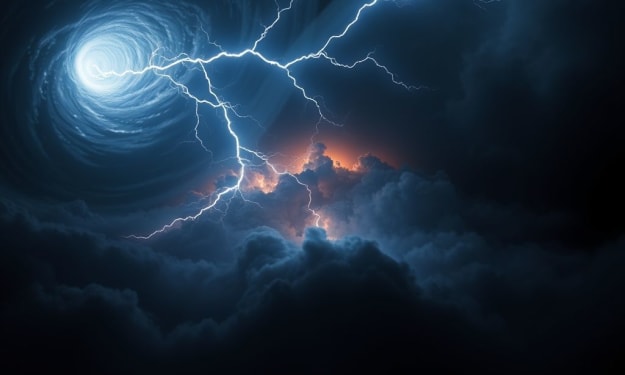
How Electric Discharges Form in the Atmospheres of Other Planets
When we hear the word lightning, we usually picture a blinding flash slicing through a stormy sky, followed by a deafening roll of thunder. On Earth, lightning is a familiar natural spectacle. But beyond our planet, electric discharges can be far stranger, far more powerful, and, in some cases, even dangerous.
By Holianyk Ihorabout a year ago in Futurism
Colonizing the Moons of Uranus and Neptune: Life on the Edge of the Solar System
When most people imagine humanity colonizing space, they picture bustling cities on Mars, mining stations on the Moon, or scientific outposts on the icy moons of Jupiter and Saturn. But what if we dared to look even farther beyond Saturn’s majestic rings, past the edge of the familiar Solar System, to worlds so distant that the Sun appears as a pale star in the sky?
By Holianyk Ihorabout a year ago in Futurism
AI with Maternal Instincts
Imagine a future where humanity's fate hinges not on our collective intellect, but on the nurturing "love" of a machine. Sounds like a dystopian sci-fi plot, doesn't it? Welcome to the latest, and perhaps most unsettling, proposition from Geoffrey Hinton, the so-called "Godfather of AI."
By Francisco Navarroabout a year ago in Futurism
Dollar vs BRICS Currency: The Silent Battle for a New World
It’s the kind of story that begins in the ruins of war and may end in the reshaping of the global order. Today, the world is quietly watching a battle that isn’t fought with missiles or tanks — but with currency. On one side stands the U.S. dollar, the king of the global economy for nearly eight decades. On the other side, a rising challenger: the idea of a BRICS currency backed by gold and raw power.
By Leah Brookeabout a year ago in Futurism
Neutrino Observatories in Deep Space: Eyes That See Through the Stars
Far across the cosmos, billions of light-years away, events of unimaginable power unfold supernova explosions, neutron star collisions, and energy bursts from supermassive black holes. Most of these cosmic cataclysms remain hidden from traditional telescopes, their signals swallowed by gas, dust, and distance.
By Holianyk Ihorabout a year ago in Futurism
Cosmic Relics — The Remnants of Stars and Planets
Scattered across the vast darkness of the Universe lie ancient artifacts cosmic relics that have survived the births and deaths of stars, the violent creation of planets, and catastrophic collisions between celestial giants. These silent travelers have been drifting through space for billions of years, each one carrying a fragment of the Universe’s history like a page torn from an ancient, unending book. Today, astronomers are learning to “read” those pages, unlocking secrets from the dawn of time.
By Holianyk Ihorabout a year ago in Futurism
Why This Universe Podcast
The University of Chicago was incorporated as a coeducational institution in 1890 by the American Baptist Education Society, using $400,000 donated to the ABES to supplement a $600,000 donation from Standard Oil co-founder John D. Rockefeller, and including land donated by Marshall Field.
By Frank Racioppiabout a year ago in Futurism