science
Topics and developments in science and medicine, presented by Futurism.
The Hidden Truth About Using ChatGPT: Why You Should Handle It With Care
It begins innocently enough. You open up a sleek little chatbox, type in a question — anything from “write me a poem” to “explain quantum mechanics” — and within seconds, the words appear. Crisp. Confident. Fluent.
By Fazal Ur Rahmanabout a year ago in Futurism
3 AI Websites That Will Blow Your Mind!
It always happens when you least expect it. One minute, you’re mindlessly scrolling at 2AM — trying to convince yourself that watching “just one more” cat compilation isn’t a terrible life choice. The next minute? BAM. You stumble upon something so surreal, so jaw-dropping, so unbelievably futuristic that your brain does a double take.
By Fazal Ur Rahmanabout a year ago in Futurism
Robots Will Be Able to Give Birth
A Chinese company claims it is on the verge of creating an artificial womb inside a humanoid robot, capable of carrying a baby to term. This announcement forces us to confront a fundamental question: are we witnessing a revolution that could end infertility, or standing on the edge of a dystopian nightmare that redefines the very origin of life?
By Francisco Navarroabout a year ago in Futurism
The Hidden Legacy of Giants and the Smithsonian Part Two: The Vanishing Bones
The Vanishing Bones The story of giants in North America did not end with the early newspaper clippings and scattered reports of colossal skeletons. If anything, those accounts were only the beginning of a more profound mystery that would grow more unsettling as the decades unfolded. Where the first wave of discoveries gave the public images of titanic skeletons unearthed from burial mounds and ancient chambers, the following years revealed something stranger still: the systematic disappearance of evidence. Eyewitnesses told their stories, crates were packed and shipped, and then, silence. The bones were gone, as though swallowed by history itself.
By The Secret History Of The Worldabout a year ago in Futurism
The Latest Breakthrough in the Double-Slit Experiment
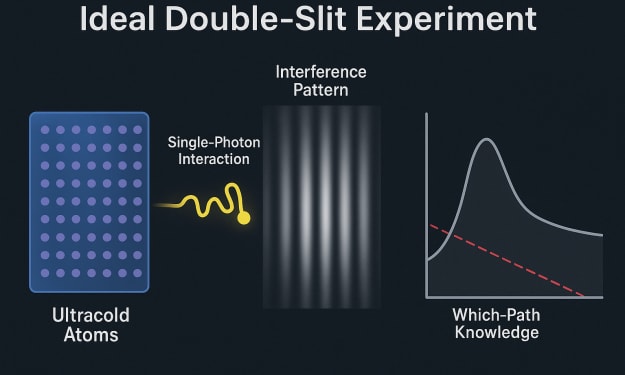
MIT Puts to Rest the Wave-Particle Duality Debate In July 2025, physicists at the Massachusetts Institute of Technology (MIT) achieved what is arguably the cleanest and most compelling realization to date of the famed double-slit experiment. Conducted in Cambridge, Massachusetts, this “idealized” rendition of the 1801 Young experiment pitted Einstein’s century-old intuition against Bohr’s quantum orthodoxy—and emerged as a decisive vindication of Bohr’s principle of complementarity.
By Mohamed hgazyabout a year ago in Futurism
Choosing the Right Crops for Solar Farms: Practical Insights for Agrivoltaic Success
When it comes to agrivoltaics, the crops you plant are just as important as the solar panels you install. Not every plant responds well to partial shading, and making the wrong choice can turn an innovative project into a frustrating one. But when farmers select crops that thrive under solar panels, the results can be extraordinarily higher yields, improved water savings, and a steady income from renewable energy.
By Kenneth Annanabout a year ago in Futurism
3D Printing. AI-Generated.
Start writing...3D Printing How 3D Printing Has Shaped Industry and Science In the past few decades, one of the most exciting technological revolutions has been 3D printing, also known as additive manufacturing. What started as a small idea in research labs is now transforming industries such as medicine, aerospace, construction, and even education. The history of 3D printing is full of fascinating inventors, groundbreaking innovations, and unexpected applications that continue to push the boundaries of human creativity.
By Mohamed hgazyabout a year ago in Futurism
The Looming AI Winter: Hype, Overinvestment, and What Comes Next
Artificial intelligence has taken center stage in today’s tech-driven economy. From ChatGPT to autonomous vehicles, AI is transforming industries, fueling startups, and pushing stock markets to record highs. Giants like Nvidia, Microsoft, and OpenAI have become the poster children of what many call the "AI gold rush." But behind the excitement, a critical question lingers: *Is this boom built to last—or are we setting the stage for another "AI winter"?* --- ## A Look Back: What Was the AI Winter? An "AI winter" refers to periods when interest and funding in artificial intelligence plummeted, usually after grand promises failed to materialize. - **First AI Winter (1970s):** Early researchers envisioned machines with human-like reasoning, but limited computing power and underwhelming results led governments to slash funding. - **Second AI Winter (1980s–90s):** Expert systems were hailed as revolutionary, but they turned out to be expensive, inflexible, and difficult to scale. When the hype faded, investments dried up. Each collapse followed a cycle of overpromising and overinvestment—a pattern some fear is repeating today. --- ## Warning Signs in Today’s AI Boom ### 1. **Sky-High Valuations** Startups with little more than a prototype are landing billion-dollar valuations. Venture capital is flooding AI at levels not seen since the dot-com bubble. ### 2. **The Limits of "Bigger Is Better"** Many cutting-edge AI models rely on scaling up data and computing power. But experts warn that simply adding more parameters may soon hit diminishing returns. ### 3. **Runaway Costs** Training top-tier AI models can cost hundreds of millions, consuming massive energy and requiring specialized hardware. This creates a high barrier to entry, leaving only tech giants in the game. ### 4. **Overblown Expectations** AI is often marketed as a cure-all—replacing doctors, solving climate change, even achieving human-like reasoning. While progress is real, many applications remain experimental and error-prone. Taken together, these factors suggest the AI market may be overheating. --- ## Could Another AI Winter Happen? The risk isn’t that AI will "fail"—it’s that hype could outpace reality. If investors pour billions into unproven ideas and consumers grow frustrated with underdelivered promises, enthusiasm could evaporate quickly. Consider self-driving cars: a decade ago, companies promised fully autonomous vehicles by the early 2020s. Today, progress is real—but human drivers still dominate the roads. Similarly, AI chatbots are impressive but still prone to "hallucinating" false information. If AI can’t translate hype into real-world reliability, funding could freeze, innovation could slow, and startups could collapse. --- ## Why This Time Might Be Different Not everyone believes a full-blown winter is coming. Some argue today’s AI boom is built on a stronger foundation: - **Real-World Adoption:** Unlike past cycles, businesses are actively using AI for marketing, coding, customer service, and healthcare. - **Massive Infrastructure Investments:** Cloud providers, chipmakers, and governments are pouring billions into AI-ready infrastructure. - **Embedded in Daily Life:** Even if cutting-edge models plateau, AI is already woven into everyday tools—from email assistants to fraud detection. In this view, we might see a *cooling* of hype rather than a deep freeze—a shift from speculative frenzy to steady, practical growth. --- ## Key Lessons for the AI Era Whether or not a winter arrives, the current boom offers crucial insights: ### 1. **Ignore the Hype** Not every AI startup will be the next OpenAI. Investors must separate real innovation from marketing buzz. ### 2. **Solve Real Problems** The most successful AI companies focus on tangible benefits—cutting costs, improving efficiency, or enhancing user experiences—not chasing sci-fi fantasies. ### 3. **Smart Regulation** Governments must balance protecting against misuse (like deepfakes and bias) without stifling innovation. ### 4. **The Next Breakthrough May Not Be "Bigger AI"** Future advances could come from entirely new approaches—like neuromorphic chips, causal reasoning, or hybrid AI systems—rather than just scaling up existing models. --- ## The Future: Winter, Slowdown, or Evolution? AI stands at a crossroads. While excitement is driving incredible progress, unchecked hype could lead to a sharp backlash. The most likely outcome? Not a catastrophic freeze, but a *market correction*—where unsustainable startups fail, investment becomes more cautious, and only the most practical AI applications thrive. For consumers, this could be a good thing: fewer exaggerated claims and a clearer sense of what AI can actually do. For the tech industry, it might be the reset needed to turn AI from a speculative bubble into a stable, trusted field. --- ## Final Thoughts The fear of an AI winter isn’t just about technology—it’s about human nature. We’ve seen this cycle before: excitement, overpromising, disappointment, and renewal. Today’s AI boom carries similar risks, but also unprecedented potential. If we focus on real-world value over hype, long-term progress over short-term gains, and transparency over exaggeration, this era won’t end in another deep freeze. Instead, it could mark the moment AI truly matured.
By GadgetGroundabout a year ago in Futurism