science
Topics and developments in science and medicine, presented by Futurism.
'Super-Earth' is our best chance to date to find extraterrestrial life.
Just under 20 light-years away, astronomers have discovered a likely rocky "super-Earth" that might harbour life. The mass of the planet GJ 251 c seems to be nearly four times that of Earth. The fact that it orbits in the habitable zone—where, under ideal circumstances, liquid water may persist—has scientists excited.
By Francis Dami12 months ago in Futurism
Huawei Pura 80 Ultra vs Honor Magic 7 Pro — Complete comparison (design, cameras, performance, battery, software, verdict
Short version: both are top-tier 2025 flagships: Huawei’s Pura 80 Ultra focuses on camera innovation and battery/charging tech, while Honor’s Magic 7 Pro emphasizes raw performance, wide software/ecosystem support, and strong zoom optics. Which one suits you depends on whether you prioritise camera hardware and Huawei’s proprietary stack, or Google-friendly Android performance and broader regional availability. Below is a full, walk-through comparison to help you decide. Quick model facts (release & positioning Huawei Pura 80 Ultra — flagship from Huawei’s 2025 Pura series; flagship camera innovations (switchable dual telephoto periscope), large main sensor, HarmonyOS-based software. (Huawei official specs / coverage). ([HUAWEI Consumer][1]) Honor Magic 7 Pro — Honor’s 2025 flagship positioned as a performance and camera leader with Snapdragon flagship silicon and advanced telephoto hardware; launched into international markets with Android-based MagicOS. ([Honor][2]) Design & display Huawei Pura 80 Ultra 6.8″ LTPO OLED, high refresh rate (adaptive), premium glass/metal build; large camera island to host its complex telephoto module. Official spec pages list the display and physical dimensions. ([HUAWEI Consumer][1]) Honor Magic 7 Pro 6.8″ OLED quad-curved “floating” screen, flagship class panels with high refresh rate and very slim bezels; compact/flat side profile and IP68/IP69 durability in some regional variants. ([Honor][3]) Takeaway: both use top-class OLED panels around 6.8″ with high refresh rates. Expect excellent brightness, contrast and smooth UI. Huawei’s design emphasizes the camera hardware; Honor targets a slightly sleeker IP-rated package. Performance (SoC, memory) Honor Magic 7 Pro Ships with a Qualcomm flagship (Snapdragon 8 Elite / 8 Gen 3 depending on SKU and market), tuned for performance and gaming. Multiple RAM/storage options (12GB+). Honor explicitly advertises the Snapdragon 8 Elite on global pages. ([Honor][2]) Huawei Pura 80 Ultra Huawei increasingly uses its own Kirin or region-specific chipsets; the Pura 80 Ultra focuses on camera and imaging compute rather than chasing raw Qualcomm peak in some international SKUs. Huawei’s pages show HarmonyOS and high-end memory options but chipset details vary by market. ([HUAWEI Consumer][1]) Takeaway: if peak CPU/GPU performance (and broad app/game compatibility on Android) is a priority, Honor’s Qualcomm-powered Magic 7 Pro will generally be the safer bet internationally. Huawei’s silicon + ISP strengths are tuned for imaging workloads and AI features inside HarmonyOS. Cameras (the biggest difference) Huawei Pura 80 Ultra — what stands out Innovative switchable dual-telephoto periscope system: two telephoto focal lengths (about 3.7× and 9.4× optical) using a movable prism to let two lenses share a larger sensor — a novel approach that saves space while delivering strong medium and long-range zoom. Main camera: 50MP 1-inch style (Ultra Lighting HDR) with variable aperture; a high-res ultra-wide as well. Huawei’s launch coverage highlights this mechanical/optical innovation. ([HUAWEI Consumer][1]) Honor Magic 7 Pro — what stands out Very strong multi-lens system with an emphasis on computational zoom and a 200MP telephoto module in some variants (Honor markets a 3× periscope with high megapixel count + AI Super Zoom). Honor combines high-res sensors with aggressive software sharpening/AI processing. Honor’s global spec pages and coverage describe the flagship telephoto and camera AI. ([Honor][2]) Real-world differences Huawei’s physical optical ingenuity (switchable tele lenses + larger main sensor) tends to produce very natural, high-dynamic-range images and excellent long-range detail without relying solely on heavy cropping. Honor’s approach blends very high megapixel sensors and Qualcomm’s ISP + Honor’s AI to achieve strong results and very usable zoom (often excellent at 3×–10× thanks to hybrid zoom algorithms). Takeaway: for pure optical engineering and especially long-range telephoto fidelity, Huawei’s Pura 80 Ultra is unique and compelling. For overall camera versatility, computational features, and aggressive megapixel zoom, Honor is excellent and often more predictable across apps/markets. Battery & charging Huawei Pura 80 Ultra — large battery capacity (Huawei cites figures in the 5,000–5,700 mAh range across the Pura family) and extremely fast wired/wireless charging in flagship trims; Huawei emphasizes fast wired + very fast wireless charging. ([HUAWEI Consumer][1]) Honor Magic 7 Pro — competitive battery (around 5,200–5,270 mAh in some specs), fast wired charging and proprietary silicon-carbon battery tech in Honor documentation; rated to do well across a full day of heavy use. ([Honor][2]) Takeaway: both provide excellent battery life and fast charging; Huawei may have a small edge in maximum charging rates and very large-cell options depending on the exact SKU. Software, ecosystem & app support Huawei Pura 80 Ultra Runs HarmonyOS (Huawei’s ecosystem). HarmonyOS includes deep Huawei-centric integrations and on-device AI features, but outside China users should check app availability: Huawei devices in many regions still face Google Mobile Services (GMS) limitations; Huawei supplies AppGallery + HMS alternatives. If you rely on Google apps/AOSP-dependent services, verify availability for your country. ([HUAWEI Consumer][1]) Honor Magic 7 Pro Runs MagicOS (Honor’s Android skin) based on recent Android versions (Android 14/15 depending on region) with full Google services in most international markets. Honor tends to ship with Google Play and familiar Android experience in Europe, South Asia and other regions. ([Honor][2]) Takeaway: software/ecosystem is a major decision factor: choose Honor for a classic Android + Google experience and wider third-party app compatibility; choose Huawei if you accept HarmonyOS and want Huawei’s on-device AI features and camera pipeline. Connectivity, network & available Honor generally sells widely in Europe, Asia, and many international markets with full band support and carrier compatibility. ([Honor][2]) Huawei increasingly sells flagship devices widely but availability and official support (and GMS) depend strongly on region due to trade/market restrictions. If you’re in Pakistan or other specific markets, check local stock and official service coverage before buying. ([The Verge][4]) Takeaway: Honor often has the edge in global availability and official warranties; Huawei may require import/grey-market purchases in some regions. Pricing (how they position value) Both are premium, flagship-priced phones. Huawei’s Pura 80 Ultra launched at flagship pricing in China (reports noted CNY9,999 for Ultra), while Honor’s Magic 7 Pro also sits in the flagship price bracket in Europe and other regions. Exact street prices vary by country, taxes and local SKUs — check local retailers for up-to-date pricing. ([The Verge][4]) Pros & Cons — quick summary Huawei Pura 80 Ultra Pros: breakthrough optical design (switchable dual telephoto), very large main sensor and strong imaging/AI pipeline, competitive battery/charging. ([HUAWEI Consumer][1]) Cons: software ecosystem may be constrained by GMS absence in some regions; availability/warranty/support varies by market. ([The Verge][4]) Honor Magic 7 Pro Pros: flagship Qualcomm performance, strong computational imaging (200MP telephoto in some SKUs), full Android/Google support in many markets, IP rating and broadly available. ([Honor][2]) Cons: camera results can be more “AI-processed” (sharpening/saturation) depending on taste; fewer radical optical hardware innovations compared with Huawei’s latest Ultra. ([Honor][2]) Who should buy which phone? Buy the Huawei Pura 80 Ultra if: you want the cutting edge in optical camera hardware, prefer Huawei’s imaging stack and on-device AI, and either live in a market where Huawei fully supports devices or are comfortable with AppGallery/Huawei services. ([HUAWEI Consumer][1]) Buy the Honor Magic 7 Pro if: you want a flagship with top-tier Qualcomm performance, full Android/Google compatibility, wide availability and a very strong (and often faster/safer for third-party apps) overall experience. ([Honor][2]) Final verdict (short) Both phones are excellent flagships in 2025. If your #1 requirement is optical fidelity and engineering novelty (real optical zoom and a 1-inch class main sensor), Huawei’s Pura 80 Ultra stands out. If you prefer raw performance, broad app compatibility, global support and strong computational zoom, Honor Magic 7 Pro is the more practical flagship choice for most international users.
By NextGen Mobile Tech12 months ago in Futurism
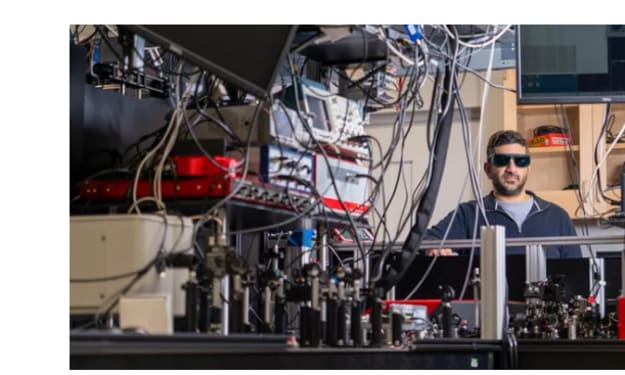
Researchers use light and crystals to create new materials on demand.
One day, it may be possible to "draw" rather than "grow" crystals for use in a wide range of applications, including lasers, LEDs, and the semiconductors used in sensors in astronomical instruments, which would result in improved performance and reduced prices.
By Francis Dami12 months ago in Futurism
A new telescope photograph shows the interstellar comet 3I/ATLAS blasting a jet towards the sun.
As our nearest star warms up a portion of the comet's surface, 3I/ATLAS is launching a jet of material in the direction of the sun. The composite image displays a white light, which is the comet's atmosphere or coma, and the nucleus, or frozen, rocky centre core, of 3I/ATLAS as a big, black dot. The purple-marked jet is blazing out in the direction of the sun, which is also how comets in the solar system often behave.
By Francis Dami12 months ago in Futurism
The End of an Era: Gaia’s Mission Comes to a Close — and Its Legacy Is Just Beginning
In early 2025, the European Space Agency’s Gaia spacecraft officially ended its operational life after more than a decade of mapping the Milky Way with breathtaking precision. It’s a bittersweet milestone for astronomers worldwide: while Gaia has stopped collecting new data, the treasure trove it leaves behind will keep fueling discoveries for decades.
By Holianyk Ihor12 months ago in Futurism
Washing Moon Dust for Helium-3: The New Space Gold Rush
The Promise of a Lunar Treasure For decades, the Moon has been more than a symbol of human curiosity — it’s been a promise. A promise of knowledge, exploration, and now, perhaps, limitless clean energy. Among all the minerals and exotic materials believed to lie within its dusty surface, one element stands out as a true cosmic prize: helium-3.
By Holianyk Ihor12 months ago in Futurism
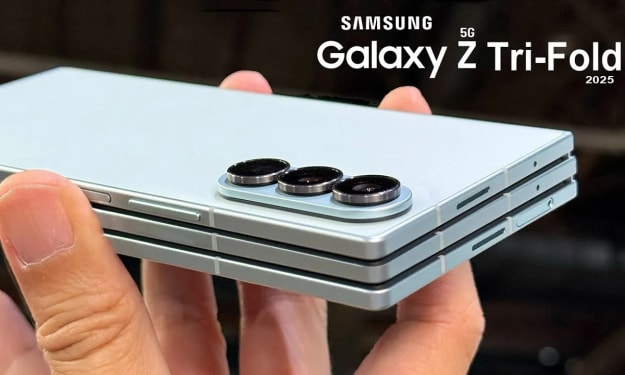
Samsung Galaxy Z Tri-Fold: The Future of Foldable Phones Is Here
Samsung is once again pushing the boundaries of smartphone innovation with its upcoming Galaxy Z Tri-Fold — a revolutionary device that redefines what a foldable phone can be. Combining futuristic design, premium engineering, and cutting-edge features, the Tri-Fold is shaping up to be one of the most talked-about tech releases of 2025. A New Era of Foldable Smartphones For years, Samsung has led the foldable market with its Galaxy Z Fold and Z Flip series. Now, the Galaxy Z Tri-Fold takes that legacy to an entirely new level. Instead of folding just once like the Fold series, this device features two hinges, allowing it to fold in three parts — creating an expansive, tablet-sized display when fully opened. Imagine carrying a smartphone that unfolds into a mini tablet — perfect for multitasking, gaming, or content creation. When closed, it’s compact enough to fit comfortably in your pocket. This triple-fold mechanism is not just a gimmick; it’s the future of portable computing. Premium Design and Precision Engineering Samsung’s engineers have invested years perfecting the tri-fold hinge system, ensuring that each fold is smooth, durable, and built to last. Early reports suggest the company has used a combination of aerospace-grade materials, ultra-thin glass, and reinforced flexible polymers to handle the stress of repeated folding. This level of craftsmanship explains the device’s exclusivity — manufacturing such a complex hinge system requires precision assembly and advanced robotics, making mass production extremely challenging. As a result, Samsung plans to release the Tri-Fold in limited quantities, elevating it to luxury status among tech enthusiasts. A Display That Redefines Immersion The Galaxy Z Tri-Fold boasts a massive AMOLED foldable display that expands to a tablet-like size when unfolded. Samsung’s proprietary Ultra Thin Glass (UTG) technology ensures crisp visuals, deep blacks, and vibrant colors that adapt seamlessly as you fold and unfold the device. When fully opened, it’s perfect for watching movies, editing photos, or running multiple apps simultaneously. Samsung’s Multi Window and App Continuity features have been further refined to support this new tri-panel layout, allowing users to drag and drop apps or split the screen into multiple functional areas effortlessly. This isn’t just a phone — it’s a productivity powerhouse that merges the convenience of a smartphone with the versatility of a tablet. Flagship Performance: Power Meets Innovation Under the hood, the Galaxy Z Tri-Fold is rumored to pack top-tier hardware that matches its premium price tag. Expected specs include: Processor: Qualcomm Snapdragon 8 Gen 4 or Samsung Exynos 2500 (depending on region) RAM: 16GB LPDDR5X Storage: Up to 1TB UFS 4.0 Battery: Dual-cell design with 120W fast charging and wireless charging support Software: Android 15 with Samsung’s One UI 7 These components ensure smooth performance, lightning-fast app switching, and energy-efficient multitasking. The Tri-Fold also supports Samsung DeX, transforming it into a full desktop-like workstation when connected to a monitor or keyboard. Camera System: A Photographer’s Dream Samsung continues to lead in smartphone photography, and the Tri-Fold raises the bar once again. Early leaks suggest a 200MP primary sensor, accompanied by a 12MP ultra-wide and 10MP telephoto lens with 100× Space Zoom. The result? Stunning clarity, even from a distance. On the front, the under-display selfie camera delivers immersive full-screen visuals without any notch interruption. The advanced AI imaging system adjusts lighting, sharpness, and color balance in real time, ensuring professional-level shots in any environment. Whether you’re a content creator, vlogger, or casual photographer, the Galaxy Z Tri-Fold’s camera setup promises to be one of the most versatile on the market. Exclusive Pricing and Target Market The Samsung Galaxy Z Tri-Fold isn’t aimed at the average smartphone user. With a projected price between $3,000 and $3,500, it clearly targets tech enthusiasts, professionals, and collectors who crave cutting-edge technology and exclusivity. This pricing places the Tri-Fold above even the most premium flagships, such as the Galaxy S26 Ultra or Huawei Mate XT. But Samsung isn’t just selling a phone — it’s offering a glimpse into the future of mobile technology, where innovation and luxury converge. Expected Release Date and Availability According to industry insiders, the Galaxy Z Tri-Fold is expected to debut by late October 2025, possibly during a high-profile event in South Korea or China. Samsung might choose the APEC Summit or a dedicated Galaxy Unpacked event to unveil this device to a global audience. Due to limited production, initial sales will likely focus on select Asian and European markets, with a gradual rollout to North America and the Middle East. Those looking to get their hands on one should register early or join Samsung’s pre-order program as units are expected to sell out quickly. How It Compares to Competitors The foldable phone market is heating up, with major players like Huawei, Xiaomi, and Honor competing for dominance. Huawei’s Mate XT offers a sleek dual-fold design, but Samsung’s triple-hinge innovation gives the Tri-Fold a clear edge in both versatility and usability. While most foldables today focus on form factor, Samsung’s approach emphasizes functionality, blending powerful hardware, a robust software ecosystem, and unmatched multitasking capabilities. The Tri-Fold could easily become the gold standard for next-generation foldable devices. Challenges and Durability Concerns Of course, innovation comes with challenges. Tri-fold mechanisms are inherently more complex than single-hinge designs, raising concerns about durability and long-term reliability. However, Samsung’s engineers claim the new hinge can withstand over 400,000 folds — nearly double the durability rating of previous models. The device also includes IPX8 water resistance, scratch-resistant coating, and dust protection improvements, ensuring it can handle everyday use despite its intricate design. The Future of Foldables: What the Galaxy Z Tri-Fold Represents Samsung’s Galaxy Z Tri-Fold isn’t just a smartphone — it’s a statement of what’s next in the world of mobile technology. As the lines between phones, tablets, and laptops continue to blur, the Tri-Fold represents a major step toward an era where one device can do it all. For professionals, it can replace a laptop for presentations and document editing. For gamers, it delivers an immersive experience unlike anything seen before. And for tech lovers, it’s a symbol of Samsung’s relentless pursuit of innovation. Final Thoughts The Samsung Galaxy Z Tri-Fold is shaping up to be one of the most ambitious and groundbreaking devices in recent memory. With its revolutionary tri-hinge design, powerful hardware, and ultra-premium aesthetic, it redefines what a smartphone can be. While the high price tag and limited availability make it a niche product, its impact on the smartphone industry will be anything but small. If you’re someone who values innovation over convention, and luxury over compromise, the Galaxy Z Tri-Fold might just be your next dream device. Samsung Galaxy Z Tri-Fol
By NextGen Mobile Tech12 months ago in Futurism
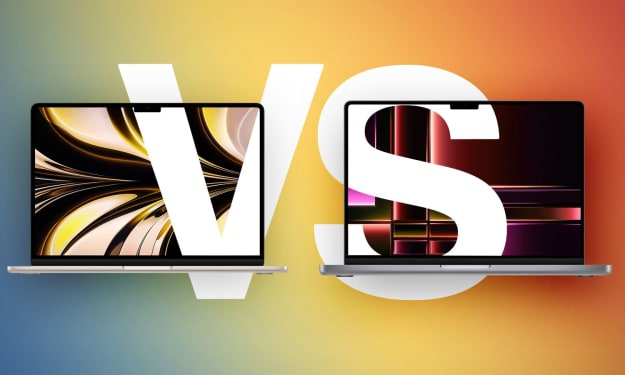
M4 MacBook Air vs. M5 MacBook Pro: Which Apple Laptop Is Worth Your Money in 2025?
Apple’s MacBook lineup has never looked sharper—or more confusing. With the launch of the M4 MacBook Air and M5 MacBook Pro, buyers in 2025 are faced with a classic Apple dilemma: should you choose the ultra-portable Air or invest in the powerhouse Pro? Both are cutting-edge machines with Apple Silicon chips, remarkable efficiency, and elegant design, but they serve very different audiences. If you’re trying to decide which MacBook offers the best value for your needs, this detailed buyer’s guide breaks down the differences in performance, design, display quality, battery life, and price so you can make an informed decision. Design and Build: Portability vs. Power When it comes to design, Apple has stayed true to the DNA of each product line. The M4 MacBook Air is all about portability and simplicity, while the M5 MacBook Pro emphasizes power and professional capability. The M4 MacBook Air comes in two sizes—13.6-inch and 15.3-inch—both featuring Apple’s signature wedge-free unibody aluminum design. It’s lightweight, slim, and incredibly easy to carry, weighing just 2.7 pounds for the 13-inch model. It’s ideal for students, writers, and professionals on the go. By contrast, the M5 MacBook Pro (14-inch) feels more substantial. It’s slightly thicker and heavier at around 3.5 pounds, but that added size houses active cooling fans and a more robust internal design that allows for sustained high performance. The Pro also comes in the striking new Space Black finish, giving it a more premium and professional look. In short: if you value mobility and simplicity, the Air wins. If you prefer a machine that means business, the Pro’s design is built for serious work. Display: Liquid Retina vs. Liquid Retina XDR The display is one of the clearest differentiators between these two MacBooks. The M4 MacBook Air features Apple’s Liquid Retina display—a bright, vibrant 60Hz panel that looks fantastic for everyday use. It supports one external display (up to 6K resolution at 60Hz) when the lid is closed, which is fine for casual setups but limiting for multitaskers. Meanwhile, the M5 MacBook Pro steps up to Apple’s Liquid Retina XDR display. This Mini-LED panel offers up to 1,000 nits of sustained brightness and 1,600 nits peak HDR, making it ideal for photographers, video editors, and creative professionals. It also supports ProMotion with a 120Hz refresh rate, ensuring buttery-smooth scrolling and animations. If you spend your days editing photos or videos—or you simply love stunning visuals—the Pro’s display is in a league of its own. Performance: M4 vs. M5 Silicon The real story lies under the hood. Apple’s M-series chips continue to redefine laptop performance, and the M4 and M5 show just how far things have come. The M4 chip, built on TSMC’s 3-nanometer process (N3E), delivers excellent performance and efficiency for an ultraportable machine. It features an 8-core CPU and up to a 10-core GPU, easily handling everyday tasks and light creative work. It’s faster than the M3 chip before it and remarkably power-efficient, keeping the Air cool without a fan. The M5 chip, however, is a generational leap. Manufactured using TSMC’s refined 3-nanometer (N3P) process, it brings improved CPU and GPU architecture. Apple claims the M5 delivers around 15% better multi-core CPU performance and up to 30–40% faster GPU performance compared to M4. It also includes hardware-accelerated ray tracing and improved neural processing, making it far more capable for video editing, 3D rendering, and AI-driven workflows. For most users, the M4 Air will feel lightning fast—but professionals running Final Cut Pro, Logic Pro, or Blender will appreciate the Pro’s sustained speed under load. Cooling and Noise: Silent Air, Powerful Pro One major difference between the two machines is cooling. The M4 MacBook Air uses a fanless design, meaning it’s completely silent even under stress. It stays cool for normal workloads but may throttle performance slightly during prolonged heavy tasks. The M5 MacBook Pro, in contrast, features active cooling with dual fans. This allows the M5 chip to maintain peak performance for much longer, making it better suited for demanding workflows like exporting large video projects or compiling code. If silence matters more than raw power, the Air is the clear winner. But if you push your machine to its limits, you’ll want the Pro’s thermal advantage. Ports and Connectivity: Versatility vs. Simplicity Apple continues to distinguish the Air and Pro models through connectivity. The M4 MacBook Air includes two Thunderbolt 4/USB-C ports, a MagSafe 3 charging connector, and a headphone jack. It’s simple but somewhat limited if you use multiple peripherals or external drives. The M5 MacBook Pro adds much more versatility: three Thunderbolt 4 ports, HDMI 2.1, an SDXC card slot, and a MagSafe charger. It can support up to two external displays simultaneously, which is a big advantage for creative professionals or multitaskers. If you rely on multiple connections or external monitors, the Pro gives you everything you need without extra dongles. Battery Life: Efficiency Meets Endurance Apple Silicon continues to impress in battery life. The M4 MacBook Air delivers up to 18 hours of video playback, which is already class-leading for an ultrathin laptop. The M5 MacBook Pro takes that even further, offering up to 24 hours of video playback—thanks to its larger battery and improved efficiency. In real-world use, both machines will easily last through a full workday, but if you’re constantly on the move and don’t want to think about charging, the Pro provides that extra cushion of endurance. Price and Value: What You Get for Your Money Here’s where the decision often becomes clear. M4 MacBook Air (13-inch): starts at $999 M4 MacBook Air (15-inch): starts at $1,199 M5 MacBook Pro (14-inch): starts around $1,599 That’s a significant gap—roughly $400 to $600 between comparable configurations. For many users, the Air’s combination of power, portability, and price makes it the sweet spot. However, if you’re already considering a high-end Air (say, 16GB RAM and 512GB storage), the price gap to a base-model Pro narrows to just a few hundred dollars. In that case, stepping up to the Pro brings better performance, a superior display, more ports, and longer battery life—all of which future-proof your investment. Who Should Buy Which MacBook? Here’s a quick summary to help you decide: | User Type | Best Choice | Why | | ----------------------------------------- | ------------------ | ---------------------------------------------------------------- | | Students, professionals, travelers | M4 MacBook Air | Lightweight, affordable, silent, all-day battery | | Content creators, developers, power users | M5 MacBook Pro | Higher performance, better cooling, superior display, more ports | | Long-term buyers (5+ years) | M5 MacBook Pro | More headroom for future software and updates | | Budget-conscious users | M4 MacBook Air | Best performance-per-dollar in Apple’s lineup | Final Thoughts: The Right MacBook for 2025 Both the M4 MacBook Air and M5 MacBook Pro represent the best of Apple’s engineering philosophy—but they serve different missions. The Air delivers exceptional performance and portability at a price that makes it accessible to almost anyone. It’s the perfect MacBook for students, writers, and professionals who want a sleek, reliable laptop without spending more than necessary. The M5 MacBook Pro, on the other hand, is the ultimate expression of Apple’s power and precision. Its breathtaking display, next-generation chip, and superior thermal design make it a true workhorse for creative and technical professionals. If your daily work involves demanding creative tasks, data processing, or software development, the M5 MacBook Pro is the smarter long-term investment. If you simply want a capable, silent, and stylish laptop for everyday life, the M4 MacBook Air remains the best-value MacBook Apple has ever made. Either way, Apple’s 2025 lineup ensures there’s a MacBook for everyone—and both options are built to last for years to come. M4 MacBook Air vs M5 MacBook Pro
By NextGen Mobile Tech12 months ago in Futurism
Xiaomi 17 Pro Max vs Samsung Galaxy S25 Ultra — Which flagship wins in 2025?
The flagship battle in late-2025 is a heavyweight match: Xiaomi’s 17 Pro Max arrives as a bold, battery-centric, dual-screen challenger while Samsung’s Galaxy S25 Ultra refines an already dominant formula with advanced AI, a pro-grade camera system, and a sleeker, titanium build. If you’re choosing between the two, here’s a complete, SEO-friendly comparison that covers displays, cameras, performance, battery, software, real-world use, pros & cons, and FAQs to help you pick the right phone. Quick snapshot — the headline specs Xiaomi 17 Pro Max: Snapdragon 8 Elite Gen 5, huge 7,500 mAh battery, 100W wired + 50W wireless charging, functional rear AMOLED secondary display, Leica-tuned 50MP triple cameras, HyperOS (Android 16/HyperOS 3). ([Xiaomi][1]) Samsung Galaxy S25 Ultra: Snapdragon 8 Elite (Galaxy variant), 6.9-inch QHD+ Dynamic AMOLED 2X 120Hz, 200MP main sensor, 5,000 mAh battery with ~45W wired charging, built-in S Pen, One UI 7 (Android 15) and deep Galaxy AI features. ([Samsung][2]) (Those two bullets are the core load-bearing claims — specs and platform choices that shape everything below.) Design & display — big, bright, and different Both phones are big and premium, but they take very different design approaches. Xiaomi 17 Pro Max leans into novelty with a functional rear AMOLED display that sits alongside its camera island. That rear screen is useful for notifications, creative widgets, and framing selfies with the main cameras — a clear differentiator if you like gadgetry and personalization. The main display aims to match flagship brightness and smoothness standards. ([Android Central][3]) Samsung Galaxy S25 Ultra keeps the “refined flagship” look: a near bezel-less, 6.9-inch Dynamic AMOLED 2X panel with QHD+ resolution and a 120Hz adaptive refresh rate. Samsung’s panel typically leads in color accuracy, adaptive brightness control and outdoor legibility, and the S25 Ultra continues that trend with minimal bezels and a more ergonomic titanium frame. ([Samsung][2]) Edge: Samsung for display quality and polish; Xiaomi for quirky, attention-grabbing features (rear screen). Cameras — versatility vs computational mastery Camera battles are subjective, but key differences are clear. Xiaomi 17 Pro Max focuses on Leica collaboration and large sensors across its triple-50MP array, plus a periscope telephoto (5× optical) — the emphasis is on natural color tuning and strong everyday performance, and the rear display gives you an easy way to take high-quality selfies with the main camera. ([Xiaomi][1]) Samsung Galaxy S25 Ultra doubles down on resolution and zoom: a 200MP primary sensor (for extreme detail with pixel-binning), upgraded wide and ultra-wide optics, and multiple telephoto modules for flexible long-range shots. Samsung’s computational pipeline (Galaxy AI, improved Nightography and Object-Aware Engine) also adds real advantages in low-light and complex scenes. ([Droid Life][4]) Edge: Samsung for sheer imaging versatility and computational features; Xiaomi for Leica tuning and practical selfie advantages via the rear screen. Performance & software — power with different philosophies Both phones use top-tier silicon and are engineered for sustained performance. Processor & RAM: Both leverage Qualcomm’s latest top-tier platform (Snapdragon 8 Elite family) and high RAM configurations (12–16GB), so raw CPU/GPU benchmarks will be competitive and excellent for gaming, multitasking, and AI features. ([Xiaomi][1]) Software: Xiaomi ships HyperOS (privacy-oriented updates, deep customization) and a China-first release strategy; the global HyperOS builds are improving but check region-specific services (Google, carrier features) if you import a China variant. Samsung runs One UI 7 with Galaxy AI integrated, plus years of promised Android updates and strong enterprise/brand support. ([Xiaomi][1]) Edge: Samsung for global software maturity and long-term updates; Xiaomi for a fresh take with HyperOS and experimental features. Battery & charging — Xiaomi’s clear advantage If endurance is your top priority: Xiaomi 17 Pro Max ships with a 7,500 mAh cell and 100W wired charging plus 50W wireless — phenomenal on paper and ideal for multi-day use, heavy gaming, or power users who dislike daily charging. The large capacity is the standout spec here. ([Xiaomi][1]) Samsung Galaxy S25 Ultra uses a 5,000 mAh battery with efficient display management and improved video playback times; Samsung’s power management and One UI optimizations are excellent, but the S25 Ultra won’t match the outright endurance numbers of Xiaomi’s 7,500 mAh flagship. ([Samsung][2]) Edge: Xiaomi for battery size and longer real-world runtime; Samsung for optimized efficiency and ecosystem reliability. Real-world use — which suits you? Buy the Xiaomi 17 Pro Max if you want massive battery life, a novel rear display, Leica color tuning, and top raw specs — and you’re comfortable checking bands/software if you’re outside China. ([Xiaomi][1]) Buy Samsung Galaxy S25 Ultra if you want the most polished Android experience, superior imaging versatility (especially telephoto and computational features), long software support and a globally supported device with the S Pen. ([Samsung][2]) Pros & Cons Xiaomi 17 Pro Max Pros Massive 7,500 mAh battery (excellent endurance). ([Xiaomi][1]) Unique, functional rear AMOLED display for selfies, widgets, and personalization. ([Android Central][3]) Leica-tuned cameras and flagship Snapdragon 8 Elite Gen 5 performance. ([Xiaomi][1]) Cons Likely China-first availability — possible Google services and carrier band issues if you import. ([Xiaomi][1]) Bigger and heavier (Pro Max size) — less pocketable. The software ecosystem (HyperOS) is great but newer than Samsung’s — update cadence in global markets may lag initially. Samsung Galaxy S25 Ultra Pros Best-in-class display, refined build (titanium frame), and proven software support. ([Samsung][2]) Extremely versatile camera system with 200MP main sensor and strong computational photography. ([Droid Life][4]) S Pen integration and deep Galaxy AI features for productivity. ([Samsung][2]) Cons Battery (5,000 mAh) is solid but not class-leading vs Xiaomi’s 7,500 mAh. ([Samsung][2]) Premium price — you pay for polish, brand, and support. ([The Guardian][5]) Incremental upgrades vs S24 Ultra; not a dramatic reinvention. Final verdict — who wins? There’s no single winner; the right choice depends on priorities: Choose Xiaomi 17 Pro Max if you prize battery life, a unique hardware trick (rear display), and raw value/specs — and you’re comfortable navigating regional availability or importing. ([Xiaomi][1]) Choose Samsung Galaxy S25 Ultra if you want a globally supported, polished flagship with best-in-class imaging flexibility, a premium build, and long software support (plus the S Pen). It’s the safer choice for most global buyers. ([Samsung][2]) FAQs (Frequently Asked Questions) Q: Is the Xiaomi 17 Pro Max available globally? A: Xiaomi initially launched the 17 series in China; global availability may follow but check local Xiaomi sites and carrier compatibility before buying — importing can lead to missing bands or limited warranty/support. ([Xiaomi][1]) Q: Which phone has better battery life? A: Xiaomi 17 Pro Max has a bigger battery (7,500 mAh) and faster wired charging, so it should outlast the Galaxy S25 Ultra in pure runtime. Samsung, however, is highly optimized and may feel more balanced for everyday users. ([Xiaomi][1]) Q: Which camera system is better for zoom and detail? A: Samsung’s S25 Ultra wins for zoom flexibility and high-resolution detail (200MP main sensor plus multiple telephoto options). Xiaomi’s Leica-tuned 50MP triple setup emphasizes color and real-world shooting simplicity. ([Droid Life][4]) Q: Should I worry about software updates and security? A: Samsung offers a well-established update policy on flagship devices and strong enterprise/security features. Xiaomi’s HyperOS is evolving fast and Xiaomi promises regular updates, but global rollout timing can vary. ([Samsung][2]) Q: Which is better for gaming? A: Both use top-tier chipsets (Snapdragon 8 Elite family) and high RAM options; gaming performance will be excellent on both. Xiaomi’s larger battery gives it an edge for extended sessions; Samsung may manage thermals and sustained performance slightly better thanks to refined cooling and software optimizations. ([Xiaomi][1])
By NextGen Mobile Techabout a year ago in Futurism
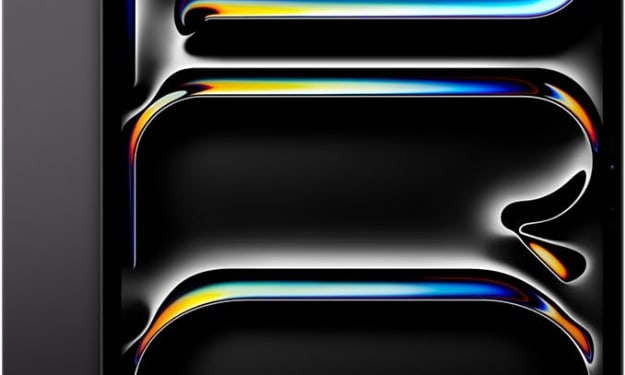
Apple iPad Pro 13-inch (M5) Review — Redefining the Future of Tablets
When Apple first launched the iPad Pro, it was clear that the company wanted to bridge the gap between tablet and laptop. Over the years, each generation has pushed that line further — but the new Apple iPad Pro 13-inch (M5) completely redraws it. With the blazing-fast M5 chip, Ultra Retina XDR display, Apple Intelligence integration, and iPadOS 26, this model doesn’t just refine the iPad experience — it reinvents it. In this in-depth review, we’ll explore everything you need to know about the iPad Pro (M5): its design, display, performance, AI capabilities, accessories, and whether it’s worth the $1,499 price tag. Design: Sleek, Lightweight, and Pro to the Core At first glance, the iPad Pro (M5) looks familiar — until you pick it up. Apple has trimmed the frame and bezels to make this the thinnest and lightest 13-inch iPad ever. The Space Black color gives it a striking, professional appeal, though a more minimalist Silver option is also available. The body is crafted from recycled aluminum, maintaining Apple’s sustainability push while feeling solid and premium in the hand. The precision of the build is unmistakable — from the even bezels around the display to the perfectly integrated Face ID sensors. At just under 1.2 pounds, it’s surprisingly light for a 13-inch device. Whether you’re sketching, editing, or reading, it’s comfortable to hold for long sessions. Apple’s design maturity truly shines here — every detail feels intentional and refined. Display: Ultra Retina XDR Is Simply Breathtaking The 13-inch Ultra Retina XDR display is one of the biggest highlights of this model. With a 2752-by-2064 resolution at 264 pixels per inch It delivers stunning clarity, brightness, and color accuracy. Apple’s new tandem OLED technology (used in this display) combines two OLED panels for better contrast and richer black levels. The result? Deep, inky blacks, dazzling whites, and incredible HDR performance. Watching 4K content or editing photos on this screen feels like looking through a window — not a display.
By NextGen Mobile Techabout a year ago in Futurism
Rebel Worlds: Exoplanets with Reverse Rotation and Bizarre Atmospheres
When astronomers began discovering planets beyond our Solar System in the 1990s, most expected to find familiar worlds — something like a Hot Jupiter here, a cold Neptune there, maybe the occasional rocky Earth-twin. Instead, the universe responded with a cosmic smirk and delivered a catalog of planets so strange that even science fiction writers would hesitate to invent them. Among the most mind-bending of these discoveries are exoplanets with reverse (retrograde) rotation and wildly abnormal atmospheres — worlds that defy planetary logic and challenge our understanding of physics.
By Holianyk Ihorabout a year ago in Futurism
Nuclear Engines for the Journey to Mars: Why NTR and NEP May Change Everything
For decades, Mars has been the big red prize of human space exploration. We’ve landed rovers, taken selfies on its dusty plains, and mapped its canyons and craters in high resolution. And yet, no human has ever set foot there. The biggest obstacle isn’t distance itself — it’s time. With today’s chemical rockets, a crewed flight to Mars would take six to nine long months one way, and the entire mission could stretch to two or even three years. That means more radiation exposure, more psychological pressure, more supplies, and more risk.
By Holianyk Ihorabout a year ago in Futurism