science
Topics and developments in science and medicine, presented by Futurism.
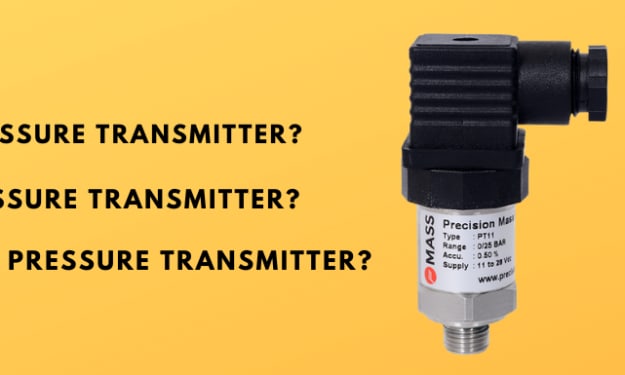
Pressure Transmitter – Types & Accuracy
What is a Pressure Transmitter? Pressure transmitters, also known as pressure transducers, are used to measure the pressure of liquids, fluids, and gases in various working equipment in industrial and process applications. These transmitters are essential in process industries, particularly the oil and gas industry, which deals with a wide range of fluids and gases.
By Mohit Soneji4 years ago in Futurism
Illness
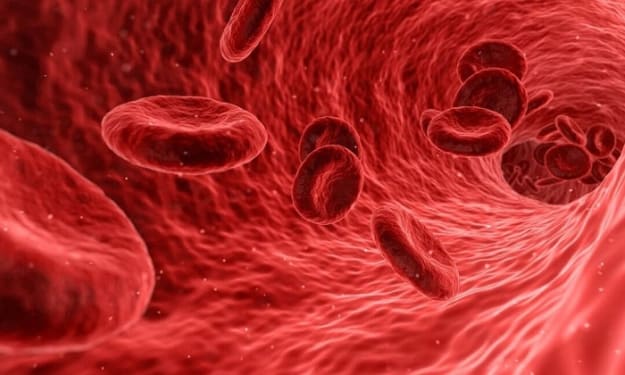
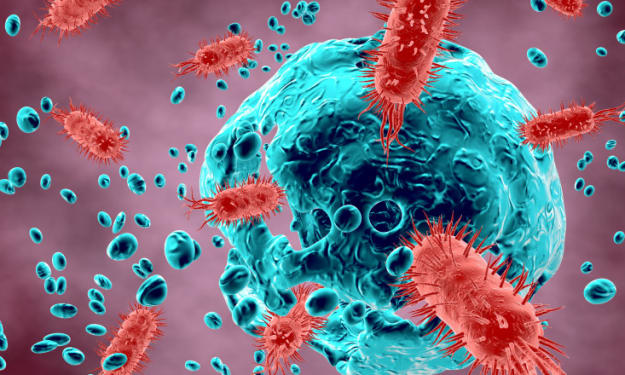
Inflammation = reaction of normal tissues to cell damage; non-specific local reaction, with a defensive character. • It may be accompanied by general reactions such as: fever, leukocytosis, changes in intermediate metabolism, which in turn, influence the development of the local process
By Nagy Alexandra4 years ago in Futurism
Ocean-based bionic innovations
Bionics is a branch of science that integrates biology and technology. In bionic research, scientists and engineers examine natural laws, principles of structure and function of organisms, and apply their findings to the design of equipment, structures, and architecture. Leonardo da Vinci, a Renaissance genius who diligently examined nature and sketched plans for various flying machines, was one of the most prominent forefathers of bionics. However, the true development of this scientific subject was launched by John Keto, chief of the Aeronautical Systems Division, who formed a team in 1956 to investigate the possibility of utilising biological advances in technology.Jack Steele named the new field bionics two years later, in 1958. Since then, a plethora of equipment and technical solutions have been invented based on observations of the natural world. In this regard, not only the terrestrial but also the maritime environment is an inexhaustible source of knowledge.
By Sakher Haider Chowdhry4 years ago in Futurism
What if they gave you control of the Hubble Space Telescope?
It is probably the dream of any amateur astronomer to be able to be the boss of one of the great multimillion dollar telescopes even if it was just for one hour or for a few shots. Sure, we can have a lot of fun with our binoculars. And as we improve our personal equipment set, we get better and better at pinpointing what we want to see in the sky.
By maria constantin5 years ago in Futurism
What is data science? A Complete Guidance for Beginners.
As the world enters the age of great data, the warehouse is changing. The main problem and concern for companies were until 2010. The main emphasis is on creating frameworks and data storage solutions. Now that Hadoop and other frameworks have solved storage problems, the focus is on processing that data. Data science is a secret sauce here. Data science can confirm every thought you see in Hollywood science fiction movies. The destiny of data science is artificial intelligence. Therefore, it is important to understand what data science is and how it can help your business.
By Vivek Shori5 years ago in Futurism
Facts About Mars Planet | Fun Facts About Mars
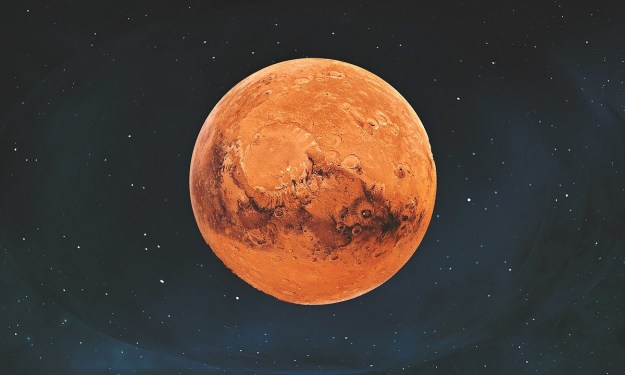
Facts About Mars Planet | Fun Facts About Mars 1. Mars is otherwise called the Red Planet. This is on the grounds that Mars is shrouded in soil, rock, and residue produced using iron oxide which gives the surface a red corroded shading. 2. Mars is named after the Roman divine force of war. 3. Mars has 2 moons called Deimos and Phobos. They are named after the two ponies that pull the Roman divine force of war, Mars', chariot. They might be space rocks caught by Mars' gravity. 4. Mars is the fourth planet from the sun. It is 227,936,637 km (141 million miles) away from the sun. It would require 300 days (around 8 months) to arrive from Earth. 5. Mars is more modest than Earth with a measurement of 4217 miles. This makes it the second littlest planet in our planetary group. 6. A day on Mars endures 24 hours and 37 minutes. 7. One year on Mars is 687 days in length. That is 1.9 Earth years. This is on the grounds that Mars is further away from the sun so it takes more time to circle it. 8. The slant on the pivot of Mars is 25 degrees which implies that the planet encounters seasons as we do on Earth as various pieces of the planet are nearer to the sun at various seasons of its circle. 9. Mars has a meager air produced using 95.9% carbon dioxide and 2.7% nitrogen. The air is slim to such an extent that it's not thick to the point of catching the sun's hotness so it is freezing - going from - 100℃ in winter to 20℃ in summer. 10. Mars has exceptionally frail gravity. Gravity on Mars is 37% not exactly on Earth. This really intends that on Mars you could hop 3x higher than on Earth. 11. Mars is an earthbound planet since it has a hard and rough surface. Its northern side is brimming with level fields and the southern side has edges and pits. 12. Mars' surface has many channels, fields, and gullies which might have been brought about by water disintegration (water eroding the surface). This could be proof that untamed water in fluid structure once existed on a superficial level billions of years prior. 13. Mars encounters rough residue storms fueled by the sun which can keep going for a really long time. The residue tempests can totally cover the planet and constantly change Mars' surface. 14. Mars is home to Olympus Mons, a torpid well of lava and the biggest fountain of liquid magma and most elevated mountain in our nearby planet group. It is 16 miles high and 600 km across the base, making it 3x the tallness of Mount Everest. 15. The greatest cavity on Mars is Borealis Basin. It is 5300 miles from one finish to another and covers 40% of planet's surface. 16. Mars has the biggest gorge in our nearby planet group, Valles Marineris. It is 4 miles down and extends large number of miles long. 17. Mars has north and south poles like earth. The polar ice covers are shrouded in a layer of frozen carbon dioxide (dry ice). 18. As it's so near Earth, Mars is the planet that people will doubtlessly step foot on and investigate first. 19. We conveyed Mars Rovers (which are like robots) on missions to investigate Mars and gather tests and record logical information for researchers on Earth to review. A portion of these Rovers incorporate Viking 1, Viking 2, Mars 2, Mars 3, Spirit, Phoenix, Pathfinder, Curiosity, and Opportunity. 20. There is no proof of life on Mars. Nonetheless, it is the planet with the best circumstances to help life and researchers accept there is potential for life underneath defaces on the grounds that they as of late observed water ice simply on a deeper level. Need to more deeply study Mars, the planets, our planetary group, and the entire universe? For more science, additional astonishing realities, and more tomfoolery, select now in our science occasion campsand spring term science classes where children can learn, analyze, investigate, and play!
By Rohit Vimal5 years ago in Futurism
Stephen Hawking'S Black Hole Paradox May Finally Have A Solution
Scientists have solved the 50-year-old black hole puzzle first proposed by Professor Stephen Hawking that once threatened Professor Stephen Hawking's understanding of the universe. Researchers have probably solved the famous myth of Professor Stephen Hawking of the abyss, a mystery that has puzzled scientists for nearly a century. Stephen Hawking left physicists with the mystery of black holes, and now physicists think they have a solution.
By neetesh crouch5 years ago in Futurism