future
Exploring the future of science today, while looking back on the achievements from yesterday. Science fiction is science future.
On computer-based how might we do it securely?
We'd need to investigate computer-based intelligence in a controlled climate before we set it on the world however I was pondering the items of common sense of getting that going. What might we need to do to safeguard ourselves and moderate the dangers of investigating the possibility of cutting-edge AI? A humanistic upside of the future ought to be like map makers. We are planning, noticing, and learning until we adequately grasp the idea of our conditions and afterward advance. My view would be that we treat artificial intelligence similarly. We test and see in seclusion and find out about its ability and limits.
By Golam Kibria2 years ago in Futurism
It's Time, To Exhale. Content Warning.
Jane had been trapped in a never-ending cycle of terror for what felt like an eternity. Every night, the same recurring nightmare haunted her, leaving her afraid and exhausted. The dream was always the same: a dark figure chasing her—unrelentingly pursuing her, only adding a few extra moments to each dream going forward
By Noted Moments2 years ago in Futurism
What chatgpt 4 says about crypto miners?
1) What is crypto and miners? First let’s understand in simple way Think of blockchain like a big book. Every time someone trades digital money (cryptocurrency), it’s like writing in the book. But instead of one book in one place, everyone has a copy of the same book. So, if someone tries to cheat or change a trade, everyone would know because their copies wouldn’t match.
By Julin quickplus2 years ago in Futurism
Harvard Scientists Study Suggests Popocatépetl Volcano Might Be an Extraterrestrial Base
In a groundbreaking study that has captivated both the scientific community and the public, researchers from Harvard University have put forth a controversial and intriguing hypothesis: the Popocatépetl volcano in Mexico could potentially harbor an extraterrestrial base. This extraordinary claim is based on a series of geological and atmospheric anomalies that challenge our current understanding of volcanic activity and invite both skepticism and curiosity.
By JONATAN DAVID VEGA2 years ago in Futurism
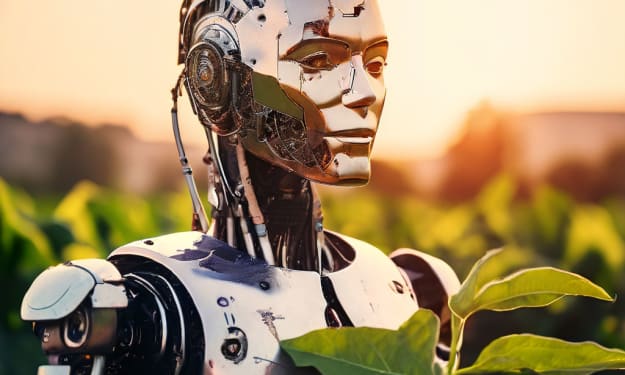
The Future of AI:
Artificial intelligence gence (AI) has made unprecedented strides in recent years, revolutionizing various sectors including healthcare, finance, transportation, and entertainment. As we look ahead, the future of AI promises even more groundbreaking advancements that will reshape our world in profound ways. In this article, we explore the potential trajectories of AI development and its implications for society. ### Transformative Impacts on Industries **1. Healthcare:** AI's integration into healthcare is expected to enhance diagnostic accuracy, personalize patient care, and streamline administrative processes. Machine learning algorithms can analyze vast datasets to identify patterns that escape human detection, enabling early diagnosis of diseases such as cancer and Alzheimer's. Moreover, AI-driven predictive analytics can anticipate patient needs, optimize treatment plans, and reduce hospital readmission rates. **2. Finance:** The finance industry is set to benefit immensely from AI through improved risk management, fraud detection, and customer service. AI algorithms can analyze market trends and financial data at unprecedented speeds, providing insights that inform investment strategies and economic forecasts. Additionally, AI-powered chatbots and virtual assistants will enhance customer interactions, offering personalized financial advice and support. **3. Transportation:** Autonomous vehicles are perhaps the most visible example of AI's potential to transform transportation. Self-driving cars, trucks, and drones are expected to reduce traffic accidents, enhance fuel efficiency, and alleviate congestion in urban areas. Furthermore, AI will optimize logistics and supply chain management, ensuring timely delivery of goods and reducing operational costs. ### Ethical and Social Implications While the potential benefits of AI are vast, they come with significant ethical and social considerations. The deployment of AI raises questions about privacy, job displacement, and algorithmic bias. **1. Privacy Concerns:** AI systems often require access to vast amounts of personal data to function effectively. Ensuring that this data is collected, stored, and used ethically is paramount. Robust data protection regulations and transparent AI practices will be crucial in maintaining public trust. **2. Job Displacement:** AI's ability to automate tasks traditionally performed by humans poses a threat to certain jobs, particularly in manufacturing, customer service, and transportation. However, this technological shift also creates opportunities for new roles in AI development, maintenance, and oversight. Preparing the workforce for these changes through education and training programs will be essential. **3. Algorithmic Bias:** AI systems are only as unbiased as the data they are trained on. If the training data contains biases, the AI will likely perpetuate these biases, leading to unfair outcomes in areas like hiring, law enforcement, and lending. Developing fair and transparent AI algorithms is a critical challenge that researchers and developers must address. ### AI and Human Collaboration Rather than viewing AI as a replacement for human labor, it is more productive to see it as a tool for augmenting human capabilities. AI can handle repetitive, data-intensive tasks, allowing humans to focus on creative, strategic, and interpersonal aspects of their work. This collaboration between AI and humans can lead to enhanced productivity and innovation. **1. Enhanced Decision Making:** AI can provide decision-makers with data-driven insights, helping them make more informed choices. For instance, in business, AI can analyze market trends and consumer behavior, guiding product development and marketing strategies. **2. Creativity and Innovation:** AI tools are increasingly being used in creative industries. From generating music and art to designing buildings and fashion, AI can serve as a creative partner, offering new perspectives and ideas. ### The Path Forward: Research and Regulation The future of AI will be shaped by ongoing research and thoughtful regulation. It is crucial to strike a balance between fostering innovation and ensuring that AI technologies are developed and deployed responsibly. **1. Continued Research:** Investing in AI research is essential to unlock its full potential. Areas such as explainable AI, which aims to make AI decisions transparent and understandable, and AI ethics, which addresses the moral implications of AI, are particularly important. **2. Regulatory Frameworks:** Governments and international bodies need to develop comprehensive regulatory frameworks that address the ethical, legal, and social implications of AI. These frameworks should promote innovation while protecting public interests and ensuring that AI technologies are used responsibly. ### Conclusion The future of AI holds tremendous promise, with the potential to revolutionize industries, enhance human capabilities, and address some of the world's most pressing challenges. However, realizing this potential requires careful consideration of the ethical, social, and regulatory implications. By fostering collaboration between AI and humans, investing in research, and implementing robust regulatory frameworks, we can harness the power of AI to create a better, more equitable future for all.
By Artical Media2 years ago in Futurism
Cryptocurrency Futures: What Next for Digital Money?
Cryptocurrency has evolved from a niche curiosity into a financial powerhouse that has captured the imagination of investors, technologists, and even governments around the world. But as the landscape of digital money continues to change, what does the future hold for cryptocurrencies? In this blog, we'll explore the potential developments, challenges, and opportunities that lie ahead for digital currencies.
By Alex Romanenko2 years ago in Futurism
Robert Krant talks about how Emerging Technologies are Transforming Online Shopping
In recent years, e-commerce has experienced a significant transformation driven by the rapid development and integration of emerging technologies. These advancements are reshaping how businesses operate and redefining the shopping experience for consumers. One of the most impactful technologies is artificial intelligence (AI). AI is revolutionizing e-commerce by enabling highly personalized shopping experiences. AI analyzes customer behavior, preferences, and purchase history through sophisticated algorithms and machine learning to deliver tailored product recommendations. This level of personalization enhances customer satisfaction and increases the likelihood of repeat purchases. Additionally, AI-powered chatbots and virtual assistants provide real-time customer support, improving the overall shopping experience and reducing the need for human intervention.
By Robert Krant2 years ago in Futurism