future
Exploring the future of science today, while looking back on the achievements from yesterday. Science fiction is science future.
Meta's Ray-Ban: New Horizon for Smart Glasses
Imagine being able to make calls, scroll through social media, browse the internet and do virtually everything a modern smartphone offers-without ever pulling a device from your pocket. Everything you need, always within reach but not in the form you’re used to. It sounds like something straight out of a sci-fi movie, doesn’t it? Surprisingly, it’s not. This isn’t fiction or far-off fantasy. Thanks to Meta, it’s becoming a reality. Meta’s CEO, Mark Zuckerberg, has officially unveiled their latest innovation: the Meta Ray-Ban smart glasses. But these aren’t your average wearables. They go far beyond simply snapping photos or playing music. These glasses are packed with intelligence and functionality and according to Zuckerberg himself, they’re designed with a bold ambition-to ultimately replace the smartphone. A new era in personal technology may be closer than we think.
By Sovon Mukherjee2 years ago in Futurism
AI and the Future of Writing: Threat or Tool?
For hundreds of years, writing has been a skill only humans could do. Whether it was a poem, a news article, or a business report — only people could write with meaning, feeling, and clarity. But in 2025, AI can write too. Tools like ChatGPT, Jasper, and others can create stories, emails, even books. Many people are asking: is AI a threat to writers, or can it be a helpful tool? This article explores both sides of the question — in simple words — so you can understand how AI is changing the writing world, and what the future might look like. 1. What Can AI Write? AI has become surprisingly good at writing. It can: Write blog posts Create emails Generate ad copy Help with social media posts Write poems and short stories Translate languages Summarize long texts It learns from huge amounts of data. AI doesn't "think" like a human, but it can follow patterns and give answers that sound like real writing. This makes people wonder: if AI can write, do we still need human writers? 2. The Fear: Will AI Replace Writers? Many writers are scared. They fear: Fewer jobs for copywriters, bloggers, or content creators Companies choosing AI to save money instead of hiring writers AI-generated books or news taking over websites Some companies already use AI to create full blog posts or even product descriptions. It’s fast and cheap. This makes human writers worry that they might not be needed anymore. 3. The Truth: AI Still Needs Humans But here’s the truth: AI is not perfect. It still: Makes grammar mistakes sometimes Gives wrong or outdated information Has no real feelings or personal experience Can’t be truly creative like a human mind Good writing is not just about correct grammar. It’s about connection. A writer shares their heart, culture, emotion, and real-life experiences. AI can’t do that. At least not yet. Most great writing needs a human touch — editing, emotions, humor, local knowledge, or storytelling. That’s why many experts believe AI is a tool, not a threat. 4. How Writers Can Use AI as a Tool Smart writers are not afraid of AI. They’re learning to work with it. Here are a few ways AI helps writers: Idea Generation: Stuck with writer's block? Ask AI for ideas. Drafting Quickly: AI can write first drafts that you can edit later. Improving Grammar: AI tools like Grammarly check mistakes. Translating Content: AI helps write in multiple languages. SEO Help: Some AI tools help you write content that ranks on Google. Saving Time: Instead of spending hours on small tasks, writers use AI for first steps. In short, AI can help writers do more in less time — but the best final product still comes from a human brain. 5. New Writing Jobs Created by AI Did you know that AI is also creating new writing jobs? For example: AI Content Editor: Someone who checks and improves AI-written text Prompt Engineer: A person who writes smart questions for AI tools Content Strategist: Someone who decides where, when, and how to use AI-generated writing So instead of stealing jobs, AI is changing jobs. Writers who adapt can even earn more. 6. What About Books, Poetry, and Art? This is a deep question. Can AI write novels or poetry that touch your heart? Maybe it can try. But most readers still prefer real stories from real people. AI can copy the style, but not the soul. A human can describe pain, love, or joy with depth — because they felt it. That’s why most serious authors still use AI as a helper, not a replacement. They might ask AI for ideas or structure, but the voice is always theirs. 7. Schools, Students, and AI Writing Some students use AI to do their homework. Some teachers are worried. But schools are now teaching students how to use AI responsibly. Students learn to: Use AI for research Get help with grammar Practice writing and editing skills Check facts before accepting AI answers This means the future generation will grow up knowing how to use AI wisely — just like we learned to use the internet or calculators. 8. So, Is AI a Threat or a Tool? The answer is simple: It depends on how you use it. If you let AI do all the work, you might lose your skills. But if you use AI as a helper — a writing partner — it can make you faster, smarter, and even more creative. AI is like a bike. You still need to pedal, steer, and balance. But it helps you go further with less energy. Conclusion: AI is a great helper, but not a human. In 2025 and beyond, machines may do many jobs — but only humans can feel, love, and connect. The human touch is more powerful than any machine. So let AI help. But never forget: your heart, your feelings, your story — these are irreplaceable.
By Hashim khan2 years ago in Futurism
This Is How Tesla Will Die
Introduction Tesla is often seen as untouchable in the electric vehicle (EV) world—an innovation juggernaut led by the audacious Elon Musk. It revolutionized the auto industry, turned battery technology into a global obsession, and made electric sexy. But in the world of tech and business, giants can and do fall. Blockbuster, Nokia, and Kodak once ruled their sectors before vanishing from relevance. Could Tesla share the same fate? In this blog, we explore the potential paths that could lead to Tesla’s downfall—not as a prediction, but as a critical lens through which we examine the risks that accompany rapid innovation, cult-like brand loyalty, and aggressive scaling. --- 1. The Inevitable Onslaught of Competition For years, Tesla had the EV market nearly to itself. But now, every major automaker is building electric fleets: Ford’s Mustang Mach-E, Volkswagen’s ID series, Hyundai’s Ioniq, and GM’s Ultium-powered lineup. Chinese EV makers like BYD and NIO are growing rapidly and aggressively expanding beyond Asia. Even luxury brands like Porsche and Mercedes-Benz are making electric models that rival or exceed Tesla in quality and performance. These companies have deeper pockets, decades of manufacturing experience, and vast dealership networks—advantages Tesla lacks. If Tesla fails to maintain its technological lead, it may get outpaced by more refined, better-supported, and competitively priced alternatives. --- 2. Reliability and Quality Control Issues Tesla has often been criticized for quality control problems—ranging from panel gaps and software glitches to reports of sudden unintended acceleration or poorly functioning autopilot features. In the early days, fans overlooked these issues in favor of innovation. But as competition stiffens, consumer tolerance will shrink. A luxury vehicle with premium pricing must deliver on reliability and refinement. Tesla’s “move fast and break things” approach might work in tech, but not in the long lifespan world of automobiles. A failure to address this could damage Tesla’s reputation permanently. --- 3. Overpromising on Autonomy Tesla's Autopilot and "Full Self-Driving" (FSD) suite has been both revolutionary and controversial. Musk has promised full autonomy for years—yet it remains elusive. Critics argue that Tesla is misleading consumers by selling “FSD” packages that are essentially advanced driver assistance, not true autonomy. If Tesla is unable to deliver safe, fully autonomous driving while competitors or startups (like Waymo or Cruise) succeed in regulated robotaxi deployments, Tesla could lose its image as the leader in AI-driven mobility. Worse, a fatal accident involving its software could invite massive legal and regulatory backlash. --- 4. Elon Musk: Visionary or Liability? Elon Musk is Tesla’s greatest asset—and potentially its biggest liability. While his vision and leadership have propelled Tesla to global fame, his controversial behavior, tweets, political stances, and attention divided across multiple companies (SpaceX, X, Neuralink, etc.) could destabilize Tesla’s brand and investor confidence. Musk's behavior has already resulted in lawsuits, regulatory scrutiny, and public backlash. If his antics increasingly hurt Tesla’s image, it could lead to boycotts, investor exits, or even a boardroom rebellion. --- 5. Dependence on a Narrow Product Line Tesla's vehicle lineup is surprisingly narrow: the Model S, 3, X, and Y form the backbone of its business. The Cybertruck and Roadster have been repeatedly delayed, and other vehicles like the Semi remain niche or unproven. This concentration creates vulnerability. If consumer tastes shift or new models from competitors gain traction, Tesla might not be agile enough to pivot. A broader, more dynamic lineup is crucial to compete long-term. --- 6. Battery Supply and Tech Plateau Tesla's early advantage in battery technology and vertical integration gave it a massive edge. But now, competitors are rapidly catching up. Battery tech is maturing, and new chemistries—like solid-state—may come from other companies first. Tesla’s famous Gigafactories are impressive, but they rely on long supply chains, raw materials like lithium and cobalt, and partner companies. Disruptions in these chains—geopolitical instability, mining restrictions, or trade wars—could choke production. If Tesla fails to maintain battery leadership, it risks losing its core advantage. --- 7. China Risk and Geopolitical Instability Tesla has a major factory in Shanghai and generates significant revenue from China. But China is both a key market and a massive geopolitical risk. Rising tensions between the U.S. and China could lead to tariffs, production bans, or nationalistic consumer backlash against American companies. If Tesla is squeezed out of China—or if Chinese companies undercut Tesla globally—it would be a significant blow. --- 8. Stock Valuation vs. Reality Tesla’s stock price has been astronomically high, driven by hype, future potential, and Musk’s celebrity. But high valuation brings pressure. Any failure to meet delivery targets, produce promised vehicles, or maintain profitability could spark a sell-off. Many investors see Tesla not just as a car company, but as a tech giant, AI firm, energy innovator, and robotaxi pioneer. If it fails to live up to those expectations, the financial fallout could be brutal. --- 9. The AI Race Could Leave Tesla Behind Tesla has framed itself as an AI company, not just an automaker. But other AI firms are rapidly advancing with large-scale models, better data sets, and stronger partnerships. Tesla's “do it all in-house” approach may not scale fast enough. If Tesla's AI stack, including FSD, Optimus robots, and Dojo supercomputing, falls behind open-source or collaborative ecosystems, it risks irrelevance in the AI space. --- Conclusion Tesla's death wouldn't come suddenly. It would be the result of multiple converging pressures: rising competition, broken promises, eroded trust, and strategic missteps. None of this is guaranteed—Tesla still holds many cards and continues to innovate. But history shows that dominance invites disruption, and no company—no matter how revolutionary—is immune. Whether Tesla fades into the background or evolves into something far beyond a car company depends on how it navigates the next decade. The fall of a giant often begins with ignoring the cracks beneath its feet.
By GadgetGround2 years ago in Futurism
The Right Competitive Intelligence Questions
The Right Competitive Intelligence Questions: Weekly Winning Strategies The right competitive intelligence questions and the good questions aren’t just intellectual exercises or quick lists with little thought.
By Octopus Competitive Intelligence2 years ago in Futurism
AI and the Future of Writing: Threat or Tool?
For hundreds of years, writing has been a skill only humans could do. Whether it was a poem, a news article, or a business report — only people could write with meaning, feeling, and clarity. But in 2025, AI can write too. Tools like ChatGPT, Jasper, and others can create stories, emails, even books. Many people are asking: is AI a threat to writers, or can it be a helpful tool? This article explores both sides of the question — in simple words — so you can understand how AI is changing the writing world, and what the future might look like. 1. What Can AI Write? AI has become surprisingly good at writing. It can: Write blog posts Create emails Generate ad copy Help with social media posts Write poems and short stories Translate languages Summarize long texts It learns from huge amounts of data. AI doesn't "think" like a human, but it can follow patterns and give answers that sound like real writing. This makes people wonder: if AI can write, do we still need human writers? 2. The Fear: Will AI Replace Writers? Many writers are scared. They fear: Fewer jobs for copywriters, bloggers, or content creators Companies choosing AI to save money instead of hiring writers AI-generated books or news taking over websites Some companies already use AI to create full blog posts or even product descriptions. It’s fast and cheap. This makes human writers worry that they might not be needed anymore. 3. The Truth: AI Still Needs Humans But here’s the truth: AI is not perfect. It still: Makes grammar mistakes sometimes Gives wrong or outdated information Has no real feelings or personal experience Can’t be truly creative like a human mind Good writing is not just about correct grammar. It’s about connection. A writer shares their heart, culture, emotion, and real-life experiences. AI can’t do that. At least not yet. Most great writing needs a human touch — editing, emotions, humor, local knowledge, or storytelling. That’s why many experts believe AI is a tool, not a threat. 4. How Writers Can Use AI as a Tool Smart writers are not afraid of AI. They’re learning to work with it. Here are a few ways AI helps writers: Idea Generation: Stuck with writer's block? Ask AI for ideas. Drafting Quickly: AI can write first drafts that you can edit later. Improving Grammar: AI tools like Grammarly check mistakes. Translating Content: AI helps write in multiple languages. SEO Help: Some AI tools help you write content that ranks on Google. Saving Time: Instead of spending hours on small tasks, writers use AI for first steps. In short, AI can help writers do more in less time — but the best final product still comes from a human brain. 5. New Writing Jobs Created by AI Did you know that AI is also creating new writing jobs? For example: AI Content Editor: Someone who checks and improves AI-written text Prompt Engineer: A person who writes smart questions for AI tools Content Strategist: Someone who decides where, when, and how to use AI-generated writing So instead of stealing jobs, AI is changing jobs. Writers who adapt can even earn more. 6. What About Books, Poetry, and Art? This is a deep question. Can AI write novels or poetry that touch your heart? Maybe it can try. But most readers still prefer real stories from real people. AI can copy the style, but not the soul. A human can describe pain, love, or joy with depth — because they felt it. That’s why most serious authors still use AI as a helper, not a replacement. They might ask AI for ideas or structure, but the voice is always theirs. 7. Schools, Students, and AI Writing Some students use AI to do their homework. Some teachers are worried. But schools are now teaching students how to use AI responsibly. Students learn to: Use AI for research Get help with grammar Practice writing and editing skills Check facts before accepting AI answers This means the future generation will grow up knowing how to use AI wisely — just like we learned to use the internet or calculators. 8. So, Is AI a Threat or a Tool? The answer is simple: It depends on how you use it. If you let AI do all the work, you might lose your skills. But if you use AI as a helper — a writing partner — it can make you faster, smarter, and even more creative. AI is like a bike. You still need to pedal, steer, and balance. But it helps you go further with less energy. Conclusion: AI is not the end of writing. It’s the next step. Writers who learn how to use AI will do better than those who fear it. It’s not about fighting the future — it’s about working with it. So, is AI a threat or a tool? It’s a tool — and a powerful one. But the heart of great writing will always come from a human. A real person. Just like you.
By Hashim khan2 years ago in Futurism
Black Mirror: White Bear Review
White Bear is the second episode in series 2 of Black Mirror. This entry is crazy, brutal and very scary in my opinion. It is by far one of the most traumatising episodes in the entire show. Before I even explain the plot, I just want to stress how close this feels to watching a suspenseful horror movie. More so than "Hated In The Nation" which was movie length and had a somewhat B movie plot about killer bees, that felt more silly than scary. Unlike that episode, White Bear is a thrilling experience, one full of absolute terror. As the main protagonist, Victoria, is chased relentlessly across the British countryside by axe-wielding mad men! What at first seems to be a strange post apocalypse, has one of the most surprising plot twists I've ever seen, one that would make M. Night himself blush. But before I can go over what that mind bending twist is, allow me to summarise the plot first. Afterwards I will let you know exactly why I love this story so much.
By Joseph Roy Wright2 years ago in Futurism
How AI and Software Are Reshaping Workforce Demands in Germany’s Evolving Job Market
In recent years, Germany’s job market has been undergoing a profound transformation—driven largely by technological innovation, digitalization, and the rapid adoption of artificial intelligence (AI). As industries modernize and operational models evolve, the demand for new skill sets and digital capabilities has grown dramatically.
By NextGen Narratives2 years ago in Futurism
How Small Businesses are Winning Big with AI
In the past, Artificial Intelligence (AI) was something only big companies used. They had money, technology, and teams to manage it. But things have changed. In 2025, even small businesses — like local shops, freelancers, and small online stores — are using AI to grow faster and work smarter. This story shows how AI is helping small businesses win big. Running a small business is not easy. Owners wear many hats — they are the manager, the marketer, the customer support, and more. They have less money and fewer people than big companies. But thanks to Artificial Intelligence (AI), small businesses are now getting powerful tools that help them compete with larger companies. Let’s explore how small businesses are using AI to grow and win. --- 1. Smarter Marketing Marketing used to be expensive. Hiring an agency or doing ad campaigns required a lot of money. Now, AI tools make it easier and cheaper. Tools like ChatGPT, Jasper, and Canva’s AI help write social media posts, create ads, and even suggest new ideas. Some businesses use AI to study what their customers like. For example, AI can track what people click on, buy, or ignore. Then it suggests better marketing strategies — like the best time to post or the perfect product to promote. AI-powered email tools also help. They write emails, personalize them for each customer, and even send them at the best time. This means more people open the emails and buy from them. 2. Better Customer Service Customers expect fast answers. But hiring full-time support staff is expensive. That’s where AI chatbots help. Small businesses now use tools like Tidio or Intercom AI to talk to customers 24/7. These bots can answer common questions, take orders, and even solve small problems. If the bot cannot solve it, it passes it to a human. This saves time and keeps customers happy. Even WhatsApp and Facebook now have AI reply features for business accounts. Small shops and freelancers can use them to manage chats quickly and professionally. 3. Managing Money and Inventory Small businesses must be careful with money. AI tools help track spending, send invoices, and manage inventory. Apps like QuickBooks and Xero now use AI to suggest where to cut costs or what product is selling the most. For example, if a bakery notices that chocolate cupcakes sell more on weekends, AI can suggest buying more ingredients before Friday. This stops waste and increases sales. These tools also warn when stock is low, send automatic bills, and help with taxes. All this makes it easier for the owner to focus on customers. 4. AI-Powered Product Ideas Have you ever heard of businesses using AI to decide what to sell next? Many do. AI studies customer reviews, feedback, and market trends to suggest new product ideas. For example, a clothing shop can use AI to see what styles are trending. Or a small coffee shop can ask AI to help create a unique drink based on customer tastes. Some use tools like Midjourney or DALL·E to create product images, labels, or posters without needing a designer. 5. Saving Time on Daily Tasks Time is money — especially for small businesses. AI helps save time by automating boring tasks. This includes writing documents, creating reports, translating content, or even scheduling meetings. Voice-to-text AI helps business owners record thoughts quickly. AI assistants like Notion AI or Otter.ai help with note-taking and planning. Some businesses even use AI to manage their to-do lists and calendars. When daily tasks are done faster, owners can spend more time with customers or growing their business. 6. Learning and Improving Fast AI tools also teach. They help business owners learn about marketing, design, customer service, and more — all without paying for big courses. Tools like YouTube’s AI recommendations or online AI tutors give the right video or lesson at the right time. AI also shows what’s working and what’s not. It gives small reports with charts and data that are easy to understand. Even a shopkeeper can see how their business is doing in just a few clicks. 7. Competing with Big Brands AI helps level the playing field. A small skincare brand can now advertise on Instagram using AI — just like a big brand. A local bakery can use AI to send special offers. A freelancer can make a beautiful website using AI design tools. This means even small businesses can look professional and work smart — sometimes even better than big companies. Conclusion: Small businesses don’t need big money to grow anymore — they need smart tools. And AI gives them those tools. From customer service to marketing, inventory to ideas — AI is helping small businesses save time, work smarter, and reach more pepeople. In 2025, AI is no longer a luxury — it’s a smart friend. One that helps small businesses win big. If you run a small business or dream of starting one, learning to use AI might be your smartest move yet.
By Hashim khan2 years ago in Futurism
Google Unleashes Powerful AI Tools to Protect Chrome Users from Online Scams
In an era where cybercrime and online scams are on the rise, Google is stepping up its efforts to safeguard users by integrating cutting-edge artificial intelligence (AI) technology directly into its Chrome browser. On May 8, 2025, Google officially announced the rollout of new AI-powered tools aimed at protecting Chrome users on both desktop and mobile devices. The move is part of a broader initiative to combat online fraud and make the internet a safer place for everyday users. This development marks a significant leap forward in real-time security technology, as Google leverages its advanced on-device large language model (LLM), Gemini Nano, to provide more intuitive and proactive protection against scams. In this article, we’ll explore the key features of this rollout, how it enhances user safety, and why it matters in today’s increasingly digital world. Google Introduces Gemini Nano: An On-Device AI for Chrome Security At the heart of this new initiative is Gemini Nano, a lightweight yet powerful version of Google's large language model. Unlike cloud-based AI models that rely on external servers, Gemini Nano runs directly on users' devices. This on-device capability not only ensures greater privacy but also allows the AI to respond in real-time, without the delays of sending and receiving data over the internet. For Chrome users on desktop platforms, Gemini Nano analyzes web pages as users browse them, looking for indicators of phishing schemes, deceptive content, or other suspicious behavior. If a potential threat is detected—especially from websites that haven’t yet been flagged in Google's database—the AI can immediately notify the user and offer options to avoid potential harm. This is particularly useful for defending against zero-day phishing websites, which are newly created scam sites that traditional systems may not yet recognize. By identifying sketchy language, patterns of deceit, and abnormal site behavior, Gemini Nano can alert users before any damage is done. Chrome on Android Gets Smarter with AI-Powered Notification Warnings Google isn't stopping at desktop protection. Chrome users on Android will also benefit from new AI enhancements. One of the most common tactics used by scammers today is through deceptive browser notifications. Users often unknowingly enable notifications from fraudulent websites, which later bombard them with scam messages, fake alerts, or misleading offers. To combat this, Google is rolling out AI-driven warning systems for Android notifications. When a user is about to receive a suspicious notification, Chrome will now display a warning, giving users the choice to block the notification or continue. This AI system analyzes the intent behind the notification and alerts the user if it determines that the message could be part of a scam. Importantly, this system also gives users control. If someone believes the warning was an error, they can override it and allow future notifications from the same site. This balance of protection and user freedom is crucial for building trust in AI-powered features. Broader AI Strategy: Fighting Scams at Scale While these new Chrome features are headline-worthy, they’re just one part of Google’s larger strategy to fight scams using artificial intelligence. Google has been increasingly relying on AI systems to detect and block malicious content across its platforms, including Google Search, Gmail, and YouTube. According to the company, AI tools are now blocking hundreds of millions of scam-related search results every single day. This includes everything from fake tech support websites to phishing attempts disguised as legitimate services. One particularly successful area has been in curbing scams related to fake airline customer service numbers. In fact, Google reports an over 80% reduction in users being misled by these types of impersonation scams in search results. These efforts not only help individual users avoid being defrauded, but they also make it more difficult for scammers to reach a wide audience. By disrupting their visibility in search engines and cutting off common attack vectors, Google is making the internet a much harder place for scammers to operate. Why This Matters: Scams Are Evolving—And So Must Our Defenses Online scams have become more sophisticated in recent years. Today’s scammers often use social engineering tactics, mimic legitimate websites and services, and exploit user trust to steal personal information or financial data. Traditional cybersecurity tools are no longer enough to keep up with the speed and scale of modern threats. By embedding AI directly into Chrome, Google is shifting from a reactive to a proactive security model. Instead of relying solely on blacklists or user reports, Chrome can now detect and block threats dynamically, as they happen. This shift represents a major evolution in how browsers protect their users. Moreover, these AI advancements aren’t just theoretical—they’re grounded in practical impact. From blocking deceptive pop-ups to identifying fraudulent websites in real-time, Gemini Nano and related tools are making a measurable difference in user safety. What’s Next for Chrome and User Security? As AI continues to evolve, we can expect even more sophisticated tools integrated into the Chrome browser and other Google products. Future updates could include AI-based fraud detection for online purchases, smarter password management, and even automated scam reporting features that help other users stay safe. For now, Google is focused on ensuring that these tools roll out smoothly and effectively. The company has emphasized its commitment to user privacy, stating that Gemini Nano’s on-device processing ensures personal data never has to leave the user’s computer or phone. Final Thoughts: Google Leads the AI-Powered Security Revolution Google’s latest announcement marks a pivotal moment in the fight against online scams. By harnessing the power of artificial intelligence and embedding it into one of the world’s most widely used browsers, the tech giant is raising the standard for online safety. Whether you’re a casual browser or someone who relies on the internet for work, shopping, or socializing, these new AI tools in Chrome could be the difference between staying safe and falling victim to a scam. It’s a welcome step forward in making the web not only smarter—but also safer for everyone.
By NextGen Mobile Tech2 years ago in Futurism
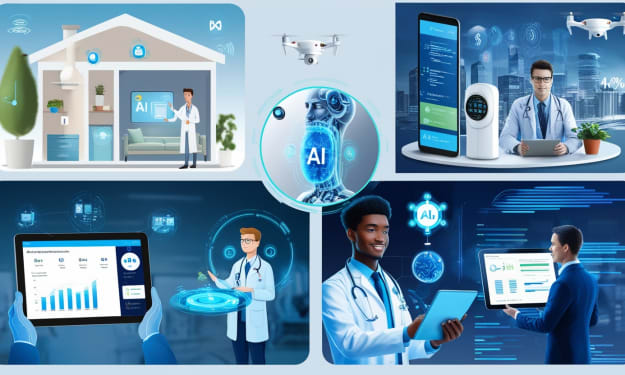
AI in Daily Life : The Silent Revolution. AI-Generated.
Artificial Intelligence (AI) has transitioned from science fiction to a very real part of our daily lives. It no longer exists solely in futuristic movies or complex labs; it’s right here, in our pockets, homes, and workplaces. While we may not always notice it, AI is rapidly becoming one of the most transformative technologies of the 21st century. Let’s dive into how artificial intelligence is subtly — yet powerfully — reshaping the world around us, and what it means for the way we live and work. What is Artificial Intelligence? At its core, AI refers to the ability of machines to mimic human intelligence. These systems can learn from data, recognize patterns, make decisions, and even predict future outcomes — often more efficiently than humans. From voice assistants like Siri and Alexa to recommendation systems on Netflix and Amazon, AI is everywhere. But its influence goes far beyond just convenience. 1. Smart Homes: Living with Intelligent Devices The modern home is no longer just a physical space — it’s an intelligent environment. Smart thermostats learn your schedule and adjust temperature automatically. AI-powered security cameras detect unusual behavior and alert you in real-time. Lights turn off when you leave the room, and your coffee starts brewing the moment your alarm rings. These innovations are more than just luxuries — they save time, energy, and provide a new level of comfort and security. 2. AI in Healthcare: Smarter Diagnoses, Better Care Perhaps the most meaningful use of AI is in the healthcare industry. AI algorithms can scan medical images like X-rays and MRIs to detect diseases earlier and with higher accuracy than human doctors. They help doctors analyze symptoms, suggest treatment options, and even predict potential health risks based on patient history. Remote monitoring tools powered by AI allow for continuous health tracking, reducing hospital visits and ensuring better patient care, especially in rural or underserved areas. 3. Personalized Education: Learning Tailored to You AI has entered classrooms too. Intelligent tutoring systems analyze how students learn and adapt accordingly. For example, an AI-powered learning app can detect when a student struggles with a concept and offer additional explanations, videos, or exercises tailored to their specific needs. This kind of personalized education has been shown to improve retention and engagement, especially in remote learning environments. 4. Financial Intelligence: Smarter Investments and Spending In the world of finance, AI is transforming how we manage money. AI-powered robo-advisors help investors choose stocks and manage portfolios based on real-time market analysis. Banks use AI to detect fraudulent transactions, automate customer service, and even offer spending advice. Even budgeting apps now use AI to predict future expenses and help users save more effectively. 5. AI in Entertainment: The Content You Crave Ever wondered how Netflix always seems to know what you want to watch next? That’s AI at work. AI analyzes your viewing habits to recommend shows and movies you’re most likely to enjoy. The same happens on Spotify, YouTube, and even social media platforms like TikTok, where AI tailors content to your preferences — keeping you engaged (and often addicted). Benefits of AI in Daily Life Efficiency: Tasks that once took hours can now be done in minutes, or automatically. Convenience: Personalized services make everyday life smoother and more comfortable. Safety: From fraud detection to surveillance, AI contributes to personal and public safety. Healthcare Access: AI-powered diagnostics are improving access and quality of healthcare worldwide. Challenges and Ethical Questions Despite its benefits, AI also comes with concerns: Job Automation: Many fear that AI will replace human jobs, especially in manufacturing, customer service, and transportation. Bias in AI Systems: If an AI learns from biased data, it can make unfair decisions — particularly in areas like hiring or law enforcement. Privacy Issues: As AI systems collect more personal data, concerns over surveillance and data misuse are rising. Dependence on Technology: There's also the risk of becoming too reliant on machines, losing critical thinking or interpersonal skills. What Does the Future Hold? Looking ahead, AI is expected to continue evolving rapidly. Self-driving cars, AI-powered cities, and advanced robotics are no longer ideas of tomorrow — they’re under development today. But as AI grows smarter, the way we shape its development will determine whether it becomes a tool of liberation — or control. Final Thought: Artificial intelligence is not just a trend; it's a technological shift reshaping how we interact with the world. Understanding it today is crucial to navigating the future. The next time your phone suggests a shortcut, or your bank alerts you to a suspicious charge, remember: you’re already living in the age of AI. So, how will you prepare for a world where machines may soon think — and possibly decide — for us?
By RafiBinYousaf2 years ago in Futurism