future
Exploring the future of science today, while looking back on the achievements from yesterday. Science fiction is science future.
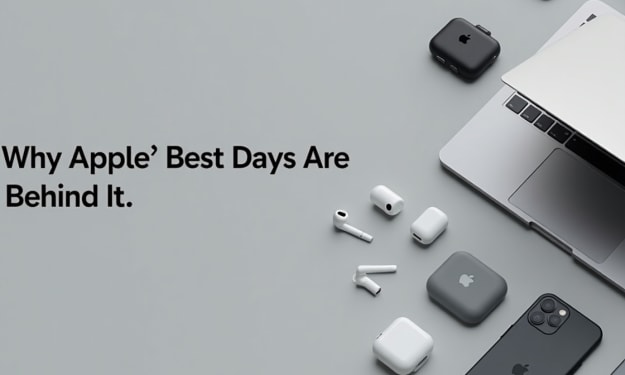
Why Apple’s Best Days Are Behind It. AI-Generated.
For over two decades, Apple Inc. has been the crown jewel of Silicon Valley. From revolutionizing personal computing to reshaping the mobile phone industry, Apple didn’t just follow trends—it created them. But here’s a controversial take: Apple’s best days are behind it. While the company remains a financial powerhouse, cracks are forming under the surface. Loyalty is slipping. Innovation is stalling. And rivals are catching up—fast. 1. Innovation Has Slowed to a Crawl Let’s be honest—when was the last time Apple truly blew our minds? The iPhone was groundbreaking in 2007. The iPad in 2010 was impressive. AirPods reshaped wearable tech. But recently? Apple has leaned heavily on incremental updates. The iPhone 13, 14, 15… they look eerily similar. The design tweaks are minor. The software improvements are nice, but not revolutionary. Compare that to the energy of the Steve Jobs era, when each keynote was a cultural moment. Today, Apple’s product launches feel predictable. There’s a sense that they’re playing it safe—optimizing profit over pushing boundaries. 2. Apple Is No Longer the Cool Brand Apple once represented rebellion, creativity, and sleek modernity. Today, it represents… the status quo. Teenagers and Gen Z aren’t as infatuated with Apple as Millennials were. In fact, platforms like TikTok are filled with creators who mock the lack of customization on iPhones compared to Android. Tech-savvy users are turning to Samsung, Google Pixel, and even Chinese brands like Xiaomi and OnePlus for cutting-edge features and flexibility. The cult-like devotion Apple once enjoyed is fading. People no longer line up around the block for the latest iPhone. Apple has become “just another phone brand”—with a premium price tag. 3. The Apple Ecosystem Is a Walled Garden—and It’s Backfiring Apple’s ecosystem used to be its greatest strength: Mac, iPhone, iPad, AirPods, Watch—everything just works together. But in 2025, that strength is turning into a cage. People want choice. They want compatibility. Apple’s refusal to adopt universal standards like USB-C (until forced by regulation) and their tight control over the App Store has frustrated users and developers alike. In regions like Europe, Apple is facing legal heat over monopolistic practices. Developers are increasingly questioning why Apple takes a 30% cut of their earnings just to appear on the App Store. These battles are chipping away at Apple’s pristine image. 4. China Is a Growing Threat A decade ago, Apple owned the premium smartphone market in China. But now, Chinese brands like Huawei, Oppo, and Xiaomi are taking over—offering better hardware at lower prices. Add to that growing geopolitical tensions, government restrictions, and a movement to “buy local,” and Apple’s dominance in one of its largest markets is being seriously challenged. In 2023 and 2024, Apple saw declining sales in China. If this trend continues, it could mark the beginning of a long-term decline in global market share. 5. AI Is the Future—and Apple Is Behind While Microsoft integrates ChatGPT into everything from Word to Windows, and Google pushes AI into Search and Android, Apple has been oddly silent on the AI front. Sure, they’ve made moves—like enhancing Siri or making quiet acquisitions—but compared to the AI arms race happening right now, Apple feels like it’s standing still. In a world where people expect intelligent assistants, creative tools, and smart automation, Apple’s reluctance to lead in AI could prove costly. If Apple doesn’t catch up fast, its devices could feel outdated—not because of hardware, but because of what they can’t do compared to competitors. 6. Tim Cook Is Not a Visionary—He’s a Manager Steve Jobs was an innovator. He saw the future and built it. Tim Cook is a master of operations. He made Apple a $3 trillion company by optimizing supply chains, maximizing margins, and pleasing shareholders. But you can’t spreadsheet your way to the next iPhone moment. Under Cook’s leadership, Apple has become more cautious, more corporate. The magic, the mystery, the bold risks—many feel they died with Jobs. And unless someone new steps up with radical vision, Apple may slowly drift into irrelevance—just like Nokia or BlackBerry once did. So, Is Apple Doomed? Not Yet… Let’s be clear: Apple isn’t going to vanish tomorrow. It still sits on mountains of cash, controls a massive user base, and dominates multiple product categories. But here’s the warning: giants fall slowly—until they fall all at once. If Apple doesn’t reignite its culture of innovation, embrace open ecosystems, and lead in AI, it risks becoming the next case study in corporate complacency. It won’t happen overnight. But it will happen—if they don’t change course. Final Thoughts: The Clock Is Ticking Apple's legacy is secure. But legacies don’t sell phones. Vision does. Innovation does. Risk does. Right now, Apple looks more like IBM in the '90s than Apple in the 2000s—powerful, respected, but slowly becoming irrelevant to the next generation. If that doesn’t change, we might one day say, “Remember when Apple ruled the world?”
By GadgetGroundabout a year ago in Futurism
Time Is an Illusion
I used to think time was simple. Seconds ticked by. Hours passed. The sun rose and set. Clocks moved. Calendars flipped. Everything seemed to follow a neat little timeline from birth to death. Cause and effect. Past to future. Straight line.
By Shailesh Shakyaabout a year ago in Futurism
IoT's Challenges and Opportunities for Bangladesh's Telecommunications Industry
The Internet of Things (IoT) is revolutionizing the telecommunication landscape worldwide. Bangladesh, a rapidly developing nation in South Asia, is beginning to explore the potential of IoT within its growing telecommunications infrastructure. This paper delves into the numerous opportunities that IoT offers to telecom companies in Bangladesh and the various challenges they must overcome. Capacity building, regulatory issues, infrastructure limitations, and cybersecurity are all included in the analysis. Finally, the paper presents recommendations for leveraging IoT to enhance service delivery, improve efficiency, and contribute to the country's digital transformation goals.
By Mahibul Mahtab Rummanabout a year ago in Futurism
Is Crypto Still Worth it in 2025?
Introduction The cryptocurrency market had come a long way since the early days of Bitcoin and Ethereum. Once dismissed as digital fad or a gambler's playground, crypto has cemented itself as a permanent fixture in the financial world. But, here we are in 2025, after wild bull runs, brutal crashes, stricter regulations, and evolving technologies. Many investors and skeptics alike are now asking: Is crypto still worth it?
By HazelnutLatteaabout a year ago in Futurism
Tesla vs China on the Final Frontier in Humanoid Robot Development. AI-Generated.
Tesla vs China on the Final Frontier in Humanoid Robot Development In the rapidly evolving world of artificial intelligence and robotics, a new battleground is emerging — humanoid robots. What was once science fiction is quickly becoming a technological arms race, with Tesla and leading Chinese tech giants sprinting toward dominance in this cutting-edge domain. As 2025 unfolds, the competition between Elon Musk’s Tesla and China’s increasingly state-backed robotics sector is not only about innovation but also geopolitical influence, economic dominance, and the redefinition of labor itself.
By Adnan Rasheedabout a year ago in Futurism
Revolutionizing Software Development: The Strategic Role of AI in Modern Engineering Workflows
Let's be honest- software development is no longer what it once was! Those days of developers spending weeks typing boilerplate code or manually debugging lines are over. Today, artificial intelligence is taking its place, changing the way we write, test, and deploy code.
By Emily Carterabout a year ago in Futurism
Tomorrow’s Memory
Day One – April 5, 2041 When Elias Varrick opened his eyes, he knew it was tomorrow. Not figuratively—literally. Each morning, his mind woke with memories from the next day. A full 24-hour leap ahead in consciousness, replaying the events of a future he hadn’t yet lived. The phenomenon started a year ago, after an experimental neural-AI project Elias led collapsed in a feedback loop of quantum code. He’d survived, but something changed inside him. Doctors called it “Temporal Retrograde Cognition.” The military called it a “liability.” Elias just called it a curse. Every night, his memories reset. Every morning, he knew what would happen next—but not what came before. -------------------------------------- Day Four – April 8, 2041 The vision came in fragments. A mall. Smoke. Screaming. A girl with a red balloon. Elias woke sweating, heart pounding. He grabbed his notebook and scribbled: “Mall—3:45 PM—explosion—food court.” He remembered the girl just staring at the ceiling as it collapsed above her. It wasn’t a dream. It was tomorrow. Which meant… he still had time. He’d done this before. A woman he warned not to take the 9:12 train later thanked him. The news reported a brake failure. But every time he altered the future, the memory vanished, swallowed into a reality he never experienced. Each success left him with nothing but a blank page—and a gut feeling he’d done something important. ------------------------------------- Day Five – April 9, 2041 Elias lingered at the mall’s food court at 3:40 PM, eyes scanning for danger. Then he saw the girl. Red balloon. Alone. He moved without thinking, shouting for everyone to evacuate. Security tried to stop him. A scuffle broke out. And then the explosion. Not in the food court—but a trash bin ten feet away. Controlled. Directed. Minimal casualties—thanks to his distraction. The girl lived. But he wouldn’t remember her face tomorrow. ------------------------------------- Day Six – April 10, 2041 Patterns were emerging. The bombing wasn’t random. It was part of something larger—four coordinated attacks on former HelixNet sites. Elias recognized the name instantly. He had exposed them a year ago for experimenting with neural-AI fusion. The fallout destroyed careers. His included. Now, someone was cleaning up loose ends. And he was next. He flipped through his notes and found a name circled repeatedly: Dr. Lira Sen. A neural engineer. Supposedly killed in the original HelixNet lab meltdown—the same one that cursed Elias with his fractured timeline. But his tomorrow-memory said otherwise. She was alive. And hiding. ---------------------------------------- Day Seven – April 11, 2041 The warehouse smelled of ozone and oil. Lira stepped from the shadows. She was older, thinner, but unmistakable. “I hoped you’d find me,” she said. “Or at least, that you’d remember.” “I only remember tomorrow,” Elias replied. She pointed to a humming device in the corner—a circular machine framed with copper coils and flickering blue light. “That machine split your perception. You don’t move through time, Elias. Your consciousness does. Every night when you sleep, your awareness leaps forward a day. But your body stays in sequence.” “So I never live today,” he muttered. “Only the consequences,” she said. Elias looked at the machine. “Can it be reversed?” She hesitated. “If you do, you’ll lose everything. The ability to remember the future. Your only advantage.” “But if I don’t,” he replied, “I’ll keep watching the world burn a day before I can stop it.” She nodded. “Then we try something different. A hard reset. We anchor your mind in the present… at the cost of everything you've changed.” “And if it doesn’t work?” “You’ll wake up,” she said, “and won’t remember any of this.” ---------------------------------------- Day Eight – April 12, 2041 Elias woke in his bed. The memories of bombs, of the girl, of Lira—all gone. But he felt different. Rested. Whole. He found a sealed envelope on his desk, addressed in his own handwriting. Inside was a note: > “You stopped them. You saved lives. But memory is the price of change. —E.” Below it, a headline blinked across his tablet screen: > “Coordinated Terror Plot Foiled Across City—Anonymous Tip Saves Hundreds” He stared for a long time. Then smiled faintly. He didn’t know how or why. But somehow, he knew the cost had been worth it. --------------------------------------- Day Nine – April 13, 2041 At breakfast, he wrote in a new notebook. Not to remember. But to remind himself who he still was. Just in case.Start writing...
By TheSilentPenabout a year ago in Futurism