astronomy
Celestial objects and the phenomena that surrounds them. What lies above the earth forever out of reach. From moons, to stars, galaxies, and beyond.
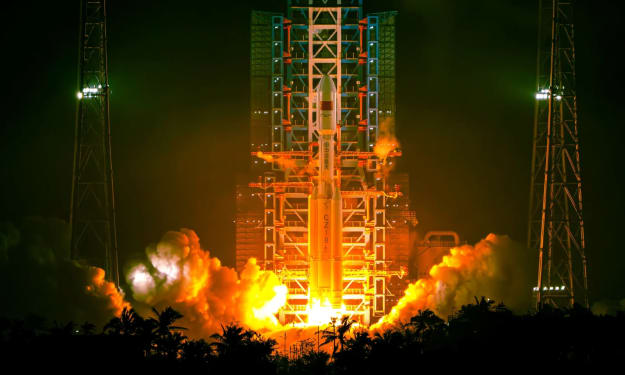
China’s Effort to Build a Competitor to Starlink Is Off to a Bumpy Start
China’s Effort to Build a Competitor to Starlink Is Off to a Bumpy Start In a world increasingly driven by data connectivity, and satellite technology China’s ambitious attempt to rival Elon Musk’s Starlink satellite internet network is both a strategic necessity and a national prestige project. However as with many grand visions the road to execution has proven to be far from smooth. China’s twin satellite internet initiatives Guowang (also called SatNet or Xingwang) and Qianfan (also known as Spacesail) are part of a state driven effort to create a low Earth orbit LEO satellite constellation that could provide global broadband coverage enhance military communication and establish China as a major space power. While these projects symbolize China’s desire to assert technological independence and global influence their rollout so far has been marred by technical logistical and regulatory challenges.
By Adnan Rasheedabout a year ago in Futurism
"The Machine That Learned to Love"
Emotion has always been the most intimate and mysterious part of the human experience. It shapes our relationships, fuels our creativity, and drives our decisions in ways logic alone cannot explain. But as artificial intelligence grows more sophisticated, we now face an astonishing possibility: machines that not only mimic emotion, but begin to emulate it. What does that mean for humanity, and how far are we willing to go? From Calculation to Connection In the early days, machines were built for speed and precision—chess-playing programs, calculators, and search engines. Their intelligence was cold, functional, and unmistakably artificial. They were brilliant at solving problems, but emotionally hollow. Then came a shift. As AI systems began interacting with people more frequently—in smartphones, customer service, and even therapy—developers realized that machines needed to understand how people feel. This was the birth of affective computing, a field aimed at enabling machines to recognize and respond to human emotions. Suddenly, chatbots could detect frustration in a user’s tone. Voice assistants started replying in cheerful, empathetic voices. Robots were programmed with facial expressions to match the emotional context of their tasks. But even then, it was clear: these machines weren’t feeling—they were performing. Simulated Emotion or Something More? Today’s AI is leagues ahead of its predecessors. Advanced models can write poetry, compose music, and engage in heartfelt conversations. AI companions like Replika offer emotional support to thousands of users, some of whom form real attachments. AI therapists can detect patterns of depression through subtle shifts in word choice or tone. These systems don’t just simulate emotion; they respond as if they understand it. To the human on the other side, the difference is often indistinguishable. But does that mean AI feels? Not exactly. Unlike humans, machines don’t experience dopamine rushes or heartbreak. There’s no biological core, no inner world. Yet from a functional perspective, emotion is evolving—not in origin, but in outcome. Machines are learning how to use emotion as a tool—to persuade, to comfort, to connect. Consciousness and the Illusion of Empathy At the heart of this conversation lies a complex debate: if a machine can convincingly mimic empathy, does it matter whether it’s “real”? To many users, the answer is no. If a virtual companion offers comfort in moments of loneliness, or an AI coach helps someone through a panic attack, the effect is meaningful—even if the emotion behind it is an illusion. This blurs the line between human and machine in powerful ways. Emotions may no longer be exclusive to biology, but rather extendable through technology. That’s both exhilarating and unsettling. The Human Cost There are risks, of course. Emotional AI can be used to manipulate—whether it’s a chatbot designed to upsell products or an algorithm shaping political opinions through personalized emotional appeals. There’s also the danger of dependence: people turning to machines for connection while real-life relationships fade. More urgently, we must consider what it means to feel when machines can fake it so well. Will we begin to doubt our own emotions? Will authentic human connection lose value in a world where synthetic empathy is always available and perfectly tuned to our needs? Toward a New Emotional Era Despite the risks, the potential for good is enormous. Imagine AI that can comfort the elderly, support mental health in underserved communities, or help children with autism learn social cues. These tools could offer not only assistance, but dignity, companionship, and understanding. Perhaps emotion in machines isn’t a threat to humanity—it’s an expansion of it. We’re not giving machines a soul, but we are giving them the language of the soul. And in doing so, we might learn something new about ourselves. In this age of machines, emotion is no longer confined to flesh and blood. It's being encoded, simulated, and woven into the circuits of our digital creations. Whether that leads us to greater empathy or greater confusion will depend on how we choose to use it. But one thing is certain: emotion, once our deepest dividing line from machines, is now the bridge.
By Kaleem Ullahabout a year ago in Futurism
The Galactic Federation Is Closing In: Awakening From the Matrix and the Call to Heal Ourselves and the Planet
They Are Watching. And Waiting. There is a rising hum beneath the surface of the world. You can feel it in the air, in the earth, in the strange coincidences that seem too perfect to be accidents. People are waking up in the middle of the night, feeling watched yet comforted. There is a growing whisper among mystics, ex-military personnel, visionaries, and everyday people alike: We are not alone. We have never been alone.
By The Secret History Of The Worldabout a year ago in Futurism
Ideal Girlfriend. AI-Generated.
The quest for the perfect partner is a timeless human endeavor, filled with hopes, dreams, and a touch of cosmic curiosity. While love is a complex tapestry woven with individual personalities and shared experiences, astrology offers a fascinating lens through which to explore potential compatibility and the kind of girlfriend who might resonate most deeply with your zodiac sign. Could the stars hold a clue to your ideal match? Let's embark on a celestial journey to uncover the girlfriend archetype that might just be your perfect fit.
By Jyotishgher Astrologyabout a year ago in Futurism
Rahu's Transit in 2025
In the vast cosmic dance of planets, Rahu, the North Node of the Moon, holds a unique and often enigmatic position. Known as a shadow planet in Vedic astrology, Rahu doesn't have a physical form but represents worldly desires, ambition, illusion, and unconventional paths. Its movements across the zodiac signs are considered significant events, capable of stirring up our lives in unexpected ways. As we move through 2025, a key astrological shift involving Rahu is set to unfold, prompting us to examine its potential effects on various aspects of our existence.
By Jyotishgher Astrologyabout a year ago in Futurism
The Aethereal Nexus
Words possess an unmatched power: they carry the potential to shape reality, sculpt consciousness, and align our minds with deeper truths. Yet, even among words, certain ones vibrate uniquely, resonating not only through intellect but through subtle intuition and primal recognition. Two such words are "Aethereal" and "Nexus."
By Bruno Cerqueiraabout a year ago in Futurism
"Why Black Mirror Feels More Real in 2025 Than Ever Before"
When Black Mirror first hit screens in 2011, it felt like a dark, exaggerated peek into a twisted future. Fast-forward to 2025, and it no longer feels like fiction—it feels like a documentary. Charlie Brooker’s anthology series has always been unnervingly prophetic. Each episode was a warning, a black mirror held up to society. But in today’s world of rapidly evolving tech, surveillance capitalism, and blurred lines between human and machine, many of those dystopias have become our day-to-day reality. Here are a few episodes that now feel shockingly relevant—and why we should be paying attention. 1. “Nosedive” – The Rise of Social Credit and Online Reputation In this pastel-colored nightmare, society revolves around a 5-star rating system. Every interaction affects your score, which then determines your access to housing, travel, and even friendships. Sound familiar? While the West hasn’t adopted a formal “social credit” system, online reputation scores are everywhere. Uber drivers rate passengers. LinkedIn endorses skills. Even dating apps subtly reward high engagement. In China, an actual government-run social credit system exists—and it's being refined with AI. The scariest part? Many people voluntarily shape their lives to be “likable” online, curating identities for approval instead of authenticity. 2. “Be Right Back” – AI Clones and Grief Technology This episode tells the story of a woman who uses an AI chatbot trained on her deceased partner’s digital footprint. Eventually, it leads to a humanoid replica. In 2025, AI is capable of mimicking voices, writing styles, and personalities with eerie accuracy. Companies like Replika and HereAfter AI already allow people to create virtual companions or record life stories to be “spoken” by AI after death. With ChatGPT-style models advancing and deepfakes improving, it’s plausible that virtual versions of loved ones could soon be a normal part of grieving. But should they be? 3. “Fifteen Million Merits” – The Gig Economy and Entertainment Culture This early episode showed a world where people pedal on bikes to earn merits and pay to skip ads—while being bombarded by talent shows and influencer culture. Today, many live in that cycle. The gig economy has millions hustling across Uber, DoorDash, and Fiverr. Entertainment is dominated by viral content, quick fame, and constant performance. Even the idea of “skipping ads” now costs money—on YouTube, Spotify, or streaming platforms. We work, consume, and strive for online validation in a never-ending loop. It’s not science fiction. It’s our screen-scrolling routine. 4. “The Entire History of You” – Surveillance and Memory Tracking In this unsettling tale, people can replay every moment of their lives through an implanted device. While brain implants aren’t mainstream yet, digital memory tracking is. Apps monitor your locations, cameras track your face, and smart devices record your voice. Combine that with wearable tech, biometric data, and cloud storage, and you have a society constantly documenting itself. Privacy is no longer a default—it’s something we have to fight for. So, What Now? Black Mirror always posed a simple question: What happens when technology evolves faster than ethics? In 2025, we’re living the answer. The show was never just about fear. It was about reflection. We can’t stop tech from advancing, but we can choose how we use it. We can push for regulation, practice digital mindfulness, and prioritize human connection over algorithmic approval. Because if we’re not careful, the darkest episodes of Black Mirror might just become our daily routine.
By Kaleem Ullahabout a year ago in Futurism
China Launches First Satellites to Build World's First Orbital Supercomputer. AI-Generated.
China Launches First Satellites to Build World's First Orbital Supercomputer With the launch of 12 advanced satellites, China begins constructing the world’s first space-based supercomputer, aiming to revolutionize real-time data processing and assert dominance in the new era of orbital technology.
By Adnan Rasheedabout a year ago in Futurism
"How China Became a Tech Superpower"
How China Became a Tech Superpower In just a few decades, China has transformed from a largely agrarian society into one of the most technologically advanced nations on Earth. Once known for cheap manufacturing and imitation products, China now leads in fields such as artificial intelligence, 5G, quantum computing, and electric vehicles. The question many around the world are asking is: How did China become a tech superpower so quickly? A Strategic Vision from the Top China’s rise in technology wasn’t an accident—it was the result of deliberate, long-term planning by its government. The Chinese Communist Party (CCP) has consistently placed science and technology at the core of its national development strategy. As early as 2006, China launched its Medium- to Long-Term Plan for the Development of Science and Technology, which aimed to reduce reliance on foreign innovation. This was followed by the Made in China 2025 initiative in 2015, targeting global leadership in 10 high-tech sectors including robotics, aerospace, and new energy vehicles. Unlike Western governments that often shift priorities with each election cycle, China’s centralized governance allows it to focus on long-term technological goals with consistency and massive resource backing. Government Investment and Support China pours billions into research and development. In 2023, China’s R&D spending reached over $445 billion—second only to the United States. This includes generous subsidies for tech startups, tax breaks for innovation-focused companies, and funding for public-private partnerships in cutting-edge fields. Moreover, state-owned banks provide favorable loans to tech companies, while government policy shields them from foreign competition during their early stages. This strategic support has helped companies like Huawei, Tencent, and BYD become global giants. Tech Giants Driving Innovation China is home to some of the world’s most influential tech companies. Alibaba revolutionized e-commerce, Tencent transformed mobile communication and gaming, and ByteDance (owner of TikTok) reshaped global social media. These companies aren’t just copying Western models—they’re innovating. For example, WeChat (by Tencent) is far more than a messaging app; it combines social networking, payments, news, and government services in one platform, becoming an essential tool in everyday Chinese life. In the AI space, China is rapidly catching up with the U.S., thanks to huge data sets, government support, and a vast pool of engineering talent. Chinese facial recognition firms like SenseTime and Megvii are now global leaders. A Massive Market and Data Advantage China’s population of over 1.4 billion provides a huge domestic market for testing and scaling new technologies. With millions of users adopting new apps and gadgets rapidly, Chinese companies can collect vast amounts of data—fueling advances in artificial intelligence, e-commerce personalization, and smart city systems. Moreover, in China, fewer regulations around data privacy (compared to countries like those in the EU) have enabled faster development and testing of surveillance tech and other data-heavy technologies. Education and Talent Development China has made enormous investments in education, especially in STEM (Science, Technology, Engineering, Mathematics) fields. Each year, Chinese universities produce millions of graduates with engineering and computer science degrees. Many Chinese students also study abroad in top global universities, bringing back skills and ideas. China is also nurturing home-grown talent with tech-focused schools, innovation zones, and "tech cities" like Shenzhen—known as the Silicon Valley of China. Infrastructure and 5G Leadership China has built some of the most advanced digital and physical infrastructure in the world. It leads in 5G deployment, with more 5G base stations than the rest of the world combined. High-speed rail, smart cities, and widespread mobile payment systems make everyday life in urban China more tech-driven than in many Western nations. This infrastructure allows Chinese companies and citizens to adopt and adapt new technologies quickly, giving them a competitive edge. Military-Civil Fusion and National Security China’s tech growth is also closely tied to its national security interests. Through a policy known as “military-civil fusion,” the Chinese government encourages collaboration between the private sector and the military to accelerate technological development in areas such as cybersecurity, quantum technology, and space exploration. This strategy blurs the line between civilian and military innovation, helping China advance in defense technologies and compete with the U.S. for global influence. Challenges Ahead Despite its successes, China faces major challenges. U.S. sanctions have targeted key tech sectors—most notably Huawei and the semiconductor industry. China still relies heavily on foreign-made advanced microchips, particularly those produced by Taiwan’s TSMC and U.S. firms. Additionally, concerns about censorship, surveillance, and lack of political freedom could limit global collaboration and innovation in the long run. Conclusion China’s rise as a tech superpower is the result of a unique mix of government planning, massive investment, ambitious entrepreneurs, and a vast domestic market. While challenges remain, the pace and scale of China’s technological advancement are reshaping global power dynamics. Whether admired or feared, China’s transformation from a developing country to a tech titan is one of the most remarkable stories of the 21st century.
By World politics about a year ago in Futurism
One Thing on Mars Even NASA Fears
Mars is one of the most interesting planets in our solar system. It's often called the "Red Planet" because of its reddish color, caused by iron in the soil. For many years, scientists have dreamed of sending humans to Mars. NASA, the space agency of the United States, has already sent robots, satellites, and rovers there. These machines have given us a lot of information about Mars—its weather, surface, and even signs that water may have once existed there.
By CodeCraft By Rashidabout a year ago in Futurism