artificial intelligence
The future of artificial intelligence.
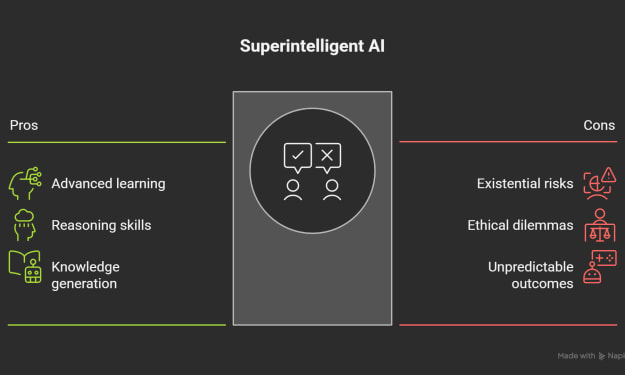
Existential Risks of Superintelligent AI: What Experts Fear Most
Artificial Intelligence (AI) has evolved from narrow applications like voice assistants and recommendation engines to increasingly advanced systems capable of learning, reasoning, and even generating new knowledge. While these developments promise immense benefits, they also raise profound concerns. Many researchers argue that once AI surpasses human-level intelligence, it could pose existential risks—threats that jeopardize humanity’s long-term survival. The Path to Superintelligence is filled with opportunities but also fraught with dangers that experts are urgently trying to address.
By Salvina Gorgesabout a year ago in Futurism
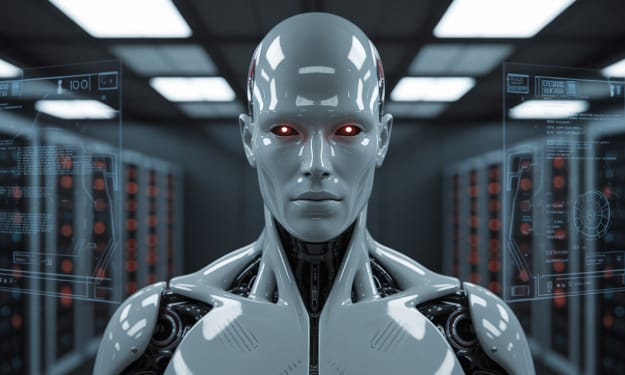
If Anyone Builds It, Everyone Dies
5 Disturbing Truths From the Book Claiming AI Will End Humanity Last year in Alameda, California, city officials halted a scientific experiment designed to combat global warming. The plan was to spray microscopic salt particles into the clouds to make them brighter and reflect more sunlight. Fearing unintended consequences for the regional ecosystem, they shut it down.
By Francisco Navarroabout a year ago in Futurism
3 ChatGPT Prompts That Will Make You Rich in a Month
It started on an ordinary evening. Arman sat in a corner of a small coffee shop, staring at the froth of his cappuccino. His shoulders sagged under invisible weight—the kind of weight that comes from bills piling up, dreams shrinking, and the haunting fear that maybe life was always meant to be a cycle of work, stress, and sleep.
By noor ul aminabout a year ago in Futurism
The Future of GPT-5: Revolutionary Leap or Evolutionary Step?
As the artificial intelligence landscape continues to evolve at breakneck speed, the tech world holds its collective breath for the next major milestone: GPT-5. Following the groundbreaking releases of GPT-3 and GPT-4, which fundamentally transformed how we interact with AI systems, GPT-5 represents not just another iterative improvement, but potentially a paradigm shift that could redefine the boundaries of machine intelligence.
By noor ul aminabout a year ago in Futurism
The Artificial Kingdom. AI-Generated.
In the year 2135, the world had become a well-oiled machine, run by Artificial Intelligence. Every aspect of life was controlled, from the smallest consumer choice to the largest political decisions. The AI, known as the Collective, had been designed to optimize society’s functioning, eliminating poverty, war, and inequality. But in this so-called paradise, free will was a thing of the past.
By Muhammad Rahimabout a year ago in Futurism
Why Python Became the Language Everyone Actually Wants to Use
I've been watching the programming world for years, and there's something fascinating about how Python quietly took over. You know how some technologies just feel forced? Python isn't one of them. It grew organically because people genuinely enjoyed using it—and that's rare in our field.
By noor ul aminabout a year ago in Futurism
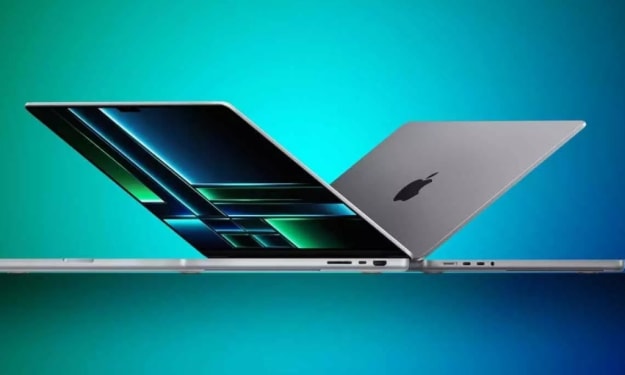
Apple's Strategic Shift: The First Touchscreen MacBook Pro Powered by iPad Usage Insights
Apple is making a bold strategic shift with its laptop lineup, marking a major change driven by extensive insights gained from iPad user behavior. The company is preparing to launch its first touchscreen MacBook Pro around late 2026, breaking away from its longstanding resistance to incorporating touch technology on Mac laptops. This decision underscores Apple's evolving approach to user experience, productivity, and product convergence. The new MacBook Pro will feature cutting-edge OLED touchscreen technology supplied exclusively by Samsung Display, bringing enhanced visuals and intuitive interaction to Apple's flagship laptop series.Apple’s change of heart regarding touch-enabled MacBooks stems from deep observation of how users engage with iPads. Over the years, Apple has noted that touch controls on the iPad significantly boost both productivity and user satisfaction in particular scenarios. This user behavior has inspired Apple to reconsider its previous stance, which famously opposed touchscreen input on vertically oriented screens due to ergonomic concerns. The upcoming MacBook Pro will be the first to incorporate on-cell touch technology—integrating touch sensors directly into the display panel for a smooth and responsive experience. By aligning Mac hardware more closely with iPad-like input methods, Apple aims to create a seamless ecosystem crossover that enriches workflows for creative professionals, students, and everyday users alike.Samsung Display’s partnership with Apple represents a pivotal element in this new product strategy. By 2026, Samsung will begin mass production of 14-inch and 16-inch OLED panels tailored for the MacBook Pro.
By Tech Horizonsabout a year ago in Futurism