artificial intelligence
The future of artificial intelligence.
📱 The Future of Smartphones: What Apple and Samsung Don’t Want You to Know
The Smartphone Revolution Nobody Talks About Every year, Apple and Samsung take the stage with shiny presentations, promising “the future of smartphones.” Sleeker cameras, faster chips, smarter assistants — it all looks exciting. But here’s the truth: the next five years of smartphone technology are far more disruptive than these tech giants admit.
By The Narrative Hubabout a year ago in Futurism
How to Use AI in Everyday Life: From Money Management to New Hobbies
In 2025, artificial intelligence is no longer just a buzzword. It has become part of daily life, quietly helping people make better decisions, save time, and even discover new interests. From managing money to picking up hobbies, AI is now a powerful tool in our personal toolkit. The real trick is learning how to use it wisely combining AI’s efficiency with human judgment, so we don’t rely on it blindly.
By Muzamil khanabout a year ago in Futurism
Why Does Elon Musk Walk So Fast? The Mystery Behind His Unstoppable Pace
Elon Musk, the tech billionaire behind Tesla, SpaceX, and Neuralink, is known for his remarkable achievements and eccentric habits. One habit that has caught the attention of many observers is his rapid walking style. Whether entering a board meeting, walking across a conference stage, or touring a factory, Musk seems to move with unmatched speed, often leaving colleagues and onlookers scrambling to keep up. But what exactly is going on with Musk’s walking pace, and could it reveal something more profound about his personality, health, or work habits? For years, journalists, engineers, and fans have noticed Musk’s unusually quick stride. Videos across social media show him walking faster than most people, often appearing impatient or hyper-focused. Some have joked that he’s “walking faster than his own thoughts,” but a closer look suggests there may be more to this phenomenon than meets the eye. --- Theories Behind Elon Musk’s Speedy Walk Several explanations have been proposed to explain Musk’s walking pace: 1. Time Efficiency: Musk is notoriously busy. Running multiple companies simultaneously, he reportedly works over 100 hours a week. Rapid walking may simply be his way of saving precious seconds and staying on schedule. 2. High Energy Levels: Musk is known for his relentless work ethic and ability to maintain focus for extended periods. Walking quickly could be a reflection of his boundless energy and drive. 3. Mental Restlessness: Some behavioral experts suggest that individuals with hyperactive thought processes may exhibit fast walking as a physical manifestation of their racing minds. Musk is famous for brainstorming complex engineering problems and business strategies, often simultaneously, which might explain his need to “move his body as fast as his brain moves.” 4. Neurological Factors: While less likely, some medical professionals note that unusual walking habits can occasionally reflect neurological or musculoskeletal conditions. Though there is no evidence Musk suffers from any such issue, the consistent speed and precision of his stride is unusual enough to warrant curiosity. --- Psychological Implications Beyond efficiency and energy, Musk’s fast walking could also convey a deeper psychological signal. Behavioral analysts have observed that leaders with rapid walking tendencies are often: Highly goal-oriented and focused Less tolerant of delays or inefficiency Perceived as ambitious and determined Musk’s walking style, therefore, may contribute to his public persona as a relentless innovator, someone always pushing forward, both literally and figuratively. Interestingly, Musk himself has commented in interviews that he prefers to walk meetings rather than sit, citing creativity and mental clarity as key benefits. Walking fast may simply be a natural extension of this habit, allowing him to process ideas while moving at a brisk pace. --- Public Reactions and Social Media Observations Social media has been abuzz with clips of Musk walking quickly across stages, factories, and campuses. Fans and commentators often humorously remark that his legs appear to have their own agenda. Memes comparing Musk to “a human bullet train” have gone viral, but the fascination with his stride goes beyond humor. Some employees have noted that keeping pace with Musk can be challenging. In factory walkthroughs, for instance, staff sometimes struggle to match his speed, leading to a perception of high-pressure environments. This perception aligns with Musk’s image as a demanding, results-driven leader who expects maximum efficiency from himself and others. --- Is There a Health Angle? While there is no evidence of medical concern, rapid walking can have physical implications. Experts suggest that brisk walking at a consistent pace is generally healthy, improving cardiovascular fitness, energy levels, and mental clarity. Musk’s habit may actually be contributing to his ability to sustain intense work hours. However, some caution that extreme, prolonged fast walking combined with high work stress could potentially lead to joint strain or fatigue over time. Given Musk’s known tendency to push boundaries, it’s plausible that he prioritizes productivity over rest. --- The Symbolic Meaning Elon Musk’s walking pace can also be interpreted symbolically. It represents a man always moving forward, never standing still, constantly chasing innovation and progress. In a metaphorical sense, Musk’s stride mirrors his career trajectory, where speed, vision, and determination define every step. Whether Musk realizes it or not, his fast walking has become part of his personal brand—a visual representation of relentless ambition and the urgency with which he approaches both work and life. --- Final Thoughts Elon Musk’s rapid walking is more than a quirky habit—it’s a window into his personality, work ethic, and possibly his physical vitality. While some may dismiss it as mere eccentricity, others see it as a physical manifestation of genius, focus, and ambition. In a world obsessed with productivity and efficiency, Musk’s stride serves as a reminder that speed—mental, physical, and professional—can define a legacy. Observing him move so quickly, we are reminded that progress waits for no one, and innovation, much like Musk himself, moves at a relentless pace. --- SEO Keywords: Elon Musk walking speed, Musk rapid walking, Elon Musk habits, Musk health insights, Elon Musk physical fitness, Musk productivity habits, CEO walking style, tech billionaire habits, Musk leadership style, Elon Musk energy levels, Musk behavioral analysis, Musk lifestyle secrets
By Muhammad Riazabout a year ago in Futurism
Elon Musk’s $7,000 Robot “Chefino” – A Culinary Revolution or the End of Human Chefs?
Elon Musk has once again captured the world’s attention with a bold innovation that could redefine how we cook. His newest creation, Chefino, is an AI-powered robotic chef developed by Tesla’s advanced food technology division. Promising to deliver restaurant-quality meals at the push of a button, Chefino is designed for both home kitchens and commercial establishments. But the question arises: is Chefino merely a kitchen assistant, or could it disrupt the restaurant industry, replacing skilled human chefs entirely? --- What is Chefino? Chefino is a fully autonomous cooking robot that combines artificial intelligence, robotics, and machine learning to prepare gourmet meals with precision and flair. Unlike traditional kitchen appliances, Chefino doesn’t just assist with cooking—it handles everything from ingredient preparation to plating with artistic presentation. Key capabilities include: Preparing thousands of recipes with exact accuracy Learning new cooking techniques via AI updates Adjusting flavors according to user preferences Operating autonomously, requiring minimal human input With a price tag of $7,000, Chefino is designed for ambitious home cooks and restaurant owners alike, making it a potential game-changer in the culinary world. --- How Chefino Works Equipped with multiple robotic arms, precision sensors, and AI-powered processors, Chefino can replicate complex cooking methods traditionally reserved for professional chefs. Its features include: AI Taste Adaptation: Adjusts seasoning and cooking style based on feedback and personal preferences. Machine Learning Algorithms: Continuously improves cooking techniques and recipe execution. Automated Ingredient Selection: Identifies the freshest and most suitable ingredients for each dish. Smart Plating Technology: Ensures visually stunning presentations worthy of Instagram. Additionally, Chefino integrates a voice-controlled interface, allowing users to give commands effortlessly. Whether it’s a quick breakfast, an elaborate five-course meal, or a delicate dessert, Chefino promises consistent results every time. --- Impact on the Culinary Industry While the innovation is impressive, Chefino raises concerns about job security in the food industry. With AI automation becoming more capable, some experts worry that robots like Chefino could replace human chefs, particularly in chain restaurants and high-volume kitchens. However, proponents argue that Chefino is designed to enhance human creativity, not eliminate it. By automating repetitive and labor-intensive tasks, chefs can focus on innovation, presentation, and flavor experimentation. Potential benefits include: Reduced labor costs for restaurants Consistent food quality without human error Faster meal preparation in busy kitchens Healthier options with precise control over ingredients Despite these advantages, many chefs insist that cooking is an art, requiring human intuition, emotion, and cultural context—qualities a robot cannot replicate. --- Chefino: The Future of Home and Restaurant Cooking AI-powered chefs like Chefino may soon transform the culinary landscape. Imagine home kitchens where anyone can cook gourmet meals effortlessly, or restaurants capable of delivering perfectly consistent dishes every day. Elon Musk emphasizes that Chefino is not intended to replace chefs, but to augment their abilities. By removing repetitive tasks, it allows humans to focus on creativity and refinement, ensuring that the culinary arts continue to evolve alongside technology. --- Potential Challenges Even with advanced AI, Chefino faces practical challenges: Adapting to unique ingredients or unpredictable kitchen conditions Handling complex multi-step dishes requiring manual dexterity and intuition Navigating regulatory requirements for food safety in restaurants Overcoming these hurdles will be crucial for Chefino’s success in professional kitchens. --- Final Thoughts Chefino represents a major leap in culinary technology, making gourmet cooking accessible to virtually anyone. Whether it becomes a household staple or a disruptive force in the restaurant industry, one thing is certain: Elon Musk’s robotic chef is a revolutionary innovation that bridges the gap between AI and human creativity. As AI continues to evolve, we must ask ourselves: how much of our daily lives should we entrust to machines? The answer will shape the future of food, technology, and human ingenuity. --- SEO Keywords: Elon Musk robot chef, AI cooking robot, Chefino robot, Tesla food technology, Smart kitchen robot, AI-powered chef, Automated cooking machine, Future of cooking, Robot replacing chefs, AI in restaurants, Tesla robot cooking, AI culinary assistant, Home robot chef, Robotic gourmet meals, Tesla kitchen innovation
By Muhammad Riazabout a year ago in Futurism
Elon Musk’s Bold Plan: Tesla’s Optimus Robots Could Build a Martian Colony by 2026
Elon Musk, the visionary entrepreneur behind Tesla and SpaceX, has unveiled one of his most ambitious projects yet: sending Tesla’s humanoid robots, Optimus, to Mars by the end of 2026. This mission could redefine the way humanity approaches interplanetary exploration, shifting the focus from human astronauts to AI-driven robotic pioneers. Optimus, also called the Tesla Bot, was first announced in 2021 as part of Tesla’s AI initiatives. Standing around 5 feet 8 inches tall and weighing approximately 125 pounds, Optimus is designed to handle repetitive, dangerous, and labor-intensive tasks, which humans would otherwise perform. Leveraging Tesla’s neural network and AI technology—the same system behind Tesla’s self-driving cars—Optimus can walk, lift, and manipulate objects with near-human dexterity. The second generation of Optimus, unveiled in December 2023, showcased significant upgrades in motion control, hand grip, and energy efficiency, making it more suitable for industrial applications—and now, interplanetary missions. --- Why Robots Are Key to Mars Colonization Sending humans to Mars without preparation is extremely risky due to harsh environmental conditions: extreme temperatures, high radiation, and a thin atmosphere. Optimus robots, however, can operate in these environments without life support, making them perfect for early exploration and habitat construction. If successful, Optimus robots could: Assemble habitats and research stations Set up solar panels and energy infrastructure Conduct geological and atmospheric surveys Prepare the groundwork for future human explorers By handling these tasks, Optimus robots could significantly reduce risk, cost, and preparation time, giving humans a better chance of surviving and thriving on the Red Planet. --- Starship: The Vehicle to Mars The mission relies on SpaceX’s Starship, the next-generation spacecraft designed for long-duration space travel. Starship is fully reusable and intended to be the most powerful rocket ever built. It is key to Musk’s vision of making humanity multi-planetary. Although Starship has undergone several test flights, it is still in development. For the 2026 Mars mission to succeed, Starship must demonstrate reliability in launch, landing, and cargo transport. SpaceX engineers are rapidly iterating on design improvements at their Texas facility, with each test flight bringing them closer to this unprecedented goal. --- Challenges for Optimus on Mars While the vision is thrilling, significant hurdles remain. Optimus must: Operate autonomously due to the communication delay between Earth and Mars Endure dust storms, extreme temperatures, and low gravity Adapt to unpredictable terrain and unexpected equipment failures Autonomy is especially critical. Optimus cannot rely on human instructions in real time, so its AI must make complex decisions independently. Its success will determine whether humanoid robots can handle the initial stages of Mars colonization. --- Why This Mission Matters Elon Musk’s plan goes beyond simple automation—it represents a new paradigm in space exploration. By using AI-powered robots to construct the first Martian infrastructure, Musk envisions a world where humans and machines collaborate across planets. If successful, this mission could: Open doors for robotic exploration of the Moon, asteroids, and outer planets Set a standard for AI-assisted colonization in the 21st century Inspire other nations and private companies to rethink space exploration strategies This approach also allows humans to focus on science, research, and innovation, while robots handle the dangerous groundwork—a concept that could transform the future of interplanetary travel. --- The Broader Impact The deployment of Optimus robots has implications beyond Mars: 1. Industrial robotics – Lessons learned in space can enhance automation on Earth, improving efficiency and safety in factories. 2. AI advancement – Optimus’ autonomous decision-making could accelerate AI development across industries. 3. Global competition – With China, the EU, and other countries advancing in robotics, Musk’s plan may set the tone for international space leadership. While ambitious, the project highlights a critical shift: AI and humanoid robots are becoming integral to human progress, not just on Earth, but across the cosmos. --- Final Thoughts Sending Optimus robots to Mars is not just a bold experiment—it is a statement about the future. Musk is redefining the relationship between humans and machines, showing that AI can extend our capabilities into environments too hostile for human life. If all goes according to plan, by 2026, the first humanoid robots could lay the foundation for a permanent human presence on Mars. This vision is no longer science fiction; it is the beginning of a new era where AI, robotics, and human ambition converge to push the boundaries of possibility. --- SEO Keywords: Elon Musk Mars mission, Optimus robot, Tesla Optimus Mars, SpaceX Starship 2026, Robots on Mars, AI robots by Tesla, SpaceX Mars 2026, Elon Musk robot plan, Tesla humanoid robot, Starship Mars launch, Elon Musk sends Optimus robots to Mars, Tesla AI robot mission to Mars, Mars colonization plan by Elon Musk, Optimus robot tasks on Mars
By Muhammad Riazabout a year ago in Futurism
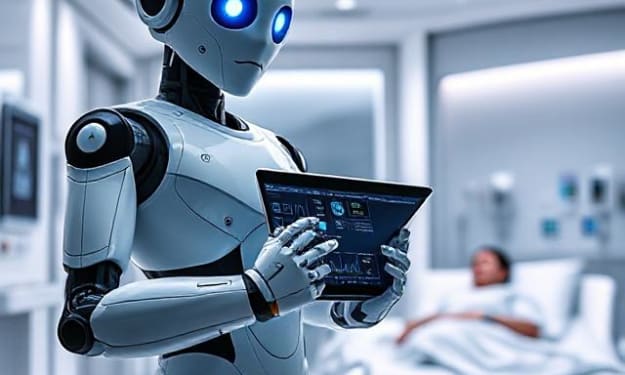
Elon Musk’s $10,000 Robot "MediBot" – The Future of Healthcare or a Threat to Doctors?
Start writing... Elon Musk has a reputation for entering industries no one expects and then flipping them upside down. He did it with cars through Tesla, with rockets through SpaceX, and with AI through OpenAI. Now, Musk is setting his sights on healthcare, one of the most complex and human-centered industries in the world. His latest creation, MediBot, is being hailed as the “Doctor of the Future.” Priced at $10,000, MediBot is a humanoid robot powered by artificial intelligence, capable of performing tasks that range from simple health monitoring to advanced diagnostics. For millions struggling with access to affordable healthcare, it could be revolutionary. But critics warn that MediBot might also threaten the roles of doctors, nurses, and even hospitals as we know them. Is this robot a medical miracle—or a sign that human doctors could one day become obsolete? --- What is MediBot? MediBot is Tesla’s bold step into the world of medical technology. Unlike apps or wearable devices that simply track health data, MediBot is a physical, interactive robotic assistant designed to work directly with patients in their homes or clinics. Some of MediBot’s core abilities include: Diagnosing 5,000+ medical conditions with a reported 95% accuracy Monitoring patient vitals in real time (heart rate, blood pressure, oxygen levels, blood sugar, etc.) Performing basic medical procedures such as wound cleaning and administering injections Offering AI-driven consultations via natural voice interaction Connecting instantly with doctors and hospitals during emergencies Learning new treatments continuously through AI cloud updates At a price of $10,000, MediBot is aimed not just at wealthy households but also at small clinics in developing countries where doctors are often unavailable. In places where healthcare is stretched thin, this could make a real difference. --- How Does MediBot Work? MediBot combines robotics, AI, and advanced medical imaging to deliver a futuristic experience. It is equipped with robotic arms, precision scanners, and cloud-connected processors. Patients can interact with it through simple voice commands such as: “MediBot, check my blood pressure.” “MediBot, schedule a diabetes test.” “MediBot, analyze my cough.” It uses: AI-driven diagnostics – analyzing symptoms and comparing them to massive medical databases Predictive health algorithms – spotting early signs of diseases like cancer, diabetes, or heart disease before they worsen 24/7 health monitoring – continuously tracking patient data to prevent emergencies Emergency response systems – alerting nearby hospitals and ambulances when urgent care is needed For example, if MediBot detects irregular heart rhythms in a patient while they’re asleep, it can immediately alert emergency services and provide CPR until help arrives. --- The Impact on the Healthcare Industry The introduction of MediBot could shake the healthcare industry to its core. Benefits 1. Affordable Care: Millions of people without access to doctors could finally get reliable medical support. 2. Hospital Relief: Overcrowded hospitals could use MediBot to handle basic cases, freeing human doctors for critical surgeries. 3. Faster Diagnoses: AI-driven pattern recognition can sometimes detect illnesses faster than humans. 4. Consistent Quality: Unlike humans, robots don’t get tired, stressed, or distracted. 5. Global Reach: MediBot could bring healthcare to remote villages and rural communities worldwide. Risks and Concerns 1. Job Displacement: Doctors, nurses, and lab technicians worry their roles may shrink. 2. Data Privacy: Sensitive health records handled by AI could be hacked or misused. 3. Lack of Human Touch: Medicine isn’t just science—it’s also empathy, reassurance, and trust. Can a robot provide that? 4. Over-Reliance: Patients might depend too much on MediBot, ignoring the need for professional medical guidance. While some medical experts believe MediBot will act as a support system for doctors, others fear it will make many healthcare jobs redundant. --- Human Doctors vs. Robot Doctors A major debate now emerges: Can robots truly replace doctors? Proponents argue that AI is more accurate in data-driven diagnoses. For instance, studies already show AI can outperform doctors in detecting early-stage lung cancer from X-rays. MediBot could multiply this advantage by working tirelessly 24/7. On the other hand, doctors emphasize the human element. Medicine is about more than diagnosis—it’s about holding a patient’s hand, giving them hope, and understanding emotions. A robot may give facts, but it cannot give comfort. The future may not be about replacing doctors entirely, but rather creating a human-robot partnership. Doctors will focus on empathy, complex surgeries, and critical thinking, while robots handle repetitive tasks and routine monitoring. --- Ethical Questions With MediBot entering healthcare, a new set of ethical dilemmas arises: Should robots be allowed to make life-or-death decisions? Who is responsible if a robot gives the wrong diagnosis—Tesla, the doctor, or the patient? Will patients trust a robot more than a human doctor? Could MediBot widen the gap between rich and poor if only some can afford it? These questions highlight why MediBot is not just a technological invention but also a social challenge. --- Is This the Future of Medicine? Elon Musk insists that MediBot is not here to replace doctors, but to assist them. In his vision, MediBot will handle routine medical care, while human doctors push medical science forward with innovation. Imagine a future where every household has a MediBot that acts as a family doctor—checking daily vitals, preventing diseases before they start, and ensuring emergencies are caught early. Hospitals would be less crowded, healthcare would be more affordable, and millions of lives could be saved. But whether humanity is ready to let robots take charge of health decisions is another story. --- Final Thoughts MediBot may be the boldest attempt yet to merge artificial intelligence with human survival. If successful, it could democratize healthcare worldwide, making reliable medical care available to anyone, anywhere. Yet it also forces us to confront uncomfortable truths: Do we trust machines with our lives? Should empathy be sacrificed for efficiency? What happens to the millions of professionals whose jobs are at risk? Like all of Musk’s inventions, MediBot is disruptive, controversial, and visionary. Whether it becomes a lifesaving household staple or a symbol of misplaced trust in machines, one thing is certain—MediBot is a game-changer for the future of healthcare. --- SEO Keywords: Elon Musk medical robot, Tesla MediBot, AI in healthcare, robotic doctor, smart medical assistant, future of medicine, robot replacing doctors, healthcare AI, AI-powered diagnosis, medical technology 2025
By Muhammad Riazabout a year ago in Futurism
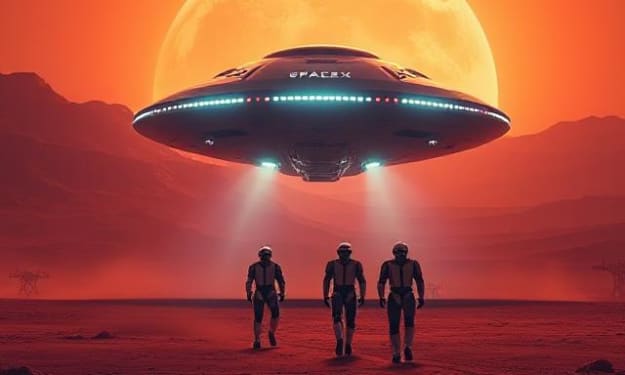
Elon Musk’s Bold Plan: Tesla’s Optimus Robots to Build the First Colony on Mars
In the year 2026, the eyes of the world are not on Earth but on a fiery trail cutting through the sky. From SpaceX’s launch site in Texas, the Starship rocket rises, carrying not humans—but the first AI-powered humanoid robots designed to set foot on Mars. These are not ordinary machines. They are Tesla’s Optimus robots, the mechanical pioneers of a new age. Standing 5 feet 8 inches tall and powered by Tesla’s advanced AI, they are humanity’s first attempt to build a foundation for life on another planet. It’s a mission that sounds like science fiction. But for Elon Musk, it’s the next logical step in his lifelong vision: making life multi-planetary. --- 🚀 The Launch Day On the morning of launch, Elon Musk stands inside the control center. Engineers monitor screens glowing with telemetry data. Journalists from every corner of the world are tuned in, and billions are streaming live from their homes. The countdown begins. “Ten… nine… eight…” The Starship, the world’s largest reusable rocket, ignites with a roar that shakes the earth. Flames thunder across the launch pad as the spacecraft ascends into the sky, carrying dozens of Optimus robots locked in their charging pods. Musk whispers, almost to himself: "This is it. The first workers of Mars are on their way." --- 🌌 The Journey Through Space For weeks, the Starship drifts through the silence of space. Inside, the Optimus units remain dormant, their AI sleeping while the ship navigates toward the red planet. They are not passengers—they are the cargo, the tools, and the workforce that will prepare Mars for human arrival. Unlike astronauts, they need no oxygen, no food, and no water. They require only energy, which solar panels will provide once they touch down. Back on Earth, people debate. Some celebrate Musk’s vision, others doubt it. But one fact is clear: humanity’s first colony on Mars will not be built by humans. It will be built by machines. --- 🛬 The First Footsteps The landing zone is Elysium Planitia, a flat region chosen for safety and sunlight. After months of travel, Starship descends through Mars’ thin atmosphere. Dust storms swirl, shaking the craft. But the ship holds steady and lands with a muted thud. The hatch opens. For the first time in history, a humanoid robot steps onto Martian soil. Its mechanical feet press into the red dust, leaving the first artificial footprints. One after another, the Optimus units emerge, forming a silent army of pioneers under the pale Martian sky. Billions on Earth watch the broadcast. For a moment, the world is united by awe. --- 🛠️ Building the Martian Outpost The robots immediately begin their programmed tasks. Some unfold giant solar panels, tilting them toward the weak sun. Others begin assembling habitats using bricks made from Martian regolith. Surveying drones launch into the air, mapping the landscape. Teams of Optimus units plant communication towers to connect back to Earth. They move with uncanny human-like motions—lifting, gripping, and constructing. Unlike astronauts who would tire after hours, Optimus robots work tirelessly, day and night. Their mission is simple but critical: prepare Mars for human life. --- ⚡ The Harsh Reality But Mars is not gentle. Temperatures plunge to –100°C at night. Dust storms rage for weeks, coating solar panels and cutting power. The thin atmosphere and high radiation test the robots’ endurance. One Optimus unit collapses, its joints frozen by the cold. Another struggles with sand clogging its motors. Yet the rest adapt, their AI learning in real time. They reroute power, share data wirelessly, and repair one another with spare parts carried aboard Starship. Back on Earth, engineers watch anxiously. Elon Musk tweets updates: "Our robots are learning to survive Mars. Each challenge makes them stronger. Humanity is coming next." --- 👨🚀 Humanity Watches In classrooms, children draw pictures of Optimus robots building cities on Mars. In offices, scientists debate the risks and rewards. Religious leaders call it either a divine step forward or human arrogance. Yet every night, news outlets replay the same footage: a silver humanoid raising the first solar panel on Mars. It becomes a symbol of hope, progress, and the start of a new era. --- 🌍 Why Robots First? Sending humans to Mars has always been dangerous and costly. The thin atmosphere, deadly radiation, and long communication delays make it nearly impossible without preparation. That’s why Musk’s plan is so bold: use robots first. They can build habitats, test resources, and set up power systems before astronauts ever arrive. If Optimus succeeds, the next generation of explorers will land not on barren soil but in a robot-built base ready for human life. --- 🌅 A Colony is Born Months later, the first Martian outpost is complete. From orbit, satellites capture images of rows of solar panels, small domes, and communication towers—all assembled by robots. It’s not a city. It’s not even a village. But it’s something far greater: a proof of concept. Humanity can build on another world. Elon Musk announces at a press conference: "This is the first robot-built colony in human history. When humans arrive, they won’t be stepping into the unknown. They’ll be stepping into a home our machines have already prepared." --- 🌌 The Legacy Historians will later write that the first pioneers of Mars were not astronauts, but machines. Optimus became more than just a robot—it became a symbol of the partnership between human intelligence and artificial intelligence. From this small beginning, future generations will expand. First dozens of robots, then hundreds, then humans, then families. One day, cities may rise under glass domes, and children may be born who will never know Earth as their home. And it all began with a single launch in 2026. --- 📝 Conclusion Elon Musk’s plan to send Tesla’s Optimus robots to Mars may sound like science fiction, but it is closer to reality than ever before. With SpaceX’s Starship and Tesla’s AI-powered machines, the groundwork for human colonization of Mars could be laid within the next few years. If successful, this mission will not only redefine space exploration but also the very definition of what it means to be human. For in the future, humanity’s story will not be confined to one planet—it will stretch across the stars. --- 📌 SEO Keywords Elon Musk Mars mission, Tesla Optimus robot, SpaceX Starship Mars 2026, Robots on Mars, AI humanoid robots, Tesla AI on Mars, Elon Musk robot plan, Mars colonization 2026, SpaceX future missions. ---
By Muhammad Riazabout a year ago in Futurism
Best AI Tools in 2025: Boost Your Productivity, Creativity & Success
AI tools in 2025 have completely transformed the way we work, create, and solve problems. From writing and design to video creation and productivity, these cutting-edge AI tools are now essential for creators, students, and entrepreneurs alike. Whether you want to save time, improve quality, or unlock new creative possibilities, the right AI tools can help you achieve more in less time.
By ✦•············• Freelancer •············✦about a year ago in Futurism
How Big Investors Use AI in Portfolio Management and How You Can Apply It Too
AI is no longer the monopoly of big banks. Smaller investment houses and individual investors can now use AI tools to run their portfolio management more efficiently, improve their selection of equity and other assets, and control risks. This guide shows how known investors use AI when making investment selections. It will also guide you on building an AI-powered portfolio management system to leverage AI in your investment choices.
By Kiran Modaabout a year ago in Futurism
Artistly.ai Review 2025: Is This AI Design Tool Worth the Hype (and Lifetime Deal)?
Have you ever stumbled upon a creative tool that makes you pause and think, “Why haven’t I tried this sooner?” That’s the kind of buzz surrounding Artistly.ai review conversations across design and content circles. In an industry where speed and originality often clash, platforms like Artistly.ai are stepping up with promises to transform the way creators work—whether you’re a designer, marketer, or entrepreneur looking to save time without sacrificing quality.
By Kamel Saidaniabout a year ago in Futurism
Sophisticated WhatsApp Hack Targets iPhone Users.
In today’s digital-first world, messaging apps are no longer just tools for chatting with friends—they’ve become lifelines for business, family connections, and even activism. But what happens when the very app you trust to keep your private conversations secure becomes the target of one of the most advanced cyberattacks seen in years? That’s exactly the situation unfolding with WhatsApp. A newly uncovered zero-click hacking campaign has exposed a dangerous vulnerability that allowed attackers to infiltrate iPhones without the victim ever tapping a suspicious link or opening a malicious file. For iPhone users worldwide, this discovery is a wake-up call: your security can be compromised even if you don’t make a single mistake. The Zero-Click WhatsApp Exploit Explained Unlike traditional hacks that rely on tricking users into clicking a bad link or downloading infected files, a zero-click exploit requires no interaction at all. That means attackers can silently install spyware or malware on your device without you even realizing something is wrong. In this case, researchers uncovered that hackers combined two separate vulnerabilities: 1. WhatsApp Vulnerability (CVE-2025-55177): Hackers exploited the way WhatsApp handled linked-device synchronization, tricking the app into processing malicious URLs. 2. Apple iOS Vulnerability (CVE-2025-43300): This flaw in Apple’s ImageIO system allowed attackers to cause memory corruption by sending a carefully crafted image file. When chained together, these two weaknesses gave cybercriminals a powerful weapon—remote access to iPhones through WhatsApp messages. No clicks, no downloads, no alerts. Just silent, undetectable infiltration. Who Was Targeted? Meta, the parent company of WhatsApp, has confirmed that the attack was not widespread. Fewer than 200 individuals worldwide were affected, with most of them belonging to civil society groups, journalists, and activists. That detail makes the incident even more alarming. These kinds of high-precision, targeted operations are hallmarks of state-sponsored spyware campaigns. The attackers weren’t after ordinary WhatsApp users—they were after people whose voices challenge power. Amnesty International’s Security Lab warned that while the attack mainly hit iPhone users, some evidence suggests Android users may have also been targeted. This broadens the scope of the threat and reminds us that no platform is completely safe. Why This Hack Is So Dangerous The WhatsApp incident is not just another data breach or phishing scam. It’s part of a growing trend of invisible cyberattacks designed to spy on specific individuals. Here’s why this hack stands out: No User Mistake Required: You could have the best digital hygiene in the world—never clicking suspicious links, avoiding shady apps—and still fall victim. Encrypted Doesn’t Mean Invulnerable: WhatsApp is celebrated for its end-to-end encryption, but that only protects messages in transit. Vulnerabilities in the app itself open the door for attackers before encryption even matters. High-Value Targets: By focusing on fewer than 200 people, attackers maximize stealth and minimize detection. Each victim is likely chosen carefully for political, economic, or intelligence reasons. What Apple and WhatsApp Have Done Fortunately, both Meta (WhatsApp) and Apple responded quickly. WhatsApp Updates: iOS users should update to version 2.25.21.73 or newer. macOS users should install version 2.25.21.78 or newer. Apple Patches: Apple released urgent fixes addressing the ImageIO vulnerability. iPhone, iPad,and Mac users are strongly advised to update immediately. User Notifications: Meta has been sending alerts to individuals believed to have been targeted. These messages recommend performing a factory reset and enabling extra security measures like Apple’s Lockdown Mode. How to Protect Yourself Right Now Even if you weren’t among the 200 known targets, it’s critical to secure your device. Here are the steps every WhatsApp user should take: 1. Update WhatsApp Immediately Open the App Store and install the latest version of WhatsApp. This patch closes the door on the vulnerability. 2. Update Your iPhone or iPad Go to Settings > General > Software Update and install the newest iOS release. Apple’s fix for CVE-2025-43300 is included. 3. Enable Lockdown Mode (for high-risk users) Available in Settins > Privacy & Security, Lockdown Mode limits certain device functions to block sophisticated spyware. While it slightly reduces convenience, it drastically improves protection. 4. Review Linked Devices In WhatsApp, check Settings > Linked Devices and remove anything unfamiliar. 5. Stay Alert for Suspicious Behavior Sudden battery drain, overheating, or strange app behavior can sometimes indicate spyware. 6. Factory Reset if Compromised If you receive a notification from WhatsApp or Apple, perform a complete device reset. It’s the most reliable way to remove hidden malware. The Bigger Picture: Cybersecurity in 2025 This attack highlights an uncomfortable truth: even the most trusted tech platforms are vulnerable. For years, iPhones were considered nearly “unhackable” for everyday users, but the reality is shifting. As cyber-weapons become more advanced, privacy and security are no longer guaranteed by default. Instead, users must take proactive steps to stay safe. Governments and corporations will continue to clash over surveillance, and unfortunately, apps like WhatsApp often find themselves caught in the middle. But here’s the silver lining: every major incident like this forces tech giants to harden their defenses, leading to stronger apps and safer systems for all of us. Final Thoughts If you use WhatsApp on an iPhone, update your app and iOS immediately. Even if you weren’t directly targeted, patching your software is the single most important step to protect yourself from future attacks. The WhatsApp hack is a reminder that cybersecurity is not just a tech issue—it’s a human rights issue. When hackers infiltrate the phones of activists and journalists, it isn’t just about data; it’s about silencing voices. For everyday users, the lesson is clear: never get comfortable with digital safety. Stay updated, stay cautious, and remember that in 2025, even a simple messaging app can become a battlefield.
By Tech Horizonsabout a year ago in Futurism