
Review of 'Dark Matter' Season 2
The Best Show on Streaming TV This Fall

Dark Matter -- the TV series on Apple TV -- based on Blake Crouch's novel -- which Blake Crouch created -- is back for its second season. I thought the first season was thought-provoking and excellent, all that an alternate history science fiction TV series should be. I thought episode 2.1 was even more so.
[And there will be a few spoilers ahead ... ]
The episode starts with a great punchline, as Jason tells the police detective (Keller from the first season) before she's replaced (along with Mason, also from the first season) by some other kind of cop (who says he's not a cop), "What, is it illegal to look like a bunch of dead people?" in response to being questioned about the bevy of dead Jasons who have turned up on the tables. No, it's probably not, but we'll soon see another dead Jason, killed by Daniela because she's sure he's not her Jason, let's call him, Jason 1. The slain Jason does seem a little more ragged than our hero, and that ring on his finger, some of what he said, but ...
All of which raises an interesting question, at least to me. Can we be 100% sure that the Daniela who pulled the trigger is Daniela 1, and the Jason she killed is indeed not Jason 1? I mean, I get that we're supposed to think that the Jason who shows up after Daniela pulls the trigger is her (and our primary) Jason, but how can we know for sure in a series in which doppelgangers show up everywhere, including in the song "The Quiet Life," heard early in the episode (and indeed the name of this episode), which sure sounds like it was written and performed by Leonard Cohen, when in fact it's by Teho Teardo and Blixa Bargeld?
But that's all part of the mental stretching aka deep fun that characterizes alternate realities -- that's why I read them, watch them, and write them -- and season 2 of Dark Matter looks like it will have plenty of doppelgangers in the story, additions to the seemingly infinite number of Jasons, of which the Jasons on the tables at the beginning of 2.1 are just a drop in the infinite bucket.
Sam Spade Back in Action
Dark Matter 2.2 starts off with a nice piece of alternate history, as Jason, Daniela, and Charlie seek "A Perfect World" (title of the episode), actually a world in which they can find some relief from the chaos. And they find a world with no Internet, smart phones, home computers, or social media -- all because Nixon beat Kennedy, and defunded NASA, and we never got to the Moon -- the race to get there in our reality having sharpened science and invention.
And the ending had a nice piece of a different kind, as we see Jason and Daniela unknowingly just across the hall of the hotel from Ryan and Amanda, one of the other couples and people making their way through the maze of alternate realities in this so-far not only exciting but conceptually rich second season.
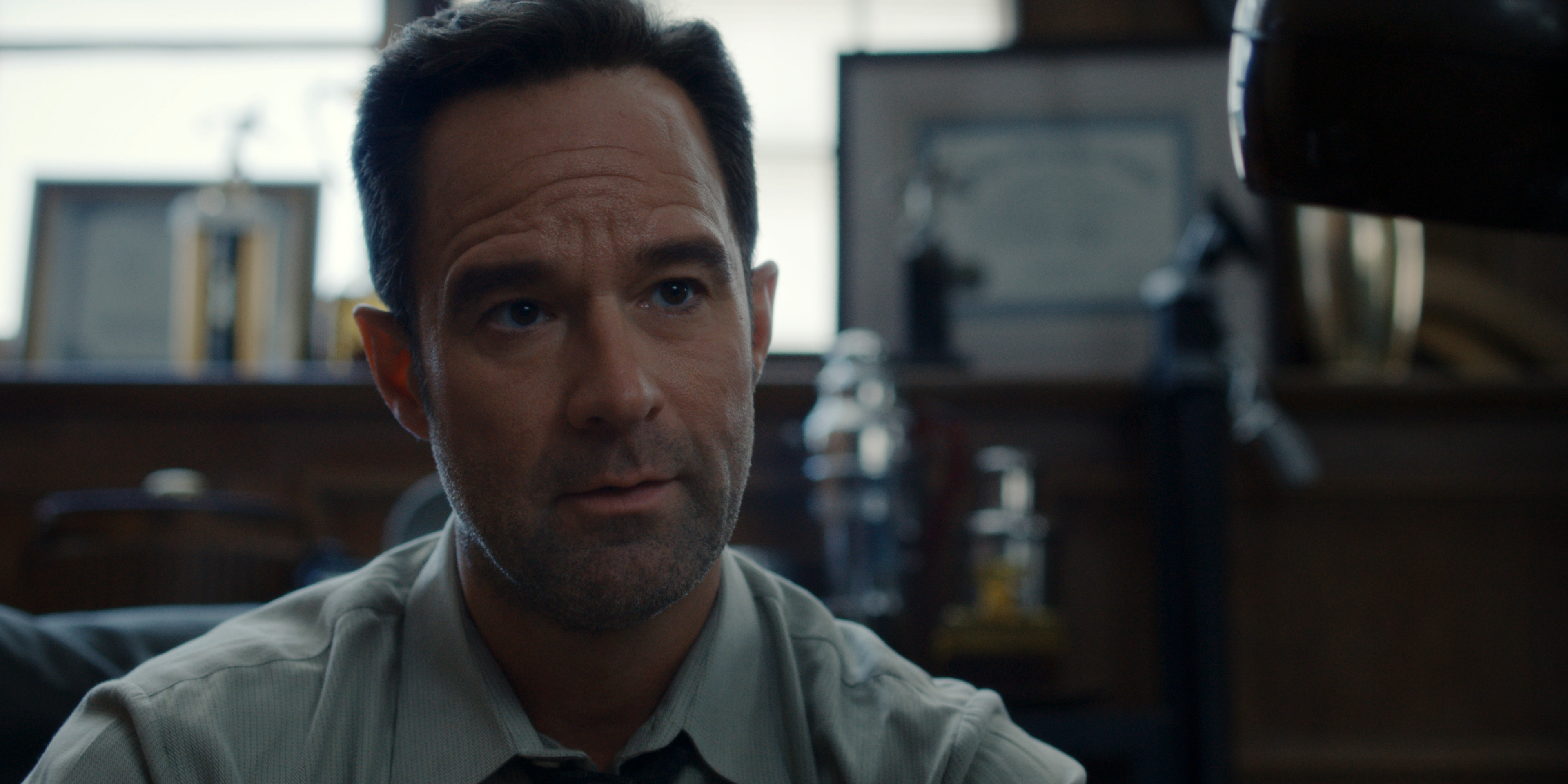
But my favorite part of this episode is private detective (listed in the IMDb credits as "agent", though I thought I saw "Private Investigation" on his door) Mitchel MacNamara, whom Jason goes to for help, but we see at the end investigating the box that is the conduit to alternate realities. MacNamara (played by Chris Diamantopoulos, an actor with a dossier of many roles) has a Sam Spade played by Humphrey Bogart kind of vibe, which is always welcome, but an especially good addition to this story of alternate realities with omnipresent life-and-death implications and consequences.
And come to think of it, Sam Spade is a logical inhabitant of the technologically stifled world that Jason finds himself in -- The Maltese Falcon movie adaptation of Dashiell Hammett's 1929-1930 novel in which Bogart's Spade appeared hit theaters in 1941, a world just slightly less advanced than the place that Jason and family are hoping is a refuge.
I really like that world in movies made at the time, and in streaming series and movies that harken back to that early media world (by our current standards). But you know what? I streamed Dark Matter 2.2 on my Mac Airbook last night, and I'm writing this review on that same laptop computer, and posting it on my blogs, and I like that world just fine, thank you. :)
Can Two Couples Be in Two Different Places at the Same Time?
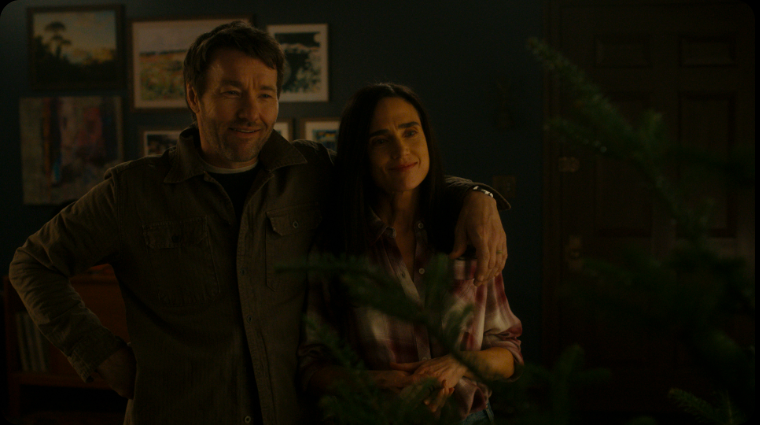
That question -- can two couples be in two places at the same time -- is posted fairly early in the latest episode of Dark Matter, 2.3. Let's look at that question more carefully.
The obvious answer is of course not, unless you're a world in which alternate realities exist. But, actually ...
We've been in such a world ever since mass media were invented. I mean, a photograph printed in a newspaper can be in as many realities or worlds simultaneously as the number of newspapers printed. If people are careful with their newspapers, or were talking about books, photos of people can also travel forward in time without aging too much.
But wait, a photograph of a person isn't really a person, right? People can move and talk. Ok, well, what about a person talking on the radio, or talking on television, or talking on a streaming service like Apple TV? Edmund Carpenter, someone who worked with Marshall McLuhan, said when people are on television, they're like angels, which in some interpretations can be omnipresent, much like a deity.
So we can add angels to alternate realities as places where people or humanlike entities can be in more than one place, indeed an infinite number of places, at the same time. But there's an important difference between angels and the characters we see in Dark Matter. Those folks are certainly not angels, and some of them do some very bad things. After all, Dark Matter is a life-and-death got-you-by-the-throat science fiction drama in just about every scene.
But angels and Dark Matter and alternate realities do have one thing common: they're all modes of fiction, as far as we know.
"There's no entrance to the diner"
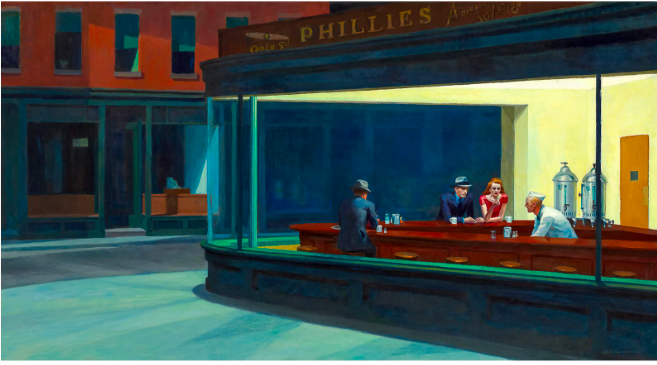
So I'll tell you my favorite scene in Dark Matter 2.4: Charlie and Daniela looking at Edward Hopper's 1942 painting "Nighthawks", hanging in an art gallery in Chicago (it hangs in the Art Institute of Chicago in our reality). Charlie tells her we're not supposed to connect to the people in the diner, because "there's no entrance to the diner".
Science fiction is supposed to be about science, not art. But Ray Bradbury's celebrated The Illustrated Man, an anthology in which each story tells the tale of a different one of the 18 different tattoos on William the Illustrated Man's arm, is a notable exception, and there are others. So the first thing that grabbed me and stayed with me about this scene is: good for Blake Crouch for including it in this episode of Dark Matter.
But disconnection, the difficulty of people to connect and relate, is a hallmark of this series, and the transcendent watermark of this episode. Everyone is cut off from people they care about -- not because they're far away physically, but far away emotionally, separated in some cases by the chasms of alternate realities.
The Dessens are the most affected and afflicted. Daniela still can't get over shooting the version of Jason she shot to death, and who can blame her. I mean, the guy looked and sounded like Jason, because he was a Jason, and in shooting him Daniela inevitably killed something of the man she loved -- who, as far as we know, also loved her.
So the people in Hopper's painting capture the predominant disconnection of the people in Dark Matter. But maybe that painting holds a ray of hope for the people in this streaming series. The viewers of the painting, anyone outside of the diner in the painting -- we don't see any in the painting --can't connect to the people in the diner. But ... the people sitting in the diner, the couple, the man sitting alone, the counter man behind the counter -- there's no reason they can't connect, right? And if that's possible, maybe the same is true for the characters in Dark Matter, especially the characters who come from the same reality.
I wish there was some way to get this message to Daniela. But, as far as I know, there is no way to directly communicate with characters on the other side of the streaming screen. Though, come to think of it, in a way, maybe there is ...
Canterbury Realities and Proust
What an exquisite, beautiful episode, heart rending and heart warming at the same time. Dark Matter 2.5 was in effect a standalone story, with a Jason of whatever number in a world by himself, using his last capsule to go to his childhood house in an alternate reality to see his mother and staying there. As I said in my review about the end of episode 1.9 -- an end which we see again at the beginning of 2.5 -- this plethora of Jasons opens the gates to a Canterbury Tales, in which each traveler is an alternate Jason. Call this Canterbury Realities or Canterbury Jasons.
This concerto of a tale was a lot like "The Inner Light" in Star Trek: The Next Generation, where Picard finds himself in a world with no Enterprise, and lives his life as a blacksmith and then a scientist. But Picard on this planet is the Picard who knows he was Captain of the Enterprise. The hero of Dark Matter 2.5 is not our Jason -- not Jason 1 -- whom we last saw in episode 2.4 left alone, as Charlie moves into a dorm and Daniela moves away somewhere to get away from it all. The Jason in 2.5 is for whatever reason also alone (actually, we later see a note from him that he's lost his wife and son, so that makes him similar to Jason 1, though we don't know how and why this happened), and understandably uses his last capsule to move into an alternate reality. So although 2.5 is (at this point) a standalone episode, its immediately following 2.4, where Jason 1 is left alone, creates a powerful synchrony between these two episodes.
The beginning of 2.5 with the ending of 1.9 with Jason 1 and Daniela and Charlie looking down at the crowd of Jasons including the Jason of 2.5 -- alright, let's call him Jason 1b -- also has the big benefit of giving Jason 1b a specific motive for using his last capsule. He sees Jason 1 with the family that Jason 1b doesn't have. It also adds punch to the ending of 2.5, where Jason 1b runs into the Daniela of that world, but I'll get to that in a minute. (All of this complexity, by the way, makes for a wonderful episode, and, indeed, 2.5 may be the best episode in the series so far. I know, I keep saying that, because it's true).
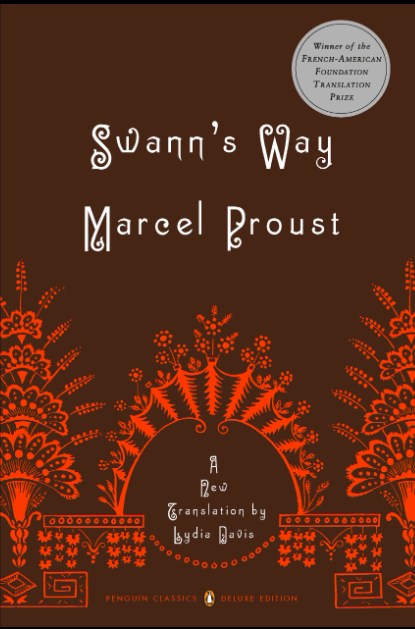
But back to the story, Jason 1b discovers that in this reality, he died when he was 16! His mother, Elle, is deaf, and superbly played by Linda Bove, who is deaf. Ellie accepts and loves Jason 1b, as a miracle that is bestowed upon her. Jason 1b thrives. He becomes a chair-maker (analogous to Picard's blacksmith), and rescues an alternate-version derelict of himself. The three have a wonderful Thanksgiving dinner, and are joined by yet another Jason at Christmastime. And Jason 1b, apparently an avid reader (there doesn't seem to be TV or streaming in this reality), devours volume one of Proust's In Search of Lost Time. This is not only a good choice (volume one is entitled Swann's Way, note the double "n") for a protagonist -- or an alternate protagonist -- in a saga like Dark Matter (as I indicated in my review of 2.4 last week, Dark Matter is enriched by its inventory of 20th century popular culture), it also brings Jason 1b to Maria's Bookstore in search of the final volume of Proust's trilogy, where he meets Maria, and we're treated to a touching falling-in-love story with all the trimmings. That in itself is a worthy story, well acted by Angela Sarafyan and Joel Edgerton, who is especially outstanding in this episode.
Which also has just the right closer. Jason 1b encounters the Daniela of this reality as he's shopping for food and flowers for the dinner Maria is preparing. Daniela (of course) tells Jason 1b he's picking the wrong kind of flowers and should get roses. Jason 1b recognizes her from the opening scene where he saw Jason 1 and Daniela 1 (and Charlie 1), and realizes he probably could have a relationship with Daniela is this new reality ... but he smiles and goes home to Maria. A perfect ending to a perfect episode.
The Harptones in the Multiverse
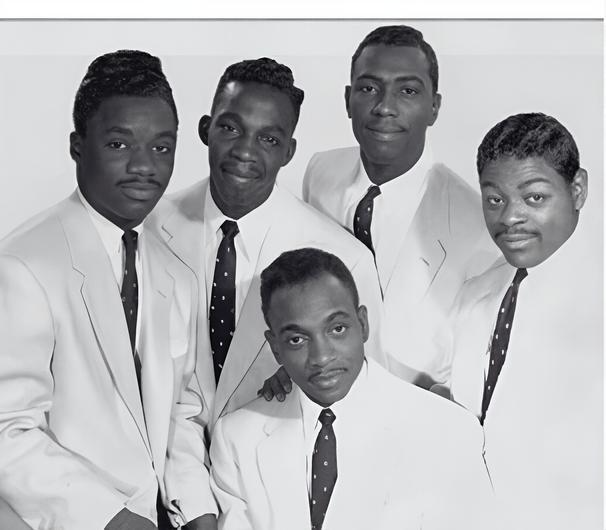
It was so good to hear The Harptones' "My Memories of You" in Dark Matter 2.6. I love doo-wop. I sang it with my group The Transits (I'm doing first tenure falsetto in this rough demo we did of The Passions' "I Only Want You"). I've written science fiction stories about doo-wop (check out "The Harmony" in my anthology Peter Brown Called). I even got my family to do a little of the Five Satins' "In the Still of the Night" in the early Covid days.
Now the Harptones song The Transits always sang was "Sunday Kind of Love" -- to this day, one of my favorite songs -- but "My Memories of You" certainly fits better in this episode of Dark Matter, and in Dark Matter overall.
Every time Jason-1 in his travels in interreality runs into someone that he knew in his original world (I suppose our world, yours and mine, too), he wonders if that person knows him, and if so, how much and what that person knows of him. Jason wants to know the nature of their memories of him, or, from their perspective looking at Jason, my memories of you.
It's comforting to think that the same music exists, at least to some extent, across multiple realities. But now that I'm thinking about it, where does that music really exist? If we hear it on a jukebox in a bar in an alternate reality, it exists in that reality. But lots of the music, including "My Memories of You", are part of the background soundtrack. When the Harptones play in the background of a scene with Daniela, with her father, and then thinking of her father, are we to assume that she's hearing that song in her head?Maybe ... but unless it's playing in the car she's driving, or she tells someone she loves that song, we can't be sure. Maybe that song is just something Blake Crouch or Jen Malone (music supervisor) or one of the other people in the 15-person music department put into those scenes to sharpen and enhance our understanding of what's going on.
Whoever chose it -- it was a great choice. The other thing I especially liked in this episode is this alternate version of Amanda (Alice Braga) and her incandescent smile. (I don't recall her ever smiling so vividly in the earlier realities she was in.) And the hooded person who turned out to be Charlie taking a turn towards another reality, after Jason tells him that his lost twin Max is alive in one of them somewhere, promises a new story of some kind for him and us straight ahead.
"Through this door ..."
The excellent episode 2.7 of Dark Matter is entitled "The Pyramid," a good title, but I think "Through this door," which Leighton says repeatedly in his rousing speech in support of what the plethora of alternate worlds with wonderful things that Velocity's use of Jason's invention is opening up, is even better. And I say this even though we see plenty of horrors through this or that door in this episode, and Leighton is looking at this through rose-colored glasses.
There were lots of important and intriguing stories in this episode. Here are some of my favorites:
Mitchel MacNamara (played by Chris Diamantopoulos), the Humphrey Bogart / Sam Spade-ish character I said I was happy to see in my review of episode 2.2, gets his just deserts. I hope he'll survive, though. I still like his character.
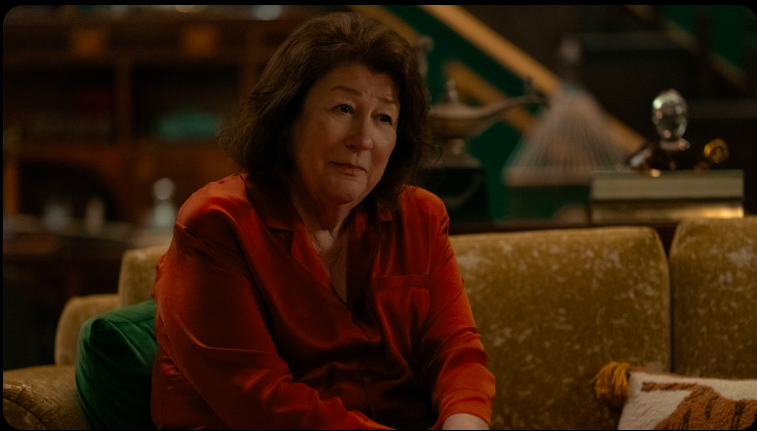
Margot Martindale's new character Laurel is also a pleasure to encounter. She has a sign in her home that welcomes inter-reality visitors, in this case, Charlie. Speaking of which, I assume it's Max he sees at the end, but with a show like Dark Matter and its unexpected turns, I certainly wouldn't bet on it.
I'm as tired of stories about plagues as I assume you are, but I thought the Black Iris Plague was a logically very possible development to explore in a series about a myriad of alternate realities, and I thought it was handled very well.
Daniela and her alternate-reality father were beautifully rendered, and their story made a crucially important point in this narrative: although the fire in MacNamara's scene, the plague I just mentioned above, etc., are necessary to portray in this anti-fairytale of a series, there are nonetheless some fairytale-like wonderful elements to it too, and they're heartening to see.
Finally, the appearance of Jason 2 at Jason 1's home at the end was a perfect teaser for next week's episode.
Now, in my past three reviews, I focused a lot on the cultural trimmings in this season of Dark Matter. I did see something I thought I liked in 2.7, but I can't say more about it, because all I got was a brief blurry glimpse of it -- the LP cover in Jason's home. It was reminiscent of Meet the Beatles, but the unclear letters didn't look like those words. Anyone know what they are?
Amanda's Smile and Laurel's Singularness
I loved Dark Matter 2.8, because of its tenderness, because we get more of Laurel's story, and because of Jason and Amanda.
I said in a review of an earlier episode this season that I like Amanda (Alice Braga) much more than Daniela. I felt that way in Season 1, and even more so in Season 2. She's a better match for Jason than is Daniela. Jason and Daniela rarely if ever seem as happy as Jason and Amanda. And as I also said earlier, Amanda's smile radiates a feeling that no other character on Dark Matter has.
But let me also say here that I'm not sure which version of Jason we see in episode 2.8. We know that Jason 1 has a tattoo, which we didn't see in this episode. I know it takes place near the beginning of this season -- I think it was in the second episode -- when Jason 1 gets the tattoo, which means not seeing the tattoo on Jason in 2.8 does not absolutely disprove that's he's Jason 1. But if he is Jason 1, that means, what? After what we see in this episode, he goes back to Daniela? And this Charlie in this second season is which version of Charlie?
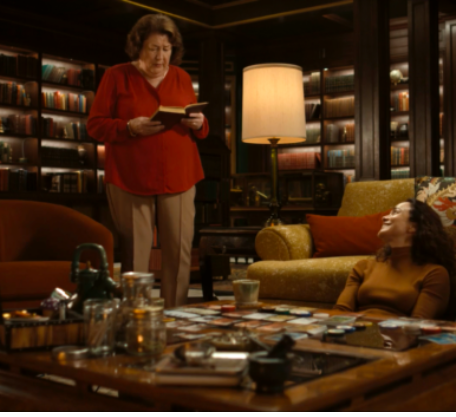
I think maybe the only character with just one version (so far) is Laurel (Margo Martindale). It was great to see her again, and learn about her past and her world, and since she's not going through a box (as yet, as far as we know), we can reliably believe we're seeing the exact same person, not a different version of her.
In a meta-universe in which there are alternate universes bumping into one another with the drop of a hat/ampule, this reliability becomes a rare and beautiful thing. You could well say that about this whole season, which is why I'm always looking forward to another episode.
Good News for Actors
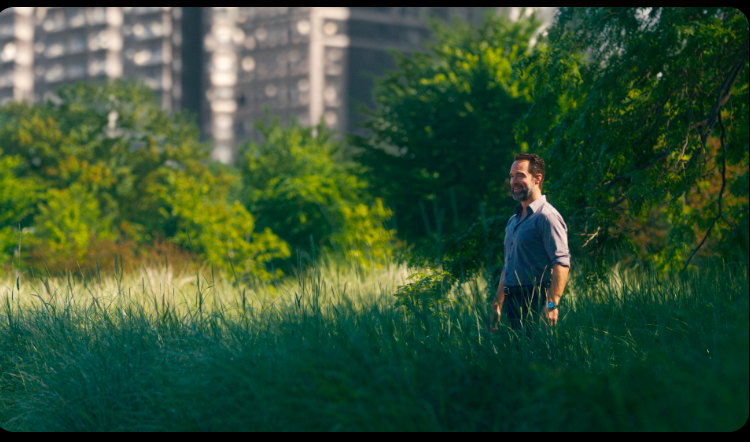
So it occurred to me, after watching episode 2.9 of Dark Matter on Apple TV, that this series is very good for everyone who is acting in it.
The episode ends with a Chicago struck by a fearsome attack -- right after Jason whatever or a closely related Jason lures a Mitchel MacNamara (Chris Diamantopoulos) with a beard onto a sunny beach with happy people just as the attack is about to happen. So Mitchel who is hardboiled is about to get hardboiled in a different way, and I felt a little bad for the character, because I liked him, at least sometimes or in some realities.
But then I realized, in a universe in which there are infinite universes, we'll likely see Mitchel again. A series like Dark Matter is, among its many attractions, good news for actors. In the meta-universe which contains all the universes, all characters are immortal. Even if you kill a character a hundred different times, there will be many more of them potentially on hand.
And this is good news for viewers, too. As I said in my review of Dark Matter 2.2, I liked Mitchel's Sam Spadish vibe. And in Dark Matter, killing off one of them means it's more than likely I'll see him again.
The immortality of characters also plays well into another thread of this fine episode, when Charlie finds a universe with his twin-brother Max alive and thriving. This reunion made for a tender, winning part of the narrative, and Oakes Fegley did a fine job as the two Charlies (our Charlie and the Charlie in the universe in which Max is alive) and Max.
Next week is the season finale, and I miss this show already.
A Lesson in Media Determinism
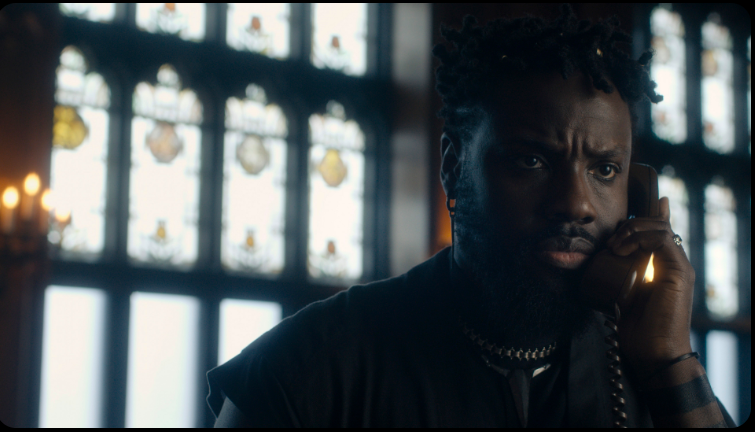
The finale of the second season of Dark Matter on Apple TV was many things: a short, ferocious battle scene in an alternate Chicago (one of the best in the series); the reunion and stranding of characters; the surprising death of others -- though, as I said last week, there inevitably are an infinity of killed characters left in existence in an alternate reality story like this -- all of this and more lit up the fast-moving final episode of the second season of this series.
But my favorite was the lesson in media determinism that Olu delivers to Leighton as they argue about whether to destroy the pyramid and therein the network of boxes. After Leighton gives a list of all the terrible consequences these boxes have brought into being, Olu tells his alternate self that all technologies have destructive unintended consequences.
"Even the printing press triggered wars, genocide," Olu observes. Yes, indeed. That's what media and all technology do. I wonder if versions of Harold Innis and Marshall McLuhan and their path-breaking work about media and their impact were known by Olu in the reality he came from. I certainly hope so, if only because their works were the impetus for my own 1998 book, The Soft Edge: A Natural History and Future of the Information Revolution, which explained how the Protestant Reformation, the rise of national states, the European settlement of America, the scientific revolution, and the rise of public education and democracy, to name just a few, were products of what Gutenberg brought to Europe and the world.
But in the context of Dark Matter -- which in addition to all its other merits is a philosophic picnic -- Olu's point may miss the point that Leighton was trying to make. All of the non-fictional results of the printing press and other media and technologies in our world don't hold a candle to what Jason Desson has brought into being and Leighton Vance has vastly extended. A world of infinite worlds, a universe of infinite universes, holds infinite possibilities, good and bad. So far, we have seen just a tiny, two-season sample of what such an infinity of worlds and carbon-copy characters could bring.
In principle, that could be mean that Dark Matter could be an infinite series. But I'll gladly take that one season at at time, and look forward, for now, to season three.
About the Creator
Paul Levinson
Novels The Silk Code, The Plot To Save Socrates, It's Real Life: An Alternate History of The Beatles; LPs Twice Upon A Rhyme & Welcome Up; nonfiction The Soft Edge & Digital McLuhan, translated into 15 languages. Prof, Fordham Univ.
Enjoyed the story? Support the Creator.
Subscribe for free to receive all their stories in your feed. You could also become a paid subscriber, letting them know you appreciate their work.
Comments
There are no comments for this story
Be the first to respond and start the conversation.