
In five countries, coastal communities are safeguarding the environment; this new evaluation demonstrates what truly works.
impact along the shore

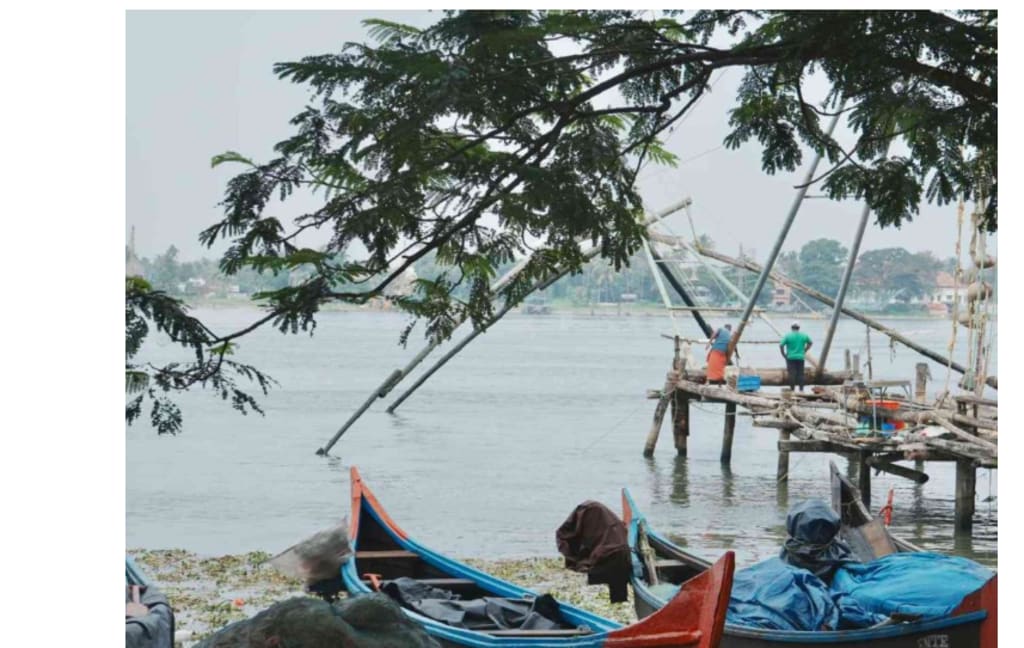
Without government patrols, fishing communities in the Southwest Indian Ocean have long managed their own reefs. They have accomplished this through collective decisions, established boundaries, and local laws. It has been difficult to ascertain whether those agreements truly protect anything.
To determine if those community-led arrangements are effective, a new regional review was conducted. 52 of these regions were assessed by researchers in five different nations. They discovered that the success or failure of these initiatives depends on certain governance characteristics rather than merely the presence of community management.
impact along the shore
The Southwest Indian Ocean, a region of Africa's southeast coast and its island nations, comprised 52 community-managed areas spread across five countries. The utilisation of the surrounding fishing areas and reefs is determined by the locals in each.
It developed from the efforts of the regional organization CORDIO East Africa and the World Wide Fund for Nature (WWF). For the first time in the region, they combined local archives to examine community-led maritime governance. It had never been measured so widely.
The ocean is not an abstract concept to the locals. In addition to providing food and revenue, it frequently makes the difference between a prosperous and hungry year. For this reason, effective management is important.
An instrument called Elinor
Researchers used a tool known as the Elinor tool to score each of the 52 locations in order to gauge the region. Elinor Ostrom, the Nobel Prize-winning researcher who examined how communities manage shared resources without depleting them, is honoured by the system's name.
It provides a uniform checklist researchers employ throughout every community. These qualities are pragmatic rather than idealistic. It determines whether the regulations are appropriate for how people actually fish, whether limits are well defined, and when
Responses from members of the community are converted into scores. The program collects written notes in addition to the numbers, so a low score on something like transparency has an explanation. The outcome is more of a snapshot of each community's position than a report card.
Proof in the scores
They are more instructive than a straightforward success tale since the results are inconsistent. Strong community control has not progressed uniformly throughout the region or among the characteristics being assessed. Some places have mastered the fundamentals.
They have the kind of basis that makes everything else possible—clear, established boundaries and acknowledged rights over who can use the water. Many are still being worked on. Many struggle to develop regulations that suit local circumstances, keeping decision-making transparent and obtaining the resources required for self-sufficiency.
Effective governance
The more important question was whether improved outcomes on the ground are correlated with better governance. More fish, more stable livelihoods, and healthier coral reefs all trend in that direction. In general, the evaluation concluded that it did. But there is a catch that must be identified.
Communities themselves report seeing these results. They reflect perception as much as recorded biological change because they are not independent counts of fish or coral. This restriction is freely acknowledged by researchers. Nevertheless, the pattern aligns with an increasing amount of data.
Fish numbers and community trust tend to increase in tandem when locals have true control over a protected area. This was tracked throughout Tanzania and Kenya in a different investigation.
Variations across time
This is the point at which the study truly innovates. Nobody had ever monitored the evolution of these efforts' strength over time. A image that is both cautious and hopeful appears. Communities that were maintained tended to see an increase in their governance scores over time rather than a stagnation. This indicates that when these systems are not left on their own, they can develop.
The way the results are interpreted is altered by that temporal dimension. Even though it's just the beginning of a long climb, a single photo can make a difficult location appear to be a failure.
What distinguishes thriving regions from stagnant ones? The response is not unique. The same unglamorous reality continues to surface, demonstrating that perseverance and patience are preferable to hasty cures. Supporting all of the governing characteristics at once and sticking with it throughout time is what works. It needs consistent training and funding that doesn't expire after a single grant cycle.
It's simple to underestimate finances. Without the resources to implement them, communities may create excellent regulations yet still struggle. This explains why durable financing continues to emerge as the crucial element—a trend observed in other marine protection studies.
Future developments
The proof is valid when the disclaimers are removed. Now, the area gets its first comprehensive, comparable read on The evaluation indicates that community-led management is feasible, and the data goes beyond straightforward policy statements. That gives funders and governments something tangible.
Strongly governed community-run zones have been shown to contain more and larger fish than adjacent open-access areas when support is maintained for years. The lesson here extends far beyond these borders, with global targets seeking to protect roughly a third of the ocean by 2030. If communities are given consistent support, they may be good stewards of the sea.
About the Creator
Enjoyed the story? Support the Creator.
Subscribe for free to receive all their stories in your feed.
Comments
There are no comments for this story
Be the first to respond and start the conversation.