
Europe Spinal Cord Stimulation Devices Market Set to Nearly Double by 2034 as Chronic Pain Cases Rise
Advanced Neuromodulation Therapies Gain Ground Across Europe’s Healthcare Systems

Chronic pain is one of the most underestimated health burdens across Europe. Millions of people live daily with persistent back pain, nerve pain, failed surgeries, and neurological discomfort that affects sleep, work productivity, and emotional well-being. As healthcare systems continue to search for safer, long-term alternatives to opioid medications and repeat surgeries, spinal cord stimulation devices are emerging as one of the most promising solutions.
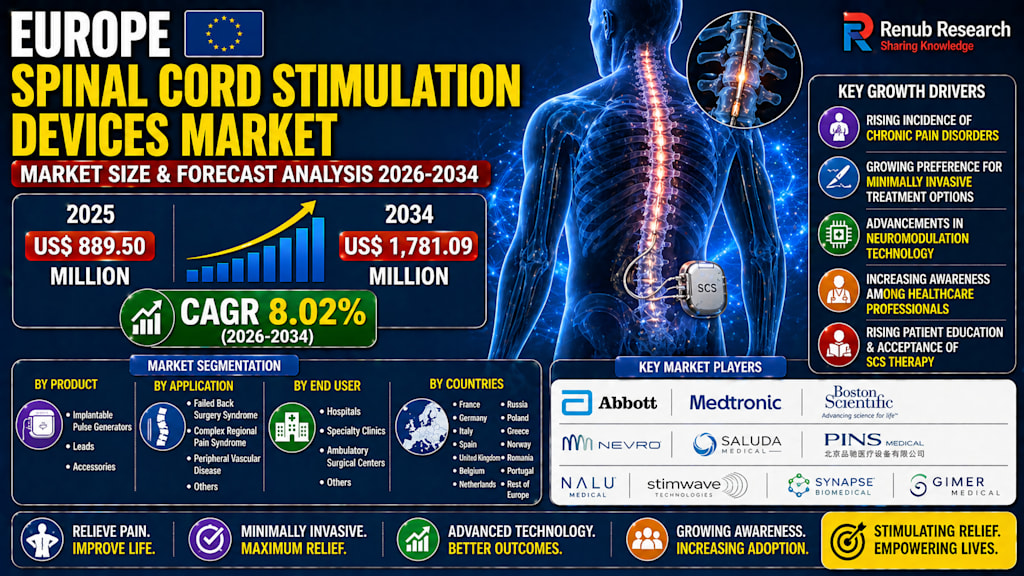
According to Renub Research, the Europe Spinal Cord Stimulation Devices Market is projected to grow from US$ 889.50 million in 2025 to US$ 1,781.09 million by 2034, expanding at a CAGR of 8.02% from 2026 to 2034.
This strong growth reflects increasing demand for innovative pain management technologies, greater physician awareness, rising elderly populations, and rapid improvements in implantable medical devices.
What Are Spinal Cord Stimulation Devices?
Spinal cord stimulation systems, often called SCS devices, are implantable technologies designed to manage chronic pain through controlled electrical pulses delivered to the spinal cord. These signals interrupt pain messages before they reach the brain.
A standard system generally includes:
- Thin implanted electrodes near the spinal cord
- A pulse generator placed under the skin
- A remote control or programmer for therapy adjustments
These devices are commonly used for conditions such as:
- Lower back pain
- Leg pain
- Failed back surgery syndrome
- Complex regional pain syndrome
- Sciatica
- Neuropathic pain disorders
Unlike irreversible surgical procedures, spinal cord stimulation offers a customizable and reversible treatment pathway.
Why Europe Is Becoming a Key Growth Region
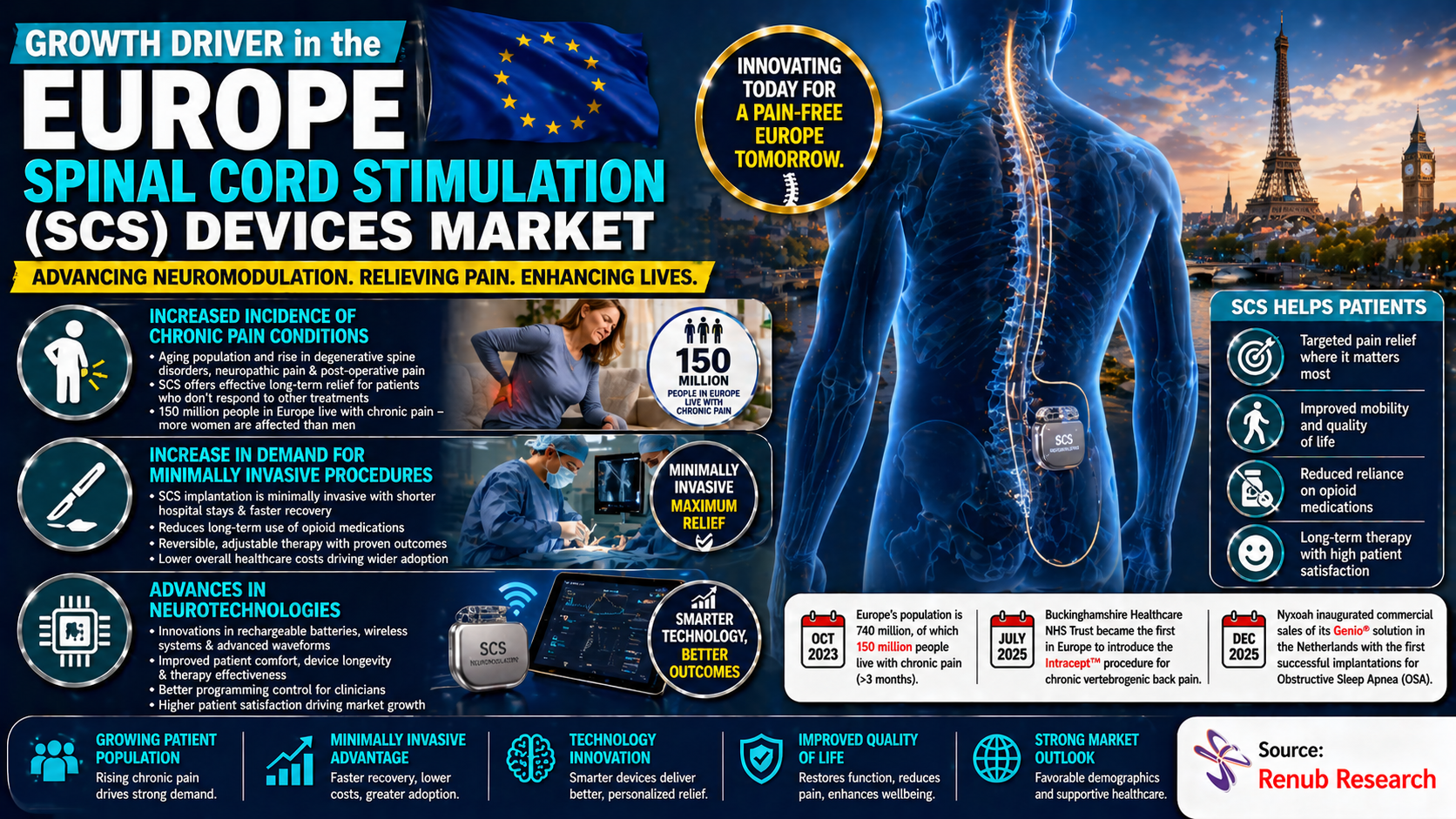
Europe has become one of the world’s most important markets for spinal cord stimulation technology because of its advanced healthcare infrastructure and growing need for chronic pain solutions.
Several countries across the region are facing similar healthcare pressures:
- Aging populations
- Rising musculoskeletal disorders
- Increased spinal surgeries
- Greater focus on reducing opioid dependence
- Demand for minimally invasive procedures
As a result, hospitals and specialists are expanding use of neuromodulation therapies.
Rising Chronic Pain Cases Fuel Market Expansion
One of the strongest growth drivers is the growing prevalence of chronic pain across Europe.
According to the research data, Europe’s population is approximately 740 million, and tens of millions experience pain lasting longer than three months. This creates a major public health challenge and an enormous need for effective therapies.
Conditions contributing to this demand include:
- Degenerative disc disease
- Post-surgical nerve damage
- Sciatica
- Arthritis-related pain
- Complex regional pain syndrome
- Failed back surgeries
As conventional treatments often fail to provide lasting relief, physicians are increasingly recommending spinal cord stimulation.
Demand for Minimally Invasive Treatment Is Growing
Healthcare systems today are under pressure to reduce hospitalization time, lower surgical complications, and improve recovery speed. That makes minimally invasive procedures highly attractive.
Spinal cord stimulator implantation generally requires less recovery time than major spinal surgeries. Benefits include:
- Shorter hospital stays
- Lower long-term treatment costs
- Adjustable pain management settings
- Reduced dependency on pain medication
- Improved patient mobility
This trend is expected to continue as healthcare systems seek better cost efficiency.
Technology Is Rapidly Improving
Modern spinal cord stimulation systems are far more advanced than earlier generations. Device manufacturers are introducing smarter, smaller, and more patient-friendly systems.
Recent innovations include:
- Rechargeable batteries
- Longer device lifespan
- Wireless programming systems
- AI-assisted pain modulation
- Precision waveform stimulation
- Smaller implant sizes
These upgrades improve comfort, reduce replacement surgeries, and increase patient satisfaction.
Technology improvements are also helping physicians personalize treatment plans based on patient pain patterns.
Rechargeable Devices Becoming Popular
Among product segments, rechargeable spinal cord stimulation devices are gaining strong momentum.
These systems offer clear advantages:
- Fewer replacement procedures
- Lower lifetime treatment cost
- Better for younger patients
- Continuous therapy support
- Smaller implant footprints
As sustainability and cost control become priorities, rechargeable systems are expected to dominate future installations.
Major Applications Driving Demand
Failed Back Surgery Syndrome
Many patients continue to suffer pain even after spinal surgery. Spinal cord stimulation is increasingly used as a secondary therapy when conventional surgery does not solve symptoms.
Sciatica
Patients with persistent leg and lower back pain caused by nerve compression are turning to SCS when medication and physiotherapy fail.
Complex Regional Pain Syndrome (CRPS)
This painful nerve disorder often requires long-term intervention. Personalized stimulation therapy is helping improve quality of life.
Arachnoiditis
Although less common, this severe inflammatory nerve condition is another important use case for spinal cord stimulation devices.
Hospitals Lead End-User Adoption
Hospitals remain the largest end-user segment across Europe because they offer:
- Advanced surgical facilities
- Pain specialists
- Neurology expertise
- Post-operative monitoring
- Multidisciplinary care teams
Large hospitals and specialty pain centers are often the first adopters of next-generation neuromodulation systems.
Ambulatory surgical centers are also expected to grow as outpatient procedures increase.
Country-Wise Growth Highlights
France
France benefits from a strong healthcare system and increasing focus on non-opioid pain treatment. Adoption of advanced neuromodulation therapies is rising steadily.
Germany
Germany is among Europe’s largest markets due to:
- Strong reimbursement systems
- Advanced hospitals
- High physician awareness
- Rapid adoption of new technology
Its aging population further supports demand growth.
United Kingdom
The UK market is expanding through specialist pain centers and evidence-based treatment pathways. Cost-effective long-term pain relief remains a key driver.
Russia
Russia is an emerging market where awareness and advanced pain management infrastructure are gradually improving, especially in major urban centers.
Challenges Facing the Market
Despite impressive growth potential, several barriers remain.
High Initial Costs
Spinal cord stimulation devices and implantation procedures require significant upfront investment. Budget-constrained hospitals may delay adoption.
Reimbursement Complexity
Different reimbursement systems across Europe can slow patient access and create market fragmentation.
Specialist Availability
Implantation requires trained surgeons and pain management experts, which are not equally available in every country.
Still, long-term savings from reduced medication use and fewer surgeries continue to strengthen the value proposition.
Competitive Landscape
Leading companies operating in the Europe spinal cord stimulation devices market include:
- Abbott Laboratories
- Medtronic plc.
- Boston Scientific Corp.
- Nevro Corp.
- Saluda Medical Pty Ltd
- Nalu Medical
These companies are investing heavily in innovation, clinical studies, AI integration, and product expansion.
What the Future Looks Like
The next decade could transform chronic pain treatment across Europe. As awareness rises and technology becomes more sophisticated, spinal cord stimulation may move from specialist therapy to mainstream pain management.
Future growth will likely be shaped by:
- AI-powered therapy personalization
- Remote patient monitoring
- Smaller implants
- Better battery life
- Expanded reimbursement coverage
- Faster outpatient procedures
With millions seeking safer alternatives to painkillers and invasive surgeries, demand is expected to remain strong.
Final Thoughts
Europe’s spinal cord stimulation devices market is entering a high-growth phase driven by medical need, technological innovation, and changing healthcare priorities.
From US$ 889.50 million in 2025 to US$ 1,781.09 million by 2034, the market’s near doubling signals how rapidly advanced pain therapies are becoming essential across the continent.
About the Creator
Enjoyed the story? Support the Creator.
Subscribe for free to receive all their stories in your feed.
Comments
There are no comments for this story
Be the first to respond and start the conversation.