NASA
Interplanetary spaceflight, astronauts, and beyond. NASA is leading the exploration into space.
2021 was a colossal year for space investigation. 2022 could be much greater.
The year 2021 will likely go down in the archives of room history as a defining moment, a second when conventional residents began leaving Earth consistently. Numerous groups took off on a few diverse space apparatus, and for a short second this month, there were a record 19 individuals in the weightless climate of the room — and eight of them were private residents.
By Noman Islam5 years ago in Futurism
Three life lessons I learned from Command Module Pilot Michael Collins
As the Columbia Command Module pilot, he kept watching over Neil Armstrong and Buzz Aldrin while they explored the lunar surface that day, the day we all know fondly as “the first man to walk on the moon.”
By Reto Bachofner5 years ago in Futurism
Rocketing Towards the Dreaded Kessler Syndrome
On 15 October 2020, scientists watched in fear as a 16-foot long inoperative Russian navigation satellite and part of a 25-foot long Chinese rocket whizzed passed each other at 33,000 miles an hour, more than 600 miles above the southern Atlantic Ocean. Had they collided, the debris cloud would’ve been large enough to put every other spacecraft and satellite in low Earth orbit at risk.
By The Happy Neuron6 years ago in Futurism
8 Space Satellites you should know about!
In this new era many things happen that’s beyond our expectations and sometimes things are hunted to find a novel way. Space Missions are something that’s bringing novelty to this new generation. Space probes/satellites/telescopes are constructed for various purposes and this is, what is described below. Given below are some of the space satellites that you should know. 1) James Webb space telescope (JWST) is a joint NASA-ESA-CSIA space telescope planned to succeed the Hubble space telescope as NASA’s flagship astrophysics mission. The JWST will not only provide improved infrared resolution and sensitivity over Hubble but also enable a broad range of investigation across the fields of astronomy and cosmology including most distant events such as formation of the first galaxies. The spacecraft is being developed by NASA with signature contributions from the European space agency and the Canadian space agency. It’s named so after James E. Webb, who was the administrator of NASA and played a crucial role in the Apollo programs. In comparison with other space telescope, the JWST observes lower frequency range, from long wavelength visible light through mid- infrared which allows observation of high redshift objects. In order to observe infrared without interference, it will be deployed in space closure to Earth-Sun L2, Langrange point. To maintain very cold temperature, a large Sunshield is made of silicon- coated and aluminium-coated kapton to keep the instrument below 50K. The Langrange point allows the telescope to remain at a certain distance and use a single sunshield to block heat and light from the sun and the earth which helps in Keeping the temperature of spacecraft below 50 k. Main motives of the JWST to search for light from the first stars and galaxies that formed in the universe after the big bang, to study the formation and evolution of galaxies, to understand the formation of stars and planetary systems and the origin of life p. Even, it might would gather information on the dimming light of stars KIC 8462852 too. According to plank’s law, relatively cold objects emit their radiation primarily in the infrared and the mechanism of the JWST hits the motives, hence, it could provide briefs about many objects and region of space which gets obscured by gas and dust in the visible spectrum, such as the molecular clouds where stars are born, the circumstellar disks that give rise to planets and the vote of active galaxies. 2) Laser interferometer space antenna (LISA) is a proposed space probe to detect and accurately measure gravitational waves- tiny ripples in the fabric of space time from astronomical sources . The LISA concept is having a constellation of three spacecrafts arranged in an equilateral triangle, flying along an Earth- like heliocentric orbit. The LISA project was started with a joint effort of NASA and the European space agency but later NASA couldn’t continue its partnership due to funding limitations, hence, the project is a recognised CERN experiment and LISA would be the first dedicated space based gravitational wave detector. The main motive of LISA is to detect and measure the gravitational force as gravitational force leads to squeezing and stretching of objects by a tiny amount and such forces are caused by energetic events and could pass unhindered by intervening mass . To avoid such problems, LISA could be a solution as it will add a new sense to scientist’s perception of the universe and enable them to study the phenomenon that are invisible in normal light. It provides details about massive black holes and the force residing behind such massive holes and will be enable to elaborate sources of cosmological origin and speculative astrophysical objects like cosmic strings and domain boundaries. This is not the things for which LISA is specif for, it’s expected to detect and resolve around 25,000 galactic compact binaries at higher frequencies hence, studying the distribution of the masses , periods and location will provide innovative ideas about the formation of evolution of galaxy. 3) Breakthrough starshot It’s an engineering and research project by the breakthrough initiatives to develop a proofof-concept fleet of light sail interstellar probes named starship. It was founded by Yuri milner, Stephen hawking and Mark Zuckerberg. The conceptual principles that relies for this interstellar travel project is well described in “A roadmap to interstellar flight”, but sending such a lightweight spacecraft involves a multi kilometre phased array of beam steerable lasers which combines coherent power output of up to 100 GW. The breakthrough starshot is proposed to demonstrate a proof of concept for ultra fast light driven nano spacecraft, lays the foundation for first launch to alpha centauri with next generation. This discovery could lead to solar system exploration and detection of Earth crossing asteroids but the spacecraft needs to survive collision at each square centimetre of frontal cross section at a high speed with about thousands particles. 4) Exomars 2022 It’s an astrobiology program by the European space agency (ESA) and the Russian space agency, Roscosmos . This program has been initiated with a motive to search for possible biosignatures of past Martian life , water and geochemical distribution as a function of depth in the shallow surfaces. It’s supposed to throw lights on human missions to Mars and to investigate surface environment and identification of hazards and is expected to achieve incremental steps ultimately culminating in a sample return flight. Other technological objectives includes lending of large pay loads to Mars and to exploit solar electric power on the surface of Mars and to access the surfaces and also to develop surface exploration capability using a rover. 5) Prospector-1 Prospector-1 is a small spacecraft weighing 50 kg (fueled) that manages cost and performance well. DSI is developing prospector-1 both for it’s own asteroid mining ambition and also to bring an extremely low-cost, get high performance exploration capability, even the ability to locate, travel to and usually potentially rich supplies of space resources is critically added in the plan. Prospector-1 is not only the first commercial interplanetary mission, but also an important milestone to open the frontier hence by learning to “ live of the land”, DSI is ushering in a new era of unlimited economic expansion. 6) Jupiter Icy moons Explorer (JUICE) As the name suggests Jupiter ICy moons Explorer is an interplanetary spacecraft is develop by ESA with Airbus Defence and space as the main contractor. The main objective is to study three of Jupiter’s Galilean moon , Gaymede, Callisto and Europa as each of them might have significant bodies of liquid water beneath their surfaces and it focuses basically for Ganymede and for Callisto to a lesser extent, for characterization of the ocean layers and detection of putative subsurfaces water reservoirs, topographical and geologice compositions and much more . 7) The Parker solar probe Parker solar probe swoops within 4,000,000 miles of the sun surface, facing heat and radiation like no space crowd before it. In order to unlock the mysteries of the Corona of the sun, but also to protect a society that's increasingly dependent on technology from the threats of space weather. 8) The lunar gateway: Formerly known as the deep space gateway (DSG), The station was renamed uh lunar orbital platform gateway( LOP-G). ThProject is expected to play a major role in NASA’s Artemis program. It will serve as the staging point for Both robotic and crewed explorations of the lunar South Pole and is the proposed staging point for NASA’s deep space transport concept for transport to Mars. This is just to explain how space stations work and about the enormous motives which lies behind such great works. Article by:- Saumya Mishra Instagram: radioactron Twitter: radioactron Tags: James Webb space telescope, Laser interferometer space antenna, Breakthrough starshot, Exomars 2020, Prospector-1, JUICE, The Parker solar probe, The lunar gateway
By Radioactron6 years ago in Futurism
The Voyager Golden Record: Humanity's Soft Place to Land
There's an X-Files poster on my bedroom door. You know the one: a grainy photo of a UFO blown up against a canopy of pine trees with "I WANT TO BELIEVE" written in block letters across the bottom. TheX-Files poster. And while I deign to admit it, I'm a poser. I've seen maybe 10 full episodes of the show (and read the two fun YA prequels about teenage Scully and Mulder solving crimes in the 70s) and have no intention of continuing. Serialized media and my commitment issues aren't the best combination. But still, that poster has been on my door for two years and will continue to remain there in the future.
By kit vaillancourt8 years ago in Futurism
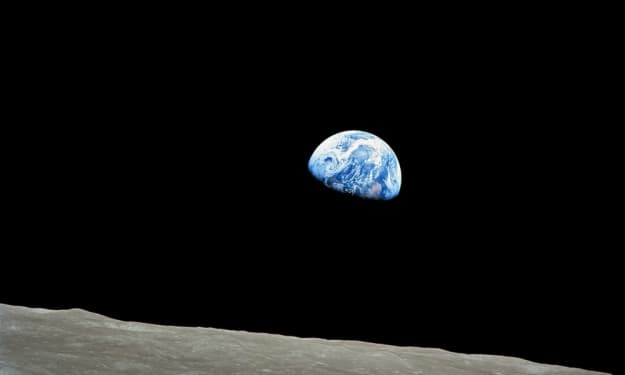
1968: The Successful Journey of Apollo 8
Dates: Dec. 21, 1968 – Dec. 27, 1968 The second manned spaceflight mission in the United States Apollo space program, Apollo 8, was launched on December 21, 1968. It became the first manned spacecraft to leave low Earth orbit, reach the Earth's moon, orbit it and return safely to Earth.
By Shandi Pace8 years ago in Futurism
NASA’s Jet Propulsion Laboratory Wants to Welcome You to the Center of the Universe
On the floor of the Spaceflight Operations Facility at NASA’s Jet Propulsion Laboratory there is a plaque that boldly proclaims: “The Center of the Universe.” With large screens on the wall displaying data being downloaded from various spacecraft across the solar system and engineers pouring over rows and rows of glowing screens in the darkened room, the Spaceflight Operations Facility resembles a scene from a science fiction film. It is a fitting description as this is the only place on Earth where we can communicate with robotic spacecraft in deep space.
By Liza Saguto9 years ago in Futurism
The Black Knight Satellite
The history of the Black Knight Satellite, an object orbiting our planet in polar orbit, should not be so controversial. Polar orbit is an orbit that goes in the opposite direction that our planet naturally revolves. This polar orbit has been used for surveillance, and neither The United States or Russia had capabilities of launching satellites into that orbit when the Black Knight Satellite was supposedly discovered in 1954.
By Lady Sunday9 years ago in Futurism
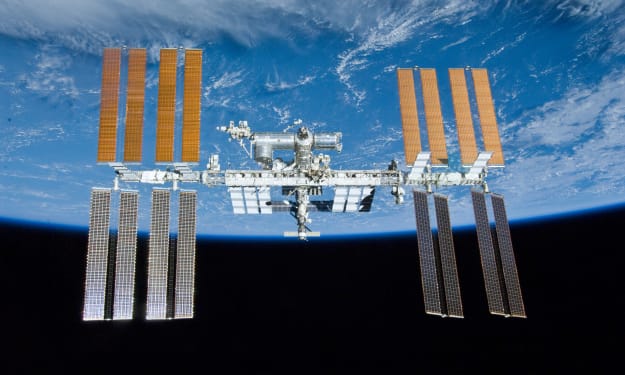
Have Alien Microbes Been Found Hitching a Ride on the International Space Station?
When searching for extraterrestrial life, the focus tends to be, naturally, on worlds far away, such as Mars, Europa or distant exoplanets. But could there be evidence closer to home, even near Earth itself? It's a seemingly unlikely but not unheard of possibility. That said, there is an interesting new report from the Russian news agency TASS that living "alien" bacteria have been found on the outside of the International Space Station (ISS). Say what?
By Paul Scott Anderson9 years ago in Futurism
Newly Discovered Earth-Sized Exoplanet May Be Best Candidate Yet For Alien Life
Astronomers just announced the discovery of yet another exoplanet, just one of thousands now, but this one is quite interesting and exciting for a variety of reasons. The planet, called Ross 128 b, is an Earth-sized world orbiting a star only 11 light-years away. Not only is it nearly the same size as Earth, the observations show that it is likely quite temperate, with temperatures similar to those on our planet as well. These findings make it possibly the best exoplanet candidate yet in the search for extraterrestrial life.
By Paul Scott Anderson9 years ago in Futurism
Astronomers Discover 'Monster Exoplanet' Which Shouldn't Exist — but Does
Exoplanets have been found in all different types and sizes, showing how much diversity there is among planets outside of our own Solar System. Now another one, a "monster exoplanet," is of interest to astronomers because according to current models of planetary formation, it shouldn't exist — but does.
By Paul Scott Anderson9 years ago in Futurism