
Biohacking and the future of human performance
What can you do to upgrade yourself?

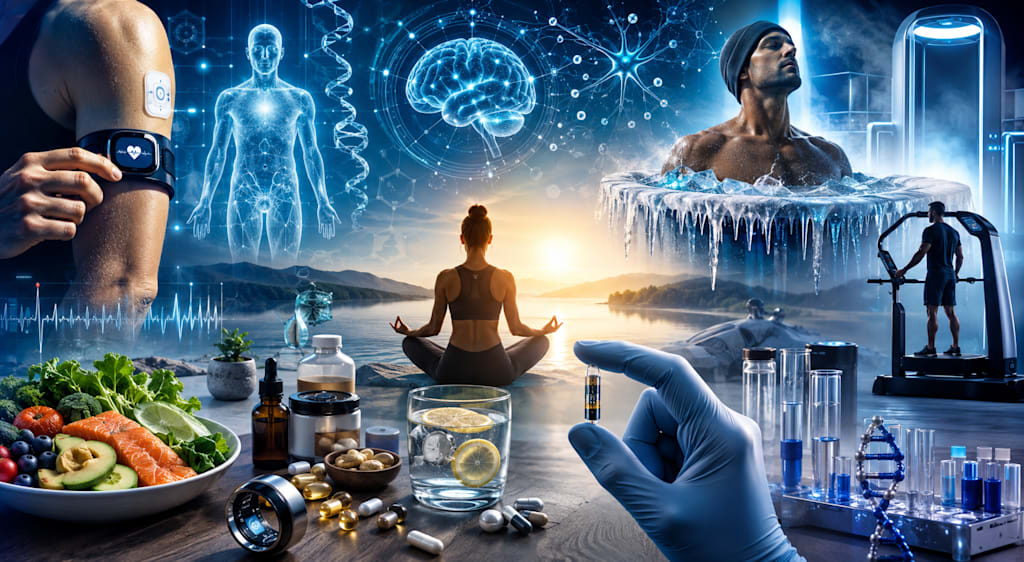
Biohacking ranges from simple lifestyle changes to advanced genetic and technological interventions.
The first time I attended a biohacking conference, I was introduced to information and technology that seemed to come straight from a science fiction film. It was the Biohacker Summit, which launched back in 2016 in Helsinki and London, rotating to other cities in the following years, and now rebranded as HOLOLIFE Summit.
I have to admit, a biohacking conference feels like stepping into the future. After my first experience, I attended a few more in subsequent years, learning more about how human performance can be upgraded and how to extend the healthspan toward longevity.
Longevity sounds like some futuristic promise of a long and healthy life, the kind of dream that would transform you into an experienced human being retaining a good part of your youth and mental capacity intact, if not better and enhanced.
Back then, when I discovered biohacking, it promised to teach the means of becoming an upgraded version of yourself. What's not to love about it? Since then, and for a decade now, I have become increasingly interested in biohacking. I do as much as I can to upgrade myself without becoming a totally insufferable fanatic. Everything has to be in moderation; otherwise, it becomes an obsession. What perhaps fascinates me the most is that the science and technology behind any biohacking innovation are absolutely amazing.
So, what is biohacking?
Like many other things, it is not something that was invented recently. The term “biohacking” was first introduced in the late 1980s in Silicon Valley and is linked to the transhumanism movement, which advocates using technology to enhance human capabilities.
Biohacking is defined as better living through science, technology, and nature. Some consider biohacking a fast track to upgrading or enhancing human performance, fitness, nutrition, lifestyle, and, of course, longevity. In other words, it is about becoming the healthiest version of yourself possible.
Biohacking is all about making humans healthier, happier, and stronger, with the vision of doubling the human lifespan potential and improving healthspan, according to Dave Asprey, who is a celebrity among biohackers, founder of Upgrade Labs, New York Times bestselling science author, Silicon Valley investor, technology entrepreneur, and considered the Father of Biohacking. Asprey is also credited with coining the term “biohacking”.
Biohacking is about optimising human performance. By using science, advanced technologies, and vast amounts of data collected by wearables, biohackers aim to fulfil the promise of improved health, wellbeing, and nutrition, enhanced productivity and mental performance, increased energy levels, improved sleep quality, and optimised physical activity.
Biohacking represents the promise of youthful looks and a healthier, enhanced, longer life.
Quite often, biohacking is confused with body-hacking, which is rather like confusing peaches with oranges. Let’s have a look:
Biohacking vs body-hacking
Some people tend to confuse biohacking with body-hacking.
Biohacking is an umbrella term blending self-improvement, quantified experimentation, and sometimes radical body or biological intervention. Biohacking can include the following:
Lifestyle modifications: improved and healthier diets, better sleep quality, exercise, and intermittent fasting.
Quantified self-tracking: using data from wearables, specific blood tests, and analytics to guide improvements.
Supplements and nootropics: conceived to enhance cognition or wellness.
High-tech interventions: including genetic engineering, DIY biology, implants, and grinder modifications.
Body-hacking is a more specific subset of the biohacking movement in which modifications are made directly to the body, often through technological or cybernetic means. In a way, body-hacking follows transhumanist ideals.
Body-hacking, unlike biohacking, has nothing to do with biology or chemistry.
Body-hacking is usually linked to advanced wearable technologies. Some wearables and implanted RFID chips monitor biological or health data.
Fun fact: once, at one of the first biohacker conferences I attended years ago, I almost had an RFID chip implanted in my hand. The minute I saw the size of the syringe and needle that were going to be used to implant the chip under my skin, I chickened out and pulled my hand away. :)
Some other wearables provide augmentation of the senses, such as Augmented Reality (AR) enhancement of vision through AR contact lenses; these wearables are currently used by industries such as healthcare and construction.
On the other hand, biohacking is about manipulating the biology of the brain or the body itself in order to enhance performance. Some aspects of biohacking, though, may include body-hacking as well. An advanced combination of these two approaches might lead to the emergence of a new species of technologically enhanced humans.
A few ways biohacking can enhance human performance include:
Boosting life expectancy naturally
Boosting life expectancy can be achieved by anyone following some simple habits, such as adopting an improved diet, which is usually plant-based, exercising regularly, not smoking, reducing or eliminating alcohol consumption, and improving both the quality and amount of sleep. Boosting life expectancy sometimes implies a series of lifestyle changes. These are basic steps that anyone wanting to dip their toes into the biohacking world can follow.
Longevity
Biohacking claims that enhancing and optimising human performance leads to longevity. Biohackers focus on longevity through everything they do in order to upgrade their lives and lifestyles.
Some of the things that can contribute to longevity include adequate nutrition, stress management, exercise, intermittent fasting, meditation, sleep tracking for improved rest, and supplements that are preferably natural and plant-based.
Cryotherapy
Cryotherapy is a cold therapy or ice treatment. By bringing the body temperature down at the tissue and cellular level, biohackers claim it is possible to achieve therapeutic benefits and increase metabolism. However, cryotherapy must be supervised by experts since, alongside the benefits, there are also several side effects and contraindications. Cryotherapy can involve treatments ranging from cold packs or ice packs to whole-body chambers.
An easier introductory level of cryotherapy is taking cold showers for three consecutive days for 10 seconds, letting the shower hit the forehead. According to some devoted practitioners, after day four it feels great. This is something I am not willing to try.
A Finnish version of cryotherapy is called “avanto”. This is a rather common winter practice, especially when alternating with sauna sessions. It involves making a hole in the layer of ice covering a lake and swimming in the frozen water for a few seconds or even minutes. Those who do this regularly say it is invigorating and energising. As soon as they get out of the frozen water, they run to a sauna conveniently built by the lake, where they stay for as long as they wish before returning to the frozen lake and repeating the process. A good cup of hot coffee afterwards helps bring the body temperature back up.
This centuries-old practice is part of Finnish tradition and a pastime that offers health benefits such as improved circulation and immune system function, along with the release of feel-good hormones.
Osteogenic machines
Biohackers claim they can strengthen bones in a matter of minutes by using high-tech machines called osteogenic machines, which are based on the science of osteogenic loading. OsteoStrong in California offers this kind of training. Weight-bearing exercises can improve bone health, stimulate bone growth, and prevent or combat bone loss, according to the Bone Health and Osteoporosis Foundation.
This is based on the theory that it takes four times your body weight to grow and increase bone density. This is achieved through high-impact loading, performed only once a week for a few minutes — never more than ten — with some exercises requiring just a few seconds. That should be more than enough for optimised training, leaving long hours at the gym in the past.
Nootropics (smart, natural, or synthetic supplements)
Nootropics are cognitive enhancers. They are natural or synthetic substances that may enhance mental skills and are generally divided into three categories: dietary supplements, synthetic compounds, and prescription medications.
Memory-boosting supplements are nootropics commonly taken by students during examination periods.
In addition, people seeking to optimise their cognitive function often follow a nutrient-dense diet, learn how to manage stress, and work on improving sleep quality. Nootropics are only supplements intended to complement the aforementioned practices.
Intermittent fasting
Intermittent fasting is a trend that started in Silicon Valley and rapidly expanded to the rest of the world. It can be used for weight loss, boosting brain power and mental clarity, or both. In biohacking, intermittent fasting is associated with improving focus and concentration. According to experienced biohackers, it can boost brain power simply by skipping breakfast and drinking only water, tea, or coffee during the fasting window, whilst making healthy food choices for the remainder of the day.
I am not an experienced biohacker, and I am certainly not a strict one. I enjoy my slice of cake or huge portion of ice cream every now and then. But what I can say from experience, and with certainty, is that whenever I maintain intermittent fasting for at least a couple of months in a row, the results are noticeable.
About the Creator
Susan Fourtané
Susan Fourtané is a Science and Technology Journalist, a professional writer with over 18 years experience writing for global media and industry publications. She's a member of the ABSW, WFSJ, Society of Authors, and London Press Club.
Enjoyed the story? Support the Creator.
Subscribe for free to receive all their stories in your feed.
Comments
There are no comments for this story
Be the first to respond and start the conversation.