
Beat Inflation with These 5 Investment Strategies
Protect Your Wealth, Grow Your Money, and Stay Ahead of Rising Prices with These Proven Investment Strategies

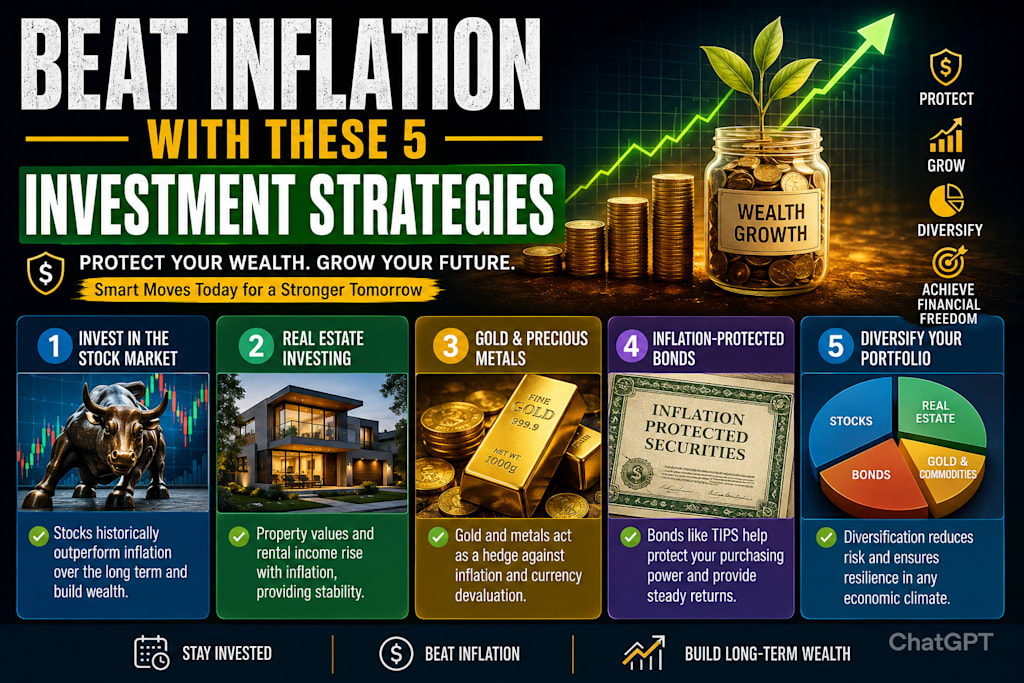
Smart Financial Moves to Protect Your Wealth and Grow Your Money in an Uncertain Economy
Inflation silently reduces the value of money over time. What you could buy for $100 a few years ago may cost significantly more today. From groceries and fuel to housing and healthcare, rising prices affect almost every part of daily life. While inflation is a natural part of the economy, high inflation can create financial pressure and make it harder for people to preserve their purchasing power.
This is why simply saving money is no longer enough. To stay ahead financially, people need investment strategies that not only protect their wealth but also help it grow faster than inflation itself.
The good news is that there are proven ways to fight inflation. By making smart financial decisions and diversifying investments, you can reduce the impact of rising prices and build long-term financial security.
Here are five effective investment strategies that can help beat inflation.
1. Invest in the Stock Market for Long-Term Growth
Historically, stocks have been one of the best ways to outperform inflation over the long term. While stock markets can fluctuate in the short term, quality companies tend to grow their earnings and revenues over time, allowing their stock prices to rise as well.
When inflation increases, businesses often raise the prices of their products and services. Strong companies with solid business models can maintain profitability even during difficult economic conditions.
Why Stocks Help Against Inflation
- Potential for high long-term returns
- Dividend income opportunities
- Businesses can adjust prices with inflation
One of the smartest ways to invest in stocks is through index funds or ETFs, which provide diversification and lower risk compared to investing in a single company.
Popular sectors that often perform well during inflation include:
- Technology
- Energy
- Consumer staples
- Healthcare
However, patience is important. Successful investing in stocks requires a long-term mindset rather than reacting emotionally to short-term market changes.
2. Real Estate as an Inflation Hedge
Real estate is widely considered one of the strongest inflation-resistant investments. Property values and rental income tend to rise alongside inflation, making real estate an effective way to preserve wealth.
As the cost of living increases, rent prices usually increase too. This creates a reliable income stream for property owners.
Benefits of Real Estate Investing
- Property appreciation over time
- Rental income potential
- Tangible asset with intrinsic value
Real estate also offers diversification because it behaves differently from stocks in many economic situations.
For people who do not want to buy physical property directly, Real Estate Investment Trusts (REITs) provide an easier way to invest in the real estate market.
3. Gold and Precious Metals
Gold has been used as a store of value for centuries. During periods of high inflation or economic uncertainty, investors often move toward precious metals because they tend to retain value better than paper currency.
Why Precious Metals Matter
- Protection against currency devaluation
- Diversification for investment portfolios
- Historically strong during economic uncertainty
Besides gold, investors also consider:
- Silver
- Platinum
- Palladium
However, precious metals do not generate income like stocks or rental properties. Their primary role is wealth preservation and portfolio stability.
4. Invest in Inflation-Protected Bonds
Inflation-protected bonds are specifically designed to help investors maintain purchasing power during inflationary periods.
One example is Treasury Inflation-Protected Securities (TIPS), where the principal value adjusts based on inflation rates.
Advantages of Inflation-Protected Bonds
- Lower risk compared to stocks
- Government-backed security
- Stable returns during economic uncertainty
These investments are especially useful for conservative investors who want stability and protection rather than aggressive growth.
Although returns may not be extremely high, inflation-protected bonds can provide peace of mind in volatile markets.
5. Diversification: The Most Important Strategy
One of the biggest mistakes investors make is putting all their money into a single asset class. Markets are unpredictable. Some investments perform well during inflation, while others struggle. This is why diversification is critical.
A Balanced Portfolio May Include
- Stocks for growth
- Real estate for income and appreciation
- Precious metals for protection
- Bonds for stability
Diversification helps reduce risk and creates a more stable financial strategy over time. The goal is not to predict the future perfectly—it’s to prepare for different economic conditions.
The Psychological Side of Investing
One overlooked aspect of investing is psychology. During inflation or market uncertainty, many people panic and make emotional decisions. Fear can cause investors to:
- Sell too early
- Avoid investing entirely
- Chase risky trends
Successful investors focus on long-term strategy instead of short-term emotions.
Important Investment Mindsets
- Stay consistent
- Avoid panic selling
- Focus on long-term growth
- Think rationally, not emotionally
Patience is often one of the most valuable investment skills.
Common Mistakes to Avoid During Inflation
1. Holding Too Much Cash
Cash loses value over time because inflation reduces purchasing power.
2. Ignoring Diversification
Relying on one investment type increases risk.
3. Chasing “Get Rich Quick” Trends
High-risk speculative investments can lead to major losses.
4. Reacting Emotionally
Markets naturally rise and fall. Emotional investing often leads to poor decisions.
Why Financial Education Matters More Than Ever
In today’s economy, financial literacy is becoming essential. Understanding inflation, investing, and wealth-building strategies can make a major difference in long-term financial success.
People who invest wisely are often better prepared for:
- Rising living costs
- Economic downturns
- Financial emergencies
The earlier someone starts learning about investing, the greater the long-term benefits can be.
Final Thoughts
Inflation is unavoidable, but losing wealth because of it is not. The key to protecting your financial future is making informed investment decisions and staying disciplined during uncertain times.
Stocks, real estate, precious metals, inflation-protected bonds, and diversification all play important roles in building a strong financial foundation. No strategy is completely risk-free, but smart investing gives your money the opportunity to grow instead of slowly losing value over time.
In the end, beating inflation is not about finding a perfect investment. It’s about building a balanced strategy that protects your purchasing power while helping your wealth grow steadily for the future.
About the Creator
Robert Redford
i create powerful, easy-to-read articles on everything from history and world events to technology, lifestyle, and thought-provoking ideas. If sparks curiosity, I write about it. Always exploring, always delivering something worth reading.
Enjoyed the story? Support the Creator.
Subscribe for free to receive all their stories in your feed.
Comments
There are no comments for this story
Be the first to respond and start the conversation.