
Five Common Myths About BDSM
That Keep People From LearningReplacing Assumptions With Education, Communication, and Curiosity

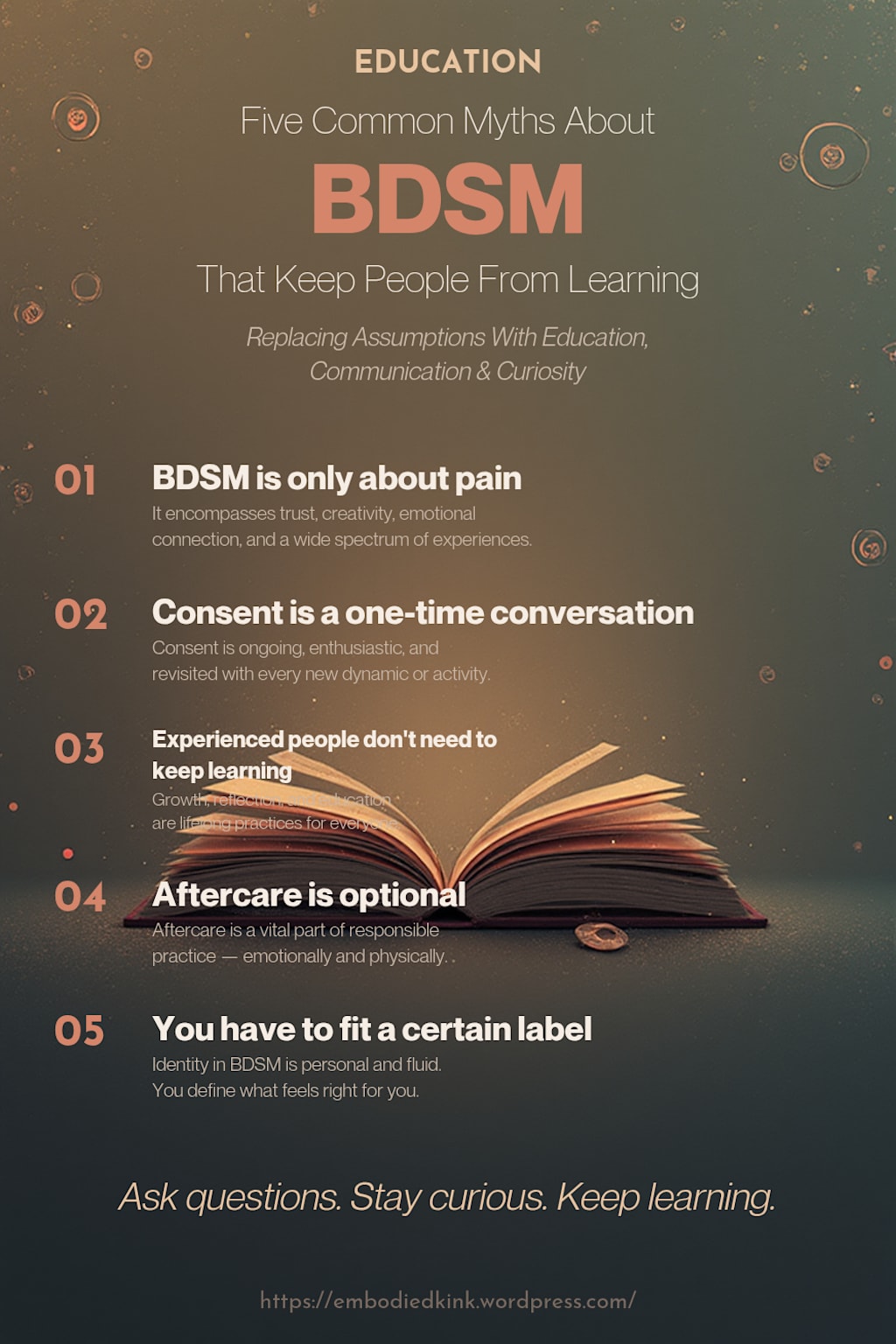
For many people, their first exposure to BDSM comes through movies, television, social media, or secondhand stories. While these sources may be entertaining, they often simplify or sensationalize a diverse community of people with different interests, values, and relationship styles.As a result, many misconceptions persist. These myths can discourage people from seeking accurate information, asking thoughtful questions, or engaging in meaningful conversations about consent, communication, and wellbeing.Whether someone is simply curious or has been part of kink communities for years, continuing to learn is one of the strongest foundations for safer, more respectful interactions.Why Myths MatterMisconceptions do more than create confusion. They can shape expectations, influence communication, and make it harder for people to recognize the importance of informed decision-making.Education helps replace assumptions with understanding.Learning from reputable educators, community discussions, and evidence-informed resources encourages people to approach relationships with greater curiosity, humility, and care.Myth 1: “BDSM Is Only About Pain”One of the most common misunderstandings is that BDSM is defined solely by pain.In reality, people participate in kink for many different reasons. Some are interested in ritual, symbolism, role-play, aesthetics, emotional connection, power exchange, creative expression, or acts of service. Others are drawn to the intentional communication and trust-building that often accompanies negotiated experiences.The specific activities involved vary widely, and no single experience represents the entire community.What many people share is an emphasis on communication, mutual agreement, and thoughtful reflection before and after experiences.A Better QuestionInstead of asking, “What activity are people doing?” consider asking, “How are they communicating, negotiating, and caring for one another?”That shift often leads to more meaningful conversations.Myth 2: “Consent Is a One-Time Conversation”Another common misconception is that consent happens once and then remains permanently understood.Healthy consent is an ongoing process.People’s emotions, energy levels, physical comfort, and personal circumstances can change throughout an interaction.Regular check-ins create opportunities to ask:- How are you feeling?- Do you need anything?- Would you like to pause?- Has anything changed?These conversations support flexibility and respect rather than assuming everyone continues to feel the same way.Myth 3: “Experienced People Don’t Need to Keep Learning”Experience can build confidence, but it should never replace curiosity.Communities continue to evolve. Research expands. Language changes. People learn more about communication, accessibility, trauma-informed practices, and relationship dynamics.Lifelong learning is one of the hallmarks of responsible participation in any educational community.Many experienced educators continue to:- Attend workshops.- Read current research.- Seek mentorship.- Reflect on their own communication.- Welcome respectful feedback.Growth doesn’t stop with experience.Myth 4: “Aftercare Is Optional”People often think of aftercare as an extra step that only matters in certain situations.In reality, many people find value in intentionally reconnecting after emotionally significant experiences.Aftercare is highly individual.For one person, it may involve quiet conversation.For another, it may include:- Rest- Food- Water- Journaling- A warm blanket- Gentle movement- Time alone- Physical affection, if desired and agreed uponThere is no universal formula.The most helpful aftercare is responsive to the needs of the individuals involved.Myth 5: “You Have to Fit a Certain Label”Some people worry they need to identify with a specific label before they are “allowed” to learn about kink.Learning does not require certainty.People often spend time exploring:- Personal values- Communication styles- Relationship preferences- Emotional needs- Boundaries- InterestsIt is okay not to have every answer.Education is often the process through which people better understand themselves.The Role of CuriosityHealthy learning begins with curiosity.Curiosity sounds like:- “I’d like to understand.”- “Can you tell me more about your perspective?”- “What resources would you recommend?”- “What questions haven’t I considered?”Curiosity leaves room for complexity.It recognizes that every person’s experiences are unique.Community LearningMany educational spaces emphasize:- Consent- Communication- Respect- Accountability- Inclusion- Emotional awareness- Continuous educationThese values support environments where people feel more comfortable asking questions without fear of judgment.Reflection ExerciseTake a few minutes with a journal and consider:- What beliefs about BDSM did I learn from popular media?- Which assumptions have I questioned?- What does respectful communication look like to me?- How do I respond when I discover I was mistaken about something?- What topics would I like to learn more about?Approaching these questions with openness can reveal opportunities for personal growth.Continuing Your EducationLearning is an ongoing journey. Consider broadening your understanding through books, workshops, community discussions, and educators who emphasize ethics, consent, communication, and participant wellbeing.When evaluating educational resources, ask:- Does this resource encourage informed decision-making?- Does it emphasize respect and communication?- Does it acknowledge that people have different needs and experiences?- Does it avoid presenting one approach as the only “correct” one?Thoughtful education invites questions rather than discouraging them.Final ThoughtsMisconceptions can keep people from asking questions, seeking reliable information, and developing the communication skills that support healthy relationships.Replacing myths with education doesn’t mean having all the answers. It means remaining willing to learn, reflect, and grow.Whether someone is exploring kink for the first time or has years of experience, the most valuable tools are often the same: curiosity, humility, empathy, informed consent, and open communication.These qualities strengthen not only kink-related conversations but also friendships, partnerships, and everyday human connection. Education is not about reaching a final destination—it is about continuing to learn with respect for yourself and for others
About the Creator
Dreadful.herbalist
Wisdom is only found by those that learn.
Enjoyed the story? Support the Creator.
Subscribe for free to receive all their stories in your feed.
Comments
There are no comments for this story
Be the first to respond and start the conversation.