Europe Vitamin Fortified and Mineral Enriched Food & Beverage Market Expands as Preventive Nutrition Becomes Mainstream
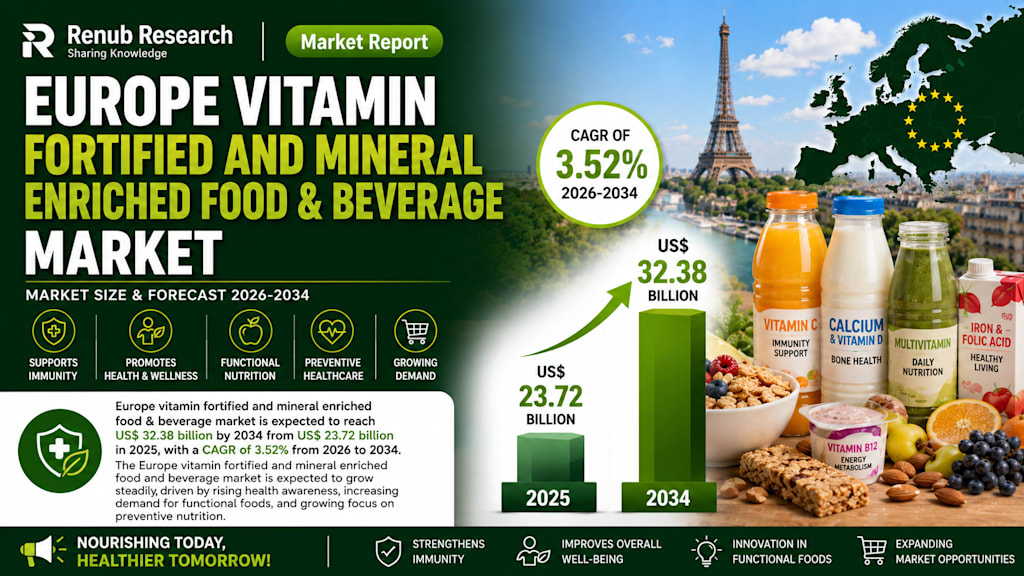
Europe’s fortified food and beverage industry is gaining momentum as consumers increasingly focus on immunity, wellness, and preventive healthcare. The market is projected to rise from US$ 23.72 billion in 2025 to US$ 32.38 billion by 2034, growing at a CAGR of 3.52% during the forecast period.

Europe’s fortified food and beverage market is entering a new phase of growth
The Europe vitamin fortified and mineral enriched food and beverage market is evolving rapidly as consumers place greater importance on nutrition, immunity, and long-term wellness. Fortified foods and beverages, once considered niche health products, are increasingly becoming part of everyday diets across Europe. From vitamin-enriched cereals and dairy products to fortified beverages and infant nutrition, the market is benefiting from a strong shift toward preventive healthcare and functional nutrition.
Consumers are becoming more aware of the role micronutrients play in supporting immunity, bone health, energy levels, and overall well-being. This awareness has accelerated demand for products containing vitamins such as vitamin D and vitamin C, along with minerals including calcium and iron. The growing prevalence of lifestyle-related health concerns and nutrient deficiencies has also encouraged people to actively seek products that provide additional health benefits beyond basic nutrition.
According to Renub Research, the Europe Vitamin Fortified and Mineral Enriched Food & Beverage Market is expected to reach US$ 32.38 billion by 2034, compared to US$ 23.72 billion in 2025, expanding at a compound annual growth rate of 3.52% from 2026 to 2034. This steady growth reflects rising health awareness, increasing demand for functional foods, and continuous product innovation across Europe’s food and beverage industry.
Preventive healthcare is driving consumer behavior
One of the biggest factors supporting the market’s expansion is the growing focus on preventive healthcare. European consumers are increasingly taking proactive steps to maintain health and reduce the risk of future medical problems through better nutrition and lifestyle choices. Fortified foods and beverages provide a convenient way to supplement daily nutrient intake without requiring major dietary changes.
The COVID-19 pandemic also had a lasting impact on consumer behavior by increasing awareness around immunity and nutritional wellness. Products enriched with immunity-supporting nutrients such as vitamin C, zinc, and vitamin D witnessed stronger demand as consumers prioritized health protection and wellness-focused consumption.
Aging populations across several European countries are another important growth driver. Older consumers are increasingly purchasing fortified products that support bone health, cardiovascular health, immunity, and cognitive function. Dairy products fortified with calcium and vitamin D, as well as beverages enriched with additional nutrients, are particularly popular among aging demographics.
Governments and health organizations are also helping raise awareness about micronutrient deficiencies and balanced nutrition. Public health campaigns encouraging proper vitamin and mineral intake have positively influenced consumer attitudes toward fortified foods and beverages across the region.
Functional foods are becoming part of everyday diets
The growing demand for functional and value-added foods is transforming Europe’s food and beverage industry. Consumers are increasingly seeking products that provide specific health benefits beyond simple nourishment. Fortified foods fit naturally within this trend because they offer convenience while supporting wellness-focused lifestyles.
Busy lifestyles are also influencing purchasing behavior. Many consumers prefer ready-to-consume products that can deliver nutritional support quickly and conveniently. This has increased demand for fortified beverages, cereals, dairy products, snack foods, and nutritional drinks that combine functionality with ease of consumption.
Manufacturers are expanding their product portfolios by adding vitamins and minerals to a wider variety of food and beverage categories. Functional beverages enriched with electrolytes, immunity-supporting nutrients, and energy-enhancing vitamins are becoming increasingly common across supermarkets and online retail platforms. Similarly, fortified cereals and dairy products continue to perform strongly due to their everyday consumption patterns.
Infant nutrition remains another important segment within the market. Parents are increasingly prioritizing fortified infant formulas and nutritional products that support healthy growth and development. As awareness around early childhood nutrition increases, this category is expected to maintain steady growth across Europe.
Product innovation is reshaping the competitive landscape
Continuous product innovation remains central to market growth. Manufacturers are investing heavily in research and development to improve taste, nutritional value, and ingredient quality while maintaining product appeal.
Clean-label and plant-based trends are particularly influential. European consumers increasingly prefer products with natural ingredients, minimal processing, and transparent labeling. As a result, manufacturers are developing fortified products using organic ingredients, plant-based formulations, and naturally sourced vitamins and minerals.
Advancements in food technology have also improved the ability to incorporate vitamins and minerals into products without negatively affecting flavor, texture, or shelf life. This has helped companies introduce fortified products across broader categories while maintaining consumer satisfaction.
Packaging and branding innovation are equally important. Companies are using modern packaging designs and targeted health messaging to improve shelf visibility and communicate nutritional benefits more effectively. Marketing campaigns emphasizing immunity support, wellness, energy, and preventive nutrition are resonating strongly with European consumers.
Retail and e-commerce channels are improving accessibility
Retail distribution continues to play a critical role in the growth of Europe’s fortified food and beverage market. Supermarkets and hypermarkets remain the dominant sales channels because they provide consumers with access to a broad range of fortified products during regular shopping trips. Convenience stores and pharmacies also contribute significantly, especially for wellness-oriented and specialty nutrition products.
At the same time, e-commerce is rapidly expanding. Online platforms allow brands to reach wider audiences, launch new products quickly, and engage directly with consumers. Digital retail channels are particularly important for niche health-focused brands and specialized fortified nutrition products.
Subscription models and direct-to-consumer strategies are also gaining popularity, particularly for functional beverages and nutritional supplements. These models improve convenience while helping companies build stronger customer relationships and brand loyalty.
Key challenges facing the market
Despite strong growth potential, the Europe fortified food and beverage market faces several challenges. One of the most significant is Europe’s strict regulatory environment. Food safety regulations, nutrient limits, labeling standards, and restrictions on health claims can create operational complexity for manufacturers.
Compliance with these regulations often requires extensive research, testing, and documentation, increasing development costs and slowing product launches. Differences in regulations across European countries can add further complexity for multinational companies operating across multiple markets.
Consumer skepticism is another challenge. Some buyers remain cautious about processed and fortified foods, preferring fresh and minimally processed alternatives. Concerns about artificial additives and excessive fortification may negatively influence purchasing decisions.
Price sensitivity can also limit market penetration. Fortified products are often more expensive than conventional alternatives because of higher production and ingredient costs. In price-sensitive markets, this pricing gap may reduce accessibility for some consumers. Manufacturers must therefore balance nutritional enhancement with affordability and transparency to maintain growth momentum.
Country-level trends across Europe
France is witnessing growing demand for fortified dairy products, cereals, and beverages as consumers increasingly prioritize health and wellness. French consumers also show strong preference for clean-label and organic products, encouraging manufacturers to focus on natural formulations.
Germany remains one of Europe’s strongest fortified food markets because of high health awareness and strong demand for functional nutrition. Consumers actively seek products that support immunity, bone health, and overall wellness, particularly within plant-based and clean-label categories.
Italy’s market is gradually expanding as younger consumers adopt more convenience-oriented eating habits and become more open to functional foods. Spain is also seeing increased demand for fortified beverages and nutritional products due to growing awareness around preventive healthcare and wellness-focused lifestyles.
Across Europe, demand for natural, functional, and value-added nutrition products is expected to remain strong as consumers continue prioritizing long-term health and balanced diets.
10 Recent Developments in the Europe Fortified Food & Beverage Market
Nestlé SA expanded its fortified nutrition portfolio across Europe in 2025, increasing focus on immunity-supporting and wellness-oriented food and beverage products.
Danone SA accelerated innovation in fortified dairy and plant-based products, emphasizing digestive health, immunity, and clean-label nutrition solutions.
PepsiCo Inc. strengthened its functional beverage strategy, introducing products enriched with vitamins, minerals, and energy-supporting nutrients across European markets.
The Coca-Cola Company increased investments in wellness-focused beverage categories, particularly products containing added vitamins and reduced sugar formulations.
Abbott Laboratories expanded clinical and nutritional product offerings in Europe, focusing on fortified nutritional beverages and specialized health-support products.
Kellogg Company introduced fortified breakfast products with enhanced nutrient profiles, responding to growing consumer demand for balanced and functional breakfast solutions.
Amway Corporation strengthened its European nutrition business, increasing focus on personalized wellness and fortified nutritional supplementation.
The Hain Celestial Group expanded organic and clean-label fortified food offerings, targeting health-conscious consumers seeking minimally processed nutrition products.
Marks & Spencer increased premium fortified food selections in its retail portfolio, focusing on convenient wellness-oriented meal and snack options.
European manufacturers continued investing heavily in plant-based fortified foods throughout 2025 and 2026, combining sustainability trends with functional nutrition demand.
Sustainability and clean-label nutrition are shaping future growth
Sustainability and ingredient transparency are becoming increasingly important in the European fortified food and beverage market. Consumers are paying closer attention to sourcing practices, environmental impact, and ingredient quality when making purchasing decisions.
As a result, manufacturers are focusing on sustainable packaging, ethically sourced ingredients, and environmentally responsible production practices. Plant-based fortified products are also gaining popularity because they align with both health-conscious and sustainability-focused lifestyles.
Brands that successfully combine nutrition, transparency, sustainability, and convenience are expected to gain a stronger competitive advantage in the years ahead.
Final thoughts
The Europe vitamin fortified and mineral enriched food and beverage market is becoming an increasingly important part of the region’s broader wellness economy. Consumers are actively seeking products that support immunity, energy, and long-term health while fitting into modern lifestyles. This shift is driving demand for fortified foods and beverages across multiple categories, from dairy and cereals to beverages and nutritional snacks.
Renub Research’s forecast highlights the market’s steady long-term potential. As preventive healthcare trends continue to influence consumer behavior and manufacturers invest in cleaner, more innovative formulations, the Europe fortified food and beverage industry is expected to remain a key growth segment within the broader food and nutrition market.
About the Creator
Enjoyed the story? Support the Creator.
Subscribe for free to receive all their stories in your feed.
Comments
There are no comments for this story
Be the first to respond and start the conversation.