Short Story
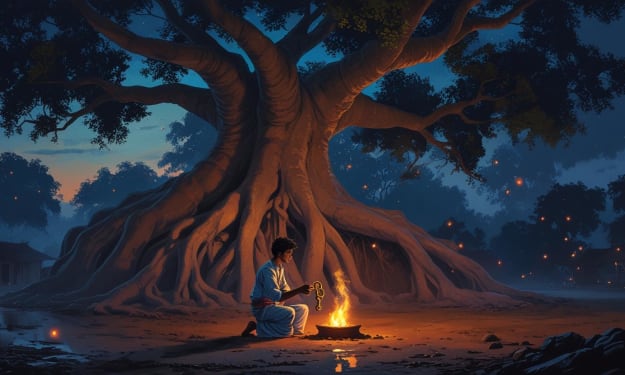
The Whispering Banyan
The evening breeze carried the scent of jasmine through the narrow lanes of Barisal, where Imran sat on the balcony of his family’s old home. At thirty-one, he was a photographer based in Dhaka, known for capturing the raw beauty of Bangladesh’s rivers and markets. But tonight, his camera lay untouched, his mind tangled in the letter he’d received that morning. It was from his cousin Farida, written in a hurried scrawl: “Imran, come to the village. Nana is gone, and there’s something you need to see. It’s about the banyan.”
By Shohel Ranaabout a year ago in Fiction
The Weaver’s Song
The morning sun spilled over the rooftops of Sylhet, casting golden streaks across Arif’s tiny apartment. At twenty-eight, he was a math teacher at a local school, known for his quiet demeanor and knack for making numbers feel like stories. But today, his mind wasn’t on equations. A letter lay open on his table, its edges creased from being read too many times. It was from his aunt in a village near Moulvibazar, a place he hadn’t visited since he was a boy.
By Shohel Ranaabout a year ago in Fiction
The Lantern’s Keeper
The rain tapped softly against the window, like a friend asking to be let in. Rhea sat in the corner of her small Dhaka apartment, cradling a cup of tea that had long gone cold. Her eyes held a distant gaze, as if she were searching for something just out of reach. Outside, the city’s chaos—honking rickshaws, vendors’ calls, and the hum of life—blended into a familiar hum. But to Rhea, it all felt muted, like a song played too far away.
By Shohel Ranaabout a year ago in Fiction
Voice Memos from My Dead Sister
The first message came exactly seven days after Lily died. It was a Tuesday. I remember that because grief made everything mechanical—measuring time in cups of coffee, unanswered texts, and hours spent staring at the ceiling, asking the same unanswerable question: Why her? The notification buzzed softly on my nightstand, barely audible over the rain tapping against the windows. Voice Memo from Lily. 9:27 PM. At first, I thought it was a glitch. Some leftover file. I’d listened to her voice memos dozens of times since the funeral. Her little rants. Her laughs. The one she left after a bad Tinder date that ended in her stealing a bottle of wine and running barefoot through a parking lot. But this one was different. I played it. > “Hey, Em. I know this sounds insane. But I need you to listen—really listen. I don’t have much time, and I think I’m being watched. You have to go to the cabin.” Her voice was shaky. Low. Not the Lily who laughed like summer. This Lily sounded afraid. Rushed. Then static. Then silence. I dropped the phone. My heart punched against my ribs. --- I didn’t sleep that night. My mind swung between denial and disbelief, crafting theories and discarding them. Had she scheduled the message before she died? No—Lily didn’t do planning. She barely did laundry. By sunrise, I convinced myself it was a cruel prank. Maybe someone hacked her cloud account. People were sick enough to do that. But then came the second message. > “Remember the tin box in Dad’s attic? The one we weren’t supposed to open? Open it. You’ll understand. Just—don’t trust anyone yet. Not even Mom.” I froze. Lily and I had joked about that tin box when we were kids. Dad always said it was “full of boring legal stuff” and told us to stay out. We’d never opened it. I didn’t tell anyone. Not Mom. Not even Mark, my boyfriend, who’d practically moved in since the funeral. I just drove. --- The attic smelled like dust and ghosts. The tin box was exactly where I remembered it—tucked behind a stack of faded photo albums and a broken fan. It was heavier than it looked. Inside: old documents, a sealed envelope, and a photo. Lily. Me. And a woman who looked like our mother… but wasn’t. I tore open the envelope. Birth certificates. Two sets. Lily’s and mine. Except Lily’s had a different last name. Different parents. Different birth city. --- The third message came while I sat in the attic, the box in my lap. > “They lied to us, Em. About who we are. About who I am. I think they found me because I was asking questions. Because I remembered too much. Don’t let them find you, too.” She was crying. I’d never heard her cry like that. I stared at the photo again. The woman—her smile was Lily’s smile. Same dimple. Same tilt of the head. Our mother never had that dimple. I took the box, stuffed it in my bag, and drove back to the apartment. My hands were shaking. My chest felt like it held a hundred bees. When I walked through the door, Mark was in the kitchen. He smiled. Too wide. Too calm. “I was getting worried,” he said. “You didn’t say where you were going.” I stared at him. Something in his voice was… wrong. “I need to shower,” I muttered. I locked the bathroom door and pulled out my phone. Another message. > “Don’t trust Mark. He’s not who you think.” I dropped the phone again. --- That night, I left. I didn’t pack much. Just the box, my phone, and some cash. I drove for hours. Past the city, past the blinking lights, until the trees swallowed the road. Lily and I had visited the family cabin every summer until we were teenagers. I hadn’t been back since. The cabin was exactly as we left it—dusty, cold, forgotten. I sat in the living room, staring at the dark fireplace, playing the messages again and again. > “You have to finish what I started. They erased us, Em. You need to remember. Go under the floorboards in the bedroom. You’ll find the rest.” Under the floorboards, I found a flash drive, a journal, and a photo ID that didn’t belong to Lily—but looked exactly like her, with a different name. --- The final message came three nights later. > “I’m out of time. If you’re hearing this, it means you found the drive. Share it. Let the truth out. I love you. I always have. Don’t let them erase me again.” And then her voice cracked. > “Goodbye, Em.” No static. No distortion. Just… nothing. --- I don’t know who “they” are. Not yet. But I know Lily wasn’t crazy. I know she found something she wasn’t supposed to. And I know I’m next. I haven’t shared the drive. Not yet. But I will. Because my sister’s voice is gone now. For good. And I won’t let it stay that way. ---
By Mati Henry about a year ago in Fiction
My Grandmother’s Mirror Only Reflects the Dead
The Mirror’s First Secret I almost sold the mirror the day after Grandma Lillian’s funeral. It was an ugly thing—a heavy oak frame carved with twisting vines, the glass smoky with age. But Mom insisted: "She wanted you to have it. Said it was special."
By MUHAMMAD Abbasabout a year ago in Fiction
The Last Café on Earth
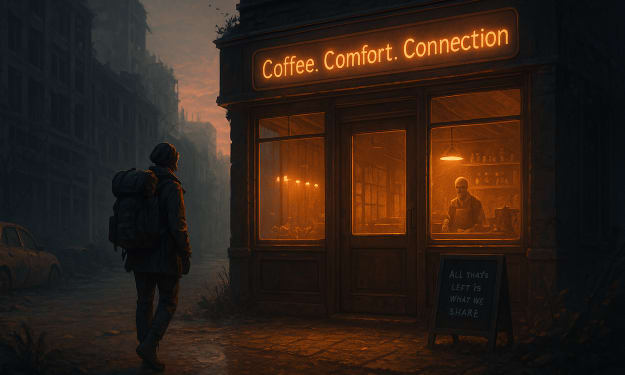
No one knew why the café still had power. The world had gone dark six months ago. Satellites blinked out like dying stars. Cities collapsed into shadows. The internet—once a sprawling digital heartbeat—flatlined. Planes fell. Governments vanished. People disappeared, or worse, turned on each other. What remained of humanity scattered like dry leaves in wind. Yet here it was. Milo’s Café. Open from 8 a.m. to 8 p.m., seven days a week. The sign outside still flickered faintly in cursive neon: “Coffee. Comfort. Connection.” Inside, the espresso machine hissed like an old friend sighing. The lights glowed softly. Vinyl hummed on a dusty turntable. The bell above the door still chimed every time someone entered—though these days, that didn’t happen often. Milo, a man with silver in his beard and eyes like burnt mahogany, wiped down the same counter every day with the same precision he had before the world unraveled. --- They came in ones and twos—stragglers, wanderers, quiet survivors. Word had spread somehow. Not through internet or broadcast. Just… word of mouth, carried in footsteps and whispers: “There’s a café still open, down past the dead highway, across the skeletal city. A place with light. A place with coffee.” Some believed it was a hallucination. A ghost. A trap. It was none of those things. It was simply what it claimed to be: a café. But that didn’t make it ordinary. --- One day, a woman named Iris arrived. Her coat was ripped, boots worn through. She carried a backpack filled with water bottles, maps, and a revolver with no bullets. She stepped inside and froze. It smelled like cinnamon and roasted beans. Like something safe. A sound—Nina Simone playing softly—drifted through the air like nostalgia. Milo looked up and smiled. “Welcome,” he said, like it was any other Tuesday before the collapse of civilization. “First cup’s on the house.” She stared. “How do you still have power?” He shrugged. “Solar. Backup batteries. And maybe a little magic.” She laughed for the first time in months. It sounded cracked, but human. --- They sat by the window. The outside world was broken glass and overgrown roots. Inside, the world was a ceramic cup and the clink of a spoon. “You waiting for someone?” Iris asked. Milo nodded slowly. “Everyone.” She blinked. “That’s a lot of waiting.” “I’ve got time,” he said, refilling her cup. --- More came. A mother and her child. A wandering historian. A mute man with eyes like galaxies. A former soldier who refused to say his name. They never stayed long—just long enough for a hot drink, a conversation, a story. They left with something they couldn’t explain. Not hope, exactly. Something smaller, but steadier. Like weight rediscovered after floating too long. Milo never asked where they came from or where they were going. He just listened. And brewed. --- One evening, Iris stayed past closing. “I think this place is keeping the world alive,” she said, watching dust float in golden light. Milo raised an eyebrow. “Because of coffee?” “Because it reminds people of who they were. Who they still are.” Milo smiled, but didn’t answer. Instead, he reached under the counter and pulled out a small, hand-carved sign. He passed it to her. It read: > “All that’s left is what we share.” She stared at it, heart tugging at something buried. “Put it up for me,” he said. She did. --- Years passed, though no one counted days anymore. Some say Milo aged in reverse. Others say he was already a ghost when the world fell apart. But the café remained. And long after everything else crumbled— A warm light still shone through the windows. A kettle still whistled. A door still chimed. And strangers still found their way to the last café on Earth… Looking for coffee. Looking for comfort. Looking for a place where they still mattered. And always— finding it. And always find it .
By Mati Henry about a year ago in Fiction
Stars We Buried
The desert was quiet the night we buried the stars. Not real stars, of course—we were just children. But at thirteen, what mattered wasn’t reality, but the believing. And we believed fiercely, the way only kids on the edge of growing up can. We buried them in jars: tiny glass containers filled with glow-in-the-dark stickers, firefly wings, glitter, and scribbled wishes. We gave them names. Leo called his Sirius, after the brightest in the sky. Mina’s was Andromeda, because she liked the sound of it. I named mine Echo, because I didn’t want my wish to be forgotten. We buried them just outside the old radio tower where no one went anymore—just past the cactus line, where the sand grew cold and silent and the sky spilled over with stars. We dug holes with our bare hands, then stood back and looked up. “This way,” Mina said, brushing dirt from her knees, “if we forget who we are, the stars will remember.” We believed her. We grew up. As kids do. Mina moved away first—her family couldn’t afford to stay in the dying town. Then Leo drifted. He stayed longer, long enough to start smoking and get his heart broken by a girl who loved storms more than people. I stayed. For years, I didn’t visit the buried stars. Life got crowded—college, bills, funerals. Dad passed. Mom followed. The town shrank more. But one sleepless night, thirty-three years later, something pulled me back. I parked near the cracked fence of the radio tower, flashlight in hand, and walked out into the night. The air smelled the same—dust and dry heat. Coyotes cried in the distance. The stars above looked so sharp, I felt like I might bleed just staring too hard. And there, after some fumbling, I found them. The jars were still there, buried shallow. Their lids rusted, their glow long faded. But the scraps inside—wish-paper, old charms, a plastic dinosaur from Leo’s collection—still held shape. I dug them all up. I didn’t cry until I opened mine. Inside was a note. Faded, water-damaged. But legible: > I wish to never be forgotten. I wish to find my voice. I wish my friends never leave. I remembered writing it with sticky fingers and a heart full of fear. I remembered Mina watching the sky like it was trying to talk to her. I remembered Leo saying he wanted to become a star himself, if nothing else worked out. I thought that was just kids being weird. But now, standing in the dark, I wondered if he meant it. That night, I made calls. Mina, surprisingly, answered on the second ring. She lived in Oregon now, with two kids and a husband who fixed guitars. “You remember the stars?” I asked. There was a pause. Then: “I think about them every time I can't sleep.” I didn’t need to explain. We agreed to meet. One week later, Mina and I stood together under the same desert sky, older and heavier with years, and waited. Leo was late. Typical. But just as we were about to give up, we saw headlights. His truck sputtered up the dirt road like it had twenty years ago, spitting dust and heat. When he got out, Leo looked like time had fought him and only half-won. But his eyes—his eyes were the same. We didn’t say much at first. Just hugged longer than we needed to. Then we reburied the jars—cleaned, resealed, wishes tucked inside again. This time, we added new ones. I wrote mine on a napkin from Leo’s glove compartment: > I wish we remember how to be whole again. Mina placed a small photograph in hers—a picture of the three of us at fifteen, with messy hair and wide eyes. Leo just dropped in a new glow sticker and smiled. We stood in silence as the wind picked up. “I always thought we buried those stars to hide them,” Leo said at last. “But maybe we did it to keep from losing them.” Mina nodded. “We were keeping pieces of ourselves safe.” The stars above blinked, ancient and indifferent. But somehow, I felt them listening. We stayed until dawn.
By Azmat Roman ✨about a year ago in Fiction
The Clockmaker's Silence.
The Clockmaker’s Silence In the heart of a quiet, mist-covered village stood a little shop that never closed, yet no one ever saw it open. The sign above the crooked door read “E. Varnham – Clockmaker”. Its windows were always clean, the brass doorknob gleamed like gold, and inside, clocks of all sizes ticked in harmonious rhythm. Some villagers claimed the clocks inside ran backward on stormy days. Others said you could hear a heartbeat if you leaned against the door. But the most curious thing of all was that no one had seen Elias Varnham speak. Not in years. Old Elias had once been the most talkative soul in the village—a man who hummed while he worked, told long stories about time and its secrets, and loved children enough to handcraft wooden cuckoos to make them laugh. Then, one day, he went silent. Not out of illness, nor rudeness. He simply… stopped speaking. He still greeted customers with a gentle nod and a smile. He still fixed their clocks, often leaving them in better shape than new. But never a word passed his lips. People asked, of course. “What happened to Elias?” “Did he take a vow?” “Was it grief?” Some whispered it had to do with his son, Peter. Peter Varnham was a bright boy with quick fingers and a quicker smile. He had helped his father since he was tall enough to reach the workbench, dreaming of becoming a clockmaker, too. But when Peter turned sixteen, he left the village after a terrible argument—shouting so loud it rattled the shop windows. He never returned. Years passed, and the clocks in Elias’s shop never lost a second. But the silence inside the shop deepened. The cuckoo birds didn’t chirp anymore. The chimes fell quieter. And Elias grew older, more frail, but never ceased his work. One gray autumn evening, the village’s priest, Father Harren, visited the shop. He brought a pocket watch that had belonged to his grandfather. “It’s stopped,” he said gently. “Like so many things lately.” Elias took the watch, nodded, and turned to work. As the gears clicked beneath his tools, Father Harren hesitated, then asked: “Do you ever wish you could turn back time?” Elias paused. His hands trembled slightly over the brass gear. Then he opened a drawer and took out a small notebook. He wrote in it carefully, and slid it across the table. > “Every day. But time only moves forward, even for clockmakers.” Father Harren looked into the old man’s eyes and saw something there—regret, loss, and the deep ache of unspoken words. That winter, snow fell early. The clocks in Elias’s shop continued to tick, but the villagers noticed something new: a large grandfather clock in the display window that no one had seen before. It was unlike anything Elias had ever made—sleek, modern, yet ancient in design. Its pendulum didn’t swing side to side, but in a slow, circular motion, like the hands of a sundial. And etched into the base, barely visible through frost, were the words: > “Forgive me.” One week later, the shop was silent. Utterly silent. No ticking, no whirring, no soft sounds of winding gears. Elias Varnham had died in his sleep. The village mourned, and the shop remained closed. But one rainy morning in spring, a stranger appeared—young, with Elias’s eyes and hands stained with oil. He carried a worn suitcase and a wooden cuckoo tucked under his arm. Peter Varnham had returned. He didn’t speak at the funeral. But afterward, he walked to the shop, unlocked the door with a rusted key, and stepped inside. The clocks began ticking again. And for the first time in decades, the cuckoo birds chirped.
By Azmat Roman ✨about a year ago in Fiction
Signed, Your Ghost
The first letter arrived on a Tuesday. Mara found it tucked neatly into her mailbox, nestled between bills and a coupon booklet. There was no return address—only her name handwritten in a script that looked strangely familiar. The envelope was pale gray, sealed with an old-fashioned wax stamp bearing the impression of a feather. She opened it on the kitchen counter, next to a half-drunk cup of coffee and a vase of wilting sunflowers. > Dear Mara, You left the bedroom light on last night. It’s okay—I didn’t mind. It’s strange, watching you sleep. I used to sleep beside you. Do you remember that? I’d count your breaths when I couldn’t count sheep. You always exhaled in threes. I never told you. I’m still here. Just quieter. Signed, your ghost. Mara stared at the letter for a long while, her fingers trembling slightly. She assumed it was a joke—some elaborate prank. But no one knew about the breath-counting. No one could’ve. She folded the letter and shoved it into a drawer. By Thursday, she had nearly convinced herself it was a one-time thing. A trick of memory. Maybe she had written it herself, during one of her sleepless nights, and forgotten. But then came the second. > Dear Mara, You made pancakes this morning. You forgot the vanilla, but they were still good. I remember how you used to hum while flipping them—“Moon River.” You don’t hum anymore. I wish I could eat with you. Sit across from you like before. But the table only sets for one now. Still, thank you for making them. The smell reminded me of Sunday. Signed, your ghost. It had been two years since Leo died. Two years since the accident. The sharp turn. The tree. The endless silence that followed. She had buried him with his favorite blue scarf and the book he never finished. Mara had tried to move on. She even dated someone briefly, a man named Owen who worked at the bookstore downtown. But she always ended things early—before she got too close. Before she had to explain the shadow that still sat at her table or the phantom weight beside her in bed. Now, the letters came once a week. They never asked her for anything. They were simply observations. Memories. Moments only Leo could’ve known. The smell of their favorite candle. The way she cried at commercials. The time she broke her toe dancing in the kitchen. Each one ended the same way: > Signed, your ghost. At first, they terrified her. Then they made her ache. But over time, the fear dulled, replaced by something else—comfort, perhaps. Connection. She started writing back. Nothing elaborate—just notes scribbled on napkins or the backs of receipts, left on the windowsill or taped to the mirror. She never knew if they were read, but somehow, she felt less alone. On the anniversary of his death, she made his favorite dinner—spaghetti with too much garlic and a bottle of wine neither of them could ever finish. She lit a candle. She poured two glasses. The next morning, she found a final letter. > Dear Mara, Thank you. For everything. For the dinners and the dancing, the laughter and the late-night walks. For remembering me. For not forgetting yourself. You’re stronger than you think. You always were. I’ve been holding on, afraid you needed me to. But I think you’re ready now. Not to forget—but to live. You’ll always carry me, but you don’t have to wait for me anymore. You are not alone. You never were. Goodbye, my love. Signed, your ghost. Mara wept, but it wasn’t the same kind of sorrow. It was softer now, almost sweet. She tucked the letter into a box with the others. Then she opened the windows, letting in the morning air. The sun spilled across the floor like forgiveness. And for the first time in years, she felt light enough to move forward.
By Azmat Roman ✨about a year ago in Fiction
Yesterday's Future
The last time I stood on the rooftop of our old apartment building, the city looked different. Back then, we were seventeen. The skyline shimmered with possibility, every blinking light a promise waiting to be kept. We called it “the edge of tomorrow”—that crumbling rooftop with graffiti on the walls, where dreams felt like they might leap straight into the sky. “I’m going to build something that matters,” you told me once, your breath visible in the winter air. “Not just make money or survive. I want to build something people remember.” I nodded. “And I’ll write. About us. About this.” You laughed. “Who’s going to read a book about two kids staring at airplanes?” I smiled back. “You. When we’re old.” That was twelve years ago. Now I stood there alone, the wind colder than I remembered, the rooftop smaller. The building next to ours had grown taller—steel and glass climbing higher than any dream we ever sketched on notebook margins. Progress. Time’s monument. I took the old Polaroid out of my pocket. Us, blurry and half-smiling. You had written in the white space below: "This is what yesterday’s future looks like." Back then, it felt poetic. Now it felt like a question I didn’t know how to answer. --- We had it all planned. You’d go to college for engineering. I’d major in literature. We’d move to the city, share an apartment, chase our dreams until they caught us or killed us. But the thing no one tells you about futures is how fragile they are. Your scholarship fell through. Mine didn’t. You stayed behind to help your mother after her accident. I left. I told myself it was temporary. We called. We wrote. For a while. Then time got in the way. I published my first book at twenty-six. It was about us, thinly veiled behind fiction. It sold decently. You messaged me congratulations. I said thank you. You said you liked chapter seven. I never asked which part. You stopped replying after that. I stopped writing about you. --- Until last week, when your sister called. She found my number buried in an old phone, still saved under "Skyline." She said the accident was sudden. A drunk driver. A rainy road. You didn’t make it. I hadn’t seen you in ten years. I didn’t even know you still lived here. I asked if I could come to the funeral. She said yes. And now I was back on the roof, holding the photograph you never threw away. I imagined you standing beside me again, eyes squinting against the sun, hair tousled by wind. Would you recognize me now? Would I recognize you? In the distance, I saw a plane cut through the clouds—just like we used to watch. You once said they looked like punctuation marks in the sky. I never understood what you meant. Maybe I do now. Maybe you were telling me that life is a sentence we write one word at a time, and sometimes we don’t realize we’ve reached the end of a chapter until it’s already behind us. --- As I turned to leave, I heard laughter. Two teenagers had climbed onto the rooftop. A boy and girl, backpacks slung low, their conversation light and fast, filled with the same dreams we once whispered into the wind. They didn't notice me. Why would they? I was yesterday now. But as I passed them, the girl asked, “Do you ever wonder what the future looks like?” The boy shrugged. “Probably like this. Just... older.” I smiled. Maybe they were right. Maybe yesterday’s future isn't some grand revelation or perfect destination. Maybe it's just this—returning to where we once began, older, quieter, but still reaching for the sky. Before I stepped through the rooftop door, I left the Polaroid wedged in the metal railing, fluttering slightly in the wind. A memory. A reminder. A punctuation mark in someone else’s story.
By Azmat Roman ✨about a year ago in Fiction