Short Story
Signed, Your Ghost
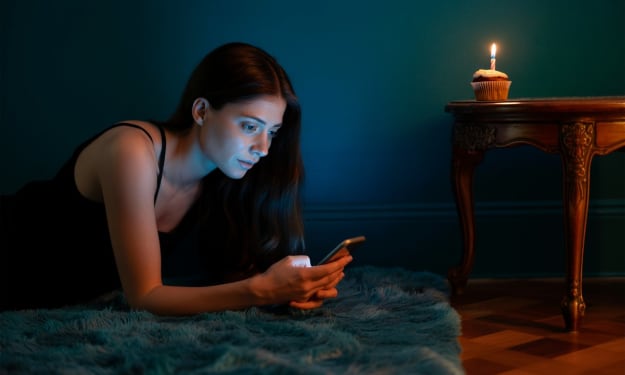
The first letter arrived on a Tuesday. Mara found it tucked neatly into her mailbox, nestled between bills and a coupon booklet. There was no return address—only her name handwritten in a script that looked strangely familiar. The envelope was pale gray, sealed with an old-fashioned wax stamp bearing the impression of a feather. She opened it on the kitchen counter, next to a half-drunk cup of coffee and a vase of wilting sunflowers. > Dear Mara, You left the bedroom light on last night. It’s okay—I didn’t mind. It’s strange, watching you sleep. I used to sleep beside you. Do you remember that? I’d count your breaths when I couldn’t count sheep. You always exhaled in threes. I never told you. I’m still here. Just quieter. Signed, your ghost. Mara stared at the letter for a long while, her fingers trembling slightly. She assumed it was a joke—some elaborate prank. But no one knew about the breath-counting. No one could’ve. She folded the letter and shoved it into a drawer. By Thursday, she had nearly convinced herself it was a one-time thing. A trick of memory. Maybe she had written it herself, during one of her sleepless nights, and forgotten. But then came the second. > Dear Mara, You made pancakes this morning. You forgot the vanilla, but they were still good. I remember how you used to hum while flipping them—“Moon River.” You don’t hum anymore. I wish I could eat with you. Sit across from you like before. But the table only sets for one now. Still, thank you for making them. The smell reminded me of Sunday. Signed, your ghost. It had been two years since Leo died. Two years since the accident. The sharp turn. The tree. The endless silence that followed. She had buried him with his favorite blue scarf and the book he never finished. Mara had tried to move on. She even dated someone briefly, a man named Owen who worked at the bookstore downtown. But she always ended things early—before she got too close. Before she had to explain the shadow that still sat at her table or the phantom weight beside her in bed. Now, the letters came once a week. They never asked her for anything. They were simply observations. Memories. Moments only Leo could’ve known. The smell of their favorite candle. The way she cried at commercials. The time she broke her toe dancing in the kitchen. Each one ended the same way: > Signed, your ghost. At first, they terrified her. Then they made her ache. But over time, the fear dulled, replaced by something else—comfort, perhaps. Connection. She started writing back. Nothing elaborate—just notes scribbled on napkins or the backs of receipts, left on the windowsill or taped to the mirror. She never knew if they were read, but somehow, she felt less alone. On the anniversary of his death, she made his favorite dinner—spaghetti with too much garlic and a bottle of wine neither of them could ever finish. She lit a candle. She poured two glasses. The next morning, she found a final letter. > Dear Mara, Thank you. For everything. For the dinners and the dancing, the laughter and the late-night walks. For remembering me. For not forgetting yourself. You’re stronger than you think. You always were. I’ve been holding on, afraid you needed me to. But I think you’re ready now. Not to forget—but to live. You’ll always carry me, but you don’t have to wait for me anymore. You are not alone. You never were. Goodbye, my love. Signed, your ghost. Mara wept, but it wasn’t the same kind of sorrow. It was softer now, almost sweet. She tucked the letter into a box with the others. Then she opened the windows, letting in the morning air. The sun spilled across the floor like forgiveness. And for the first time in years, she felt light enough to move forward.
By Azmat Roman ✨about a year ago in Fiction
Yesterday's Future
The last time I stood on the rooftop of our old apartment building, the city looked different. Back then, we were seventeen. The skyline shimmered with possibility, every blinking light a promise waiting to be kept. We called it “the edge of tomorrow”—that crumbling rooftop with graffiti on the walls, where dreams felt like they might leap straight into the sky. “I’m going to build something that matters,” you told me once, your breath visible in the winter air. “Not just make money or survive. I want to build something people remember.” I nodded. “And I’ll write. About us. About this.” You laughed. “Who’s going to read a book about two kids staring at airplanes?” I smiled back. “You. When we’re old.” That was twelve years ago. Now I stood there alone, the wind colder than I remembered, the rooftop smaller. The building next to ours had grown taller—steel and glass climbing higher than any dream we ever sketched on notebook margins. Progress. Time’s monument. I took the old Polaroid out of my pocket. Us, blurry and half-smiling. You had written in the white space below: "This is what yesterday’s future looks like." Back then, it felt poetic. Now it felt like a question I didn’t know how to answer. --- We had it all planned. You’d go to college for engineering. I’d major in literature. We’d move to the city, share an apartment, chase our dreams until they caught us or killed us. But the thing no one tells you about futures is how fragile they are. Your scholarship fell through. Mine didn’t. You stayed behind to help your mother after her accident. I left. I told myself it was temporary. We called. We wrote. For a while. Then time got in the way. I published my first book at twenty-six. It was about us, thinly veiled behind fiction. It sold decently. You messaged me congratulations. I said thank you. You said you liked chapter seven. I never asked which part. You stopped replying after that. I stopped writing about you. --- Until last week, when your sister called. She found my number buried in an old phone, still saved under "Skyline." She said the accident was sudden. A drunk driver. A rainy road. You didn’t make it. I hadn’t seen you in ten years. I didn’t even know you still lived here. I asked if I could come to the funeral. She said yes. And now I was back on the roof, holding the photograph you never threw away. I imagined you standing beside me again, eyes squinting against the sun, hair tousled by wind. Would you recognize me now? Would I recognize you? In the distance, I saw a plane cut through the clouds—just like we used to watch. You once said they looked like punctuation marks in the sky. I never understood what you meant. Maybe I do now. Maybe you were telling me that life is a sentence we write one word at a time, and sometimes we don’t realize we’ve reached the end of a chapter until it’s already behind us. --- As I turned to leave, I heard laughter. Two teenagers had climbed onto the rooftop. A boy and girl, backpacks slung low, their conversation light and fast, filled with the same dreams we once whispered into the wind. They didn't notice me. Why would they? I was yesterday now. But as I passed them, the girl asked, “Do you ever wonder what the future looks like?” The boy shrugged. “Probably like this. Just... older.” I smiled. Maybe they were right. Maybe yesterday’s future isn't some grand revelation or perfect destination. Maybe it's just this—returning to where we once began, older, quieter, but still reaching for the sky. Before I stepped through the rooftop door, I left the Polaroid wedged in the metal railing, fluttering slightly in the wind. A memory. A reminder. A punctuation mark in someone else’s story.
By Azmat Roman ✨about a year ago in Fiction
The Mirror Remember
The mirror had been in our family for generations. Tall, framed in dark oak, with curling patterns carved along the edge like vines frozen in time. It stood in my grandmother's room, pressed between her wardrobe and window, half-covered by a faded velvet cloth. She used to say, “Some mirrors reflect. Others remember.” As a child, I never understood what she meant. I’d press my nose to the cold glass and make faces, giggling when it mimicked me back. But sometimes, when I wasn’t looking directly at it—when I glanced at it from the corner of my eye—it seemed to shimmer. Like the mirror was breathing. After Grandma died, I inherited the house. Dust had settled thickly on every surface, and the rooms echoed with silence. But the mirror remained—untouched, upright, waiting. I didn’t intend to keep it. I had grown up, moved on. Old things didn’t belong in modern apartments. But something about it—its weight, its presence—dared me to ignore it. On my third night in the house, I saw her. I had just brushed my teeth and walked past the mirror when a flicker caught my eye. I turned—and there she was. Not my reflection, but hers. My grandmother, standing where I should have been, in the same nightgown she always wore, her eyes soft but solemn. I gasped, stumbled back, and when I looked again, she was gone. I told myself I was tired. Dreaming. The mind plays tricks in old houses filled with memories. But the next night, I saw her again. She didn’t move. Didn’t speak. Just watched me. Not with fear. Not with menace. With something else—urgency. Like she was trying to say something she no longer could. I started staying longer in front of the mirror, staring, waiting. And then, it changed. Not her. The room behind her. In the mirror’s reflection, the room was different—like a version from the past. The curtains were floral, not plain. A porcelain lamp sat on the nightstand that no longer existed. And on the bed… a little girl. Me. The mirror wasn’t just remembering her—it was remembering us. Each night, a new memory surfaced. My fifth birthday. Grandma teaching me to braid my hair. The time I cried because my mother had left again, and Grandma held me so tight I thought I’d break and heal all at once. The mirror, somehow, was showing me everything I had buried. Every joy. Every wound. But one memory stood out. It was raining. I was twelve, standing in that very room, shouting at Grandma. She had forbidden me from going to a party. I was cruel. I called her a bitter old woman who didn’t understand anything. In the mirror’s version of that night, I saw her cry after I slammed the door. I never knew she cried. I sat in front of the mirror that night, whispering apologies to the glass, hoping somehow she heard me. Then, for the first time, the mirror changed again. She appeared—older, paler—but this time, she smiled. Not the tight, sorrowful smile from before. A full, forgiving smile. Her lips moved silently. “I remember. And I forgive.” Tears spilled down my cheeks. I touched the glass. It was warm. The next morning, the mirror was empty. Just my reflection, tired and red-eyed, staring back. I kept the mirror. I placed it in my hallway, uncovered. Not as a decoration, but as a memory keeper. Sometimes, on quiet nights, I see flickers in the glass. Not just of Grandma, but others. My father, who died when I was young. An old friend I lost touch with. Even parts of myself I thought I’d forgotten. It doesn’t frighten me anymore. Because now I understand. Some mirrors don’t just reflect who we are. They remember who we were— And remind us of who we can still be.
By Azmat Roman ✨about a year ago in Fiction
Let's Call a Plumber
I am walking down the boulevard. My broken umbrella can provide some temporary protection against the rain, but the wind wrestling with it warns me that sooner or later I may end up soaked to the skin. In the distance, I can hear the traffic lights beeping. They seem to be fulfilling their duties just like a train driver who has to stop at every station in case someone might want to get on or get off. I want to look at the raging sea because it always makes me feel good. In those waves, I seek solace to robe my naked fears of tomorrow that have wound themselves around my feet.
By Tedo Sharadenidzeabout a year ago in Fiction
The Girl Who Vanished Twice
The first time Leah vanished, she was six years old. It was a sticky summer afternoon in the quiet town of Arden Falls. Leah's mother, Marlene, had left her playing in the backyard while she ran inside to grab lemonade. When she returned, the swing was empty, swaying in the breeze. The gate was latched. There were no signs of a struggle—no footprints but Leah’s. The whole town searched. Volunteers combed the woods, divers scoured the lake, and flyers with Leah’s freckled face and pink overalls plastered every lamppost. Days passed. Then weeks. Then months. And then, nearly a year later, Leah came back. She was found wandering near the edge of Miller’s Creek, barefoot, dazed, and holding a toy rabbit that had been buried with her favorite cousin two years earlier. Her clothes were clean but dated—like someone had dressed her in last season’s catalog. She remembered her name, her mother, and that she liked strawberry jam. But she had no memory of where she’d been. The doctors said trauma. The town said miracle. Marlene just said thank you. Leah grew up quiet. A little stranger than the other kids. She rarely talked about her disappearance, and no one pressed her. She drew often—sketches of strange places: silver towers, misty meadows, tunnels made of trees. “Dreams,” she called them. Her eyes always seemed to be looking at something that wasn’t quite there. And then, on her seventeenth birthday, Leah vanished again. This time, the police didn’t wait. They launched an investigation within hours. Her bedroom showed no signs of forced entry. No packed bags. Her phone was on her desk, buzzing with birthday messages she never replied to. She was just…gone. People talked. Some blamed Marlene. Others whispered about the first disappearance—wondering if maybe Leah had never really come back. The old myths resurfaced: tales of the fae, of children taken by the forest. Arden Falls had always had those stories, passed down through generations like recipes. But no one had expected to live one. --- Detective Arlen Thorne didn’t believe in stories. He believed in evidence, timelines, and motive. He was assigned Leah’s case after her second disappearance and quickly became obsessed. There was something wrong with the files from her first vanishing. Pages missing. Photos blurred or misfiled. One photo—of Leah the day she returned—had strange symbols drawn in the margins. Faint, like someone had tried to erase them. He found the toy rabbit in the evidence box. Old. Worn. It still had dirt under its paws, despite being cleaned. The autopsy report on Leah’s cousin—Amelia—said she’d died from a fall. But Arlen found something else in the coroner’s notes: a deep scratch along her ribcage, “as though made by a branch… or claws.” Not enough to kill her, but curious. He visited Marlene. She looked older than her years. Eyes hollowed by worry, lips trembled when she spoke. “Leah always said the trees talked to her. I didn’t listen. I thought she just had an imagination.” Arlen pressed her for more. Marlene hesitated. Then she handed him one of Leah’s journals. The final entry read: > “Tonight’s the night. I hear the song again. It’s louder than before. If I don’t come back, maybe I was never meant to stay. Maybe this world was only my first shadow.” It was dated the day before her birthday. --- Three weeks later, Leah returned. She walked into the Arden Falls Sheriff’s Office barefoot, wearing the same white dress she had on when she disappeared. It was clean. Untouched by the mud or weather. She looked seventeen, not a day older. Her hair had grown an inch. Her eyes… they were still Leah’s, but distant—like looking through glass. She answered every question with calm detachment. “I went where I belong.” “Where is that?” She smiled. “Where time doesn’t pass the same.” “Were you taken?” “No. I chose to go.” Detective Thorne asked her what was in the woods. “Doors,” she said. “Where do they lead?” “To everywhere,” she whispered, “and nowhere.” Marlene wept when she saw her. But even she could tell—this wasn’t the same Leah. Not entirely. That night, Leah stared out her window until dawn. When Marlene brought her breakfast, the bed was empty. She had vanished again. This time, no one found her. No footprints. No notes. Just the toy rabbit on her pillow, its stitched eyes facing the window. Its paws were clean. --- People still talk about Leah in Arden Falls. Some say she was stolen by something ancient. Others believe she was never truly human—that she belonged to another world and only visited this one. Detective Thorne kept her journal. He visits the woods near Miller’s Creek every year on her birthday, waiting for a glimpse of white in the trees. Listening for the sound of a song only she could hear. And sometimes, if the wind is right, he hears her voice—laughing.
By Azmat Roman ✨about a year ago in Fiction
What The Ocean Took
The ocean had always been a part of Clara’s life. She was born in a cottage on the windswept cliffs of the Maine coast, raised by a fisherman father who smelled of salt and seaweed and a mother who hummed old sea shanties as lullabies. Every morning, the tide whispered stories through the stones and sea-glass outside their home. Clara used to listen, believing the waves carried messages from another world. But on the morning of October 12th, when she was seventeen, the ocean stopped telling stories. That was the day her brother, Eli, didn’t come back. It had started like any other autumn morning. A pale mist hovered above the waves, and the sea was restless, but not angry. Clara had brought Eli a thermos of hot tea as he packed the lobster traps into their father’s old skiff. His smile was lopsided, still half-asleep. He ruffled her hair, promised to be back by noon, and pushed off into the gray. He never returned. The Coast Guard searched for three days. They found the skiff capsized near Blackwater Cove, one trap caught in a reef, its wire bent like it had struggled against something far stronger than a crustacean. But there was no sign of Eli. No body. No clue. Just the silence that followed. Their mother stopped singing. Their father sold the boat. Clara stopped going near the water. Years passed, but the grief did not dull—it calcified, like barnacles clinging to her ribs. Clara moved inland to Boston for college, studied marine biology to try to make sense of the very thing that had taken her brother. She spent years trying to understand the language of tides, the patterns of currents, even the behavior of storms. None of it answered the question that kept her awake at night: What did the ocean take him for? --- Ten years later, Clara returned to the coast. Their mother had died the previous winter, and the cottage sat vacant, the sea breeze peeling paint from the shutters. Her father had long since moved south, leaving the place in Clara’s name. She hadn’t planned to stay more than a few days—just long enough to settle the estate and say goodbye properly. But the ocean called to her again. It was subtle at first. The crash of waves no longer made her flinch. The salt air began to feel like home. One evening, as she stood barefoot on the rocks where Eli used to fish, she saw something glinting between the stones. A silver pendant. She recognized it instantly—Eli’s Saint Christopher medallion, the one their mother had given him when he first learned to swim. The chain was tangled with seaweed, and the metal was tarnished by years underwater. Clara stared at it in disbelief. The tide had gone out, revealing the medallion just feet from where she stood. How could it have surfaced now, after a decade? How had it not washed away? That night, she dreamed of Eli. He stood on the shore, soaked and pale, speaking in a language she didn’t recognize—his mouth moved like the tide, rhythmic, deep. When she reached for him, a wave pulled her under. She woke gasping. Something had changed. --- The days grew stranger. Clara began hearing whispers in the wind—faint, unintelligible sounds that disappeared the moment she turned her head. At night, the waves seemed to echo her name. The beach behind the cottage yielded more objects: a boot she remembered Eli wearing, a bit of red cloth from his old flannel shirt. She wasn’t losing her mind—at least, not in the way others feared. She was being summoned. The morning she decided to answer, the sky was cloudless, the sea unusually still. She put the medallion around her neck and walked into the surf. She expected cold, but the water was warm—welcoming. It rose past her knees, her waist, her chest. When it covered her head, she opened her eyes. The world beneath was not the dark, silt-churned abyss she feared. It was luminous. Schools of silver fish darted through glowing kelp forests. Bioluminescent tendrils lit a path downward, and she followed, breathing as if she were still on land. At the bottom, she saw him. Eli. He hadn’t aged. His eyes were the same sea-glass green. He stood barefoot on a ridge of coral, arms open, as though waiting all this time. “This is what the ocean took,” a voice echoed—not Eli’s, but the ocean’s itself. Clara understood then. The sea hadn’t stolen him. It had chosen him. Just as it now chose her. The world above the waves faded. The next day, the townspeople found Clara’s footprints leading into the surf. No one ever saw her again. But if you stand on the cliffs on certain misty mornings, some swear they hear two voices singing—a brother and sister, their harmony carried on the tide.
By Azmat Roman ✨about a year ago in Fiction
The Man Beneath the River
Ben woke up gasping. The faucet was still running. That awful sound of dripping water, echoing like laughter through the pipes. His father used to say it was the river trying to whisper back. Whispering all the sins Ben had swallowed and never spat out.
By Muhammad Abdullahabout a year ago in Fiction
The Last Voice Message
The first one came on a cold October morning. Maya had just turned 28. She was standing in her kitchen with a mug of bitter coffee, watching the steam rise like it was trying to escape. The phone buzzed. No caller ID. Just a voicemail.
By Muhammad Ahmadabout a year ago in Fiction
Borrowed Dreams
In the city of Lysoria, dreams were currency. Not just metaphors for ambition—but real, vivid dreams you could rent, download, and live in like a midnight theater. Wealthy clients paid thousands to relive the perfect kiss, the thrill of flying, or the comfort of a lost loved one’s voice. Those who couldn’t afford the high price of hope? They rented secondhand dreams—cheap, blurry, and half-wilted.
By Muhammad Ahmadabout a year ago in Fiction
Exit Sign
He woke up in a hospital bed again. The beeping monitors, the antiseptic smell, the sterile white walls—it was all different from yesterday’s dusty motel room, but one thing was exactly the same: the glowing green exit sign, mounted just above the door.
By Muhammad Ahmadabout a year ago in Fiction