Short Story
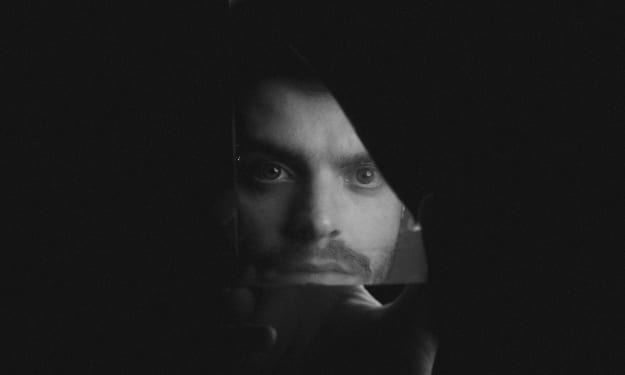
The Mirror Only I Could See
I discovered the mirror when I was eleven. It wasn’t hidden behind a curtain or buried beneath the floorboards. It hung plainly in the hallway between my room and the laundry closet, a place so ordinary that no one paid attention to it — except me.
By Mian Nazir Shahabout a year ago in Fiction
The Morning After the Last Goodbye
The Morning After the Last Goodbye By Mahboob Khan I woke up to a silence that felt more final than any shout could ever be. The apartment was dark, save for the weak pre-dawn glow slicing through the curtains. I lay in bed, still tangled in the sheets we once shared, wondering if I had done something wrong or if it was just time. Last night’s conversation replayed in my head like a broken record—a conversation where words had been left unsaid, scattered in the space between our hearts.
By Mahboob Khanabout a year ago in Fiction
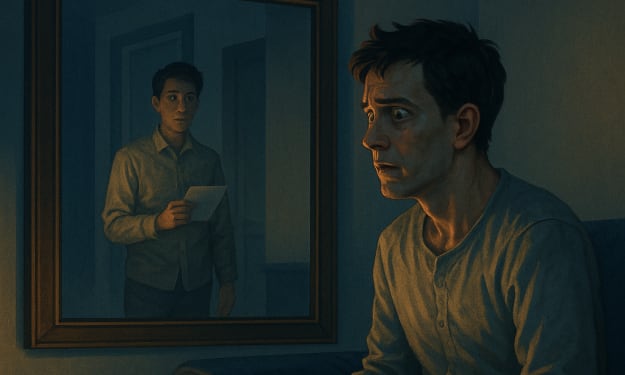
The Digital Haunting
It started with a ping. Not the usual notification noise that Sarah’s inbox made when a promotional email arrived or a newsletter drifted in. This one had weight. It sounded like memory. Like a knock at a locked door she hadn’t touched in years. She stared at the screen. From: Elena Breck Subject: “Do you still wear the silver ring?” Sarah froze. Her cursor hovered over the name as if it might bite. Elena had been dead for three years. She hadn’t just passed—she had vanished. First, from Sarah’s life. Then, from the world. A boating accident off the Florida Keys. No body. No closure. Just a drifting message in a bottle: “We searched the area. No signs.” And now… her name lit up in Sarah’s inbox like a cruel trick. Sarah clicked the message. The body was empty. No signature. No timestamp. Just the subject line. Just the question. And yes, she did still wear the ring. --- The emails came once a week. Always from Elena’s old address, the one Sarah hadn’t dared delete. Each subject line was a whisper from the past: “Do you remember the cafe in June?” “I still think about your laugh in the rain.” “You never liked thunderstorms, did you?” There were no bodies. No links. No ads. No headers suggesting it had been spoofed. It came from her exact old Gmail. Sarah contacted the provider. “The account is inactive,” they said. “Last login: three years ago.” “How is it sending me messages?” They paused. “It’s not. At least not from here.” --- By the fourth week, Sarah had stopped fighting the urge to reply. Subject: Re: “Do you remember the cafe in June?” Message: Yes. You ordered mint tea, even though you hated it. You said it made you feel 'like a ghost pretending to be alive'. I said that was dramatic. You said, ‘Good.’ She hit send. Nothing came back. But it didn’t have to. The emails kept arriving. Slowly, their tone shifted. Instead of questions, they became… observations. “You looked sad in the mirror today.” “You missed your train because you were remembering my eyes.” “Stop avoiding the bookstore. I’m not haunting the shelves.” Sarah’s therapist suggested grief hallucinations. “Maybe your mind is processing through a creative channel,” she said kindly. “Maybe the emails are… you.” But Sarah knew her own voice. This was Elena’s. Crisp, clever, slightly aloof, warm only when it wanted to be. Elena had always spoken like poetry that didn’t want to be understood. Now, she typed the same. --- One night, Sarah received an email at 3:13 AM. Subject: “I never told you what happened.” This one had a body. > The boat didn’t sink right away. I had time. To think. To float. To wish I had called you that morning instead of texting something stupid. I saw stars I never knew existed. And I thought—Sarah would love this sky. And then I thought—I never really knew how to say goodbye. So maybe this is it. Or maybe this is just… hello again. Sarah cried like she hadn’t cried in years. Not the silent, cinematic tears of a widow in a novel. These were real, red-faced sobs. The kind you feel in your stomach. --- After that, the emails became instructions. “Go back to the shore where we first kissed. Something’s buried near the driftwood log.” “Your mother’s locket is behind the third stairboard. You’ve forgotten what she smells like, haven’t you?” “Stop dreaming of water. It’s not your ending.” She followed every message. And they were right. Every time. Hidden memories. Triggers. Gifts. She began to believe Elena had become… something else. Not a ghost. Not an algorithm. Something in between. A memory refusing to dissolve. A soul too stubborn to be deleted. --- The last email came on a windless Thursday. Subject: “This is the final login.” Message: > You’re ready now. I see the way you smile when you don’t think anyone is watching. I see how you’ve begun writing again—real writing, not just sad journals. You don’t need me to haunt your inbox. You never really did. But thank you for letting me linger. I loved you. You knew that. You still do. That’s enough. Delete me. Say goodbye. Let something else begin. Sarah sat at her computer for a long time. Then she did what she’d never done before. She archived the messages. Not deleted—just out of sight. She closed the tab. Opened a blank document. And began to type. --- End
By Muhammad Tayyab about a year ago in Fiction
There is peace even in the strom
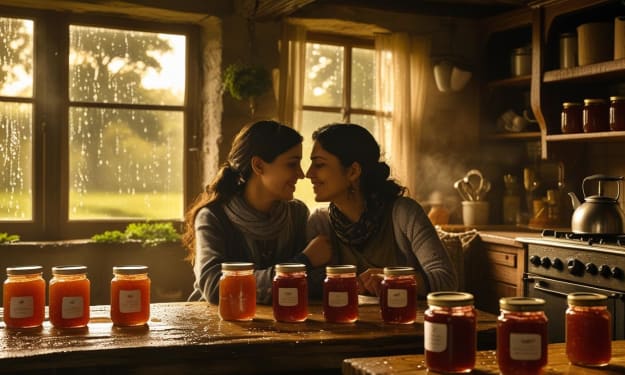
The rain hammered the tin roof of the old farmhouse in relentless sheets, each drop like a thousand impatient fingers drumming a frantic rhythm. Outside, the wind tore through the towering pines, bending their tops until they seemed on the verge of breaking. Willow Creek had been caught off guard by the sudden late summer storm, turning dusty roads into muddy trails and sending the townsfolk scrambling for shelter. Inside, Clara Hensley sat alone at the kitchen table, her hands wrapped tightly around a chipped mug of chamomile tea. Lightning split the sky, illuminating the worn lines etched deep into her face—lines that whispered stories she wished she could forget. Her auburn hair, now streaked with silver, was pulled back in a loose braid. This house, creaking beneath the weight of memories, had been her sanctuary for nearly five decades—her childhood, her marriage, the years raising her daughter Lily—all lived within these walls. But tonight, the silence felt cavernous. Lily was away at college, chasing dreams Clara barely understood. Tom, her husband of twenty years, had left three years ago—not for another woman, but for the bottle that offered him a false comfort Clara could never provide. The storm outside mirrored the turmoil inside her heart. Laid off from the library last month due to budget cuts, Clara now wrestled with mounting bills and dwindling savings. Selling homemade jams at the farmers’ market barely kept the darkness at bay. The weight of it all pressed heavily on her chest, making each breath a struggle. Yet, amid the thunder’s growl, an unexpected calm settled over her. There is peace even in the storm, her mother used to say. Clara clung to those words like a fragile lifeline. The sudden ring of the phone shattered the quiet. Seeing Lily’s name on the screen, Clara’s heart leapt—and then sank. Lily only called when something was wrong. She answered, steadying her voice despite the knot tightening in her stomach. “Hey, sweetheart. Everything okay?” “Mom,” Lily’s voice trembled through the line, strained but not panicked. “I’m fine, but… I need to come home this weekend. Can I?” Clara’s fingers tightened around the mug. “Of course, you can always come home. What’s going on?” A pause hung heavy between them. “I’ll explain when I get there. It’s complicated, but not bad. I promise.” Clara didn’t press. She’d learned to wait for Lily’s time. “Okay, baby. Drive safe. This storm’s a beast.” The storm raged on, but Clara busied herself with her grandmother’s recipe book, its pages yellowed and stained from years of love and use. Jams were her therapy—strawberry, peach, blackberry—each jar a small act of creation in a world that often felt like it was unraveling. The sweet aroma filled the kitchen, pushing back the damp chill. She thought of her mother, who had taught her to find joy in the smallest things, even when life was harsh. You don’t need much to make something beautiful, she’d said, flour-dusted hands kneading dough for Sunday bread. Clara missed her fiercely. By Friday, the storm had passed, leaving the air crisp and the fields glistening under a shy sun. Lily’s beat-up Honda crunched up the gravel driveway just after noon. Clara waited on the porch, heart pounding with a mix of joy and dread. Lily stepped out, her dark hair pulled into a messy bun, eyes bright but shadowed. She wrapped Clara in a tight hug, and for a moment, Clara felt whole again. In the living room, sunlight poured through the windows, dust motes dancing in golden beams. Lily fidgeted with her sweater’s hem, her usual confidence replaced by a fragile uncertainty. “Mom, I’m pregnant,” she finally said, the words tumbling out like a secret long held. Clara’s breath caught. She searched Lily’s face, seeing fear, hope, and a fierce determination that mirrored her own at that age. “Okay,” Clara said softly. “Who’s the father?” “His name’s Ethan. He’s in my program. He’s… good, Mom. Scared, like me, but he wants to be there.” Lily’s eyes brimmed with tears. “I didn’t plan this. I don’t know what to do.” Clara reached out, squeezing her daughter’s hand gently. “You don’t have to have all the answers right now. You’ve got time. And you’ve got me.” The weekend blurred with long talks, tears, and unexpected laughter. Lily shared stories of Ethan—a quiet boy passionate about sustainable farming, raised on a farm much like theirs. They’d been dating quietly for six months, unsure of what the future held. Now, life had made the choice for them. Clara listened, heart aching for her daughter’s uncertainty yet swelling with pride. Lily was scared but unbroken, facing this storm head-on—just as Clara had faced her own: Tom’s drinking, her mother’s illness, the library’s closure. Each had felt like the end of the world, but somehow, she had found her way through. There was peace even in the storm. Sunday morning dawned clear and bright. At the farmers’ market, the air buzzed with life—the scent of fresh bread, ripe tomatoes, and autumn leaves mingling in the breeze. Clara set up her table, jars of jam gleaming like jewels in the sunlight. Lily helped, steady hands arranging the display, chatting with neighbors. For the first time in weeks, Clara saw her daughter’s smile—whole and unguarded. A kind-faced woman approached, picking up a jar of blackberry jam. “You made this yourself?” “Yes, ma’am,” Clara replied. “It’s a family recipe.” The woman smiled warmly. “You can taste the love in it. I’ll take three.” As Clara wrapped the jars, she caught Lily’s admiring gaze. “You’re good at this, Mom,” Lily said quietly. “You make people feel… seen.” Clara shrugged, warmth flooding her chest. “Just trying to keep going, sweetheart. That’s all any of us can do.” That night, wrapped in a quilt on the porch, they watched stars emerge in a sky so clear it felt like a promise. Lily rested her head on Clara’s shoulder. “I’m scared, Mom. But I think I can do this. With you.” Clara kissed her forehead. “You can. And you won’t be alone.” The days ahead weren’t easy. Clara took on extra market hours, began selling jams online, and even started teaching a canning class at the community center. Lily stayed in school, with Ethan by her side, planning to move closer after the baby’s birth. Doubts and worries still crept in during sleepless nights, but there were also moments of grace—Lily’s laughter, the comforting weight of a jam jar, the steadfast pines standing tall after the storm. Clara learned to find peace in the chaos, just as her mother had taught her. It wasn’t loud or obvious—it was in the small things: a hand resting on a belly, the warmth of a kitchen, the kindness of strangers. Life was messy and unpredictable, but it was real. And in that reality, Clara found a strength she never knew she had. The storm had passed, but others would come. They always did. Yet Clara knew now she could weather them—and so could Lily. Because even in the wildest gales, there was peace to be found—if you knew where to look.
By Nauman Hassan Khanabout a year ago in Fiction
The Last Message
The café was almost empty. Rain tapped gently against the windows, and a low jazz tune played in the background. Sarah leaned over her cup of coffee, lost in thought. She had just ended a long day at the hospital, her mind still buzzing from the chaos of the ER. She needed quiet — not a mystery.
By NIAZ Muhammadabout a year ago in Fiction
Touch Grass
He is lying on his back, his posture defying his backbone. His left arm is tucked under his back, and he is clutching his new phone with his right, keeping it suspended in mid-air. The screen is tilted downwards, and he cranes his neck unnaturally to keep his eyes at level with it. His legs are askew, propped against the wall. The back of his head rests on a jumble of sheets. There is a pillow on his belly and two others on the floor.
By Shrean Rafiqabout a year ago in Fiction
The Woman of His Dreams. Content Warning.
Phillip prayed for night to fall sooner. He rushed his way through the shower and scarfed down his microwave dinner. He’d get to see her again soon. A pair of basketball shorts was all he had on when he finally lay down his head. Before long, he dozed off, and found bliss. Every night he dreamed of the same thing. A woman, one he’d never met when awake. This was always the highlight of his day. This time, he found himself in a field of sunflowers, the sun shining down and kissing his skin. There were a few dotted trees, but other than that, flowers reached to the horizon in every direction. A breeze brushed his face, pulling his head to his left. There she was, picking sunflowers in a blue sundress, almost matching the sky itself. He walked toward her and she looked up with a smile. She ran to meet his embrace.
By Da’mon-Ahsy Eugene Thompsonabout a year ago in Fiction
The Lookout
The wind blew from the east that evening. Or maybe it was the west. I can't remember. Danny would know. He always knew that sort of thing. I never understood how or why he remembered such things but I didn't need to understand. I trusted him. That night was much like this one, where the breeze mingles with the pinks and yellows of the sky at dusk as if the spirits use their breath like paintbrushes, whistling and blowing their creation into the atmosphere. I remember that evening. It hangs clearly on the white wall of my room, like a living mural only I can see.
By Bugsy Wattsabout a year ago in Fiction