Short Story
Mother's Promise
In the parched expanse of the Kolara Hills, where the earth bled gold like molten tears and the air tasted of dust and despair, the year was 1982. Life here was a relentless grind, a cruel tapestry woven from glittering mines and squalid shanties. The hills echoed with the clatter of pickaxes and the whispered prayers of the broken. Above all, Kolara was ruled by Dheeraj—a warlord whose wealth was built on the broken backs of his workers, a man whose shadow stretched like a plague over the land. Among the many was Vikram, a boy of eleven, his small hands already calloused from hauling ore alongside his mother, Lakshmi. Lakshmi was a woman of quiet fire—her hands rough as the rocks she mined, her eyes a well of unspoken dreams. In the flickering light of their cramped hut, she often traced the lines of Vik’s dirt-streaked face, imagining a life beyond the mines. But a wasting sickness gnawed at her from within, stealing her strength day by day. One stormy night, thunder rolling like the drums of fate, Lakshmi lay on a tattered mat, her breath shallow and ragged. Clutching Vik’s small, dirt-stained hands, she whispered, her voice trembling but fierce: “Promise me, my son... promise me you’ll break these chains. Free Kolara from Dheeraj’s grip. Make it a place where no mother weeps for her child’s hunger.” Her eyes, dim but burning with resolve, locked onto his. Vik’s tears carved clean streaks down his grimy face as he nodded, swallowing the lump in his throat. “I promise, Amma. I will.” That promise became the heartbeat of his existence. Fifteen years passed. Vikram, now twenty-six, was a man forged in the crucible of hardship. His lean frame bore the scars of the mines, but his spirit blazed with his mother’s dream. Known among the workers as “Vik the Unbroken,” he was a beacon of hope in a land suffocating under Dheeraj’s iron fist. Kolara remained a prison. Dheeraj’s fortress, carved into the hills like a black wound, loomed over the shanties. Mercenaries patrolled its walls, their guns gleaming coldly in the sun. Spies lurked in every shadow, ready to snuff out rebellion before it could breathe. But Vik was no ordinary man. Over the years, he had quietly built trust—sharing stolen scraps of food, mending torn clothes, and planting seeds of hope in weary hearts. At night, in the shadows of crumbling huts, he spoke of a Kolara where children laughed and families thrived. His words were dangerous, but they spread like wildfire. Among his closest allies was Tara, a fierce healer with eyes sharp as flint and a spirit unyielding as the hills themselves. She reminded Vik of Lakshmi—her courage, her quiet strength. Then there was old man Ravi, the gentle soul who had taught Vik to read from tattered books salvaged from the mines. And young Leela, a bright-eyed girl who dreamed of becoming a teacher, her laughter a rare light in the darkness. Their rebellion began with small, calculated strikes. Sabotaging machinery, redirecting supply carts, smuggling gold to fund their cause—each act a spark in the tinderbox of Kolara. The people, long broken, began to whisper the name “Vik the Fearless.” Dheeraj’s wrath was swift and brutal. Enforcers burned shanties, beat the innocent, and strung up suspected rebels as grim warnings. The breaking point came when Tara was captured—dragged into the fortress, her defiant glare a challenge even in chains. Vik’s heart shattered. The time for subtlety was over. He rallied every able soul—men hardened by labor, women who had buried too many children, youths who dreamed of freedom. In secret, they trained in the dry riverbeds, wielding pickaxes, slingshots, and crude spears fashioned from mining tools. Vik taught them to fight not just with strength but with strategy, turning desperation into a weapon. The night of the assault arrived under a moonless sky. A sandstorm howled, cloaking their movements as they marched toward the fortress. The air was thick with dust and tension. The battle was chaos—a maelstrom of blood and fury. Vik led the charge, his mother’s promise roaring in his veins. He swung a heavy hammer, forged from stolen steel, shattering the gates as his people poured in. Bullets tore through the night. Old man Ravi fell, clutching his chest with a whispered prayer. Leela, brave and bright, was struck down as she shielded a child. Each loss was a knife to Vik’s heart, but he pressed on, driven by the vision of a free Kolara. The fortress’s inner sanctum was a maze of torchlit corridors. There, Vik faced Dheeraj. The warlord was a towering figure, his eyes cold as the gold he hoarded. “You’re a fool, boy,” Dheeraj sneered, drawing a curved blade. “A peasant dreaming of my throne?” Their duel was a brutal dance of steel and fury. Vik’s hammer clashed against Dheeraj’s sword, sparks flying in the dim light. Dheeraj was skilled, his strikes precise, and he landed a deep gash across Vik’s arm. Blood soaked the stone floor. Pain seared through Vik’s body, but Lakshmi’s face flashed before him—her voice echoing in his mind. With a roar, Vik dodged Dheeraj’s next blow and drove his hammer into the warlord’s chest. Dheeraj crumpled, his reign ended in a single, shattering moment. As dawn broke over the Kolara Hills, Vik emerged from the fortress, bloodied but alive. The people, freed from their chains, gathered below, their cheers a thunder louder than any storm. Tara, released from her cell, ran to him, her embrace a balm to his wounds. “You kept her promise,” she said, her voice thick with pride. Vik looked out at the crowd—the faces of those who dared to hope. The mines, once a symbol of suffering, would now be theirs to rebuild. Schools would rise where shackles once stood. But Vik knew the fight wasn’t over. Dheeraj’s allies still lingered in distant cities, and Kolara’s wounds would take years to heal. Standing atop the hill, Vik felt the weight of Lakshmi’s sacrifice and her unyielding love. He had fulfilled her promise—but it was only the beginning. With Tara by his side and the people of Kolara behind him, he vowed to make their land a beacon of hope, where no child would ever again carry the weight of a mother’s dying wish.
By Nauman Hassan Khanabout a year ago in Fiction
A Girl’s Cricket Journey. AI-Generated.
In the dusty lanes of a small town in South Asia, echoes the crack of a cricket bat. Among boys diving for catches and shouting appeals, stands a young girl, gripping her bat with steady hands and eyes filled with determination. Her name is Ayesha, and her dreams stretch far beyond the boundaries marked by white lines on a cricket field.
By Bilal Mohammadiabout a year ago in Fiction
You’re the New Night-Shift Worker at a Remote Roadside Diner — And Something is Watching
--- The Job Seemed Perfect - Until the Rules Came You're twenty-three, broke, and stranded in a nowhere town off Route 46. So when the Sunset Grille offers a night-shift position, you take it without blinking.
By Ridhima Gandhiabout a year ago in Fiction
The Treasure of Faith: A True Story from Peshawar
Ubaid ur Rehman was a simple, kind-hearted man living in Peshawar, a beautiful city in the province of Khyber Pakhtunkhwa, Pakistan. Unlike most people who measure success in money or status, Ubaid believed that a meaningful life was built on kindness, gratitude, and trust in something greater than oneself. Ubaid was known throughout his neighborhood for his calm nature and selfless ways. He had a principle that guided every part of his life: > “Whatever is meant for me will reach me at the right time. I do not need to chase it, because life already knows what I need better than I do.” He focused on living honestly and helping others, never stressing about how much money he made or what he owned. His friends and family often questioned this approach, thinking he was too naive for the real world. But Ubaid remained steady, holding firmly to his values. One afternoon, after finishing his midday prayer, Ubaid went for a quiet walk along a dusty, peaceful path near his home. While strolling, he noticed something unusual under a thorny bush: a clay pot wrapped in red cloth. Curious, he bent down and gently unwrapped it. To his surprise, the pot was filled with sparkling jewels—diamonds, rubies, and other precious stones that shone brightly even in the soft sunlight. Rather than feeling tempted or greedy, Ubaid simply smiled and whispered to himself: > “If these jewels are truly meant for me, they will come to me in the right way. I do not need to take them now.” Calmly, he rewrapped the pot and left it exactly where he had found it. Later that evening, he mentioned the incident to his younger brother Amir, who was much more practical and materialistic. Amir couldn’t believe his ears. He thought Ubaid was foolish for leaving behind such a treasure. Without wasting a moment, Amir ran to the spot Ubaid described. Excited and full of dreams of becoming rich overnight, he unwrapped the pot eagerly. But when he looked inside, he was horrified. Instead of jewels, he saw only dust, insects, and a foul smell. Angry and convinced that Ubaid had played a cruel trick on him, Amir grabbed the pot and stormed back home. In a burst of rage, he threw the pot through Ubaid’s window. The pot crashed inside the room and shattered loudly. Startled, Ubaid and his wife rushed in. To their amazement, the broken pieces of the pot lay scattered on the floor, and among them were sparkling diamonds and precious stones just as Ubaid had seen earlier. At that moment, Ubaid felt an overwhelming wave of emotion and gratitude. He fell to his knees and whispered a heartfelt prayer of thanks, feeling that this was a sign that true blessings come when we have patience and live with a pure heart. This event became a turning point in Ubaid’s life and a powerful story that spread throughout the neighborhood. People began to see him not just as a humble man, but as someone who carried a deep, unshakable faith in life’s natural flow. The story of Ubaid reminds us that sometimes, when we chase after something desperately, it slips away or turns out to be an illusion. But when we let go, stay patient, and live sincerely, the right opportunities and blessings find their way to us—often in unexpected and beautiful ways. Ubaid’s experience is more than just a tale; it is a lesson for anyone feeling restless or discouraged. It teaches us that trust, gratitude, and patience can transform our lives far more deeply than any material possession ever could. --- ✨ Faith is a treasure that transforms destiny;
By Ubaid Ur Rehmanabout a year ago in Fiction
When Silence Began to Shape Me
There was a time when my life was filled with noise — not only the noise of the world but the noise I created trying to keep up with it. Conversations, laughter, arguments, explanations — it all felt endless. I was surrounded by people, yet I often felt lonely. I was always talking, but rarely heard. I didn’t realize it at first, but my words had become a shield — something to hide behind, something to fill the emptiness I didn’t want to face. I feared silence, mistaking it for sadness, for abandonment, for weakness. But then, slowly, I began to withdraw. Not out of bitterness or anger, but from exhaustion. One day, I simply didn’t have the energy to explain myself anymore. The need to prove, to please, to entertain — it all began to fade. پھر کم کردی گفتگو لوگوں سے میں نے “I started speaking less to people…” And with that, the world grew quiet around me — but inside, something began to stir. At first, the silence was uncomfortable. I didn’t know what to do with it. I would pick up my phone just to scroll, open a chat just to feel less alone, turn on the TV just to hear voices. But eventually, I let the silence sit beside me. I allowed it in like a guest, and to my surprise, it wasn’t as empty as I thought. In the quiet, I started noticing things I had never truly seen. The sky changing its shades at dusk. The way my own breath felt in my chest. The sound of birds just before dawn. These were not grand discoveries — but they were real. And they belonged to a world I had ignored. Silence became my mirror. Without constant words, I could finally hear the voice within me — the one I had long silenced with busyness. That voice didn’t shout. It whispered truths I had long buried. I remembered old dreams, long-lost feelings, regrets I never addressed, and strengths I never acknowledged. And that’s when something beautiful began to happen. پھر خاموشی سے میری خوب بننے لگی “And then, slowly, silence began to shape my beauty…” Not beauty in the way the world defines it — not through appearances, filters, or attention. This was a different beauty. A quiet confidence. A steady grace. A strength in knowing who I am without needing others to validate it. I no longer craved constant company. I found joy in solitude — not loneliness, but solitude. I would sit by the window with a cup of tea and feel full. I started journaling, pouring my thoughts onto paper, not for anyone to read but to understand myself better. I started walking — just walking — no phone, no distractions, just me and the rhythm of my steps. I began to forgive myself. I stopped expecting perfection. I stopped measuring my worth by how many people I could impress or how many replies I received. My inner world started blooming in ways my outer world never could. People noticed the change. Some drifted away, confused by my calm. Others came closer, drawn to the peace I now carried. And I didn’t mind. I was no longer trying to keep everyone close. I was no longer afraid of being misunderstood. My silence had taught me that not everyone needs access to my soul — some things are sacred, and silence guards them well. Through silence, I began healing. I began writing poems again — ones I thought I had forgotten how to write. I picked up books that once gathered dust. I prayed not with words but with presence. I understood the value of a slow, quiet life in a world chasing noise and speed. There was still pain, still memories that visited me in the night. But now, I welcomed them like passing clouds. They didn’t scare me anymore. I had learned to sit with them in silence, and eventually, they left — softer each time. I didn’t isolate myself. I simply chose peace over pressure. I still smiled, still met people, still loved. But everything was quieter now, calmer. More real. If someone asked me what changed, I wouldn’t say much. How do you explain that silence rebuilt you in ways words never could? The beauty I found in myself was never loud. It didn’t demand to be seen. It just existed — in the way I walked, the way I breathed, the way I no longer rushed to speak. And I wouldn’t trade this stillness for anything. Now, I sit beneath the sky and listen to the wind. I speak only when my heart feels the need to speak. And when I’m silent, I am not lost — I am deeply found. Because in the end, I didn’t lose people when I stopped talking too much. I found myself.
By Fazal Wahidabout a year ago in Fiction
One More Friday Night
He could hear the pounding of feet from behind. The muffled sounds of screaming and yelling. His heart pounded through his chest, and blood pumped strong through his veins. Out of the corner of his eye, he could see a black-and-white figure trying to keep pace. This only accelerated his own stride, causing him to run upright at an alarming speed. He loved this feeling. It was part exhilaration, part fear, and part violence. The rush of brisk air hitting his face through the metal cage he wore. This was how he found acceptance, how he made friends, and one of the only places he ever found peace. As he continued to pull away, he could see his goal. The crowd grew louder. The orange pylon was just feet away...
By Clifford Kincaidabout a year ago in Fiction
The Last Letter from Elderidge Lane
Elderidge Lane was the kind of road you’d miss if you blinked while driving past. Tucked between thick woods and forgotten by modern maps, it led to a crumbling village swallowed by time and silence. But for Nora Whitman, it wasn’t just a road—it was a lifeline to a mystery that had haunted her family for decades. Her grandmother, Elsie Whitman, had vanished from Elderidge in 1952, never to be seen again. The police blamed the wilderness. The town gossips spoke of elopement or madness. But Nora’s mother had always insisted something darker had taken her. Now, seventy-three years later, Nora held the key—quite literally. It arrived in a plain manila envelope postmarked from England with no return address. Inside was an old brass skeleton key wrapped in a letter written in delicate cursive: > If you are reading this, I am gone. But Elderidge is not done with us. Come to the house on Elderidge Lane. Bring no one. Find the truth that was buried. The door will open for blood. No signature. But Nora recognized the handwriting. She’d seen it in her grandmother’s old recipe books. Against every logical instinct, she drove to Elderidge. She didn't tell her husband, didn’t notify anyone. It felt like a summons. The air grew heavier the closer she got, as if time resisted her arrival. The house was still there—just as the letter described—a two-story wooden structure clinging to its foundations, shutters hanging like broken limbs, the porch cracked and moss-covered. But the lock on the front door looked strangely polished. With trembling fingers, she inserted the key. It turned smoothly. Inside, the house was... untouched. Dusty, yes, but not decayed. A faint scent of lavender hung in the air. An old grandfather clock ticked steadily in the corner, its hands frozen at 3:17. The fireplace crackled faintly, though no fire burned. On the table, another envelope. > You're early, Nora. Or maybe I’m late. Time doesn’t work right here. She dropped the letter. Her heart thudded. “This isn’t real,” she whispered. But her voice echoed unnaturally. The house groaned. A shadow moved across the hallway though no one was there. She wandered the house, each room whispering of the past—photographs of people who resembled her, furniture frozen in mid-use, teacups with dried leaves. In the attic, she found a girl’s bedroom—pink curtains, a music box, and a name carved into the wall: Elsie. That’s when the whispering started. Faint at first, like wind through trees. But it grew louder. > “Nora… Nora… open the mirror…” There was an ornate mirror on the wall. She stepped closer—and gasped. It didn't reflect her. It reflected her grandmother. Young. Alive. Terrified. The reflection mouthed words: "Behind. The. Books." Nora yanked the mirror from the wall. Behind it was a loose plank. Inside, a hollow cavity with a faded journal and a third letter. > I never left. They wouldn’t let me. The house, the woods—they feed on memories, on people. I tried to escape. I failed. But maybe you can finish what I couldn’t. Bury the locket. Burn the mirror. Break the cycle. The journal was filled with drawings of strange symbols, pages detailing rituals, cries for help, and a recurring name: The Timekeeper. Nora ran outside into the overgrown garden. The locket was easy to find—buried beneath a sundial that pointed not to north, but to 3:17. She dug with her hands until she pulled it out—cold, silver, pulsing like a heartbeat. When she returned inside, the house had changed. The clock now ticked. Slowly. The walls bled shadow. The air was thick with whispers and cries. Holding the mirror in one hand and the locket in the other, Nora set both in the fireplace. She hesitated—but then struck the match. The locket shrieked. Not mechanically—it screamed. The mirror cracked. Then shattered. The clock chimed once. Twice. At the third chime—everything stopped. Silence. Total. And then—light. The air cleared. The walls brightened. The whispers fell silent. The house—aged. Quickly. Decayed before her eyes, collapsing into the abandoned ruin it should have been all along. Nora crawled outside, coughing. Behind her, the house crumbled into ash and smoke. A figure stood among the wreckage. A young woman. Elsie. Not a ghost—but real. Tangible. Tears streamed down both of their faces. “You broke the loop,” Elsie whispered. “You freed us.” And then she was gone. Vanished into the morning light. --- The authorities found Nora by the road, confused and shaking, clutching an old brass key and a burned locket. The house, they said, hadn’t stood in that spot for over fifty years. She told them her story. No one believed her. But sometimes, late at night, when the wind is just right, she hears the chimes of a grandfather clock striking 3:17. And she smiles. Because Elderidge Lane is no longer haunted. And her grandmother is finally at peace.
By Kausar Hayat about a year ago in Fiction
The Door Opened at 11:39 PM
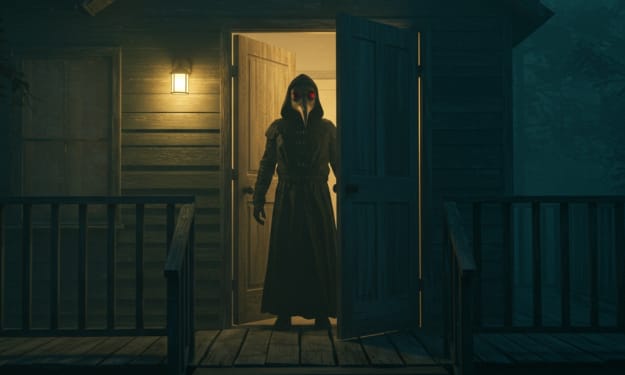
to being on our own. My parents worked late shifts and rarely returned before midnight. The house, tucked at the edge of a dense forest, always felt too quiet, too still after the sun went down. Alex arrived just after sunset, carrying a bag with snacks and a dusty Monopoly board. We played a few rounds on the living room floor, half-listening to the old box television flickering in the background. Around 9:30, we lay in our sleeping bags, whispering about the abandoned subway station three miles from the house. It had been shut down in 1932, just after the market crash, and my parents always warned me never to go near it. “They used to send people down there,” I said. “Criminals, or those who got sick. They left them to rot.” Alex looked intrigued but nervous. “We should go tomorrow,” he whispered. I smiled. “If we’re brave enough.” We eventually drifted off to sleep, but something woke me later. A sharp, distant noise. I sat up, heart thumping. Alex stirred next to me. “What was that?” he asked groggily. I wasn’t sure, but it sounded like a gunshot. I checked the clock. 11:39 PM. That didn’t sit right with me. Hunters came into the forest sometimes, but never this late. They knew the dangers of wandering these woods after dark. Trying not to panic, I walked quietly to the bedroom window and peered into the black wall of trees. Fog drifted between the trunks, thick and unmoving. I couldn’t see anything. I turned to Alex. “We should go back to sleep. Probably just... hunters.” Before I could finish, a long creaking sound echoed from downstairs. The front door had opened. Chills raced down my spine. Alex’s eyes widened. We didn’t speak. We just moved, quietly, swiftly. We ran into the bathroom, locked the door, and turned off the light. The silence was suffocating. My breath came in quick, shaky pulls. Then came the footsteps. Slow, deliberate. The weight of each step thudded against the wooden floor. They stopped just outside the bathroom door. We froze. Then came a knock. Not hard. Not fast. Just... rhythmic. Like someone was waiting. Neither of us moved. Then the knocking stopped. We exhaled. But then came a splintering crack. Wood snapped. Metal screeched. The door was being hacked apart. We screamed. A piece of the door broke away, revealing an eye behind a bird-like mask. A Plague Doctor mask. The beak jutted forward, and the single glass eye glowed with a deep red light. The man wore black leather from head to toe, his gloved hands pulling at the jagged wood. I searched the darkness for something, anything. The vent. It was high on the wall, too high to reach. Alex whispered, “I’ll lift you.” He crouched down, hands clasped together. I stepped into them and pushed upward, straining to reach the screws. They were rusted, but I managed to pry the grate loose. I looked down just as the man’s arm forced its way through the hole in the door, reaching blindly for the lock. I grabbed Alex’s wrist. “Come on!” He jumped, and I pulled, my fingers aching with effort. He was almost through when the lock clicked. The door flew open. A flash of movement. A hand grabbed Alex’s ankle. I screamed and held on, but he was yanked down, vanishing into the dark. “Alex!” I shouted. I crawled through the vent, heart pounding, mind blank. I landed in the hallway on the other side and ran out the back door, into the freezing fog. I followed the forest trail, feet slapping against the wet earth. I didn’t think. I just ran. I knew where he was going. The abandoned subway station. The entrance yawned like a mouth in the hillside, surrounded by vines and broken concrete. I stepped inside, guided only by Alex’s fading screams. The air was damp and foul. My shoes splashed into ankle-deep water as I descended. My breath clouded in the cold. The screams had stopped. Only silence now. I moved forward, deeper into the station. The tunnel was endless. Fog clung to the ceiling, thick and choking. The only sound was water dripping and the echo of my own steps. My flashlight flickered. Then died. I stood still, listening. “Alex?” I whispered. Nothing. I walked forward, arms out, hoping to feel a wall or a turn. Then I stepped into deeper water. Waist high. Freezing. My teeth chattered. The darkness felt alive. Like it moved when I blinked. I could swear I saw shapes. I heard breathing behind me. I turned. Nothing. Then I saw it. A figure. Not just the Plague Doctor. Taller. Thinner. Its face was stretched and pale, its arms too long, its fingers dragging in the water. It was watching me. I turned to run, but the subway had changed. The path twisted, shifted. Doors had appeared on either side of the tunnel. Dozens of them, all rotted and old. I tried one. Locked. Another. Stuck. My breathing grew shallow. I opened a door and found a stairway. At the top, another hallway, tiled like a hospital. Lights buzzed overhead. And Alex was there. Standing in the middle of the corridor, back turned. “Alex?” I stepped forward. He didn’t move. “Are you hurt?” He slowly turned around. His eyes were black. Hollow. His mouth stretched into a smile that didn’t belong to him. “You left me,” he said. “I tried to pull you up. I didn’t let go!” “You let him take me.” “No!” He reached out, and the corridor warped. The tiles melted into flesh. The lights flickered and popped. The hallway dissolved into screaming. Then I was falling. I woke in my bed. The sunlight poured through the window. The TV was on. Monopoly pieces lay scattered across the carpet. Alex was gone. I called his name. Nothing. I searched the house. I screamed for him in the forest. No one answered. When my parents got home, I told them everything. They called the police. No signs of forced entry. No blood. No axe. No Plague Doctor mask. No Alex. Just me. They said I imagined it. That Alex never came over. That maybe I had a nightmare. But Monopoly was still there. The vent was still open. And in the bathroom, just beneath the sink, I found something the police missed. A single black leather glove. Still wet. The End
By CreepVille Horror Storiesabout a year ago in Fiction
I Sold My Reflection for a Wish
The Shop That Wasn’t There Yesterday It wasn’t there the day before. On Thursday morning, as I walked to work past the old textile mill on Gable Street—a route I’d taken every morning for the past six years—I noticed a small shop tucked between two boarded-up buildings. A crooked sign above the door read:
By Muhammad Sabeelabout a year ago in Fiction