Script
The Clockmaker's Garden
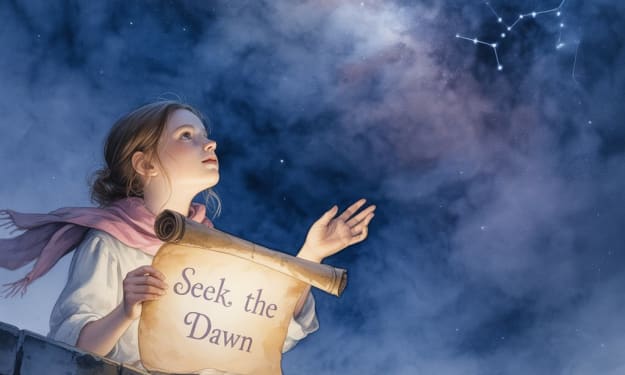
There was a village at the edge of the world where time stood still—not metaphorically, but truly. The sun always hovered in the same place. The shadows never grew longer. The leaves on the trees were forever green, and not a single wrinkle ever touched the faces of the people who lived there. Some called it a paradise. But not Mira. Mira had lived her entire life in this frozen place, where no one aged and nothing ever changed. The village was clean and calm, the people kind and quiet, but it all felt... trapped. Like living inside a snow globe where someone forgot to shake the magic. You see, the village had once been ruled by time like anywhere else. Until the day the Clockmaker came. No one remembered where he came from, or how he had arrived. But he built a tower at the village center—a tall, spiraling thing made of stone and bronze, topped with a golden clock that ticked louder than the wind. Then, one day, he stopped the clock. And when the clock stopped, so did time. People were amazed. No one got older. No one died. Food never spoiled. Days were always sunny. And for a while, it truly was a paradise. But after years, something changed—not outside, but inside the people. They stopped dreaming of new things. They stopped planting new trees. They stopped falling in love. They stopped asking, "What if?" Mira was different. Even as a child, she asked questions no one liked answering. “Why don’t we celebrate birthdays?” “What happens if the clock breaks?” “What’s beyond the hills?” The villagers would smile politely and say, “Don’t worry, dear. Everything is exactly as it should be.” But Mira wasn’t convinced. Especially not after the day she found the seed. It was buried beneath the soil behind her grandmother’s cottage, wrapped in cloth and tied with red thread. The cloth was old—older than the village’s stillness. On it, written in fading ink, were five words: "Plant me when time aches." Mira didn’t know what it meant, but she kept the seed. Years passed—or they should have—and Mira grew older in her heart, even if her body never changed. She read every book the village had. She asked questions the elders refused to answer. She even climbed the clocktower once, but found the door bolted shut with a glowing blue lock she couldn’t break. Until one night, something happened that had never happened before. She saw a petal fall. A single pink petal, drifting down from a tree in the village square. It didn’t make sense. Nothing changed here. Nothing moved unless someone moved it. But that petal had fallen on its own. As if the tree had breathed. That night, she went to her grandmother’s garden with a lantern and trembling hands. She dug a small hole in the earth and placed the old seed in it. As soon as the dirt touched the seed, the ground shivered—just a little. Not enough for anyone else to notice. But Mira did. She watered it with tears. Not because she was sad, but because she suddenly felt something for the first time in a long, long while: hope. The next morning, a small green shoot had emerged. And the day after that, a bud. And a few days later, a flower bloomed—vibrant and golden, with petals that shimmered like sunlight. People began to whisper. Nothing had grown in the village since time stopped. No new flower had bloomed in decades. But there it was, glowing softly like a candle in the fog. When the elders saw it, they panicked. They tore it from the ground. They warned Mira not to interfere again. They told her she was risking everything. That peace must be protected. That the Clockmaker would not approve. But Mira didn’t stop. She remembered what the cloth had said. “Plant me when time aches.” And time was aching. The people were stuck. Their laughter was thin. Their eyes were dull. Peace without change had become a prison with invisible walls. So Mira planted more seeds—some from old apples, some from forgotten flower pots, some even stolen from the locked archives beneath the school. And each time, something bloomed. Small things at first: daisies, dandelions, bluebells. Then vines. Then fruit. Then trees with golden bark that hummed when the wind passed through. And slowly… people changed. Some cried without knowing why. Some remembered dreams they’d buried. Some started writing poems again. Children drew things they’d never seen—skies full of color, mountains beyond the village, oceans they only imagined. And then the unthinkable happened. The clock in the tower ticked. Just once. But loud enough that everyone heard it. That night, Mira returned to the tower. The door that had once been sealed was cracked open. Inside, the gears groaned, stiff from stillness. Dust floated in the beams of moonlight. At the top of the stairs stood the Clockmaker. But he wasn’t what she expected. He looked like an old man made of wood and brass, with eyes like candle flames. His hands were tools. His spine was a coil. And on his chest was a key, long since wound down. “You have brought time back,” he said, his voice the sound of creaking floorboards. “Why did you stop it?” Mira asked. “Because the world was full of pain,” he replied. “And I thought stillness would bring peace. But peace without change… is silence.” She stepped forward. “And silence without growth... is death.” The Clockmaker nodded. “Then finish what you’ve started.” He handed her the key from his chest. She placed it in the clock. And turned it. The clock roared to life. The gears spun. The bell rang. Time surged through the village like a warm wind. The sun moved for the first time in a hundred years. Shadows danced. Trees swayed. Children grew. Laughter returned—not the polite kind, but the wild, uncontrollable kind. People wept and hugged and aged. And in the middle of the village stood Mira, now older, a little grayer, but glowing with life. She never became queen. She didn’t want to. Instead, she planted more gardens. One for every lost year. One for every forgotten dream. And people joined her. Because now… time moved. But so did hope. The End.
By Lucien Hollow about a year ago in Fiction
The Lantern of Whispering Trees
by Yahya Asim In a remote village nestled between the emerald folds of two great hills, there stood a forest known as the Whispering Trees. Locals spoke of it with reverence and caution. They said the trees could talk—not with mouths, but with murmurs carried in the wind. Only those who truly listened could understand their secrets.
By Yahya Asimabout a year ago in Fiction
Animal Farm (George Orwell) - Chapter- 9 (Novel)
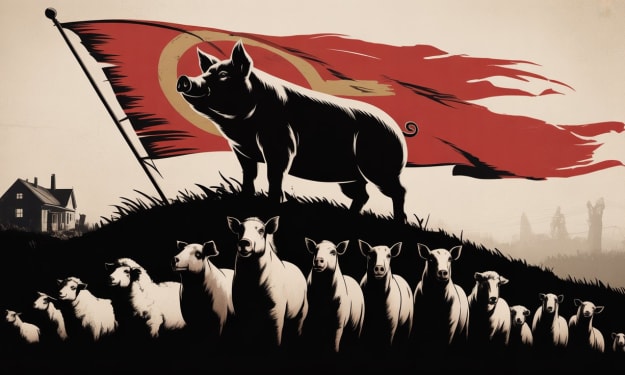
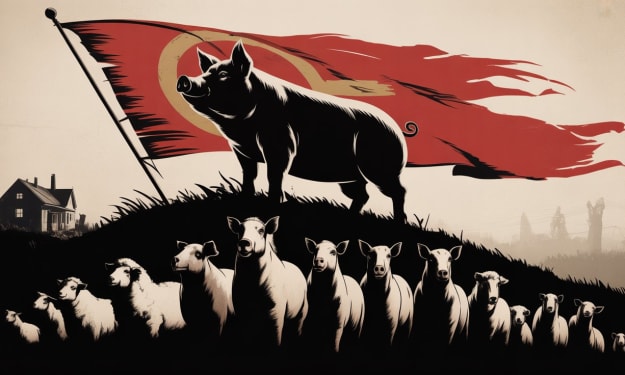
As the harsh winter passes and spring arrives on Animal Farm, the animals' hardships intensify, yet their hope struggles to survive. The animals, especially the hardworking ones like Boxer and Clover, work tirelessly to rebuild the windmill, which was destroyed in the brutal Battle of the Windmill. Despite their exhaustion and lack of food, they press forward with faith in the promise of a better future.
By Echoes of Lifeabout a year ago in Fiction
Animal Farm (George Orwell) - Chapter- 7 (Novel)
The winter on Animal Farm is harsher than ever, and the animals are suffering greatly. Food is scarce, and the cold cuts deep into their bones, but Napoleon’s regime continues to press on. To maintain appearances and maintain control, Napoleon uses propaganda, deception, and brute force to suppress dissent and silence the truth.
By Echoes of Lifeabout a year ago in Fiction
Animal Farm (George Orwell) - Chapter- 6 (Novel)
As Animal Farm's second year of freedom begins, the animals face new hardships and challenges. The winter is harsh, and food supplies are dangerously low. Nevertheless, Napoleon insists that work on the windmill must continue without a break, promising to lighten their burden once it is completed. The animals work harder than ever, often toiling from dawn to dusk, but their rations are reduced and the cold bites harder. Boxer, the hardworking carthorse, adopts his new maxims with even greater dedication: "I will work harder," and "Napoleon is always right." His strength and passion become the backbone of the farm's efforts, but even Boxer begins to tire.
By Echoes of Lifeabout a year ago in Fiction
The Mirror’s Truth
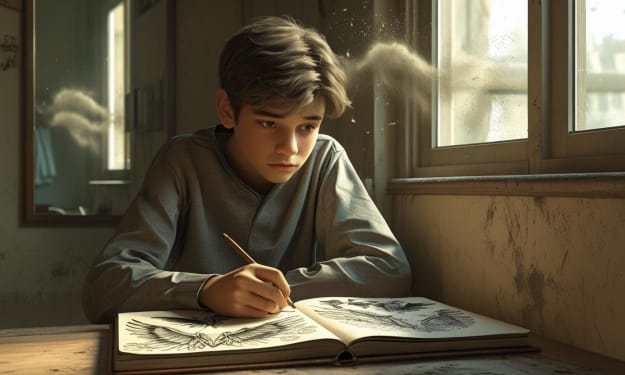
In the faded blue light of dawn, Eli lay awake, listening to the shrill alarm clock echoing through the paper-thin walls of their cramped apartment. The ceiling above him was cracked, the paint peeling in lazy curls, and the only warmth in the room came from the golden sliver of sunlight fighting its way through threadbare curtains. The air was thick with the scent of burnt toast and cheap coffee—his mother’s signature breakfast, a smell that clung to everything they owned. Clara, his mother, was already bustling in the kitchen, humming a lullaby she’d carried from her own childhood. The words were long forgotten, but the tune was stitched into Eli’s bones, a comfort that never faded, even when the world outside felt cold and indifferent. Eli’s world was small and worn at the edges. His father’s absence was a silent ache, a gap in the family photos and in the stories Clara never told. She worked herself raw at the Maple Street Diner, her hands red and cracked, her laughter edged with exhaustion. Yet every morning, she found a way to slip an extra pancake onto Eli’s plate, to make a joke about the stingy customers, to look at him with eyes that said, You matter. She was his safe harbor, the only person who saw past his silence and his awkwardness. At school, Eli faded into the background. He wasn’t the kid who scored goals or aced tests. He was the one hunched over his desk, sketching wild, impossible worlds in the margins of his notebooks. Drawing was his escape—a place where he could be brave, where monsters could be tamed and heroes could fly. But in the real world, his art made him a target. Ryan, the loudest kid in the cafeteria, made sure of that. One rainy afternoon, Ryan snatched Eli’s sketchbook, flipping through the pages with a sneer before tossing it into a muddy puddle. Laughter followed Eli as he knelt in the dirt, cradling the ruined book. He didn’t fight back. He never did. But the sting of Ryan’s words—You’re nothing special—followed him home. Clara noticed the heaviness in his eyes that night. She served up burnt toast and eggs, her voice gentle but unyielding. “Eli, you keep searching for something out there to fix you. But you’ve got everything you need right here.” She pressed her hand to her chest, then to his. “You’re enough. You just have to believe it.” Eli tried to smile, but the words felt like a story meant for someone else. Later, in the bathroom, Eli stared at his reflection. His hair was a mess, his eyes rimmed with tiredness, a faint scar above his eyebrow from a childhood fall. He saw nothing remarkable—just a boy weighed down by doubts. Clara’s words echoed in his mind: If you’re searching for the person who’ll change your life, look in the mirror. He almost laughed, but the sound died in his throat. The mirror showed only Eli—ordinary, invisible. The next morning, Clara was gone before sunrise, her uniform already stained with coffee. She left a note on the fridge: You got this, kid. Love, Mom. Eli tucked it into his pocket, a small shield against the day. At school, Ryan’s taunts were sharper than ever. “Still drawing your fairy tales, loser?” Eli kept his head down, clutching his sketchbook like a lifeline. But in art class, something shifted. Ms. Harper, with her wild hair and paint-splattered clothes, stopped him after class. She held up one of his drawings—a winged figure soaring above a city. “Eli, this is beautiful. You have a gift. I want you to enter the district art contest.” Eli shook his head, embarrassed. “It’s just something I do.” Ms. Harper smiled, her eyes kind. “It’s not just something. It’s you. Don’t hide it.” That night, Eli sat at the kitchen table, sketching by the flickering light. Clara’s words—You’re enough—echoed in his mind, mixing with Ms. Harper’s encouragement. For the first time, he wondered if his drawings could be more than an escape. Maybe they were a way to show the world who he really was. In the weeks that followed, Eli poured himself into his art. He stayed late at school, working on a mural for the contest—a boy on a rooftop, his shadow stretching behind him as wings against a sky full of stars. It was raw and honest, and sharing it felt terrifying. On contest day, Eli stood in the crowded auditorium, his mural displayed among dozens of others. Clara was there, wearing her best dress, her eyes shining with pride. She squeezed his hand. “I’m proud of you, Eli. No matter what.” He didn’t win. He didn’t even place. But as he stood by his mural, he heard a girl whisper, “This one makes you feel something.” For the first time, Eli felt seen—not as the quiet kid or the one with the ruined sketchbook, but as someone who mattered. That night, Eli faced the mirror again. He saw the scar, the messy hair, the tired eyes. But he also saw the hands that created worlds, the heart that kept going, the boy his mother believed in. And for the first time, he believed in himself, too.
By Nauman Hassan Khanabout a year ago in Fiction
There is peace even in the strom
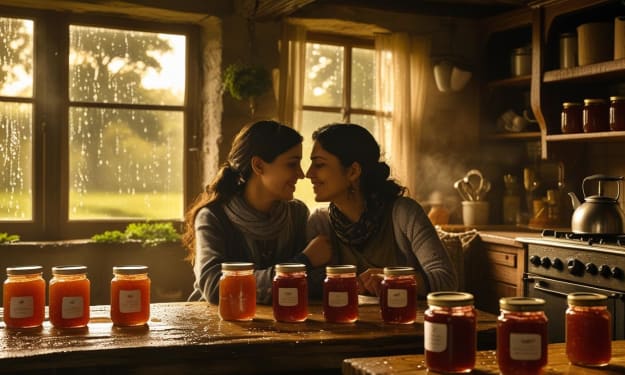
The rain hammered the tin roof of the old farmhouse in relentless sheets, each drop like a thousand impatient fingers drumming a frantic rhythm. Outside, the wind tore through the towering pines, bending their tops until they seemed on the verge of breaking. Willow Creek had been caught off guard by the sudden late summer storm, turning dusty roads into muddy trails and sending the townsfolk scrambling for shelter. Inside, Clara Hensley sat alone at the kitchen table, her hands wrapped tightly around a chipped mug of chamomile tea. Lightning split the sky, illuminating the worn lines etched deep into her face—lines that whispered stories she wished she could forget. Her auburn hair, now streaked with silver, was pulled back in a loose braid. This house, creaking beneath the weight of memories, had been her sanctuary for nearly five decades—her childhood, her marriage, the years raising her daughter Lily—all lived within these walls. But tonight, the silence felt cavernous. Lily was away at college, chasing dreams Clara barely understood. Tom, her husband of twenty years, had left three years ago—not for another woman, but for the bottle that offered him a false comfort Clara could never provide. The storm outside mirrored the turmoil inside her heart. Laid off from the library last month due to budget cuts, Clara now wrestled with mounting bills and dwindling savings. Selling homemade jams at the farmers’ market barely kept the darkness at bay. The weight of it all pressed heavily on her chest, making each breath a struggle. Yet, amid the thunder’s growl, an unexpected calm settled over her. There is peace even in the storm, her mother used to say. Clara clung to those words like a fragile lifeline. The sudden ring of the phone shattered the quiet. Seeing Lily’s name on the screen, Clara’s heart leapt—and then sank. Lily only called when something was wrong. She answered, steadying her voice despite the knot tightening in her stomach. “Hey, sweetheart. Everything okay?” “Mom,” Lily’s voice trembled through the line, strained but not panicked. “I’m fine, but… I need to come home this weekend. Can I?” Clara’s fingers tightened around the mug. “Of course, you can always come home. What’s going on?” A pause hung heavy between them. “I’ll explain when I get there. It’s complicated, but not bad. I promise.” Clara didn’t press. She’d learned to wait for Lily’s time. “Okay, baby. Drive safe. This storm’s a beast.” The storm raged on, but Clara busied herself with her grandmother’s recipe book, its pages yellowed and stained from years of love and use. Jams were her therapy—strawberry, peach, blackberry—each jar a small act of creation in a world that often felt like it was unraveling. The sweet aroma filled the kitchen, pushing back the damp chill. She thought of her mother, who had taught her to find joy in the smallest things, even when life was harsh. You don’t need much to make something beautiful, she’d said, flour-dusted hands kneading dough for Sunday bread. Clara missed her fiercely. By Friday, the storm had passed, leaving the air crisp and the fields glistening under a shy sun. Lily’s beat-up Honda crunched up the gravel driveway just after noon. Clara waited on the porch, heart pounding with a mix of joy and dread. Lily stepped out, her dark hair pulled into a messy bun, eyes bright but shadowed. She wrapped Clara in a tight hug, and for a moment, Clara felt whole again. In the living room, sunlight poured through the windows, dust motes dancing in golden beams. Lily fidgeted with her sweater’s hem, her usual confidence replaced by a fragile uncertainty. “Mom, I’m pregnant,” she finally said, the words tumbling out like a secret long held. Clara’s breath caught. She searched Lily’s face, seeing fear, hope, and a fierce determination that mirrored her own at that age. “Okay,” Clara said softly. “Who’s the father?” “His name’s Ethan. He’s in my program. He’s… good, Mom. Scared, like me, but he wants to be there.” Lily’s eyes brimmed with tears. “I didn’t plan this. I don’t know what to do.” Clara reached out, squeezing her daughter’s hand gently. “You don’t have to have all the answers right now. You’ve got time. And you’ve got me.” The weekend blurred with long talks, tears, and unexpected laughter. Lily shared stories of Ethan—a quiet boy passionate about sustainable farming, raised on a farm much like theirs. They’d been dating quietly for six months, unsure of what the future held. Now, life had made the choice for them. Clara listened, heart aching for her daughter’s uncertainty yet swelling with pride. Lily was scared but unbroken, facing this storm head-on—just as Clara had faced her own: Tom’s drinking, her mother’s illness, the library’s closure. Each had felt like the end of the world, but somehow, she had found her way through. There was peace even in the storm. Sunday morning dawned clear and bright. At the farmers’ market, the air buzzed with life—the scent of fresh bread, ripe tomatoes, and autumn leaves mingling in the breeze. Clara set up her table, jars of jam gleaming like jewels in the sunlight. Lily helped, steady hands arranging the display, chatting with neighbors. For the first time in weeks, Clara saw her daughter’s smile—whole and unguarded. A kind-faced woman approached, picking up a jar of blackberry jam. “You made this yourself?” “Yes, ma’am,” Clara replied. “It’s a family recipe.” The woman smiled warmly. “You can taste the love in it. I’ll take three.” As Clara wrapped the jars, she caught Lily’s admiring gaze. “You’re good at this, Mom,” Lily said quietly. “You make people feel… seen.” Clara shrugged, warmth flooding her chest. “Just trying to keep going, sweetheart. That’s all any of us can do.” That night, wrapped in a quilt on the porch, they watched stars emerge in a sky so clear it felt like a promise. Lily rested her head on Clara’s shoulder. “I’m scared, Mom. But I think I can do this. With you.” Clara kissed her forehead. “You can. And you won’t be alone.” The days ahead weren’t easy. Clara took on extra market hours, began selling jams online, and even started teaching a canning class at the community center. Lily stayed in school, with Ethan by her side, planning to move closer after the baby’s birth. Doubts and worries still crept in during sleepless nights, but there were also moments of grace—Lily’s laughter, the comforting weight of a jam jar, the steadfast pines standing tall after the storm. Clara learned to find peace in the chaos, just as her mother had taught her. It wasn’t loud or obvious—it was in the small things: a hand resting on a belly, the warmth of a kitchen, the kindness of strangers. Life was messy and unpredictable, but it was real. And in that reality, Clara found a strength she never knew she had. The storm had passed, but others would come. They always did. Yet Clara knew now she could weather them—and so could Lily. Because even in the wildest gales, there was peace to be found—if you knew where to look.
By Nauman Hassan Khanabout a year ago in Fiction
To Be the Best, You Must Handle the Worst
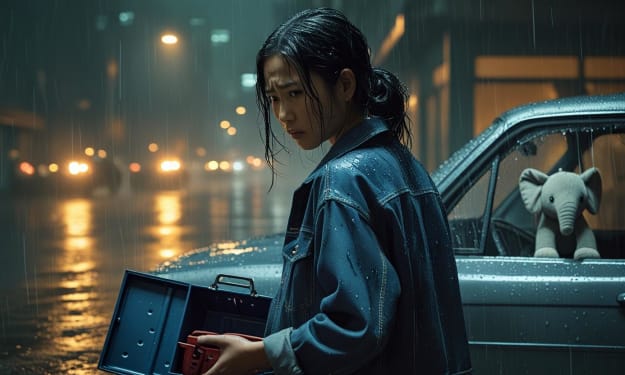
The rain hammered relentlessly against the cracked windshield of Aisha’s 2009 Honda Civic as she sat idling at a red light on the edge of downtown Oakland. It was 6:47 p.m., and the November sky had already surrendered to darkness, the city’s glow muted beneath thick storm clouds. Her phone buzzed in the cupholder, but she ignored it, knowing it was probably her boss, Marla, texting about yet another shift at the diner. At 29, a single mother, Aisha carried the weight of the world on her shoulders—heavier than the storm pressing down on her car. Her daughter, Layla, was home with Aisha’s mother, likely curled up with a book, waiting for her to return from her second job as a rideshare driver. The words her father once told her echoed sharply in her mind: To be the best, you must handle the worst. Back then, those words were a challenge. Now, they felt like a relentless burden. Aisha’s childhood home in East Oakland was small but filled with lessons. Her father, a mechanic with grease-stained hands and a heart full of stories, would come home after long days fixing engines under pressure. He’d sit her down at the kitchen table and say, “Life isn’t about avoiding breakdowns—it’s about knowing how to get the engine running again when it fails.” He passed away when she was 17, leaving behind those words and a toolbox she still kept in her trunk. She hadn’t opened it in years, but it was always there—a quiet, stubborn reminder of who she was meant to be. The light flicked green, and Aisha eased the Civic forward, her eyes flicking to the rideshare app. A new request popped up: a pickup at a bar on Telegraph Avenue, a 15-minute drive through the snarled traffic. The passenger’s name was Marcus, rated 4.8 stars. She accepted the ride without hesitation, her fingers moving on autopilot. Tonight’s fare was decent, but every dollar went straight to bills, daycare, or the endless cycle of car repairs. Her Civic was a warrior, but a tired one—coughing and rattling, begging for a break she couldn’t afford. Neither could she. At the bar, Marcus slid into the backseat—a lanky man in his early 30s, wearing a faded denim jacket, his nervous energy barely contained. “Hey, thanks for the ride,” he said, voice clipped. “Can you make it quick? I’m heading to Emeryville, gotta meet someone.” Aisha nodded, adjusting her rearview mirror. “I’ll do my best. Traffic’s rough tonight.” Marcus fidgeted, checking his phone every few seconds. She’d seen his type before—people running from something or toward something, always in a hurry. She didn’t ask questions. Her job was to drive, not pry. But as they merged onto the freeway, Marcus leaned forward. “You ever feel like life’s just… testing you? Like it’s throwing everything at you to see if you’ll break?” Aisha’s grip tightened on the wheel. “Every day,” she said, voice steady. “You just keep moving.” Marcus let out a short, bitter laugh. “Yeah, well, I’m not sure I’m moving in the right direction.” She glanced at him in the mirror, catching the half-lit expression of exhaustion and defiance on his face. “What’s got you so wound up?” she asked, surprising herself. She usually kept conversations light, but something about Marcus felt like a mirror reflecting her own struggles. He hesitated, then sighed. “Lost my job last week. Tech startup. They called it ‘restructuring.’ Now I’m scrambling, trying to pitch a new app idea to investors tonight. If I don’t land this, I’m done. Rent’s due, and my savings are a joke.” Aisha nodded knowingly. She understood that precarious edge—the one where one missed payment could topple everything. “Sounds like you’re handling the worst,” she said softly. “That’s half the battle.” Marcus raised an eyebrow. “What’s the other half?” She thought of her father’s words again. “Being the best. Not giving up, even when it feels pointless.” He leaned back, staring out the window at the rain-streaked city lights. “Easier said than done.” They rode in silence for a while, the rain drumming a steady rhythm on the roof. Aisha’s thoughts drifted to Layla, just six years old and already asking questions she didn’t have answers for. Why do you work so much, Mommy? Why can’t we go to the zoo like other kids? Aisha longed to give her daughter a life free from those questions, but every day was a grind just to keep the lights on. She had dropped out of community college when she got pregnant, burying her dreams of becoming a nurse beneath years of survival. Still, she held onto her father’s toolbox, his words, and a stubborn belief that she could be more than her circumstances. The car sputtered as they exited the freeway, a low groan twisting Aisha’s stomach. “Come on, baby,” she muttered, patting the dashboard. Marcus looked up, alarmed. “We good?” “Yeah,” she said, though uncertainty gnawed at her. The check engine light had been on for weeks, but mechanics weren’t cheap, and she’d been gambling on the car holding out. She pulled into a parking lot near Marcus’s destination—a sleek office building with glass walls that screamed money. “This is you,” she said. Marcus didn’t move right away. He stared at the building, fingers drumming nervously on his knee. “What if I blow this? What if I’m not good enough?” Aisha turned to him, meeting his gaze. “You’re here, aren’t you? You’re showing up. That’s more than most people do when life’s kicking them down. Go in there and be the best you can be. The rest isn’t up to you.” He looked surprised, then nodded slowly. “Thanks… Aisha, right?” “Yeah.” “You’re good at this. Not just driving. Talking sense.” She smiled faintly. “I’ve had practice.” Marcus tipped her generously through the app before stepping out into the rain. Aisha watched him disappear into the building, then checked her phone. Another text from Marla: Can you cover breakfast shift tomorrow? Tina’s out. She sighed, typing a quick Sure. Sleep was a luxury she couldn’t afford. As she pulled out of the lot, the car lurched, the engine coughing harder than before. She cursed under her breath and steered to the side of the road. The rain was relentless now, blurring the world into a watery haze. She popped the hood and stepped out, the cold seeping through her jacket. She wasn’t a mechanic like her dad, but she’d learned enough to know the basics. The engine looked like a tangled mess of wires and grime, and she had no idea where to start. Her phone buzzed again—Layla’s bedtime was in 30 minutes, and her mom would be annoyed if she was late. Aisha grabbed the toolbox from the trunk, her hands trembling from the cold. She opened it, the sharp scent of metal and oil flooding her senses like a memory. Her dad’s old wrench gleamed under the streetlight, and for a moment, she was 12 again, watching him work in their garage, explaining that every problem had a fix if you didn’t give up. She tightened a loose battery cable, checked the oil, and whispered a silent prayer. When she turned the key, the engine sputtered but caught, roaring back to life. She laughed—a small, triumphant sound—and closed the hood. It wasn’t a permanent fix, but it was enough to get her home. As she drove, her father’s words echoed again: To be the best, you must handle the worst. She’d been handling the worst for years—layoffs, a deadbeat ex, sleepless nights, and a car that refused to quit but wouldn’t behave either. But tonight, fixing the engine, talking to Marcus, surviving another shift—it felt like inching toward something better. When she got home, Layla was asleep, clutching a stuffed elephant. Aisha kissed her forehead, then sat at the kitchen table with a cup of tea. Her mom shuffled in, eyeing her with a knowing look. “You look like you’ve been through it.” “Car broke down. Fixed it, though.” Aisha sipped her tea, feeling a spark of pride. Her mom raised an eyebrow. “Your daddy would’ve been proud. You’re tougher than you think.” Aisha didn’t respond, but the words settled deep inside her. She wasn’t just surviving anymore. She was handling the worst, piece by piece, and maybe, just maybe, becoming the best version of herself. Not perfect, not rich, not a nurse—yet. But someone who refused to break, no matter what life threw her way. The next morning, she woke early, dropped Layla at school, and headed to the diner. Marla was in a mood, the coffee machine was broken, and the breakfast rush was chaos. But Aisha moved through it, her father’s wrench tucked in her pocket—a quiet reminder that she could fix things, even when they seemed broken beyond repair. When her shift ended, she opened the rideshare app again, ready to face whatever came next. Because to be the best, you had to handle the worst—and Aisha was learning she could handle anything
By Nauman Hassan Khanabout a year ago in Fiction
The Pursuit of Purpose
Evan sat at the corner table of the dimly lit coffee shop, his eyes flicking toward the door every few minutes. Two weeks ago, he had met Lila at a friend’s party—her smile, her laugh, the brief touch on his arm—moments he had replayed endlessly. He had texted her relentlessly since then, crafting witty messages and overanalyzing her brief replies. Tonight, she had finally agreed to meet for coffee, and his heart pounded with anticipation. Adjusting his shirt and checking his hair in his phone’s reflection, he rehearsed the perfect lines to charm her.
By Nauman Hassan Khanabout a year ago in Fiction