Sci Fi
Darok's Diatribes.
I am Darok, a Martian who has been living on Earth longer than some of you have been alive. I am but one of many agents, as I have explained before. I have given you a quick resume' of my life here in previous articles. We take on identities so that we can blend seamlessly into your society. Whatever stage of development your society has been at, we have been here. Quietly living out our lives and observing you from the shadows. We live lives just like any Earth person. We marry, we work, we even have children, we study, we practice faith, we use your tech, some of which has been driven forward by our intervention.
By Nicholas Bishopabout a year ago in Fiction
The Sound Beneath the Floor
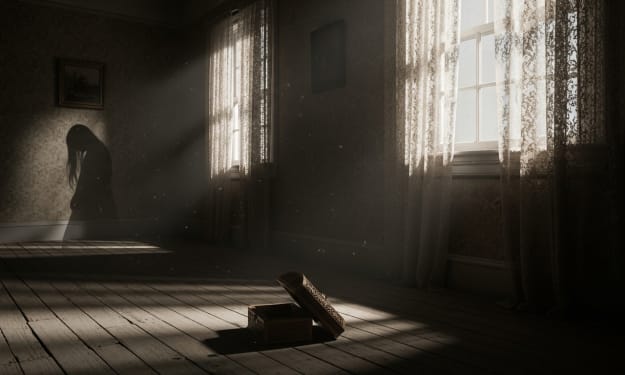
The first night it happened, I thought it was the pipes. A faint tapping beneath my bedroom floor — rhythmic, like a heartbeat out of sync. I pressed my ear against the old wooden boards, half expecting silence. But the sound grew louder, then stopped the moment I whispered, “Hello?”
By Malaika Pioletabout a year ago in Fiction
The Dream Architect
Elara was a Dream Architect. In a world where reality was often gray and taxing, she was a goddess of the subconscious. Clients came to her with pieces of their lives—a scent of a childhood garden, the feeling of a first kiss, the sound of a forgotten melody—and she would weave them into bespoke dreams. She didn't just replay memories; she constructed experiences. A week-long vacation on a Martian sunset beach. A conversation with a historical idol. A flight on the back of a dragon.
By Habibullahabout a year ago in Fiction
The Last Prayer of Rahim
There’s a small village at the edge of nowhere — the kind of place where time moves slowly, and people remember everything. That’s where Rahim lived. He wasn’t always sick. Once, he was the strongest man in the village — the kind who carried bricks all day and still helped his neighbors fix their roofs before sunset. People used to call him “Bhai Rahim — the man with a heart bigger than his hands.” But life has a strange way of testing the kindest souls. A few years ago, an illness crept into Rahim’s body. At first, it was just pain — something he could hide behind his smile. Then came the swelling, the weakness, the nights of burning fever. Doctors called it incurable. Rahim just called it “Allah’s test.” His house was small — two rooms and a wooden door that always creaked. Every morning, before the sun climbed over the rooftops, he would spread his prayer mat and whisper the same words: >Ya Allah… give me patience, not comfort. Give me strength, not ease.” The neighbors would hear his voice through the thin walls. Some pitied him. Others just shook their heads and said, “He won’t live long.” But Rahim always smiled when he heard that. “I’ve already lived longer than despair,” he’d say softly. -- One cloudy afternoon, a traveler named Saeed arrived in the village. He wasn’t looking for Rahim — he was just passing through, tired and lonely, searching for something he couldn’t name. Someone at the tea stall told him about “the sick man who prays for others.” Curious, Saeed went to find him. When he reached Rahim’s home, the sight stopped him cold. Rahim was sitting on a thin mattress by the door. His body looked fragile, but his eyes — those eyes had light. He wasn’t praying for healing; he was praying for gratitude. Saeed sat quietly beside him. Neither spoke for a while. The sound of their breathing filled the silence between prayers. Finally, Rahim opened his eyes and smiled. “Brother, you look troubled,” he said softly. Saeed’s eyes were wet. “I came to see you, but now I don’t know what to say. I feel helpless.” Rahim chuckled faintly — a dry, gentle sound. “Don’t be. Pain is not always a punishment. Sometimes it’s a reminder… that we still belong to Him.” -Saeed took out a bundle of money, hands trembling. “Please, take this,” he said. “Use it for medicine, for care… for anything.” Rahim looked at it for a moment, then closed Saeed’s hand around it again. “Brother, money can fix a body, but not a heart. And my heart is fine.” Saeed couldn’t hold back his tears anymore. “What can I do then?” he asked. “Pray with me,” Rahim whispered. “That’s all I ever need.” So they sat together — two strangers who suddenly felt like brothers. Their hands lifted, voices low but full of meaning. “Ya Allah, forgive us when we forget to be grateful. Forgive us when we fear pain more than we fear losing faith. And when we suffer, let us remember — You never test without purpose.” The air grew still. Even the birds seemed to listen. Saeed could feel the weight of those words settle deep inside his chest. Rahim’s hands slowly dropped to his lap. His eyes stayed open, but something changed — a softness came over him. He whispered one last time, barely audible: “Tell the world… I wasn’t waiting for death. I was waiting to meet the One who gave me life.” And then, silence. Complete, peaceful silence. The azaan began to echo from the nearby mosque. Saeed sat there, motionless, tears falling one by one. He wasn’t crying out of pity anymore — he was crying because he’d just seen what faith truly looked like. Before leaving, he looked around the little courtyard. There was no wealth, no comfort, no sign of healing. Yet somehow, Rahim had everything Saeed had been searching for — peace. When Saeed walked back to the main road, the evening light touched the village roofs. He whispered to himself: "He healed me, even as he was dying.” And from that day on, wherever Saeed went, he carried Rahim’s prayer in his heart — a prayer that wasn’t just about pain or faith, but about finding light in the darkest corners of life. Moral / Reflection: Some people leave this world without fame or fortune, but they leave behind something far greater — a lesson that faith can turn suffering into strength, and sorrow into peace.
By Vocal Member about a year ago in Fiction
Greenhouse. Runner-Up in A Knock at the Door Challenge. Content Warning.
The dusky shadow of the Earth passed over the windows above the heads of the adolescents gathered on the promenade, all of them tilted back to watch. Earth’s curve crested with the glow of the sunrise, a phenomenon they’d all seen before - but for most of the recruits, like Avita, it was the first time they could remember seeing the fireworks that burst in the halo.
By Elizabeth Kaye Daughertyabout a year ago in Fiction