Mystery
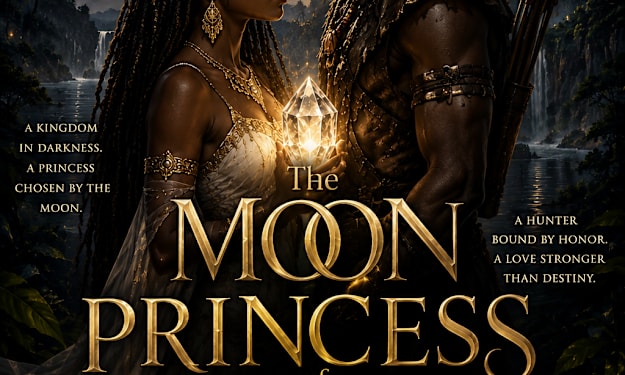
The Moon Princess of Ayanmo Forest. AI-Generated.
The Moon Princess of Ayanmo Forest Long before kingdoms were drawn on maps and before merchants crossed the great rivers of West Africa with caravans of gold and ivory, there existed a hidden kingdom known as Olori.
By Kelvinking Omoregie5 months ago in Fiction
The Basket House
October 18 It was a chilly afternoon in the neighborhood of Majesty Oaks Estates. The autumn breeze is blowing this afternoon, and it is a safe haven for both the birds in the trees and the neighborhood kids at play. One could say this was the safest neighborhood around. I find this neighborhood to be relaxing during the holiday season. Today, I must finish my last assignment before I graduate. I’m feeling anxious, but I am having faith that this project will go well.
By Nozomi Rose5 months ago in Fiction
Peace to the Falling II
Peace to the Falling II When the world remembers your fall, it rarely remembers the nights you survived. For Elias, rising once had seemed like victory. People applauded beginnings, admired breakthroughs, and celebrated momentum. But nobody prepared him for what came after—the quiet moments where applause disappears and only character remains. Peace had never arrived as comfort. Peace arrived as questions. What do you become when nobody is watching? How do you rebuild after disappointment stops feeling dramatic and starts feeling ordinary? Can someone who fell become more than the version people already buried? Years after everything changed, Elias discovers that falling was never the opposite of rising. It was the place where truth introduced itself. Old friends become distant. New doors appear in strange places. Some people return—not because they care, but because they now recognize value in what once looked broken. And slowly, he learns something dangerous: Not every battle is meant to be won loudly. Some victories happen in silence. Meanwhile, across different lives and forgotten places, others are fighting the same war— people who rose too early, trusted too quickly, loved too deeply, or gave up too soon. Their stories begin crossing paths. Because peace was never promised to those who never fell. It belonged to those who kept moving anyway. Peace to the falling II is a story about rebuilding, identity, endurance, and discovering that sometimes the strongest version of a person is born after the world stops clapping.
By Samson E. Gifted5 months ago in Fiction
Why Not Me (Why Not You)
Why Not Me (Why Not You) There was a boy named Yemi, though most people simply called him “Y.” Not because he was mysterious or special, but because life had a way of shortening people who were overlooked. Teachers forgot his answers. Opportunities skipped his name. Friends stopped inviting him when things got serious. Even dreams, it seemed, passed him like he was standing in the wrong line. Yemi grew up hearing questions that never came with answers. “Why him and not me?” “Why them and not us?” “Why does it always work for others?” At first, he believed those questions were unfair. Then slowly, he began to believe they were facts. By the time he was older, he stopped asking why not me and started accepting not me as the default setting of life. But something strange happens to people who stop hoping—they don’t become empty. They become quiet. And in that quiet, something either breaks them… or rebuilds them. Yemi’s breaking point didn’t come loudly. It came in small moments. A job interview where he was told, “We’ll get back to you,” and never did. A friendship that faded without explanation. A dream he told someone about, only to hear laughter disguised as advice. Each moment didn’t destroy him. It reshaped him. Until one evening, sitting alone in a dim room with a flickering light bulb, Yemi asked himself something different. Not “Why not me?” But— “What if I’ve been asking the wrong question?” The world had trained him to believe success was a door reserved for selected names. But what if the door was not selective… just difficult? What if it didn’t open because people were special, but because they refused to stop knocking? The idea felt almost offensive at first. Because it meant he wasn’t excluded. It meant he had a role in the outcome. And responsibility is heavier than disappointment. So Yemi did something small. He started again. Not dramatically. Not with confidence. But with repetition. He learned skills others ignored. He applied where he previously assumed rejection. He tried things he once called “not for people like me,” not because he suddenly felt worthy—but because he was tired of living as if he wasn’t. And slowly, life began to respond differently. Not because the world changed. But because he did. The same places that ignored him began to notice him. The same doors that stayed closed started to crack open—not all at once, but enough to let light through. Still, life did not become easy. That was never the promise. He failed again. And again. But something inside him had changed: Failure no longer meant “stop.” It meant “adjust.” Years later, Yemi stood in a place he once thought belonged to other people. Not at the top of the world, but far from where he started. And for the first time, he understood something that cannot be taught in comfort: Most people don’t fail because they are incapable. They fail because they stop too early. And all those questions from his past returned—but this time with a different answer. Why not me? Because I stopped trying. Why not you? Because you haven’t started yet. And in that realization, Yemi understood something simple but powerful: Life is not always fair. But it is not always final either. Some people lose because they are not chosen. Others lose because they stop choosing themselves. And the difference between those two lives… is everything. So if you are still asking “Why not me?” Maybe the real answer is waiting on the other side of one more attempt. Not because success is guaranteed. But because quitting is the only way the question ever becomes true.
By Samson E. Gifted5 months ago in Fiction
The Advantages and Disadvantages of Religion in Our Society II
The Advantages and Disadvantages of Religion in Our Society 2 Religion has influenced human civilization for thousands of years. It has shaped cultures, laws, traditions, art, education, and the way people understand life itself. For many, religion is more than a set of beliefs—it is identity, comfort, guidance, and community. For others, religion is viewed more critically because of the conflicts, divisions, or restrictions sometimes associated with it. Like many powerful forces in society, religion carries both advantages and disadvantages depending on how it is practiced, interpreted, and experienced. The Advantages of Religion 1. Building Community and Belonging One of religion’s greatest strengths is its ability to bring people together. Religious gatherings, shared rituals, celebrations, and places of worship create spaces where people connect and support one another. In many communities, religion becomes a source of friendship, encouragement, and social support during difficult times. 2. Providing Moral and Ethical Guidance Many religious traditions encourage values such as honesty, kindness, forgiveness, generosity, patience, and responsibility. For some people, religious teachings serve as a moral compass that helps guide decisions and behavior. 3. Offering Comfort During Hard Times Life often brings uncertainty, loss, disappointment, and fear. Religion can provide hope and emotional strength. Belief in something greater than oneself can help people endure difficult seasons and find meaning in suffering. 4. Encouraging Charity and Service Religious organizations have historically played roles in helping the poor, supporting education, providing healthcare, and responding to disasters. Many acts of volunteering and generosity around the world are connected to faith communities. 5. Preserving Culture and Identity Religion often becomes deeply connected to traditions, language, ceremonies, and family values. Festivals, music, stories, and customs frequently pass from generation to generation through religious practice. --- The Disadvantages of Religion 1. Risk of Division and Conflict While religion unites many people, differences in belief have sometimes contributed to tension and conflict. When people treat differences as threats instead of opportunities for understanding, religion can become a source of division. 2. Resistance to Change Some religious communities may strongly resist social, scientific, or cultural changes. This can create tension when traditional beliefs and modern developments appear to disagree. 3. Misuse of Religious Authority Religion itself is not automatically harmful, but people in positions of influence can misuse faith for personal gain, control, fear, or manipulation. History and modern society both show examples where authority was abused. 4. Pressure and Exclusion Some individuals experience pressure to conform to religious expectations. People who question beliefs, leave a faith, or live differently may sometimes face judgment or rejection. 5. Conflict Between Freedom and Rules Religious teachings often include standards and boundaries. For some, these create structure and meaning. For others, they may feel restrictive if imposed without room for personal choice or discussion. --- The Balance: Religion and Society The impact of religion is rarely simple. For one person, religion may represent peace, healing, and purpose. For another, it may represent painful experiences or limitation. Much depends on interpretation, leadership, culture, and personal experience. Society often benefits when religion contributes positively while respecting diversity, freedom of thought, and human dignity. At its best, religion can inspire people to serve, love, build, and seek truth. At its worst, religion can become fear, division, or power without compassion. The question is not always whether religion exists in society— but what people choose to do with the influence it carries.
By Samson E. Gifted5 months ago in Fiction
YNs–Tattoos. Content Warning.
2013 An ankle connecting a foot in plastic hung under the logo of the tavern The Iron Knee in Wilmington, Delaware. The joke was lost on some, but for those who got it, they were probably too hammered to even comprehend beyond the sardonic piece of witticism. A golden glow seeped through the space and allowed steins to show bubbles floating to the top in a gilded fashion. The din of the place featured a few bursts of laughter amongst the idle chatter. Garr Forsyth, 22, looked around and found his schoolmate from the University of Delaware. They had been on spring break. He was six three and spelled the name “athlete.” With bronze skin and frizzy hair, he noticed the friend coming in the door to the bar.
By Skyler Saunders5 months ago in Fiction