Mystery
When the Birds Forgot to Fly
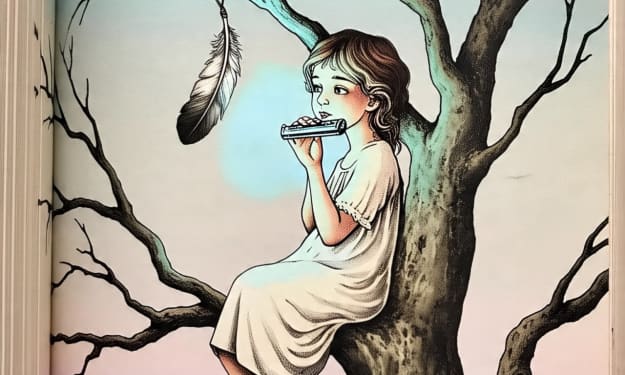
No one noticed at first. A few birds lingering longer on tree branches. A flock of starlings circling but never soaring. People thought it was the weather—too warm, too cold, too still. The scientists called it an anomaly, a disruption in migratory patterns, nothing to worry about. But Ava noticed. She always did. At eight years old, Ava had eyes that paid attention to the things adults forgot to see. Like how the sparrows outside her window stopped dancing in the morning. How the robins on the wire stared into the sky but didn’t leap. They just sat. Waiting. By the third week, the skies were quiet. It wasn’t just that birds weren’t flying—they weren’t singing either. No flapping wings overhead, no bursts of feathers from treetops. The world felt heavier, the air still. Like the sky had forgotten it was supposed to move. Ava’s parents didn’t say much. They spoke in hushed tones, eyes glued to news anchors who no longer smiled. Experts offered guesses—magnetic field shifts, global disorientation, mass trauma from environmental change. But no one had answers. Just questions. And silence. So Ava decided to find one herself. Every morning, she went outside with a sketchbook and her red boots. She drew the birds—how they perched, still and restless. She talked to them. Told them stories. Some days, she left crumbs. Other days, she played her grandfather’s harmonica, hoping the wind might remember music. The birds never responded. But they listened. Then, one evening, as the sun dipped behind the mountains and painted the clouds orange and rose, Ava saw something she hadn’t in weeks: a feather fall from the sky. Just one. Floating slowly. Like a whisper from above. She picked it up gently. It shimmered faintly, tinged with gold, like it remembered how to catch the sun. The next day, she returned to her tree—the old pine at the hilltop—and climbed to the third branch. She sat there for hours, the feather tucked behind her ear, eyes scanning the horizon. And she sang. Softly, then louder. A tune her grandmother used to hum in the kitchen while baking cinnamon bread. The melody was old and full of warmth. Ava didn’t know all the words, but the birds didn’t mind. By the end of the song, something stirred. A finch fluffed its feathers. A dove shifted its feet. A swallow tilted its head as if remembering something half-forgotten. The next day, she brought her harmonica. Played the tune again. This time, two sparrows hopped closer. The robin fluttered its wings. Still no flight. But motion. By the end of the week, she wasn’t alone. Other children came, some with flutes, others with violins, and one boy with a tiny drum. They played and sang and laughed under the wide, quiet sky. And then, one morning, as dew clung to the grass and the earth held its breath, a single lark launched into the air. It was wobbly at first. A strange, uncertain glide. But it rose. Higher and higher, until it was nothing more than a dot in the sky, silhouetted against the pale blue morning. The next day, ten birds flew. A week later, thousands. The skies bloomed again with wings and sound—coos and chirps and songs that had been buried beneath the hush. People wept watching flocks return to their patterns, their rhythms, their skies. The scientists still debated the cause. But Ava knew. The birds hadn’t forgotten how to fly. They had simply forgotten why. And when the world stopped singing, they’d grounded themselves in mourning. It wasn’t the mechanics of flight they needed—it was the memory of joy, of purpose, of belonging to the sky. They had waited for the world to remember how to feel. And Ava, in her red boots and song-filled heart, had reminded it.
By Azmat Roman ✨about a year ago in Fiction
The Last Photograph.
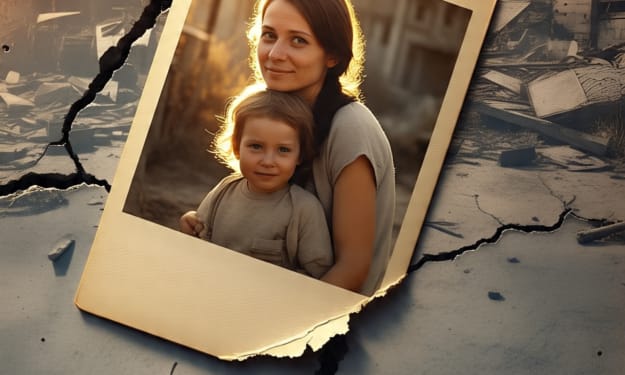
They found the camera in the rubble—an old Polaroid, scuffed and half-buried beneath the collapsed beams of what used to be a café. It still had film inside. That, more than anything, felt like a miracle. Elias cradled it in his dust-covered hands like it was made of porcelain instead of plastic. The war had taken almost everything—his home, his brother, the city’s laughter. But somehow, this camera had survived. Somehow, it was still waiting. They had orders to move north by sundown. The city was being evacuated sector by sector. But Elias stayed back a few extra minutes, standing in the broken shell of the café, his boots crunching over shattered glass and faded menus. The air smelled of old coffee, smoke, and memory. He lifted the camera and looked through the viewfinder. It was muscle memory. His father had taught him photography before the war, back when Sundays meant slow breakfasts and dusty albums filled with crooked smiles. His father had said, “Photographs are time-catchers, Elias. They remember for us when we forget how to.” He hadn’t taken a photo in three years. Elias aimed the camera toward the café’s counter. The stools were still upright, a strange defiance amid ruin. A child’s drawing clung to the far wall—crayon flowers in a world that no longer bloomed. He clicked the shutter. The camera whirred, then spat out a photo with a mechanical sigh. It was warm in his hand. Real. Tangible. He shook it gently, the way his father used to. Slowly, the image emerged: broken stools, fractured tiles, but light slicing through the cracked ceiling like hope peeking in. He stared at it. Then he turned. Outside, the street was ghosted with silence. Burned-out cars and shattered windows lined the road. The wind carried the distant sound of sirens, and even farther away, maybe—just maybe—a bird. He walked down the road with the camera dangling from his neck. People moved past him, faces drawn, eyes cast downward. Some carried bags. Some carried nothing. All carried stories. At the end of the street, he saw a woman and her daughter sitting on a bench near the old park gates. The girl clutched a teddy bear missing one eye. The woman’s hands trembled as she tried to braid her daughter’s hair. It was an act of gentleness in a world that had forgotten the word. “May I?” Elias asked, holding up the camera. The woman blinked, wary, then nodded. He knelt, framed them in the viewfinder, and clicked. This time, when the photo developed, it bloomed with quiet magic—the girl’s uncertain smile, the woman’s tired eyes, the softness between them. He handed it to them. The girl held it like treasure. “You’re giving it to us?” the woman asked. “Yes,” Elias said. “Photos are meant to belong to the moment.” He took a few more shots as he walked—an old man feeding pigeons seeds he could’ve eaten himself, a young couple holding hands like they were anchoring each other to the earth, a soldier giving his only chocolate bar to a crying child. One by one, he gave the pictures away. Then, as the sun dipped behind the scorched skyline, Elias reached the top of the hill overlooking the city. The evacuation trucks waited below, rumbling softly, their backs open like mouths ready to swallow what remained. He turned back one last time. From this height, the city looked bruised but not broken. Shadows stretched long, but light still touched the edges of rooftops, painting them gold. He lifted the camera for one final shot. Click. The last photograph developed slowly. In it, the city stood silent but enduring. Cracks spiderwebbed through its surface, but there were flowers peeking through pavement, and a boy standing at the hill’s edge, camera in hand, refusing to forget. Elias tucked that one into his coat pocket. He boarded the truck, gripping that last photograph as if it were proof—not of what had been lost—but of what was still worth remembering. Wasell
By Azmat Roman ✨about a year ago in Fiction
The Silence Between Lighting.
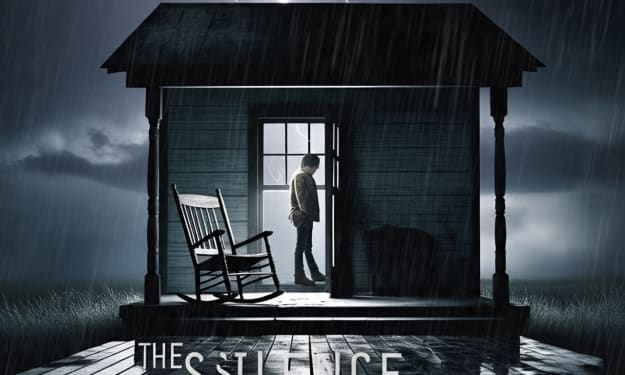
The storm began the night my father stopped speaking. At first, I thought it was just the rain—thick sheets slamming against our farmhouse windows like fists of water. The lightning came in bursts, brief and violent, illuminating the hollow look in his eyes. Then came the silence, longer than thunder’s pause, deeper than the quiet that follows grief. He sat in the wooden rocking chair on the porch, unmoving, hands gripping the armrests, as if holding on would keep him from slipping away. My mother had died two weeks before, and since the funeral, he hadn’t said a word. Not even to me. I was fourteen, with lungs full of unasked questions and a notebook full of sketches I no longer showed anyone. We lived miles from the nearest neighbor, and even farther from anyone who understood how a house full of silence could be louder than any scream. I sat beside him that night, my own hands trembling as I watched the storm roll over the wheat fields. Lightning split the sky again, searing a white scar across the horizon. I counted: one Mississippi, two Mississippi, three— Thunder crashed like the sky falling in on itself. Then silence again. Not peace—that sharp, suspended silence, like the moment between inhale and exhale, when the world is holding its breath. That’s where my father lived now—in the silence between lightning. Somewhere unreachable. He hadn’t always been like that. I remembered his voice like a warm coat around me. He used to tell stories during storms, made-up tales about cloud beasts and thunder drums. He'd say, “You know, lightning never asks for permission—it just shows up, loud and bright, and dares the dark to swallow it.” But the storm that took my mother had changed everything. It had been a quiet one. No lightning, no rain, just a strange heaviness in the air. She’d gone to sleep and never woken up. A stroke, the doctor said. Sudden. Unexpected. As if the silence had stolen her away. That night, as lightning flashed again, I decided I couldn’t let the silence steal my father too. I leaned toward him. “Dad,” I said softly, barely louder than the rain, “do you remember the story about the thunder drums?” His eyes didn’t move. I tried again. “You used to say the sky was an orchestra. That thunder was percussion, and lightning was the conductor's baton.” Still nothing. I clenched my fists, angry at the air, at the storm, at everything. I stood and shouted, “I miss her too, okay?! But you’re still here—and I’m still here—and you can’t just disappear into the quiet!” Lightning flared. I didn’t wait for the thunder. I turned to leave, tears burning, when I heard something creak behind me. The rocking chair had stopped. I turned back. My father’s eyes were closed, his face pale, but his lips… they were moving. “What?” I said, stepping closer. He opened his eyes and looked at me—not through me. At me. “The thunder… used to come quicker,” he murmured, voice cracked like old wood. I froze. “What?” “When you were little,” he said, staring into the dark. “The storms were closer. Brighter. Now they just… pass through.” A breath hitched in my throat. “You’re talking.” He nodded slowly. “I didn’t know how to carry it. Her absence.” “I know,” I whispered. “Me neither.” Silence returned—but not the same kind. This silence wasn’t empty. It held weight, but not isolation. It was like the hush of snowfall, or the pause before a melody continues. He reached out and held my hand. Lightning flashed once more, but we didn’t count this time. We waited. The thunder came, softer now, like a memory easing back into place. We sat that way for hours, letting the storm wash the dust off the world. The next day, he came into the kitchen and made breakfast. He even smiled once. He didn’t speak much, but he didn’t have to. Something had shifted. In the days that followed, he began to tell stories again. Quietly, at first. Then with more warmth. He helped me plant a sapling in the garden, one my mother had planned to plant herself. Years later, I would return to that house, older, changed, and find that tree tall and strong, its leaves whispering in the wind. And I would remember how healing began not with answers, but in the pause between pain and comfort—in the silence between lightning, where we found each other again.
By Azmat Roman ✨about a year ago in Fiction
We Bloomed us in The Dark.
The power cut out on the first night of the siege, sealing the city inside a hush so absolute that we could hear our own heartbeats scraping fear across our ribs. Windows glowed faint ember-orange from candle stubs; the streets outside lay ink-black, littered with echoes of distant shell bursts. That was when the caretaker herded the remaining tenants of Ashgrove Apartments—four families on the brink of unraveling—into the building’s unused basement greenhouse. “No bombs can burrow this deep,” she said, voice trembling behind forced certainty. “And the soil will keep us sane.” So we gathered in the subterranean glasshouse, a long-forgotten relic from the building’s more prosperous era. Ivy choked the steel beams. Flowerbeds held only skeletal stems curled like fingers of beggars. Above us, panes of dusty glass met the cracked ceiling, letting in neither moonlight nor threat—only darkness pressed tight as a lid. There were twelve of us: Mrs. Halim with her newborn; the Morales twins who never stopped arguing; widowed Mr. Liang, fixing his broken radio; my younger brother Milo and me, still tasting the smoke that had chased us down nine flights of stairs; and the caretaker herself—Miss Idris—whose left hand was always bandaged though she never spoke of why. “Plants know how to wait,” she said. “So will we.” We lit oil lamps and rationed canned beans. Days bled into nights without horizon or clock. Aboveground, the city thundered. Below, time wilted. But on the fifth evening, Milo found a packet of seeds sealed in wax, buried beneath a crooked shelf. Night-blooming cereus, the faded label proclaimed, though the ink had run like tears. He cupped the seeds in his palm, his twelve-year-old face illuminated by the lamp’s thin flame. “Flowers that open only after dusk,” he whispered, as if telling a ghost a secret. Miss Idris’s eyes flickered. “In folklore,” she murmured, “they bloom once a year—sometimes once a lifetime. But when they do, they perfume the dark so sweetly you forget all war.” We were skeptical—until hope proved cheaper than doubt. Milo and the twins prepared a planter box, mixing dusty soil with what little clean water remained. Mr. Liang cannibalized the radio’s copper wiring to rig a feeble grow-lamp from a car battery. We planted the seeds in careful rows, tiny graves for tiny promises, and waited. We waited through hunger, through newsless nights broken only by sirens that never descended to rescue us. We told stories to the newborn so she would learn laughter before she heard gunfire. We sketched constellations on the glass panes overhead, naming each imaginary star for someone missing: my mother, Mrs. Halim’s husband, the Morales’ dog. And every evening, just after the final rumble faded, Milo whispered to the planter, “Bloom for us. Please.” Weeks passed. The car battery died; the grow-lamp winked out. Yet when lamplight brushed the soil one dawnless hour, we saw green—frail shoots unfurling like shy tongues tasting air for the first time. Against all reason, they grew faster than any botany book allowed, each stem thickening, twisting, reaching for invisible moonlight. One night, when the city overhead lay silent as a graveyard and even the rats dared not scurry, the greenhouse filled with a scent—subtle, then sudden, a flood of honey and rain and old lullabies. Lamps weren’t necessary: the blossoms themselves glowed, petals thin as parchment, luminous in the pitch. They opened in synchronized slow motion, unveiling centers gold as sunrise no one above could see. We stood ringed around them, mouths parted, eyes reflecting starless halos. “We bloomed us in the dark,” Milo whispered, grammar bending under awe, and none of us corrected him because the sentence felt perfectly wrought by the moment. The newborn stopped crying. Mr. Liang’s radio crackled to life unassisted, catching a faint broadcast: Cease-fire negotiations underway. Hold on. Dawn is coming. Perhaps interference, perhaps miracle—no one cared. The blossoms’ perfume stitched courage through our lungs like new lining. We harvested nothing; we needed only to inhale. Each night thereafter, the flowers opened, as if the seeds had rewritten their own biology to soothe us. In their phosphorescent glow we shared buried confessions: Miss Idris revealed the bandage hid a shrapnel scar from the first day of shelling, when she’d dragged strangers out of a burning tram. The Morales twins admitted they argued because silence reminded them of their parents’ absence. I confessed I’d feared I would fail Milo, that I was too small to be anyone’s protector. But the flowers did not judge. They exhaled forgiveness. Forty-nine days after we descended, the doors at street level unlocked with a groan like thawing ice. Soldiers escorted us into sunlight so blinding I wept. Ashgrove Apartments was a husk amid rubble, yet pockets of ordinary life glimmered—neighbors boiling water over barrel fires, children drawing chalk rainbows on broken pavement. The soldiers offered transport to refugee stations. We accepted—but not before Milo, careful as a priest, uprooted one cereus cutting. The stalk pulsed faintly even in daylight, as though remembering its private night logic. “A reminder,” he said, placing it in a shoe box with holes poked for breath. Of what? I asked. “That something beautiful can decide to live where living makes no sense,” he replied, age sliding across his voice like sunlight on wet leaves. When the convoy rolled away, we looked back. Through a shattered basement window, darkness still pooled—yet I imagined the greenhouse glowing, patient, courageous, seedling-bright. A lantern no bomb could blow out. And I understood: we had not merely survived the dark. We had bloomed us there—together, fragrant with the proof that hope, like night-blooming cereus, is rare but real: a flower that chooses the darkness simply because someone, somewhere, still needs its light.
By Azmat Roman ✨about a year ago in Fiction
The Day the Moon Didn't Rise
e I was the kind of evening where the sky melted into soft pastels, and the stars waited behind a veil of dusk, ready to twinkle awake. But that night, something was wrong. The moon did not rise. It wasn’t just late. It wasn’t hidden by clouds. It was… gone. At first, no one noticed. The streetlights flickered on as usual. Parents called children in for dinner. Dogs barked at nothing in particular. But when people looked up, expecting that familiar silver coin in the sky, they found only emptiness. Astronomers scrambled. Satellites were checked. Telescopes turned skyward. The moon had vanished—not behind Earth’s shadow, not out of orbit. It was simply not there. In the small town of Thistle Hollow, twelve-year-old Ella Caldwell noticed first. She was a stargazer, a dreamer, the kind of girl who kept a telescope on her windowsill and a notebook full of sky charts under her pillow. That night, she had been waiting to see the Harvest Moon, the biggest and brightest of the year. She had even made cocoa and pulled her beanbag chair right up to the window. When she saw nothing, not even a sliver, her stomach twisted. “Dad,” she called downstairs. “The moon’s gone.” Her father laughed. “Probably behind some clouds, kiddo.” But Ella knew better. The next morning, the world was buzzing. Newscasters used phrases like “unprecedented astronomical anomaly” and “possible spatial displacement.” Scientists gave long explanations that didn’t explain anything. But Ella had a different theory. She remembered something her grandmother once told her, late one night as they stargazed together. “The moon is more than a rock in the sky,” Grandma had said. “It’s a guardian. A watcher. If ever it disappears, it means something has gone very wrong.” Ella had thought it was just a story. But now, as she stared at the empty sky night after night, she wasn’t so sure. Animals were acting strange. Tides grew erratic. People became restless. Dreams turned darker. Without the moon’s gentle pull, something in the world—perhaps even in people—was unraveling. One night, a week after the moon vanished, Ella awoke with a start. A soft, humming sound filled her room. She sat up, heart pounding. Her telescope began to glow faintly blue. The hum came from the sky. She looked through the telescope. And gasped. There, hidden behind a shimmer like heatwaves, floated a silver shape—blurred, out of reach. The moon wasn’t gone. It was trapped. Ella scribbled furiously in her notebook. She plotted the shimmer’s location and realized something startling: the moon wasn’t missing—it was hiding behind a tear in the sky, like a curtain pulled between dimensions. But why? That night, under the ghostly stars, Ella crept into the woods behind her house. There, in the clearing where she used to play, a strange circle of mushrooms had grown—massive, glowing faintly. A faerie circle, Grandma would’ve called it. She stepped into it. The world twisted. Colors bled into one another, and the sky above shimmered like oil on water. And then—there it was. The moon, suspended, pulsing softly, like it was breathing. Beside it stood a figure cloaked in shadow, tall and ancient. “You’re not supposed to be here,” it said, voice like falling leaves. “Why did you take the moon?” Ella asked, clutching her notebook to her chest. “The world no longer listens,” the figure replied. “They poison the seas, burn the forests, drown the stars in city light. The moon grew tired. So I let her rest.” “She doesn’t want to rest,” Ella said, heart rising. “She wants to shine. She has to.” The figure was silent. The moon throbbed faintly, like it heard her. “I still look,” Ella whispered. “Every night. And I’m not the only one.” The figure studied her, eyes like old stone. Then it reached into the sky and peeled something back. The shimmer split, and light burst through like sunrise. “She will rise again,” it said. “But remember—she watches. And she tires.” In a blink, Ella stood in her backyard, her telescope humming once more. That night, for the first time in eight days, the moon rose—full, bright, and heavier somehow, like a queen returning from battle. The world exhaled. But Ella remembered. She watched the sky every night, not just for beauty, but for balance. She wrote to newspapers, joined science clubs, started skywatching meetups. She reminded people of what they'd almost lost. Because she knew the truth: The moon doesn’t just rise. She chooses to.
By Azmat Roman ✨about a year ago in Fiction
The Mystery Of The Floating Containers
The Old Amber Forest Grove, nestled deep within the tall Canadian Rockies, was a place of whispering pines, beautiful babbling brooks, and a peculiar brand of chaos. It was home to a community of animals as diverse as the wildflowers dotting its lush green meadows, and where the unexpected was, well, to be expected. But even for the Old Amber Forest Grove, the sight of several large, brightly colored containers of different sizes bobbing down the usually serene stream was decidedly out of the ordinary.
By Toby Hewardabout a year ago in Fiction
The Girl Who Drew Doors.
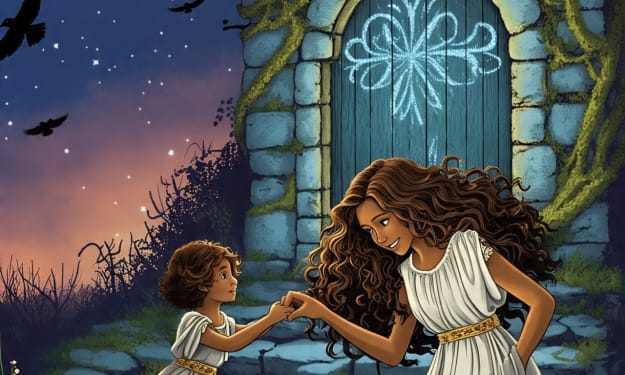
In the quiet town of Elmbrook, where the fog rolled in thick every morning and the rain tapped gentle lullabies against windowpanes, lived a girl named Mira. She was an oddity by the town’s standards—not because she wore mismatched socks or talked to the crows, but because she carried a piece of chalk wherever she went. Bright blue, always sharpened to a perfect point. Mira wasn’t like other children. While they played hide-and-seek or kicked footballs across the muddy park, Mira crouched by the walls of old buildings, sketching doors. Not ordinary doors, either—hers had twisted handles, vines growing out of the frames, and symbols no one could read. Sometimes they glowed faintly under moonlight. People whispered. “That Mira’s not right,” they’d say, peeking through lace curtains. “Drawing doors on things like she’s trying to leave.” But Mira wasn’t trying to leave. She was trying to return. It all began when Mira was five. Her parents took her on a walk through Elmbrook’s outer woods. They told her stories about faerie circles and owl spirits, trying to make her giggle. At one point, they sat by an old stone well to rest. Mira wandered, drawn to a moss-covered boulder. Upon its face, someone had drawn a door—curved at the top, etched with stars. Curious, Mira reached out and touched it. And it opened. The world behind that door was unlike anything she knew—sky split into ribbons of lavender and gold, trees that whispered secrets, and flowers that blinked like sleepy animals. She met a woman there, tall and pale-skinned, with silver eyes and hair like fireflies. The woman called herself Liora and spoke in riddles. “You have the Sight,” Liora had said. “You can draw paths where none exist. You can open what’s closed.” Mira spent hours there, or maybe days—it was hard to tell. When she finally returned, staggering back to the mossy boulder, her parents were gone. The well was gone. The trees were different. And the town… had changed. She was still in Elmbrook. But everything felt slightly… off. Her home looked the same, but a different family lived there. The bakery was on the wrong side of the street. Her name was no longer on the school’s registry. It was like she had slipped into a different version of the world. No one remembered her. Except the crows. That’s when she began drawing. She stole a stick of blue chalk from a schoolyard box and began sketching doors—trying to find her way back to the door that had first opened. Trying to find Liora, or at least someone who remembered the world behind the veil. For years, Mira searched. Sometimes the doors she drew would open. Sometimes they would hiss and vanish into smoke. Once, a door led her to a desert with two moons and a city made of glass. Another took her into a library suspended over a void, where books fluttered like birds and spoke aloud in a dozen voices. Each time, she asked, “Do you know how I can get back?” Each time, the answer was either silence or more riddles. One day, at sixteen, Mira found herself sketching a door on the stone wall behind the old bakery—an ornate arch with spirals like flames. She hadn’t meant to draw it; her hand had moved of its own accord. When she stepped back, the air shimmered, and the door opened soundlessly. Liora stood on the other side, older now, sadness etched around her eyes. “You’ve been searching long,” Liora said softly. “The threads between worlds are thinning.” “Why can’t I go back?” Mira asked, heart aching. “Because your world has already moved forward. And so have you.” Mira lowered her gaze. “Then what am I?” Liora smiled, brushing a curl from Mira’s face. “You are a Walker now. A Doorweaver. The girl who drew doors because she could never stop seeking… and who helped others find their way.” Mira turned. Behind her stood a child, lost, frightened, clutching a stuffed bear. The girl’s eyes wide with wonder. “She’s like you once were,” said Liora. “She needs a path.” Mira took the child’s hand. Then she knelt, and with her blue chalk, she began to draw. A door bloomed on the stone wall, warm and golden. It pulsed like a heartbeat. And together, they stepped through. Mira had finally found her purpose—not to return to where she came from, but to help others find their way home. She would always be the girl who drew doors. But now, she was also the one who held them open
By Azmat Roman ✨about a year ago in Fiction
The Last Lantern
*** Inspired by a foggy walk I took near an abandoned rail bridge last autumn. *** The town of Bellridge never shows up on any map. It did once — nestled deep within the Oregon mountains, famous for its coal railways and lantern-making foundry. That was before the fire.
By Muhammad Abdullahabout a year ago in Fiction