Mystery
The Girl Who Disappears in Every Photo
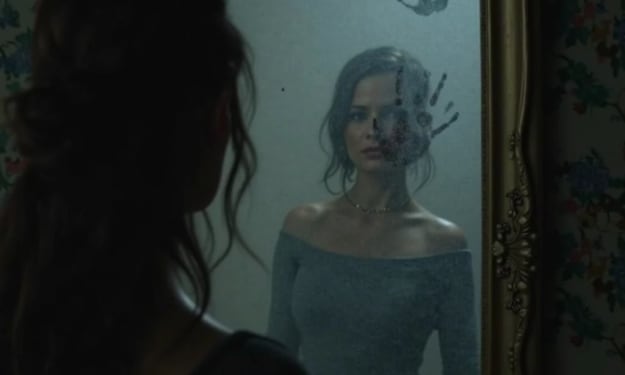
It started with a TikTok trend. “Zoom in on the corners of your old photos,” the trend said, “you might find someone who wasn’t there.” Most people found cats, photo glitches, or maybe their annoying cousin photobombing. But when Jamie tried it, she found a girl. Not just in one photo. In all of them. --- She noticed it first in a picture from her 12th birthday. Her friends were laughing, cake smeared on their faces. But just behind the fence—barely visible—was a girl in a white hoodie, head down, hair covering her face. Weird, but maybe a neighbor kid? Until she found the same girl in her prom photo. This time, on the edge of the gym bleachers. Same hoodie. Same posture. She zoomed in. The girl's face was smudged out. Not blurry—just gone. Jamie, a true crime junkie and amateur sleuth, dove into her files. She flipped through her parents' vacation albums. Her childhood Christmas photos. Even a baby picture taken at the hospital. In every single one, the girl was there. Watching. --- She showed her friends. Some said it was a prank. Others laughed nervously. One of them, Mia, grew pale. “I’ve seen her before,” Mia whispered. “She was in my graduation photo too.” Now they were panicking. They made a group chat. More people joined. Dozens found the girl in their photos too. No one remembered her. No one knew her name. Until someone on Reddit posted this: > “The girl is called Elise. She disappeared in 1997. They say she died during a field trip—drowned in a lake no one talks about anymore. Her body was never found. But after that, she started showing up in pictures. And the rules are simple: 1. Once you see her, she knows you. 2. If she gets closer in the next photo, you're next.” --- Jamie laughed at first. Until she checked a photo she took the night before. Elise wasn’t behind the fence this time. She was on the porch. Looking straight at the camera. --- Jamie didn’t sleep that night. She kept refreshing her phone, staring at the photos. Her bedroom lights flickered. The air grew thick. Her dog whined at the window. The next day, she received a notification: 📷 New shared album from unknown contact Inside were hundreds of photos. All of Jamie. Sleeping. Eating. Walking. Laughing. And in every one—Elise was getting closer. --- Desperate, Jamie reached out to a tech YouTuber who’d gone viral for debunking horror filters. They agreed to meet on livestream. Fifty thousand people watched as Jamie showed the photos. The girl. The pattern. The YouTuber scoffed. "It's an AI glitch," he said. Then the camera glitched. The livestream went black. When it came back on, the YouTuber was gone. Jamie sat alone. And Elise stood behind her. --- The stream was taken down within an hour. But not before it was downloaded, clipped, and shared across social media. Some say it was a hoax. Others call it the best horror ARG ever created. But then more people started seeing Elise. She showed up in their childhood photos. In their reflections. In their livestreams. --- Last week, Jamie’s account went dark. But today, she posted one final video. No caption. Just her whispering: > "I tried to delete the pictures. But she's in my mirror now. She’s standing behind you.” The video ends with a knock. From inside the room. --- They say the only way to stop her is to show someone else your photo. So… Check the last picture you took. Zoom in on the corners. If you see her— You’re already part of the story.
By Kausar Hayat about a year ago in Fiction
The Door Opened at 11:39 PM
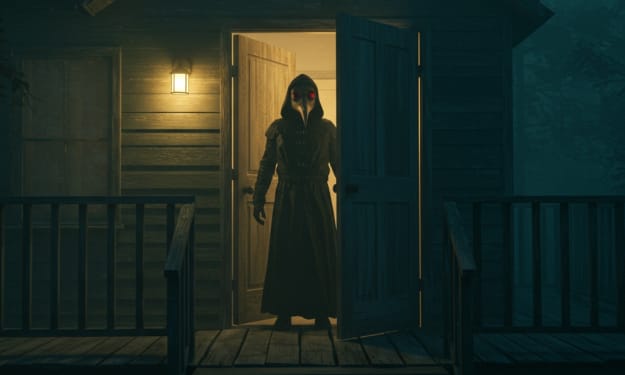
to being on our own. My parents worked late shifts and rarely returned before midnight. The house, tucked at the edge of a dense forest, always felt too quiet, too still after the sun went down. Alex arrived just after sunset, carrying a bag with snacks and a dusty Monopoly board. We played a few rounds on the living room floor, half-listening to the old box television flickering in the background. Around 9:30, we lay in our sleeping bags, whispering about the abandoned subway station three miles from the house. It had been shut down in 1932, just after the market crash, and my parents always warned me never to go near it. “They used to send people down there,” I said. “Criminals, or those who got sick. They left them to rot.” Alex looked intrigued but nervous. “We should go tomorrow,” he whispered. I smiled. “If we’re brave enough.” We eventually drifted off to sleep, but something woke me later. A sharp, distant noise. I sat up, heart thumping. Alex stirred next to me. “What was that?” he asked groggily. I wasn’t sure, but it sounded like a gunshot. I checked the clock. 11:39 PM. That didn’t sit right with me. Hunters came into the forest sometimes, but never this late. They knew the dangers of wandering these woods after dark. Trying not to panic, I walked quietly to the bedroom window and peered into the black wall of trees. Fog drifted between the trunks, thick and unmoving. I couldn’t see anything. I turned to Alex. “We should go back to sleep. Probably just... hunters.” Before I could finish, a long creaking sound echoed from downstairs. The front door had opened. Chills raced down my spine. Alex’s eyes widened. We didn’t speak. We just moved, quietly, swiftly. We ran into the bathroom, locked the door, and turned off the light. The silence was suffocating. My breath came in quick, shaky pulls. Then came the footsteps. Slow, deliberate. The weight of each step thudded against the wooden floor. They stopped just outside the bathroom door. We froze. Then came a knock. Not hard. Not fast. Just... rhythmic. Like someone was waiting. Neither of us moved. Then the knocking stopped. We exhaled. But then came a splintering crack. Wood snapped. Metal screeched. The door was being hacked apart. We screamed. A piece of the door broke away, revealing an eye behind a bird-like mask. A Plague Doctor mask. The beak jutted forward, and the single glass eye glowed with a deep red light. The man wore black leather from head to toe, his gloved hands pulling at the jagged wood. I searched the darkness for something, anything. The vent. It was high on the wall, too high to reach. Alex whispered, “I’ll lift you.” He crouched down, hands clasped together. I stepped into them and pushed upward, straining to reach the screws. They were rusted, but I managed to pry the grate loose. I looked down just as the man’s arm forced its way through the hole in the door, reaching blindly for the lock. I grabbed Alex’s wrist. “Come on!” He jumped, and I pulled, my fingers aching with effort. He was almost through when the lock clicked. The door flew open. A flash of movement. A hand grabbed Alex’s ankle. I screamed and held on, but he was yanked down, vanishing into the dark. “Alex!” I shouted. I crawled through the vent, heart pounding, mind blank. I landed in the hallway on the other side and ran out the back door, into the freezing fog. I followed the forest trail, feet slapping against the wet earth. I didn’t think. I just ran. I knew where he was going. The abandoned subway station. The entrance yawned like a mouth in the hillside, surrounded by vines and broken concrete. I stepped inside, guided only by Alex’s fading screams. The air was damp and foul. My shoes splashed into ankle-deep water as I descended. My breath clouded in the cold. The screams had stopped. Only silence now. I moved forward, deeper into the station. The tunnel was endless. Fog clung to the ceiling, thick and choking. The only sound was water dripping and the echo of my own steps. My flashlight flickered. Then died. I stood still, listening. “Alex?” I whispered. Nothing. I walked forward, arms out, hoping to feel a wall or a turn. Then I stepped into deeper water. Waist high. Freezing. My teeth chattered. The darkness felt alive. Like it moved when I blinked. I could swear I saw shapes. I heard breathing behind me. I turned. Nothing. Then I saw it. A figure. Not just the Plague Doctor. Taller. Thinner. Its face was stretched and pale, its arms too long, its fingers dragging in the water. It was watching me. I turned to run, but the subway had changed. The path twisted, shifted. Doors had appeared on either side of the tunnel. Dozens of them, all rotted and old. I tried one. Locked. Another. Stuck. My breathing grew shallow. I opened a door and found a stairway. At the top, another hallway, tiled like a hospital. Lights buzzed overhead. And Alex was there. Standing in the middle of the corridor, back turned. “Alex?” I stepped forward. He didn’t move. “Are you hurt?” He slowly turned around. His eyes were black. Hollow. His mouth stretched into a smile that didn’t belong to him. “You left me,” he said. “I tried to pull you up. I didn’t let go!” “You let him take me.” “No!” He reached out, and the corridor warped. The tiles melted into flesh. The lights flickered and popped. The hallway dissolved into screaming. Then I was falling. I woke in my bed. The sunlight poured through the window. The TV was on. Monopoly pieces lay scattered across the carpet. Alex was gone. I called his name. Nothing. I searched the house. I screamed for him in the forest. No one answered. When my parents got home, I told them everything. They called the police. No signs of forced entry. No blood. No axe. No Plague Doctor mask. No Alex. Just me. They said I imagined it. That Alex never came over. That maybe I had a nightmare. But Monopoly was still there. The vent was still open. And in the bathroom, just beneath the sink, I found something the police missed. A single black leather glove. Still wet. The End
By CreepVille Horror Storiesabout a year ago in Fiction
The House That Waited
It had stood on the hill long before Evelyn was born, and it was still there when she returned after twenty-three years. The locals never went near it. Children dared each other to touch the rusted gate. Teenagers whispered about the windows glowing at night. But Evelyn knew the truth—or so she thought. Her parents had died in that house. Everyone said it was an accident: a fire sparked by faulty wiring. She had been five years old and barely remembered anything, just flashes of smoke, the red-hot metal of the doorknob, and someone—something—pulling her from the flames. She’d grown up in foster homes, in cities far away. But the letter came on her twenty-eighth birthday: You’ve inherited the property at 42 Merrow Lane. The name of the town made her stomach twist. But something pulled her back—curiosity, or maybe guilt. Maybe it was just the chance to fill in the blanks. The house was still standing. Not charred or crumbling like she expected. The paint was peeling, the porch sagged a little, but otherwise it looked... untouched. Like it had waited for her. The key slid into the lock like it had never been removed. The door creaked open with a sigh. Inside, dust blanketed everything. Furniture stood where it had decades ago. A child’s coat—hers—hung by the door. On the table, a photo of her family, slightly warped but whole. That night, she decided to sleep there. Just one night, she told herself. Closure. She woke to the sound of footsteps. Not creaking floorboards or the groaning of old walls—actual footsteps. Steady. Deliberate. Upstairs. Heart hammering, Evelyn crept to the base of the staircase. The air was colder. She gripped the banister. "Hello?" she called. Silence. Then, a faint whisper: "Evie." Her childhood nickname. No one had called her that in years. The flashlight trembled in her hand as she climbed the stairs. Dust flew as her feet disturbed decades of stillness. She reached the landing and turned left—toward her old bedroom. The door was ajar. The light flickered. She pushed it open. And saw herself. A little girl. Curled on the bed. Crying softly. Wearing the same coat that hung by the door downstairs. Evelyn froze. Her mind screamed that this was impossible. The girl looked up. "You came back," she whispered. Evelyn backed away, stumbling. She turned and ran, tripping down the stairs. She didn’t stop until she was outside, gulping in the night air. She didn’t sleep. At dawn, she returned to town and asked about the fire. The clerk at the records office blinked at her. “There was no fire,” she said. “Your parents died in a car crash. You were sent away because there were... issues.” “Issues?” “Nightmares. You said your house was haunted. You kept screaming about the fire. But there was no fire, Miss.” Evelyn stood in silence. She returned to the house that evening. She had to know. Inside, she went to the fireplace. The bricks felt cold—too cold. She ran her fingers along them and heard a click. A panel slid open. Inside was a small box. Inside the box, a journal. Her mother’s. She sat down and read. > “Evie says she sees a girl in her room. I thought it was imaginary—until I saw her too. She looks just like Evie. And she says things she couldn't possibly know. I think… I think she’s us. A version of us from… another time. Or something else entirely.” > “The house is alive. It remembers everything. It shows us things. It keeps us.” > “We tried to leave. The doors wouldn't open. The phone went dead. I don't think we’re alone here.” Evelyn dropped the journal. The door slammed shut behind her. The fireplace flared to life. And upstairs, the child’s voice called again. “Come play, Evie. Stay with us.” The house had waited. And now, it would never let her leave.
By Kausar Hayat about a year ago in Fiction
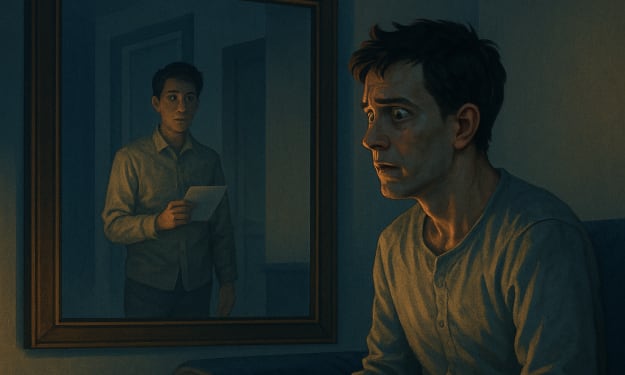
I Sold My Reflection for a Wish
The Shop That Wasn’t There Yesterday It wasn’t there the day before. On Thursday morning, as I walked to work past the old textile mill on Gable Street—a route I’d taken every morning for the past six years—I noticed a small shop tucked between two boarded-up buildings. A crooked sign above the door read:
By Muhammad Sabeelabout a year ago in Fiction
The Last Message
The café was almost empty. Rain tapped gently against the windows, and a low jazz tune played in the background. Sarah leaned over her cup of coffee, lost in thought. She had just ended a long day at the hospital, her mind still buzzing from the chaos of the ER. She needed quiet — not a mystery.
By NIAZ Muhammadabout a year ago in Fiction
Silent Vault
Antwerp, Belgium – February 2003 The city was cold, veiled in a layer of gray fog as the streets of the diamond district prepared for another day of trade. But deep underground, beneath surveillance cameras and security doors, something unthinkable had already happened. The vault was open. Empty. And not a single alarm had gone off. It would go down in history as one of the most flawless robberies ever committed. More than $100 million worth of diamonds, gold, and jewelry vanished overnight — without a trace. But this is not just a story of numbers and stolen gems. This is a story of a man called Leonardo Notarbartolo, and the mistake he never thought he’d make. --- Leonardo was a master thief. Born in Palermo, Italy, he had been robbing high-security facilities since he was a teenager. But he was no brute force criminal. He was a gentleman, a strategist, a man who believed that elegance made a heist beautiful. When he first arrived in Antwerp two years earlier, he didn't even look like a thief. He wore a clean suit, rented an upscale apartment, and posed as a diamond dealer. He joined the community. Shook hands with real merchants. Ate in their restaurants. Attended industry events. And watched. --- He wasn’t alone. Behind the scenes was a team of four highly skilled men: The Genius – a tech wizard who could dismantle alarm systems The Monster – a locksmith and climber with nerves of steel The King of Keys – an expert in forging any kind of security key The Shade – the unknown insider who never revealed his real name They studied the vault for over a year, even building a replica of it in Italy to practice over and over again. Every detail was rehearsed. --- The vault they were targeting was beneath the Antwerp Diamond Center, protected by: Infrared motion detectors Magnetic sensors A seismic sensor A keypad with a 100-million-digit combination A steel vault door with a special lock system But there was one weakness: A blind spot. A tiny corner in the hallway, just below the motion sensor’s angle. That’s where The Genius placed a homemade black plastic shield using double-sided tape and a broom handle. He did it days before the heist, during office hours, while dressed as a janitor. No one noticed. --- The night of the heist. They entered through a side door using a copied master key. Cameras were looped with an old-school tape. The heat sensor? Disabled with hairspray. The lock? Picked. The magnetic field? Overridden using a custom-built aluminum plate. It took them hours, but by morning, 123 out of 160 safe deposit boxes were empty. --- And still—no alarm. They exited the way they came in, melted into the crowd, and disappeared. But here's where it all unraveled. --- Back at a hidden property outside Antwerp, Leonardo made a decision he would regret forever. He told the crew, “We clean everything tonight. Burn the bags, shred the notes.” But one man—still unknown—panicked. He dumped a garbage bag full of evidence in a field not far from Leonardo’s rented apartment. A farmer found it the next morning. Inside? Diamond receipts Surveillance snapshots A half-eaten sandwich with Leonardo’s DNA Notes written in Italian Practice tools It was over. --- The police raided Leonardo’s apartment and found photos of the vault and plans of the building. He was arrested, tried, and sentenced to 10 years in prison. But even after his confession, the diamonds were never found. > "We didn’t steal $100 million," Leonardo said in court. “That’s just what the media says. We only took what we could carry.” --- To this day, over $80 million worth of diamonds remain missing. Some say the crew escaped to South America. Others believe the diamonds were quickly melted down and sold through underground markets. And then there’s the legend — that the heist was actually funded by a secret investor in Dubai or Russia, who paid them half in advance and took the gems to fund even darker operations. --- Reflection: Leonardo once said in an interview after release: > “We were artists. We respected the silence. The vault never screamed.” It wasn’t just a theft. It was a performance. A perfectly rehearsed symphony of light, shadow, and timing. But one forgotten bag of trash—one careless move—was all it took to fall.
By Muhammad Usamaabout a year ago in Fiction